
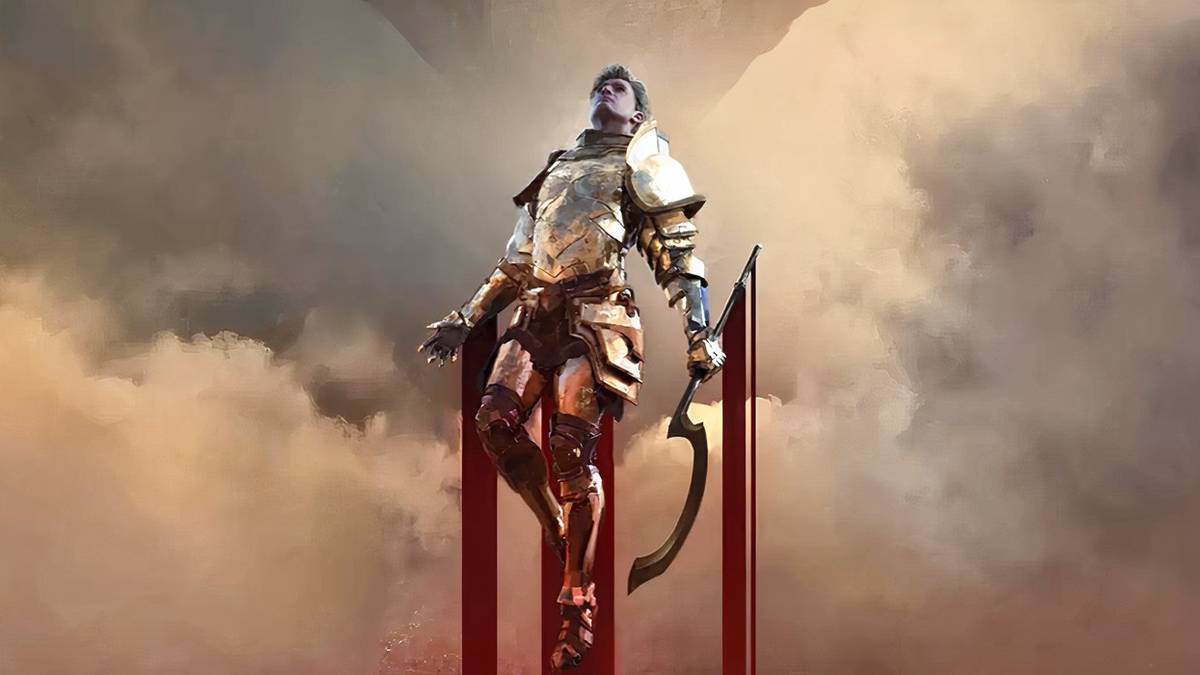
Pierce Brown’s 2014 debut novel, Red Rising, spawned a bestselling sci-fi universe, seized resounding critical acclaim, and generated an ardent fan base almost instantaneously. The operatic saga’s dystopian setting, one defined by caste systems, mercurial intergalactic Houses, an uprising against a sadistic dictatorship, and young teenagers brutally fighting to the death, drew early comparisons to The Hunger Games by way of Star Wars. While formed around familiar concepts, Brown’s premise — modeled after 19th-century Irish immigrants and “the disenfranchisement of working classes,” as he told The New York Times — contains more distinctive substance than lackluster imitation.
Between Red Rising’s concept, Brown’s sharp eye for cinematic action sequences, and the six-book series’ overwhelming success (over six million copies have sold as of 2024), bringing the author’s tale to the screen seems like a guaranteed slam-dunk. Yet somehow, for 12 years, every eager attempt to get an adaptation off the ground has failed.
What Is ‘Red Rising’ About?
After trying for almost a millennium, humanity has colonized multiple planets. A decidedly non-democratic government called the Society sorts individuals into fourteen color-coded factions. Each group fulfills its mandatory duties — except the Golds, the wealthiest and most traditionally beautiful, who bask in luxury and inflict rampant cruelty on a whim. Darrow, a newly married 16-year-old, lives deep underneath Mars’ surface with his fellow Reds. They’re the lowest of the lower castes, miners who risk their lives gathering materials to terraform the red planet’s surface. The Golds encourage the Reds to compete against one another for rationed resources, and they fatally punish even the slightest whisper of treason. When Darrow’s wife, Eo, dares to publicly sing a seditious song, Mars’ ruler orders her brutal execution. In the midst of his spiraling grief, Darrow discovers the galaxy’s oldest open secret: the Golds already live above ground inside a vast city and have no intention of rewarding the Reds’ toiling labor.
Collider Exclusive · Sci-Fi Survival Quiz
Which Sci-Fi World Would You Survive?
The Matrix · Mad Max · Blade Runner · Dune · Star Wars
Five universes. Five completely different ways the future went wrong — or sideways, or up in flames. Only one of them is the world your instincts were built for. Eight questions will figure out which dystopia, galaxy, or desert wasteland you’d actually make it out of alive.
💊The Matrix
🔥Mad Max
🌧️Blade Runner
🏜️Dune
🚀Star Wars
TEST YOUR SURVIVAL →
01
You sense something is deeply wrong with the world around you. What do you do?
The first instinct is often the truest one.
APull on every thread until I understand the system — then figure out how to break it.
BStop asking questions and start stockpiling — food, fuel, weapons. Questions don’t keep you alive.
CKeep my head down, observe carefully, and trust no one until I know who’s pulling the strings.
DStudy the patterns. Every system has a rhythm — learn it, and you learn how to survive it.
EFind the people fighting back and join them. You can’t fix a broken galaxy alone.
NEXT QUESTION →
02
In a world of scarcity, what resource do you guard most fiercely?
What we protect reveals what we believe survival actually requires.
AKnowledge. If you understand the system, you don’t need resources — you can generate them.
BFuel. Everything else — movement, power, escape — runs on it.
CTrust. In a world of fakes and informants, a truly reliable ally is rarer than any commodity.
DWater. And after water, information — the two things empires are truly built on.
EShips and credits. The galaxy is big — you survive it by being able to move through it freely.
NEXT QUESTION →
03
What kind of threat keeps you up at night?
Fear is useful data — if you’re honest about what you’re actually afraid of.
AThat reality itself is a lie — that everything I experience has been constructed to keep me compliant.
BA raid. No warning, no mercy — just the roar of engines and then nothing left.
CBeing identified. Once someone with power decides you’re a problem, you’re already out of time.
DBeing outmanoeuvred — losing a political game I didn’t even know I was playing.
EThe Empire tightening its grip until there’s nowhere left to run.
NEXT QUESTION →
04
How do you deal with authority you don’t trust?
Every dystopia has a power structure. Your approach to it determines everything.
ASubvert it from the inside — learn its rules well enough to weaponise them against it.
BIgnore it and stay out of its reach. The further from any power structure, the better.
CAppear to comply while doing exactly what I need to do. Visibility is the enemy.
DManoeuvre within it carefully. You can’t beat a system you refuse to understand.
EResist openly when I have to. Some things are worth the risk of being seen.
NEXT QUESTION →
05
Which environment could you actually endure long-term?
Survival isn’t just tactical — it’s physical, psychological, and very much about where you are.
AUnderground bunkers and server rooms — cramped, artificial, but with access to everything that matters.
BOpen wasteland — brutal sun, no shelter, constant movement. At least the threat is honest.
CA dense, rain-soaked city where you can disappear into the crowd and nobody asks questions.
DMerciless desert — extreme heat, no water, and something enormous living beneath the sand.
EThe fringe — backwater planets and busy spaceports where the Empire’s attention rarely reaches.
NEXT QUESTION →
06
Who do you want in your corner when things fall apart?
The company you keep is the clearest signal of who you actually are.
AA tight crew of believers who’ve seen behind the curtain and have nothing left to lose.
BOne or two people I’d trust with my life. Any more than that and someone talks.
CNobody, ideally. Alliances are liabilities. I work alone unless I have no choice.
DA community bound by shared hardship and mutual survival — people who need each other to last.
EA ragtag team with wildly different skills and total commitment when it counts.
NEXT QUESTION →
07
Where do you draw the line — if you draw one at all?
Every survivor eventually faces a moment that tests what they’re actually made of.
AI won’t harm the innocent — even the ones who’d report me without hesitation.
BI do what I have to to protect the people I’ve chosen. Everything else is negotiable.
CThe line shifts depending on who’s asking and what’s at stake.
DI draw a long-term line — nothing that compromises my people’s future, even if it’d help now.
ESome lines, once crossed, can’t be uncrossed. I know which ones they are.
NEXT QUESTION →
08
What would actually make survival worth it?
Staying alive is one thing. Having a reason to is another.
AWaking others up — dismantling the illusion so no one else has to live inside it.
BFinding somewhere — or someone — worth protecting. A reason to keep moving.
CAnswers. Understanding what I am, what any of this means, before time runs out.
DLegacy — shaping the future in a way that outlasts me by generations.
EFreedom — for myself, for others, for every world still living under someone else’s boot.
REVEAL MY WORLD →
Your Fate Has Been Calculated
You’d Survive In…
Your answers point to the world your instincts were built for. This is the universe your temperament, your survival instincts, and your particular brand of stubbornness were made for.
The Resistance, Zion
The Matrix
You took the red pill a long time ago — probably before anyone offered it to you. You’re a systems thinker who can’t help but notice the seams in things.
You’re drawn to understanding how the system works before figuring out how to break it.
You’d find the Resistance, or it would find you — your instinct for spotting constructed realities is the machines’ worst nightmare.
You function best when you have access to information and the freedom to act on it.
The Matrix built an airtight prison. You’d be the one probing the walls for the door.
The Wasteland
Mad Max
The wasteland doesn’t reward the clever or the well-connected — it rewards those who are hard to kill and harder to break. That’s you.
You don’t need comfort, community, or a cause larger than the next horizon.
You need a vehicle, a clear threat, and enough fuel to outrun it — and you’re good at all three.
You are unsentimental enough to survive that world, and decent enough — just barely — to be something more than another raider.
In the wasteland, that distinction is everything.
Los Angeles, 2049
Blade Runner
You’d survive here because you know how to exist in moral grey areas without losing yourself completely.
You read people accurately, keep your circle small, and ask the questions others prefer not to answer.
In a city where humanity is a legal designation rather than a feeling, you hold onto something that keeps you functional.
You’re not a hero. But you’re not lost, either.
In Blade Runner’s world, that distinction is everything.
Arrakis
Dune
Arrakis is the most hostile environment in the known universe — and you are precisely the kind of person it rewards.
Patience, discipline, and political awareness are your core strengths — and on Arrakis, they’re survival tools.
You understand that the long game matters more than any single victory.
Others come to Dune and are consumed by it. You’d learn its logic and earn its respect.
In time, you wouldn’t just survive Arrakis — you’d begin to reshape it.
A Galaxy Far, Far Away
Star Wars
The galaxy far, far away is vast, loud, and in a constant state of violent political upheaval — and you wouldn’t have it any other way.
You find meaning in being part of something larger than yourself — a cause, a crew, a rebellion.
You’d gravitate toward the Rebellion, or the fringes, or whatever pocket of the galaxy still believes the Empire’s grip can be broken.
You fight — not because you have to, but because standing aside isn’t something you’re capable of.
In Star Wars, that willingness is what makes all the difference.
↻ RETAKE THE QUIZ
Darrow vows to avenge Eo’s death by accomplishing her revolutionary dreams. He joins a dissident movement and undergoes arduous physical alterations and mental training, transforming himself from a recognizable Red into someone with a Gold’s expected attributes. He might be a teenager forced into early maturity, but Darrow takes to infiltrating, manipulating, and toppling his oppressors like a fish to water. Impressed by this newcomer’s wily tactical intelligence, the Mars Institute accepts him as a student. There, Darrow and the children of the highest-ranked Houses must survive the Institute’s initial ritual — a series of deadly games designed to separate the so-called weak from the strong. Only those who prove their mettle will be rewarded via social advancement. The more Darrow plays the Society’s depraved psychological war games, the more his infamy as the charismatic, scythe-wielding “Reaper” grows.
Plans for a ‘Red Rising’ Movie or Series Have Never Moved Past the Development Stage
A cropped version of the Red Rising coverImage via Del Rey Books
Readers have raised valid critiques concerning Red Rising’s rockier moments. Darrow’s a little too conveniently skilled at everything, the class inequality dissection falls short at times, and outdated approaches to certain female characters miss marks on the representation front (Eo is the most straightforward example of the “women in refrigerators” trope). All that said, Brown’s character development improves alongside his authorial craft and the space opera’s massive scope. The series gathers greater and greater steam until it explodes into a compulsively readable hurricane, which is a compliment.
The imaginative action set pieces are practically made for a blockbuster-sized budget. Vast in scale and as tightly formed as a Rube Goldberg machine, they crackle with kinetic suspense, never granting readers time to breathe and doling out tragic stakes without remorse, especially once every chess piece shifts into interstellar civil war. The Roman history and mythology influences mesh with the Golds’ elaborate political subterfuge and disproportionate excess. On the opposite side, where insurgents fight tooth-and-nail for their freedom, Brown explores rebellion logistics like a philosophical quandary; dismantling a tyrannical empire is all well and good, but resistance fighters have a moral obligation to provide for innocent civilians after they’ve devastated crucial infrastructure and assumed bureaucratic authority. As the savior-hero who seeks vengeance but despises adopting his persecutors’ bloodthirsty methodology, Darrow wrestles with these dilemmas while outwitting grisly psychopaths and befriending allies he may need to betray.

Related
This Stellar 4-Part Dystopian Sci-Fi Is Now Available To Stream for Free
All aboard this utterly tense and gritty ride.
Mere months after Red Rising hit bookshelves, Universal Pictures outbid Sony Pictures to secure the film rights in a seven-figure deal. Marc Forster (World War Z) boarded as the director, while Brown drafted several screenplays. Progress stalled for several years, and the rights reverted to Brown. In late 2018, he announced he was actively collaborating with a director and a showrunner on a streaming television series, and had a major studio in his corner. Fast-forward to this March, and Brown revealed that the current TV vision is dead on arrival. He explained:
“Unfortunately, we just couldn’t get it to a place where [the studio] felt confident…I only found out in October of last year that the project wouldn’t be going forward.”
However, Brown teased a bright side to this second rejection: “I think I’ll be able to announce something new that I have with regard to a live adaptation, which is not that TV show.” Garrett and Brown agreed that perhaps the “third time’s the charm” for Red Rising finally elevating off the page into the realm of visual spectacle. Hopefully, the idiom holds true. This modern magnum opus, while needing some retroactive adjustments, deserves to be rescued from development hell and realized in its full grandeur.