
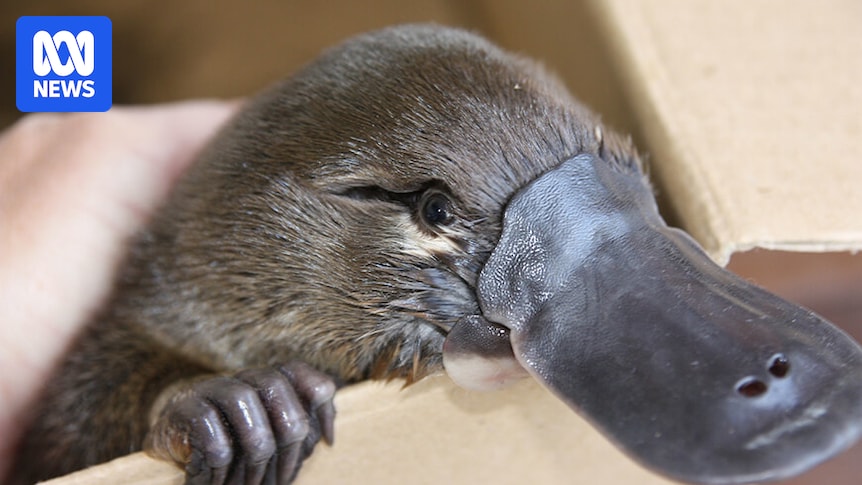
A leading researcher is calling for the platypus to be classified as a threatened species in New South Wales.
The native monotreme is classified as endangered in South Australia, and vulnerable in Victoria.
Lead researcher for the University of NSW Platypus Conservation Initiative Gilad Bino said the species was only “hanging on, not thriving” in NSW and the Murray-Darling Basin.
Loading…
“I think that platypus should be listed as a threatened species,” Dr Bino said.
“Unfortunately we don’t have enough data to support that.
“We’re very deficient in our understanding of how platypuses are faring.”
More proof needed
If a species is listed as threatened under the Environment Protection and Biodiversity Conservation Act 1999, it receives legal protection and must be considered in environmental approvals.
The government develops conservation advice and, where needed, recovery plans outlining threats and actions to support the species’ survival.
In 2022 the federal government found the platypus “was unlikely to be eligible for listing as a threatened species” and the NSW Threatened Species Scientific Committee accepted that finding.
The state’s Department of Climate Change, Energy, the Environment and Water said in a statement that the platypus was not classified as a threatened species in NSW due to a lack of data confirming the extent of population decline.
The statement said while there was evidence numbers might be decreasing, it remained unclear whether the species met the threshold of a 30 per cent decline over three generations, which is required for threatened status.
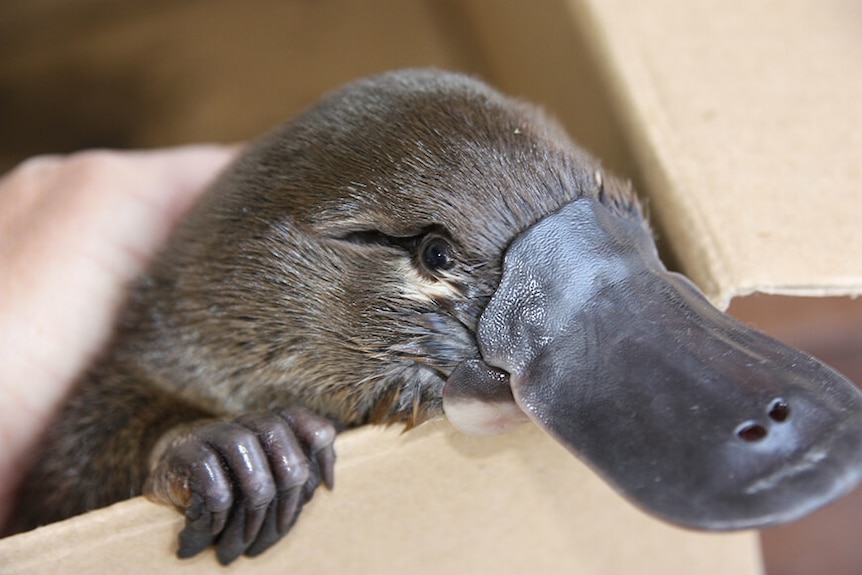
The platypus is listed as “near threatened” on the International Union for Conservation of Nature’s Red List. (Supplied: Department of Environment and Heritage)
In 2014, the platypus was upgraded from “least concern” to “near threatened” on the International Union for Conservation of Nature’s (IUCN’s) Red List, following an assessment led by Charles Darwin University professor John Woinarski.
“We are due to update that assessment over the next 12 months, but haven’t yet started collating the evidence,” he said.
The IUCN Red List is the world’s most comprehensive source on the conservation status of animal, plant and fungi species, and is widely regarded as a key indicator of global biodiversity health.
“Our assessment in 2014 was that the rate of decline over three generations approached but did not exceed 30 per cent,” Professor Woinarski said.
‘Fragmented’ populations
Work is underway to collect data and improve knowledge about the platypus, after a report eight years ago warned a lack of knowledge about its population made the species vulnerable to extinction.
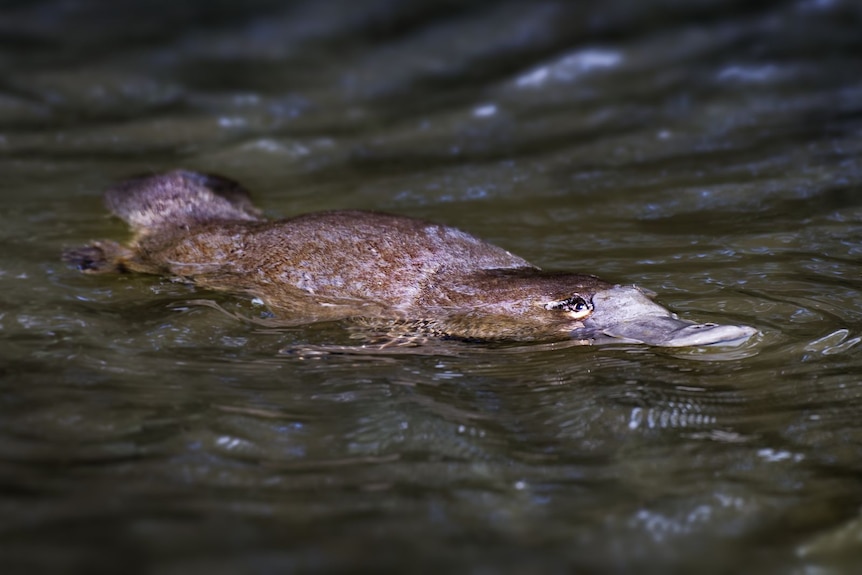
Researchers are assessing the size and location of the platypus population. (Supplied: Taronga Conservation Society)
“There’s no state or national monitoring framework for platypuses,” Dr Bino said.
“For the first time we’re establishing a baseline and a good understanding of how many platypuses are in our rivers and where they occur.
“In an assessment we did a few years ago about how platypuses are faring across their entire range, we found a signal of significant declines in the number of and distribution of platypuses.”
Dr Bino said platypuses had survived Australia’s natural cycles for millions of years, but were now struggling to adapt to human-driven changes.
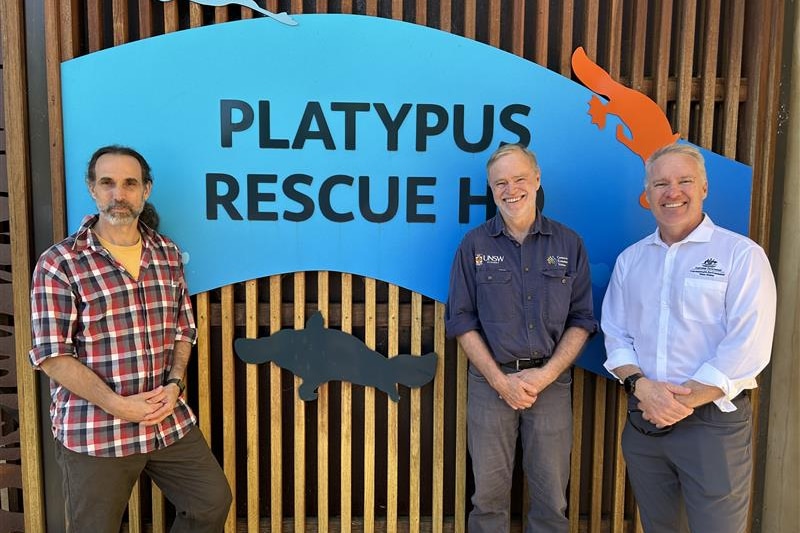
Gilad Bino and fellow UNSW researcher Richard Kingsford with Simon Banks at Taronga Western Plains Zoo. (Supplied: CEWH)
“We’ve been disrupting the natural flow regime and fragmenting and isolating platypus populations,” he said.
“Platypus are pretty much wiped out from the mainland in South Australia. They used to occur all along the Murray but that’s no longer the case.”
Using water to help, not harm
A five-year research project funded by the Commonwealth Environmental Water Holder (CEWH) in the Northern Basin is gathering information about platypus activity and the impact of water releases.
“The research is demonstrating that in some of our rivers the platypus are quite healthy, which is a sign of a healthy ecosystem,” CEWH’s Simon Banks said.
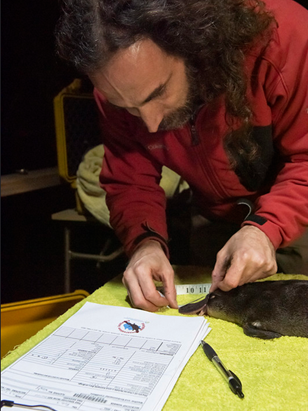
Gilad Bino takes measurements of a platypus. (Supplied: Platypus Conservation Initiative)
“There are other rivers where platypuses perhaps aren’t doing so well, so how do we use environmental water to respond to those differences to ultimately create the habitat and ecosystem they can thrive in?”
Research has confirmed the timing and velocity of water released into regulated rivers can either help or harm the unique species.
“Platypus need banks in the riparian zone to build their nests in,” Dr Bino said.
“So if we’re releasing water too high during the breeding season, a sensitive period from September to January, there’s a risk of inundation of nests and unfortunately drowning their young puggles.
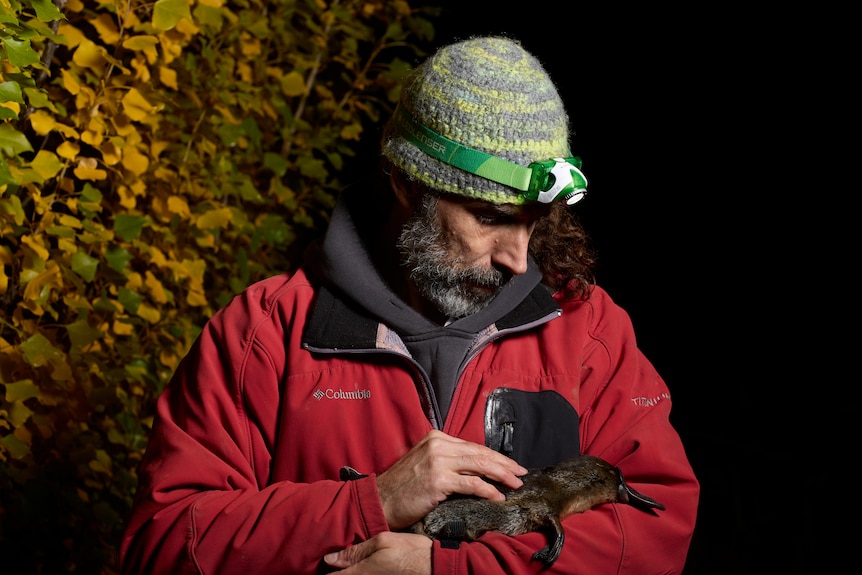
Gilad Bino says habitats for animals such as the platypus need to be protected. (Supplied: Richard Freeman)
“There are also important aspects around cold water pollution, where if we release water that’s too cold it can destroy the food for platypuses.”
Cultural pain
Ngiyampaa, Wayilwan woman Danielle Flakelar has deep cultural and familial connections with the Macquarie Marshes.
She said platypus had disappeared from the area during her lifetime.
“When my 85-year-old father was a child, he remembers seeing platypus there all the time,” she said.
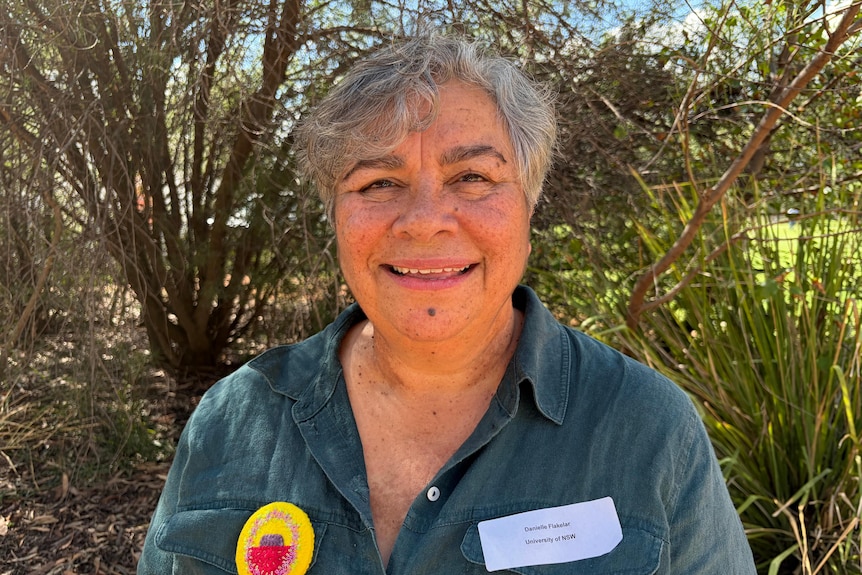
Danielle Flakelar says platypuses have disappeared from the Macquarie Marshes in her lifetime. (ABC: Lucy Thackray)
“It’s pretty sad because this has all happened in my lifetime. I think we have to take this seriously and look at restoration.
“These are totemic species. It’s like having one of your family members extinguished. It affects you.”