
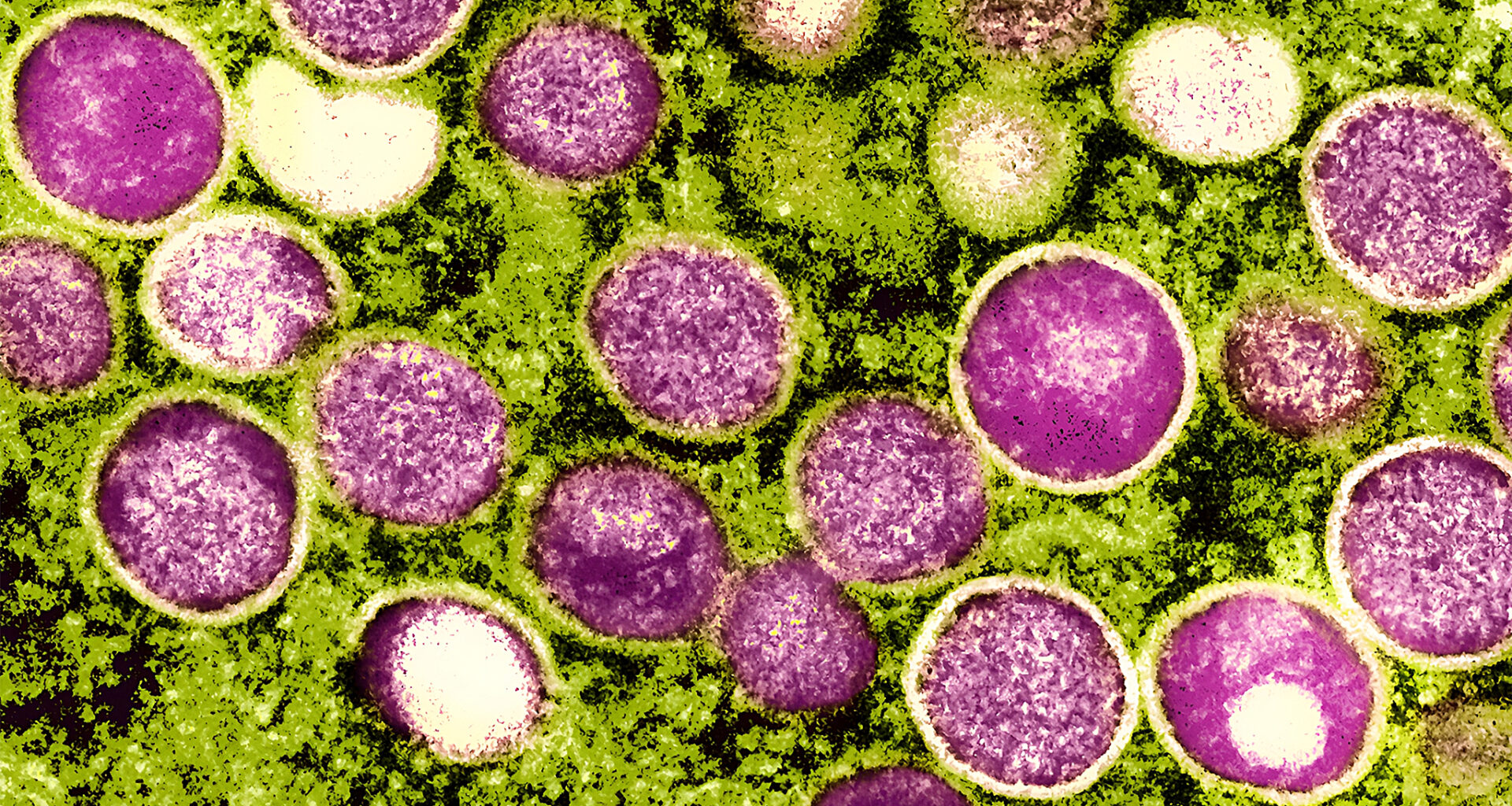
California health officials are encouraging at-risk individuals to receive the mpox vaccine as cases rise in the state, the California Department of Public Health announced this month.
San Francisco’s first case of clade I mpox was identified earlier in April, CDPH said, making it the seventh identified case of clade I mpox in California since November 2024. Meanwhile, cases of the other, less severe strain, clade II, are steadily increasing.
“So far in 2026, California is experiencing more than double the average weekly number of clade II cases compared to the same period in previous years — 14.5 weekly cases in 2026 compared to 5.8 in 2024 and 3.4 in 2025,” an April 17 California Department of Public Health news release says. While the risks of contracting the disease are low for the general public, the department is “strongly encouraging” at-risk individuals, including gay and bisexual men, to get vaccinated. The vaccine, which is administered in two doses, helps protect against both clade I and clade II mpox.
The individual who contracted clade I after contact with someone who had traveled internationally has been hospitalized and is recovering, the CDPH release says.
“CDPH is closely monitoring mpox activity across California. While Clade I cases remain uncommon, Clade II mpox continues to circulate and we’re seeing rising cases,” CDPH Director and State Public Health Officer Dr. Erica Pan said in the April 17 news release. “This reinforces how important it is for people at higher risk to get both doses of the mpox vaccine. With summer travel and large events approaching, now is the ideal time to protect yourself if you or your sex partner may be at risk.”
Though uncommon in the U.S., the viral infection is both painful and long-lasting: After coming in close contact with a sick person, usually through close intimate skin-to-skin contact, exposed individuals may develop flu-like symptoms and then break out in a pimple-like rash up to four days later, the Centers for Disease Control and Prevention says. This painful, itchy rash — which blisters and scabs — can appear on extremities and genital areas and take between two to four weeks to clear. According to the World Health Organization, hundreds, or even thousands of these sores can appear on the body.
“Clade I mpox cases can be severe,” Dr. Rita Nguyen, assistant state public health officer, previously told SFGATE, adding that the risk of hospitalization is highest for those with weakened immune systems. The San Francisco Department of Health says that anyone who plans to visit areas where clade I mpox has been reported, including Europe and Africa, should receive the vaccine, in addition to those who are considered at-risk. More information about receiving the vaccine can be found on the California Department of Public Health’s website.