
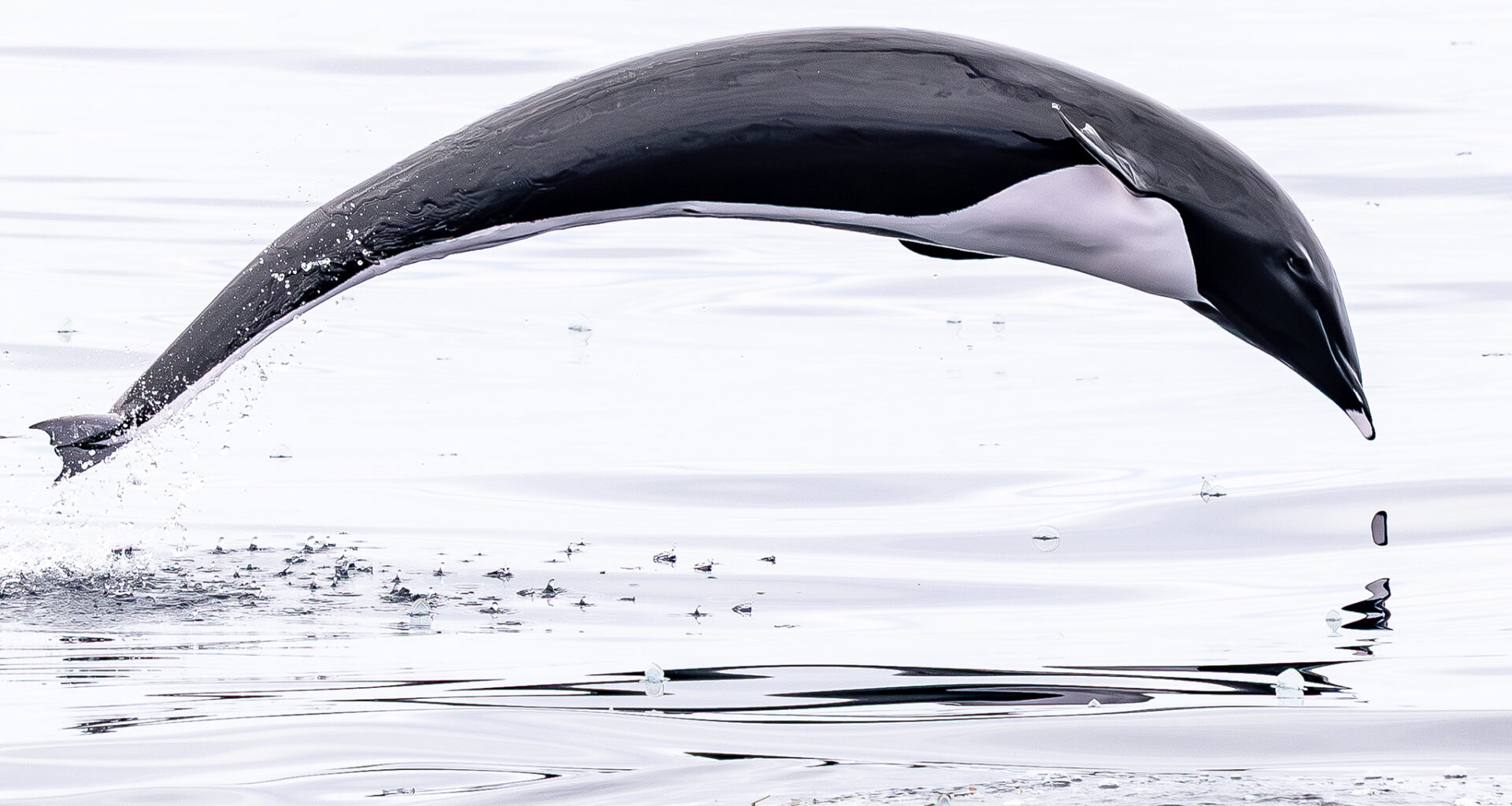
A rarely seen dolphin with a white underbelly was spotted off the coast of Monterey Bay this weekend.
Morgan Quimby, a photographer and researcher with Monterey Bay Whale Watch, captured photos of the mammal while out with Monterey Bay Whale Watch. Quimby told SFGATE the animal was a northern right whale dolphin, a species that is rarely seen close to shore.
“People come from different areas of the world or the country to see them here,” Quimby said.
She added that the species typically lives farther offshore in deep ocean waters, but Monterey Bay’s unique underwater geography can bring them closer to land.
“Our submarine canyon makes them a little bit closer to shore and easier to see,” she said. “We definitely don’t see them very often, though. They’re probably our least seen dolphin species.”
The species, known scientifically as Lissodelphis borealis, is found throughout the North Pacific and notably lacks a dorsal fin. The dolphins typically travel in groups of 100 to 200 and can leap more than 20 feet above the water’s surface, according to NOAA Fisheries.
While the photographed dolphin appeared to have white features, Quimby said it should not be confused with another famous white dolphin dubbed Casper. That animal, which has also been seen in Monterey Bay, is a separate all-white Risso’s dolphin.
“Casper would have nothing to do with [northern right whale dolphins] being in the bay,” she said. “He’s a separate species.”
Exactly what brought the pod closer to the shore is unclear.
“It could be temperature, it could be food availability,” Quimby said. “It could be a variety of things.”
Unlike migrating humpback whales, which follow more predictable seasonal patterns, northern right whale dolphins “come and go throughout the year,” Quimby noted. However, they are more likely to be seen during spring and early fall.
Quimby urged the public to keep their distance with dolphins when out on the water.
“They definitely shouldn’t approach them. If the dolphins come over to them, that’s great. They just have to be aware of their engine to make sure not to drive over the pod,” Quimby said. “The dolphins are pretty playful, so they might come up to their bow or wake to ride the pressure waves of the boat, but you definitely don’t want to intentionally go right over the pod or toward the pod. You don’t want to change their behavior or risk injuring them.”