
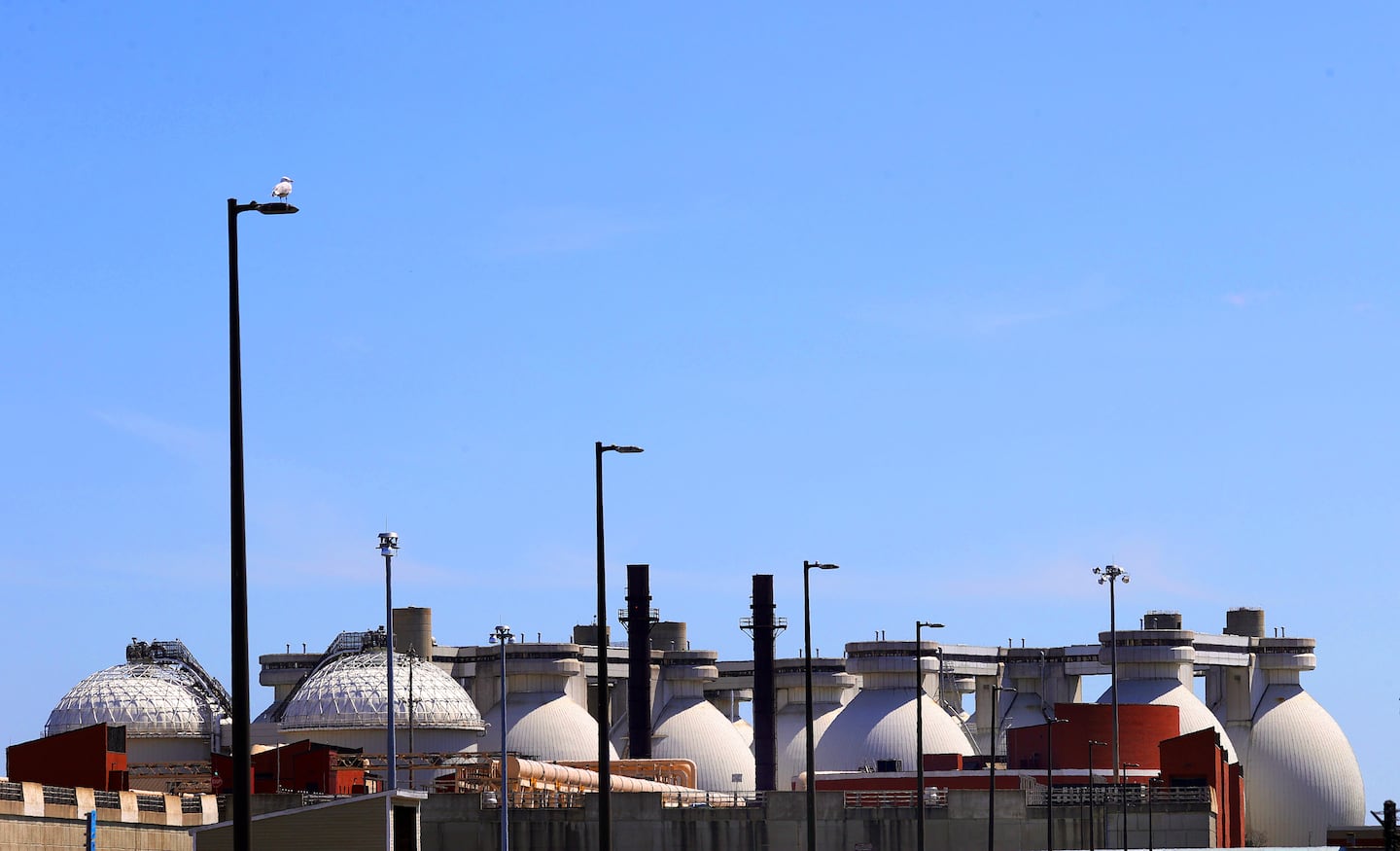
DEER ISLAND — If you did dishes last week in Somerville or Cambridge or Boston, I was standing with what you washed down your sink.
I had traveled to the massive wastewater treatment plant for most of Metro Boston to learn what happens, exactly, to everything we flush and put down the drain.
And when I arrived on this Boston Harbor island, I was shocked to find it didn’t stink; fresh sea air was the only scent on the breeze. That was the first of many surprises I encountered at the Deer Island Wastewater Treatment Plant. There was one marvel of modernity after another, a mind-bogglingly vast unseen system that cleans your crap and sends it out to sea, engineering and science front to back.
Or as Chad A. Whiting, the director of the plant and my knowledgeable tour guide, succinctly put it: “It’s all chemistry.”
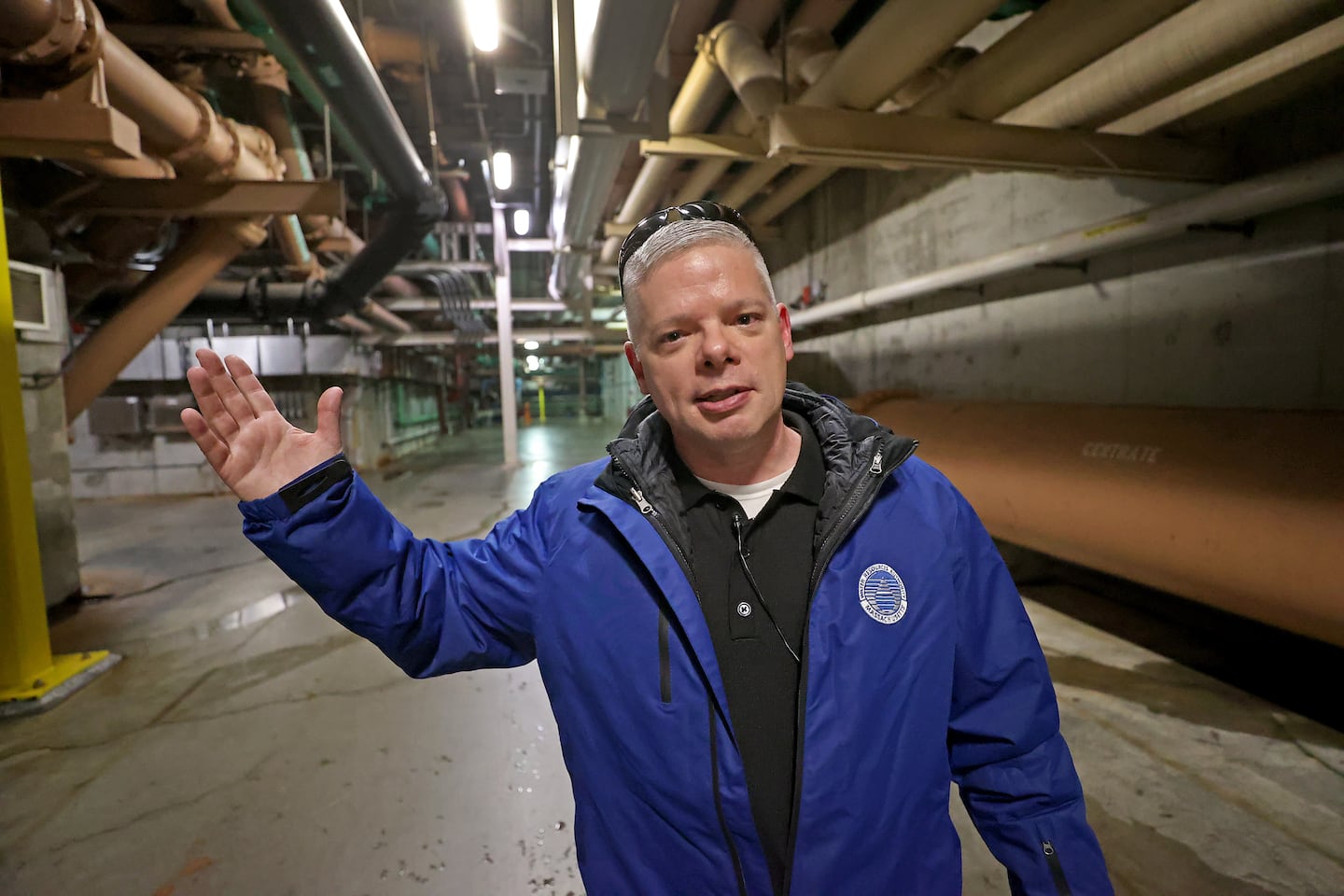 Chad Whiting, Deer Island’s director, gave a tour last week.David L. Ryan/Globe Staff
Say you live in an apartment in Somerville near Inman, flush the toilet, take a shower, and wash some dishes. The water goes down the drain through your place to city pipes and eventually flows into what’s called an interceptor, a massive conduit that’s owned by the same entity that runs Deer Island, the Massachusetts Water Resources Authority. In this case, what you put down the drain would enter that system by the Target in Somerville, and mix with sewage and stormwater from multiple municipalities. Then it would flow to a headworks in Chelsea to filter out the biggest junk, say a piece of timber, before being pumped to Deer Island. There, what more than 2 million people put down their pipes begins to be de-stinkified in earnest.
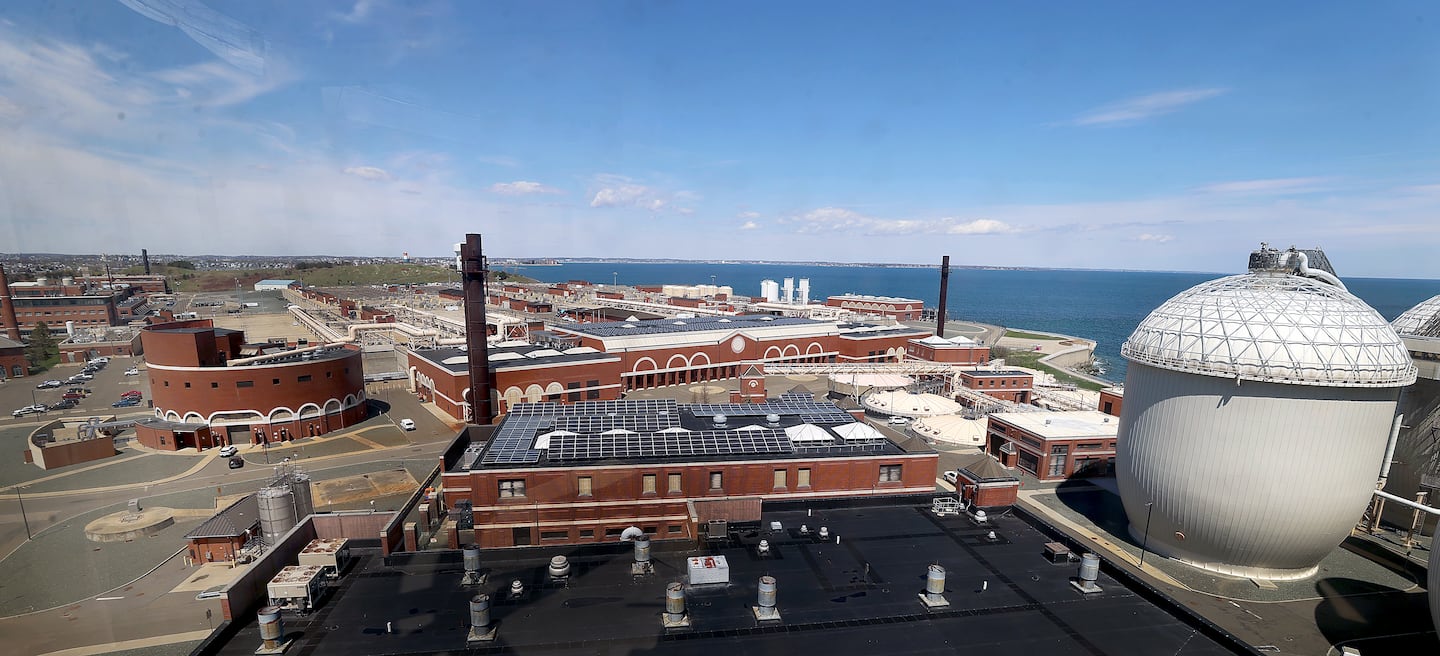 A partial view of Deer Island.David L. Ryan/Globe Staff
The process, at the highest level, separates liquids from solids. It starts with grit. Any sand-like material settles out and is sent to the landfill. We’re talking about 150 tons a month of this stuff.
Next, the wastewater goes to what’s called “primary treatment.” Heavy solids settle, and oil floats. The amount of stuff in the water is halved, Whiting said, from about 160 parts per million to about 80 parts per million.
The liquid now is on a fast track: it gets zapped with oxygen made at an onsite cryogenic facility (!), goes through another round of solids settling out, then gets chlorinated, dechlorinated, and sent to sea (more on that below). It’s on Deer Island for less than a day.
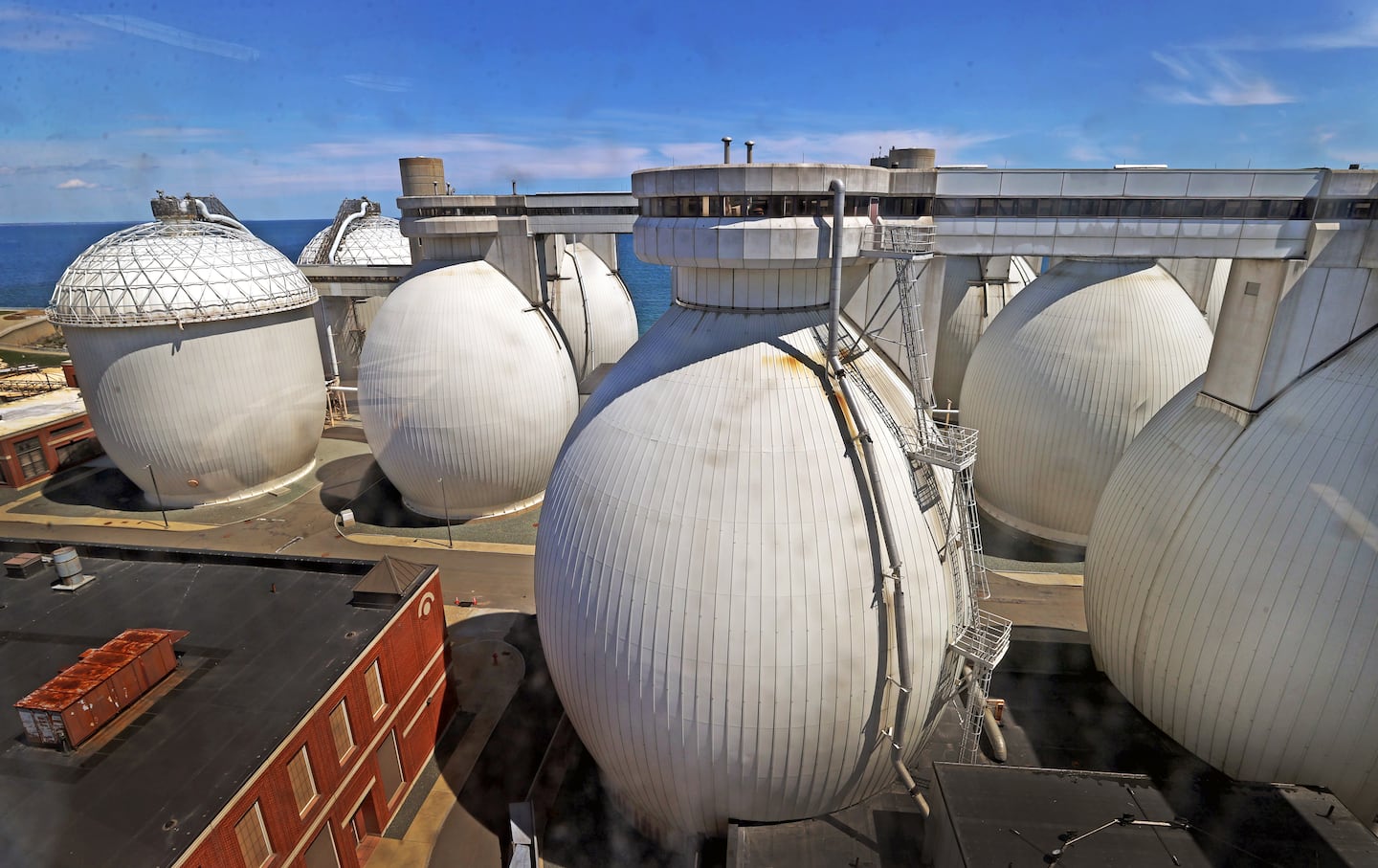
The solids have a longer stay. They sit for a while then are pumped into massive egg-shaped digesters, the ones so big you can see them from miles away.
 David L. Ryan/Globe Staff
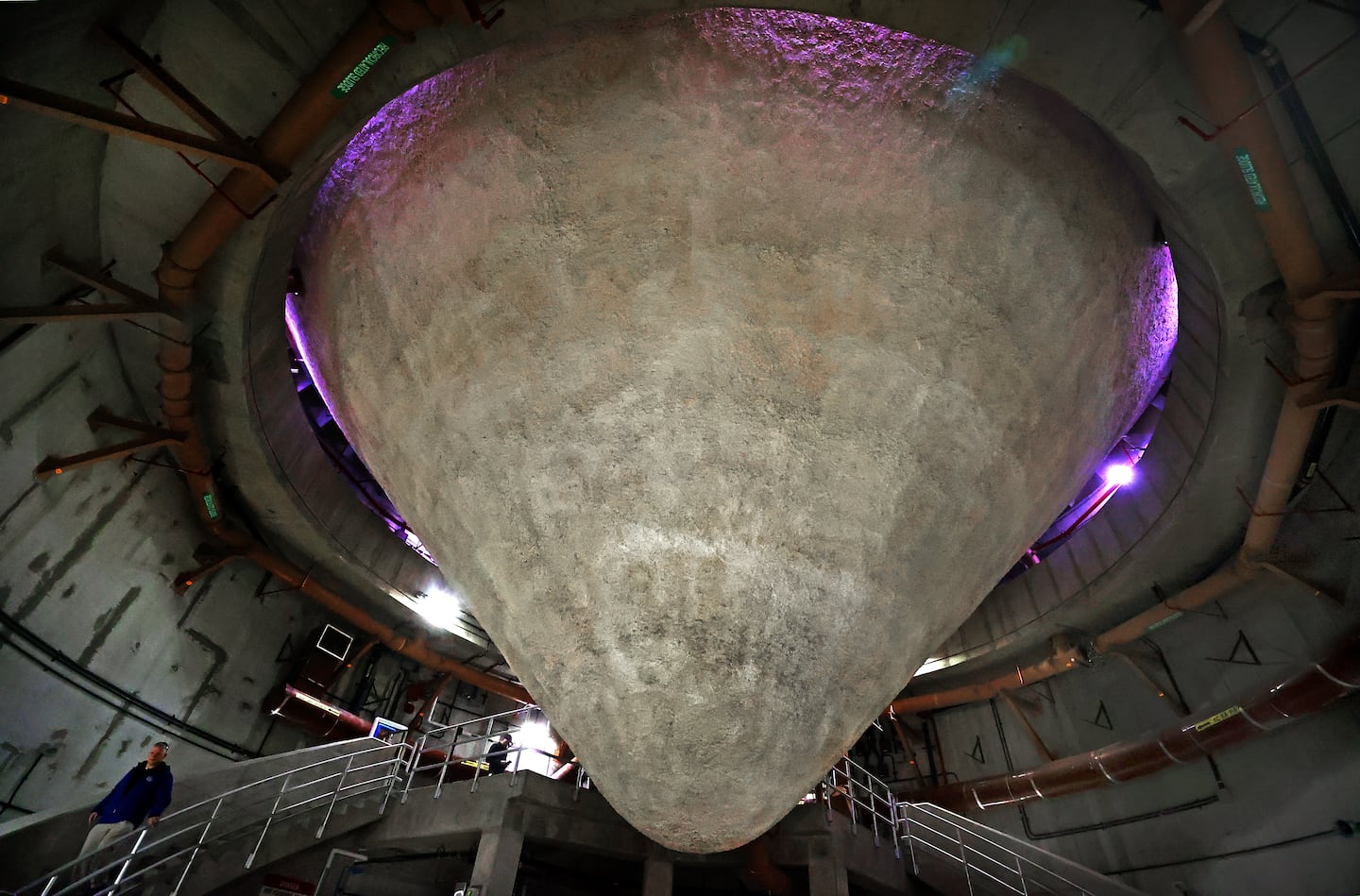 The gigantic digesters at Deer Island from the outside and the inside.David L. Ryan/Globe Staff
Sludge is kept there for two to three weeks at a balmy 98 degrees — yes, that’s about the temperature of a human body — and as it’s mixed and mixed, bacteria work their way through it. That process puts out lots of gas. So much that Deer Island uses it to run a thermal power plant that Whiting said saves the MWRA $26 million each year in energy costs.
After the sludge has finished its stay in those gigantic egg-shaped digesters, it heads to Quincy. There, at another big facility, it’s made into fertilizer pellets. The biosolids — yes, that’s the term of art — are subsequently sold all over the country. So what you flush in Somerville might eventually go to Pennsylvania or New York, be put on a golf course or in a landscaped highway median.
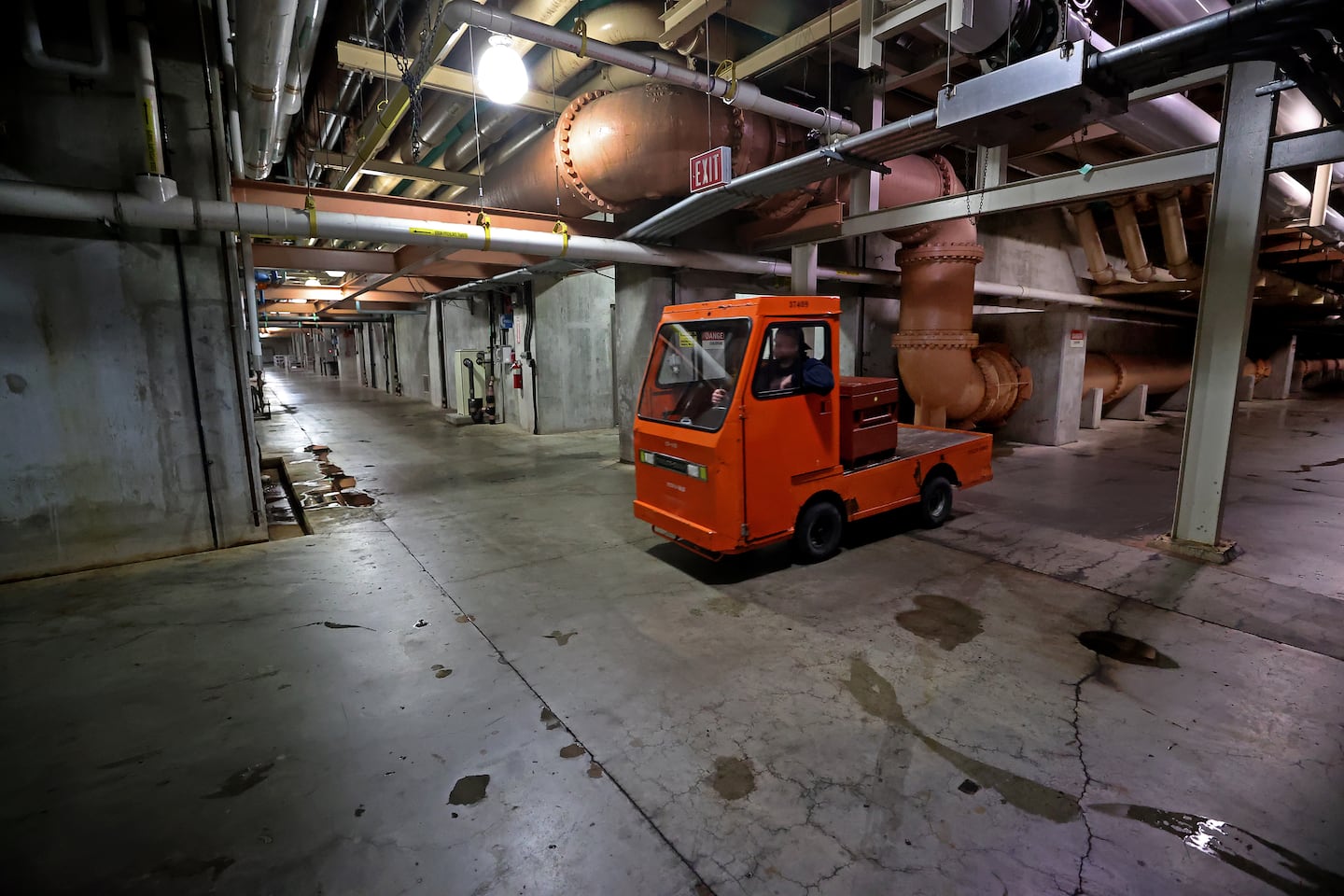
Walking around the long corridors of Deer Island, with their well-labeled pipes, high-functioning odor scrubbing system, and Austin Powers-like electric vehicles, I couldn’t help but feel I was witness to a bizarro world alchemy: sewage magically made inert and even useful.
 David L. Ryan/Globe Staff
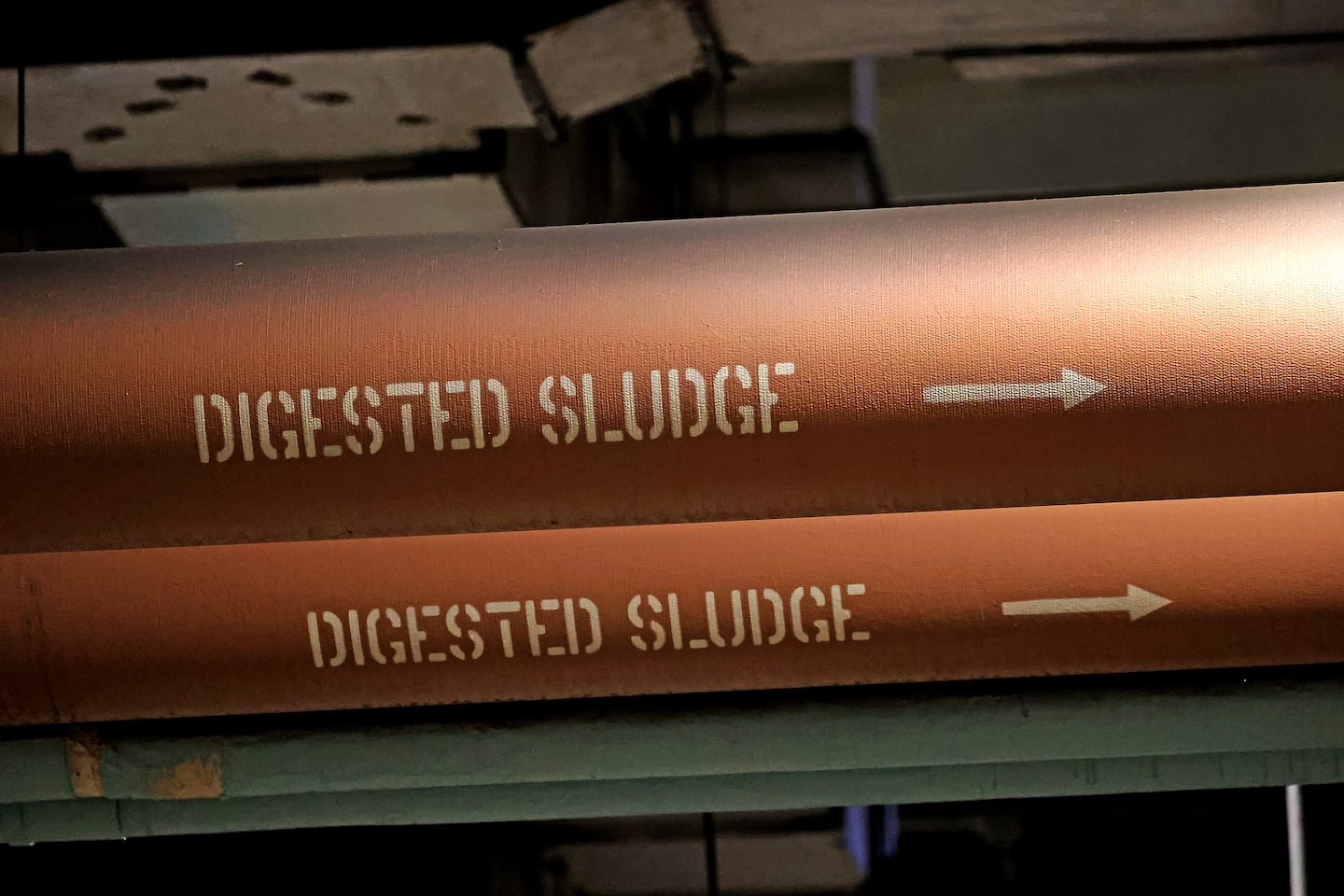 An electric vehicle in the bowels of Deer Island, above, and well-labeled pipes, below.David L. Ryan/Globe Staff
Less magic: What happens when it rains a lot. Beneath about 40 percent of Cambridge and about 90 percent of Somerville, the drain pipes and sewer pipes are commingled. When there’s a modest amount of rain going into storm drains, local and MWRA infrastructure can handle it just fine.
But rain doesn’t always come modestly and evenly. So sometimes, in some places, the system gets overwhelmed and can’t handle the volume of water. That can lead to a runoff/raw sewage mix being released directly into the wild, including, for example, spots along the Charles River and Alewife Brook. It’s gross.
Advocates laud the progress that has been made in recent decades, but say we should work to make sure all sewage goes to Deer Island, and none is ever put into waterways, even when there’s a big storm.
Officials from the MWRA, Cambridge, and Somerville told me they are together trying to balance competing priorities. One, they want to keep upgrading their very old underground infrastructure to further reduce the amount of sewage overflows. Two, they want to keep the more modern infrastructure in good order. And three, they don’t want to raise rates and taxes any more than absolutely necessary.
There’s a long planning process underway, but it seems like officials are moving toward a $1.3 billion sewer separation effort to have zero overflows in a typical kind of weather year by 2050, even as some sewage would be released in big storms.
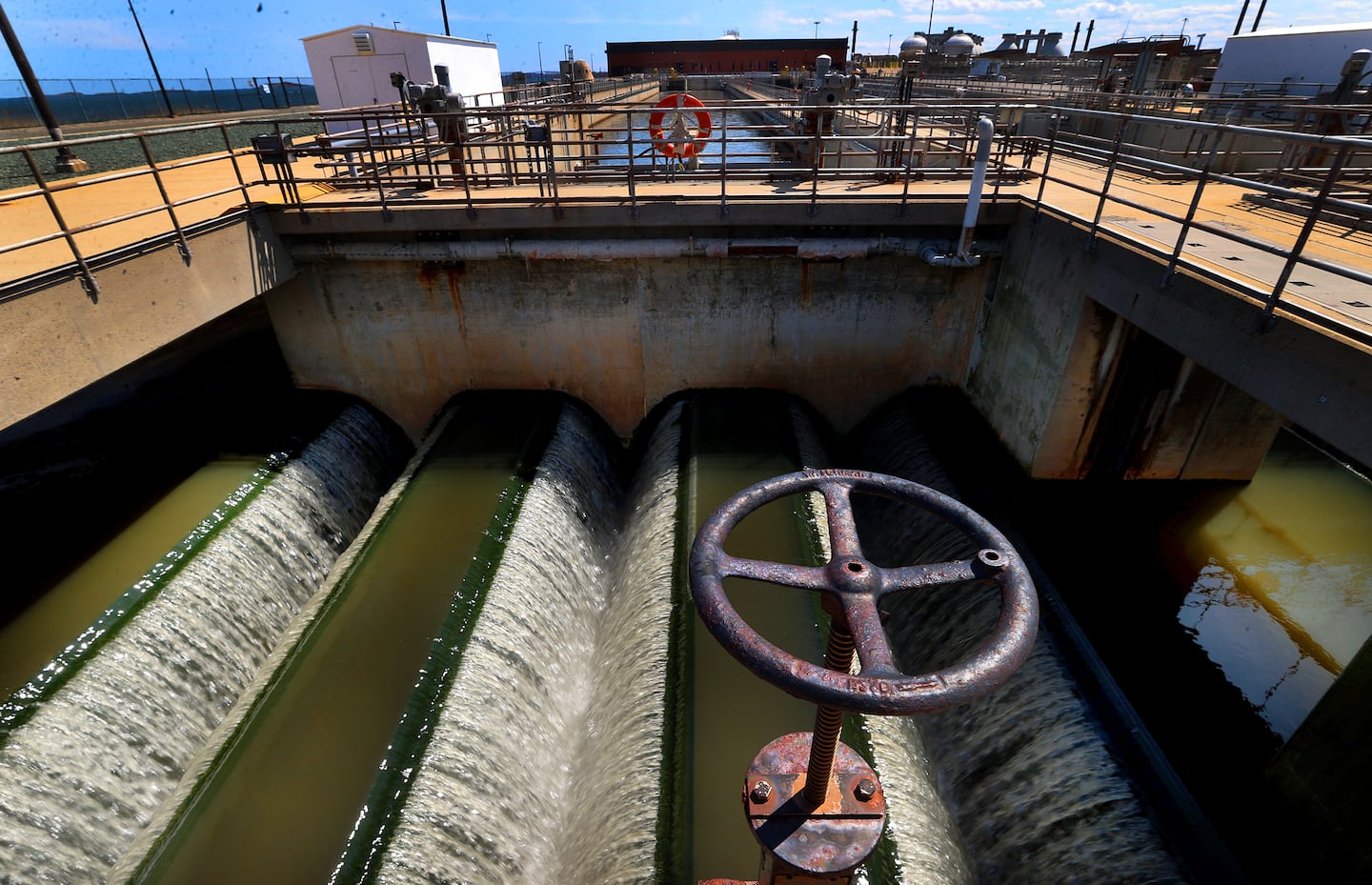 Sewage water that’s now pretty clean as it heads to a pipe that will take it more than nine miles out in Massachusetts Bay.David L. Ryan/Globe Staff
Back to Deer Island, Whiting drove me to the last spot where you can see the been-through-the-plant-and-now-much-cleaner sewage water before its sent to sea. It travels through a 9½-mile pipe (not a typo) drilled in the bedrock beneath the ocean, where it is eventually diffused into the deep waters of Massachusetts Bay (see the graphic below).
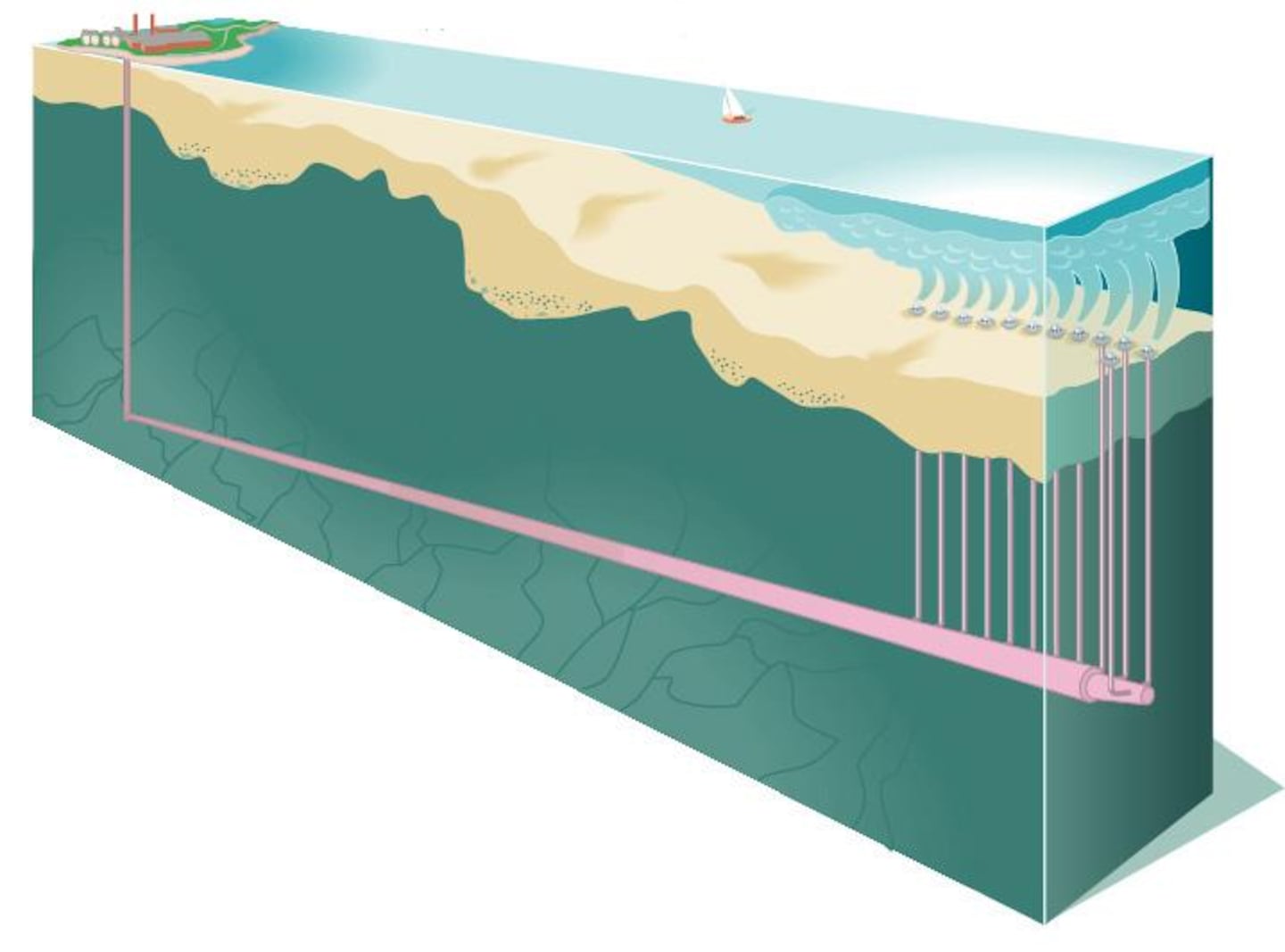 MWRA
MWRA
Whiting talked about the huge progress that’s been made since the 1980s when so much raw sewage was dumped into the water. In his matter-of-fact kind of way, he explained how Deer Island has helped turn Boston Harbor from a stinky horror to a salt-breezed gem; how his team keeps this most essential service running 24/7/365, out of sight, out of mind, and out of nose for most.
“A lot of people,” Whiting said, “don’t realize what happens when they flush their toilet or take a shower.”
Now you do.

Joshua Miller
Cambridge/Somerville Editor
P.S. Camberville reporter Spencer Buell and I are hosting Cambridge- and Somerville-themed pub trivia on Monday at 8 p.m. at Aeronaut Brewing Co. in Somerville. We’d love to see you there!
Joshua Miller can be reached at joshua.miller@globe.com.