
As Santa Clara County grapples with a $787 million dollar deficit, its healthcare system is likely to feel the brunt of a proposal that calls for slashing 464 positions countywide.
Even as the county fights to preserve services amid ongoing fiscal struggles, the budget cuts could lead to closures in behavioral health clinics and potential delays to some healthcare.
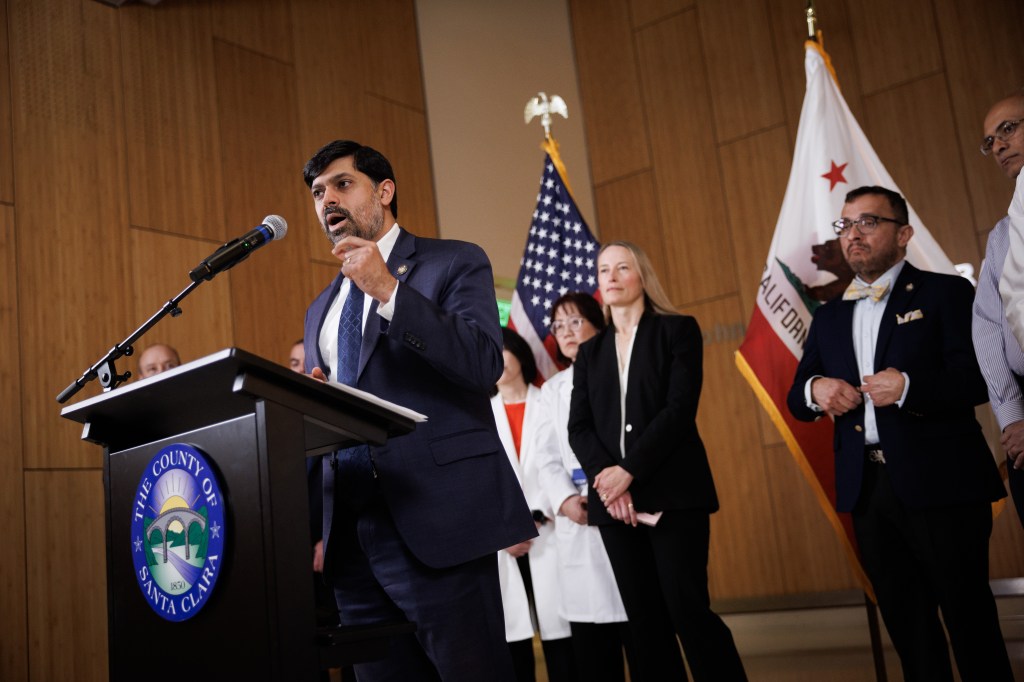
“This has been one of the most challenging county budgets in decades,” said Executive James Williams at a press conference Friday announcing his recommended $14.7 billion budget for the Santa Clara County Board of Supervisors. “This budget is not business as usual. It is a direct response to this moment of crisis, with one clear goal, to strengthen the safety net and protect the essential services that our families depend on.”
Since last year, the county has wrestled with a looming budget shortfall after the Trump administration’s landmark spending bill made massive cuts to Medicaid — the public program that provides health insurance to low-income and disabled individuals and is known as Medi-Cal in California.
To address its funding shortfall, the county is proposing eliminating hundreds of positions and adopting a series of measures that the county asserts will reduce costs and improve efficiency. The county would cut 655 positions while adding 191 new roles, leading to an overall loss of 464 positions. According to county officials, over half of these positions are vacant.
While the losses would be spread across multiple departments including from public safety and county administrative positions, the county health system, and in particular Behavioral Health Services, is expected to experience the most profound effects of the cuts to budget and staffing.
The county operates the second largest public hospital system in the state, Santa Clara Valley Healthcare, which runs four hospitals and 15 clinics across the county and relies heavily on revenues from the public insurance program. The Medicaid cuts would take a billion dollars in revenue from the system, a quarter of the hospital system’s operating budget. As part of California law, the county is mandated to ensure that those without insurance can receive care.
Even before the cuts to federal funding, the county faced a deficit as labor costs rose and revenue shrunk.
To stymie that financial bleeding, the county proposed Measure A, a tax measure approved by voters last November. Then, in February, the county slashed 365 mostly vacant positions, largely in the healthcare system. Even so, the county was left with hundreds of millions in shortfall.
The proposed budget allocates all the estimated $337 million in revenue from the tax measure to the healthcare system, despite a series of rhetorical salvos from county District Attorney Jeff Rosen asking to use the Measure A funds for public safety. Measure A, while billed as a tax to help save the county’s healthcare services, can be legally used for any purpose by the county. Under the proposal, the District Attorney’s office is facing cuts to 39 positions, about half of which are vacant.
The proposed cuts to the healthcare system would preserve “life-saving” and emergency care, according to Sanjay Kurani, hospital medical director for Santa Clara Valley Medical Center, but could result in delays to non-emergency services.
 Santa Clara Valley Medical Center Medical Director Sanjay Kurani, right, speaks during an interview following a news conference by Santa Clara County Executive James Williams on the proposed county budget Friday, May 1, 2026, at the hospital in San Jose, Calif. (Dai Sugano/Bay Area News Group)
“We are going to continue doing all the life-saving care we can do. We’re going to make sure we can do it as quickly as possible – that’s our job,” said Kurani in an interview, lauding the county’s efforts to preserve as much medical service as it could. But he admitted that potential delays in other care could trigger more emergency room visits down the line, creating a “cycle” that could eventually overwhelm emergency departments. Currently, the public hospital system already handles nearly half of the emergency room visits in the county.
Behavioral Health Services, which helps serve those with mental illness or substance use disorder in the county, could lose two clinics and 110 positions under the proposed cuts — 91 of those positions are filled. The services from the clinics, would be moved to other locations, according to Williams, and even with the cuts, the county plans to open a new behavioral health pavilion late this summer to treat youth with psychiatric issues.
Despite the deep cuts to spending, the county is already forecasting a $500 million deficit for the upcoming fiscal year beginning in July 2027, as cuts from the Trump administration’s spending bill continue to go into effect.
The county has begun advocating for the state to help fight back the compounding losses and provide funding to ensure that deeper cuts would not be needed in the future. However, the state is facing its own fiscal challenges and has signaled that it doesn’t have the funds to fully backfill the lost Medicaid revenues for counties.
“We need the state to be a strong partner in this moment,” said Williams. “Without partnership with the state, the fiscal challenges ahead will only deepen.”
The county will hold a series of public workshops and hearings on the budget throughout May and June before the Board of Supervisors approves a final budget in June.