
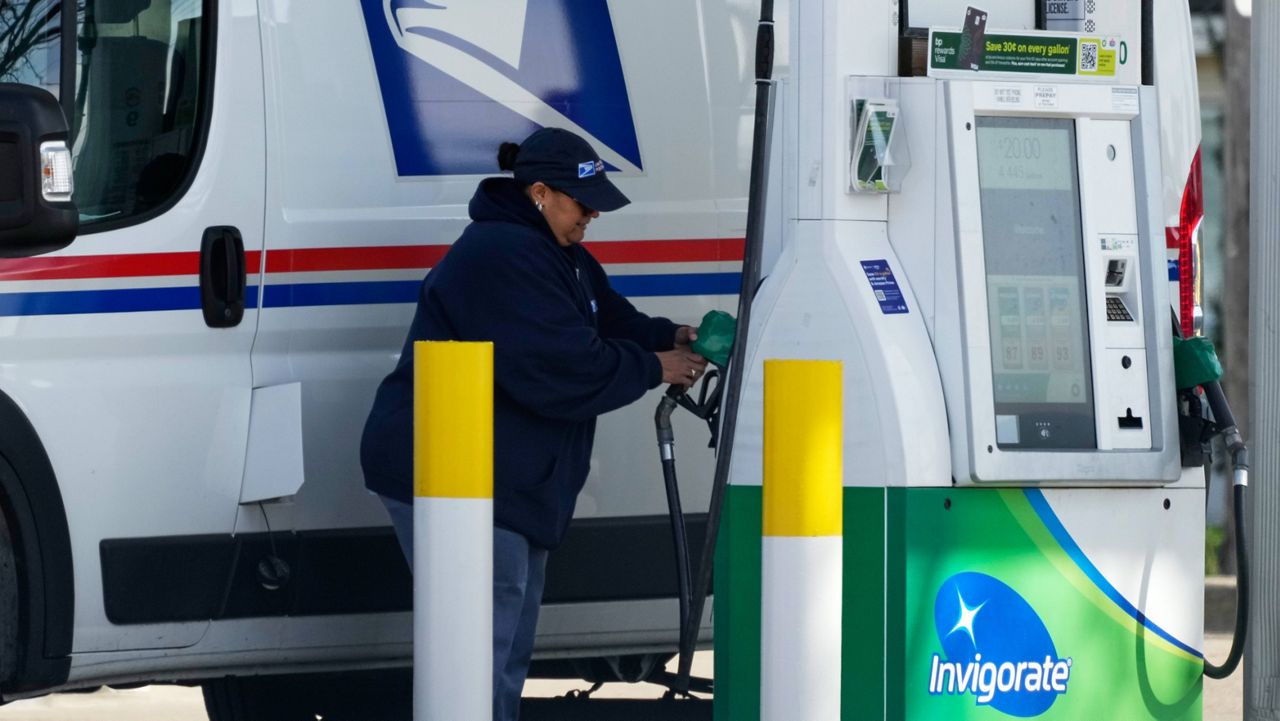
Gas prices are likely to continue their bumpy ride amid ongoing conflict over the Strait of Hormuz, experts say. Despite President Donald Trump’s announcement that the United States will guide ships through the Iran-controlled waterway that has effectively been closed for more than nine weeks, oil prices jumped early Monday on conflicting reports of an Iranian strike on a U.S. Navy vessel.
What You Need To Know
Gas prices are likely to continue their bumpy ride amid ongoing conflict over the Strait of Hormuz
According to AAA, the national average for a gallon of gasoline on Monday is $4.46 — 35 cents higher than a week ago
Despite President Donald Trump’s announcement that the United States will guide ships through the Iranian-controlled waterway that has been effectively closed for more than nine weeks, oil prices jumped early Monday on conflicting reports of an Iranian strike on a U.S. Navy vessel
“The outlook remains highly fluid, and while some localized relief may emerge, broader price volatility is likely to persist in the near term,” GasBuddy.com head of petroleum analysis Patrick De Haan wrote in his Fuel Insights newsletter Monday morning
“The outlook remains highly fluid, and while some localized relief may emerge, broader price volatility is likely to persist in the near term,” Patrick De Haan, GasBuddy’s head of petroleum analysis, wrote in his Fuel Insights newsletter Monday morning.
Gas prices rose in every state over the past week, with Indiana, Ohio, Michigan and Illinois seeing spikes of at least 49 cents, partially due to refinery outages, De Haan said.
According to AAA, the national average for a gallon of regular gasoline on Monday is $4.46 — 35 cents higher than a week ago.
De Haan said oil markets are factoring in several new developments, including OPEC+ announcing Sunday that it will increase production in June, and the U.S. military saying Monday that two American-flagged ships had successfully traveled the strait as part of a new initiative called Project Freedom.
On Monday, Iranian news agencies — including the semiofficial agency Fars and the Iranian Labour News Agency — claimed Iran had struck a U.S. Navy vessel southeast of the strait, accusing it of “violating maritime security and navigation norms.”
Oil prices initially jumped 5% on the news and is now trading between 2% to 3% higher after the U.S. military denied the attack.
“The breakdown in U.S.-Iran negotiations, combined with continued restrictions on Iranian exports and heightened concerns around key shipping routes, has driven a renewed buildup in risk premiums,” De Haan wrote. “What began as cautious optimism around diplomacy quickly faded, replaced by growing skepticism that a near-term resolution is achievable.”
He added that upward price pressure is likely to continue as diplomatic efforts appear to be faltering.
The Associated Press contributed to this report.