
It’s a stat that speaks volumes about the sea change happening across the NHL right now.
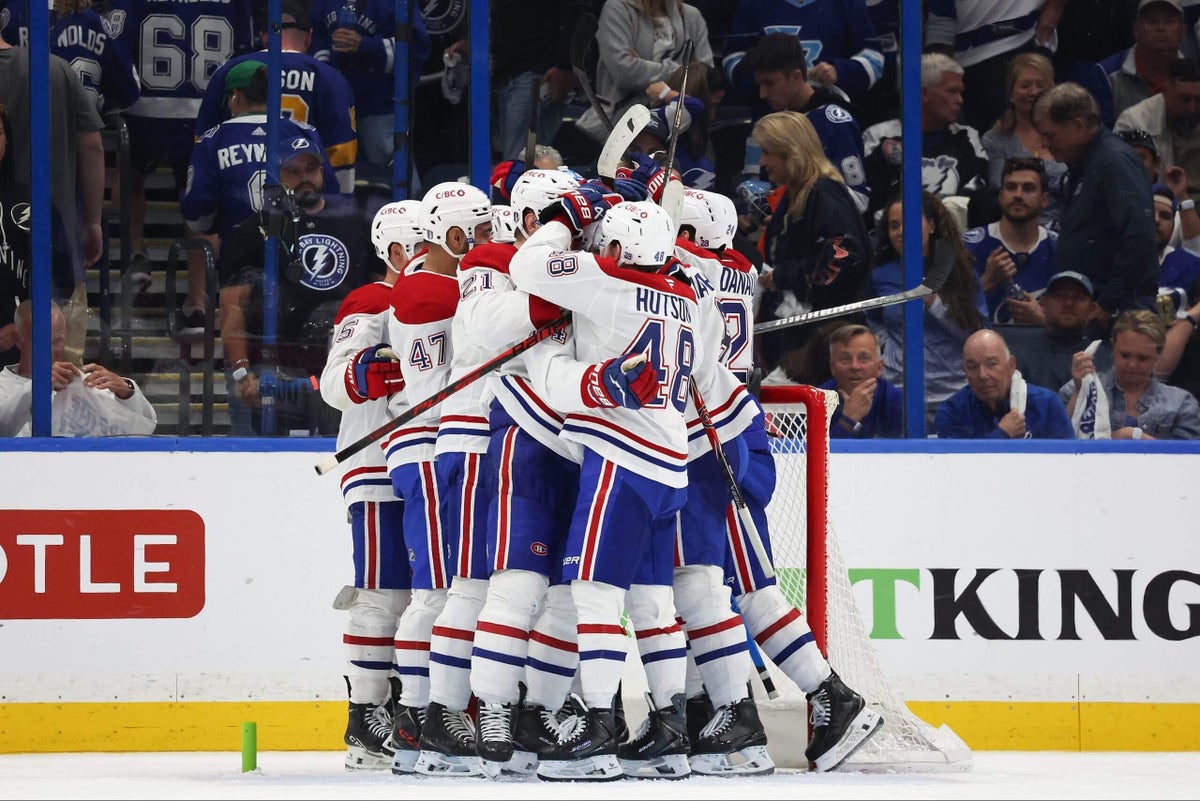
Four of the five youngest teams in the league at the start of the 2025-26 season are all into the second round of the playoffs, with the Montreal Canadiens joining the Buffalo Sabres (who they’ll face in the Atlantic Division final starting on Wednesday in Game 1), Philadelphia Flyers and Anaheim Ducks as the faces of a new generation in Round 2.
In all, there are 17 skaters who are 22 years old or younger in the NHL’s final eight, most of whom are concentrated on these four teams, with four apiece on the Canadiens, Flyers and Ducks, and two on the Sabres. It’s a group that includes some of the postseason’s leading scorers (Leo Carlsson and Cutter Gauthier in Anaheim) and top defensemen (Lane Hutson in Montreal).
What’s just as interesting is who’s not here in Round 2.
Three of the four teams with the most playoff wins over the past decade are gone, with the Florida Panthers missing the playoffs and the Tampa Bay Lightning and Dallas Stars both eliminated in Round 1. Gone, too, are many other postseason mainstays and Cup winners of this era: the Edmonton Oilers (at the hands of the Ducks), Boston Bruins (eliminated by the Sabres), St. Louis Blues and Washington Capitals (both missed the playoffs altogether).
In fact, of the franchises that have won a Stanley Cup over the past 18 years, only the Colorado Avalanche and Vegas Golden Knights are still left standing, meaning we have a high likelihood of a new champion. And the only other team that’s been consistently in the contender conversation in recent years that’s still alive is the Carolina Hurricanes, who are being led by their youngest talents (Logan Stankoven, 23, and Jackson Blake, 22).
In many ways, what’s happening is a continuation of what was a fascinating regular season in 2025-26, a campaign characterized by the fact that several unexpected teams made a big leap up the standings. Part of the explanation for that shift goes back to what’s been happening in the NHL since the pandemic-induced flat-cap years, when established contenders all locked in their top talent with max-term deals and free agency dried up almost entirely amidst the hoarding.
It was a strategy that worked for years, with teams such as the Panthers, Lightning, Golden Knights, Stars and Bruins seemingly having a stranglehold on division titles and going deep every spring thanks to having their superstars committed long term. What seems to have changed of late is that those teams’ cores have begun to age, with injuries to key veterans (Aleksander Barkov, Tyler Seguin, Victor Hedman, among others) and all of those long playoff runs adding up. Plus, some key players aged out of the league entirely (Patrice Bergeron in Boston comes to mind).
On the flip side, some of the franchises that entered rebuilds five, 10 or even 12 years ago (in the case of the long-exiled Sabres) have finally had those tough seasons at the bottom of the table begin to bear fruit. But, in some cases, their rises have been meteoric.
Montreal, for example, finished dead last in 2021-22 and in 28th place the next two seasons after that. Anaheim was the worst team in the NHL three years ago and third-last a year later. Just last season, Buffalo and Philadelphia failed to hit the 80-point mark, finishing firmly in draft lottery territory. Of those four clubs, only the Canadiens have had a sniff of the playoffs the past five seasons, as their front offices trusted what had often been a painful process of trying to climb back up the standings.
None of them, to my eye, looks like a flash in the pan, either. In fact, they’re all likely still on the way up, set to become the new challengers for division titles in the Atlantic, Metro and Pacific as the old guard fades out. You can’t help but watch a kid like 19-year-old Porter Martone come in and make an impact immediately for the Flyers and have it feel like the start of a journey for a franchise that had won just one playoff series in the past dozen years.
You wonder, too, if more of these challengers are coming, after the leap up the standings the Utah Mammoth and San Jose Sharks took during the season. Can they also start to do damage against the established contenders as soon as next season and will that mean an even more youthful group of playoff clubs a year from now?
You also wonder what it means for the larger conversation around how to build a winner in this league. When you talked to executives around the NHL the past few years, there’s been a lot of fear building over whether the type of tear-it-down rebuilds that were the norm early in the salary cap era were still worth it. Massively long playoff droughts, ugly seasons and executive firings in big hockey markets like Buffalo, Detroit and Chicago have been painful, not only in those cities but also for the league as a whole, and they became cautionary tales.
There’s been a lot more shine put on teams that have done the one- or two-year retools of late — like the Capitals last season and the Bruins this year — likely in part because executives running struggling organizations want to believe it can be done in a shorter, less arduous timeline than trying to build around teenagers through the draft. But I wonder if that begins to change as some of these upstart clubs have more success — and as new cautionary tales emerge around (a) locking in all your greybeards on seven-year deals or (b) using half measures to try and climb the standings faster than is prudent.
After all, some of these much-lauded retools appear to be a path to mediocrity, with a team that can maybe nab a wild-card spot but struggles to truly contend. And some of these build-through-the-draft teams have shown you can sometimes turn things around faster than you think, and that when you do, you may have a higher ceiling, given you’ve been collecting Carlssons and Juraj Slafkovskýs at the top of the pick pile. (Not to mention the headlines Macklin Celebrini made in becoming a Hart Trophy candidate at just 19 years old.)
With the death of free agency looking very real right now, one of the biggest stories in the NHL going forward is going to be about how teams continue to find and keep elite talent, and just how vital that very high-end player is to winning championships.
Because even the most well-run franchise is going to be challenged to win year after year beyond a six- or seven-year window, especially as they trade picks and young players in order to chase a Cup. We’re seeing some of that across the playoffs so far, where only a few familiar contenders are still in the mix, and some green newcomers are making them sweat about how secure their spot is in that group long term.
It’s all pretty interesting. And it feels good for the league, too.