
OAKLAND – Making splashy moves earns headlines. So do harsh changes. Turnover engenders heated debates. Creates buzz. Accelerates interest.
In sports, the idea of remaking the roster is often enticing.
It’s evident in the sports radio and online discussions about offseason power rankings or preseason predictions.
The Valkyries, on the surface, have decided to go against this conventional grain as they enter their second year of existence in the WNBA.
In a league where the top teams have pulled off blockbuster signings and trades, the Valkyries are betting on “connectivity” as a path to success after making the postseason last year.
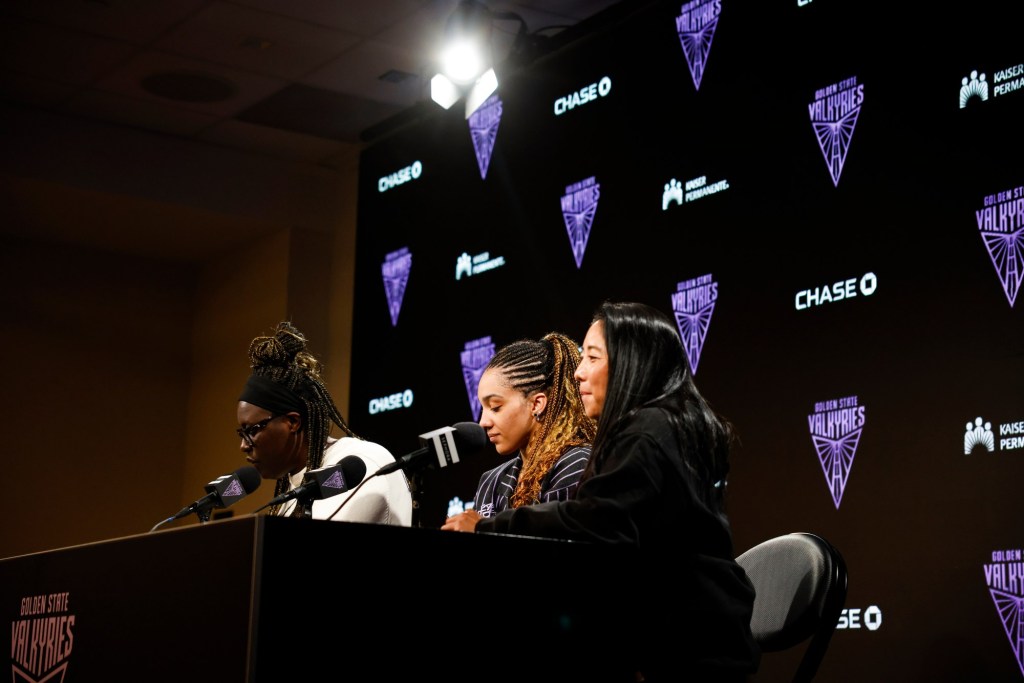
While giving carefully-worded answers to questions about the team’s decision to waive second-round pick Marta Suarez after a controversial draft day trade, general manager Ohemaa Nyanin had to use a version of the team’s favorite buzzword at least once during her media day interview Tuesday in Oakland.
“Having won games last season, one thing that we identified (was) that our athletes were connected,” Nyanin said. “They were competitive. They wanted to buy into the system, and they wanted to excel, and so it’s very important for us, especially going into Year 2.”
Coach Natalie Nakase is all-in on the concept, too.
During every press conference or availability since training camp began, she has raved about how “connected” her team is. The reason certain players deep in the rotation either stay on the roster or are cut? How well they’re “connected” to their teammates.
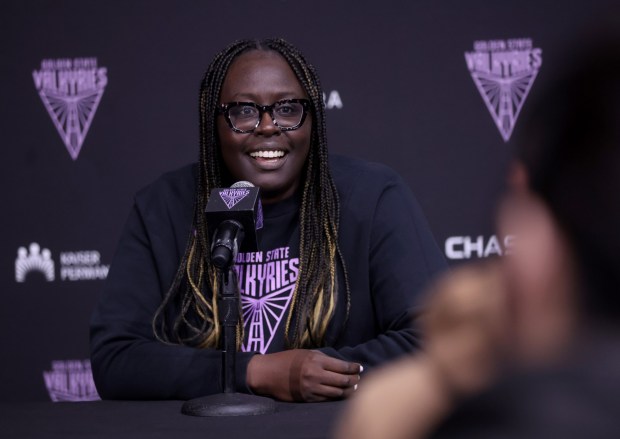 General manager Ohemaa Nyanin is prioritizing continuity over flashy moves (Jane Tyska/Bay Area News Group)
Strip away the corporate slogans and marketing-speak for a minute, though, and you’ll see what the Valkyries’ real gambit is.
As other contenders loaded up, last year’s surprise team has gone all-in on running it back. Yes, they even have a buzzword for that too: Continuity.
“We really took on this, like, well, what is the most important thing to take from the year before?” Nakase asked during a previous press conference. “And we’ve used the word continuity. It’s huge.”
The rationale is somewhat understandable.
Led by 2025 WNBA Most Improved Player Veronica Burton and surprise All-Star Kayla Thornton (for half a season), the Valkyries overcame constant roster turnover to become the first expansion team in WNBA history to make the postseason.
The thought process, at least according to the brain trust of Nyanin and Nakase, is that having another year in the system will work wonders for role players like Iliana Rupert, Janelle Salaun and Ceci Zandalisini.
And it’s not like they stood pat completely in the offseason, signing all-defense mainstay Gabby Willliams and veteran center Kiah Stokes in free agency.
But make no mistake, the Valkyries love the familiar faces on their roster, for better or worse.
Success will hinge upon the same cast of characters making leaps on the offensive side of the ball, where the Valkyries ranked near the bottom of the league last season in both points per game and offensive rating.
Does such a unit deserve that level of faith, especially for an organization that does not shy away from owner Joe Lacob’s expectation that it will win a title within its first five seasons?
After all, the Valkyries barely earned the No. 8 seed last season.
Even the Warriors looked to improve after going 73-9 in 2016 and blowing a 3-1 lead in the NBA Finals.
A squad that was a minute away from cementing itself as the best team of all time did not bank on “connection” between its role players. The Warriors signed Kevin Durant and left no doubt who would win the next season’s title.
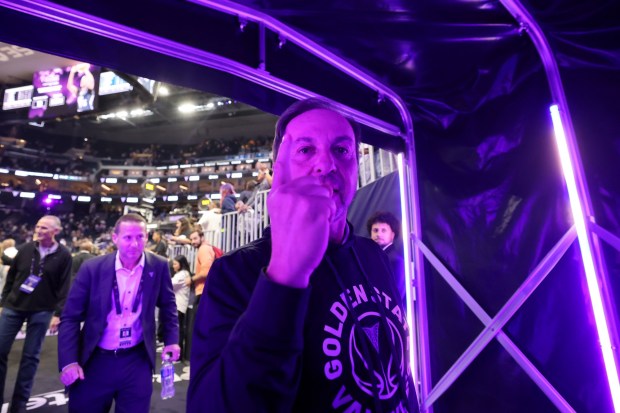 Valkyries owner Joe Lacob wants the team to win a title within the next four years (Ray Chavez/Bay Area News Group)
Obviously, the Valkyries were not in position to be that kind of destination for a megastar. But it does go to show that, in most situations, adding talent is preferable to leaning into the familiar.
Even for good teams.
The defending champion Las Vegas Aces signed the mercurial Chennedy Carter. The star-studded New York Liberty brought in All-League talent Satou Sabally. The Atlanta Dream made a blockbuster trade for unstoppable rebounder Angel Reese.
The signs are there that even the Valkyries are not all-in on “continuity” and “connectivity.”
When rationalizing their offseason moves, Nyanin emphasized the team’s desire to maintain cap space with an eye to keeping flexibility.
Trading the No. 8 pick, which would’ve come with a guaranteed contract, may have been a necessary move.
“The decision-making around the draft had a lot to do with cap flexibility, and we thought we had the opportunity to sign another athlete,” Nyanin said.
Yes, another buzzword-filled explanation, but in this case, it was easy to read between the lines. The Valkyries thought they would be able to entice another star to the Bay Area but ultimately came up short.
Viewed through this altered lens, their obsession with continuity sounds a lot more like coping.
And hey, sometimes No. 2 options work out. Maybe Burton takes another jump into the upper echelon of WNBA stars. Perhaps Salaun can go from nifty scorer to a true No. 1 bucket-getter.
Maybe one of the other unheralded role players will reach another tier while led by arguably the league’s top coach in Nakase.
If that happens, the Valkyries’ plan will end up looking brilliant.
But, for now, it just sounds like buzzwords.
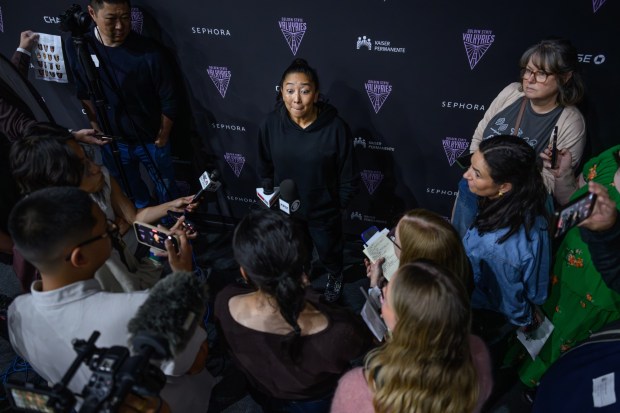 Golden State Valkyries head coach Natalie Nakase answers questions from the media during the team’s first day of training camp at the Sephora Performance Center in Oakland, Calif., on Sunday, April 19, 2026. (Jose Carlos Fajardo/Bay Area News Group)