
Make better investment decisions with Simply Wall St’s easy, visual tools that give you a competitive edge.
Chevron (NYSE:CVX) is facing higher supply disruption risk after a partial closure of the Strait of Hormuz linked to rising US Iran tensions.
CEO Mike Wirth has warned that global oil markets could see shortages comparable to the 1970s oil crises.
The company is starting hydrocarbon exploration south of Malta, expanding its footprint in the Mediterranean as trade flows adjust.
For investors tracking NYSE:CVX, the stock trades at $192.64 with a return of 23.6% year to date and 48.5% over the past year. These moves come as Chevron balances higher geopolitical exposure in the Middle East with new exploration activity in the Mediterranean.
The Strait of Hormuz disruption and Malta exploration campaign may influence how you think about Chevron’s risk mix and project pipeline. Upcoming management commentary, capital allocation decisions and any updates on shipping routes or drilling progress may be important triggers for reassessing the stock’s resilience and earnings sensitivity to supply shocks.
Stay updated on the most important news stories for Chevron by adding it to your watchlist or portfolio. Alternatively, explore our Community to discover new perspectives on Chevron.
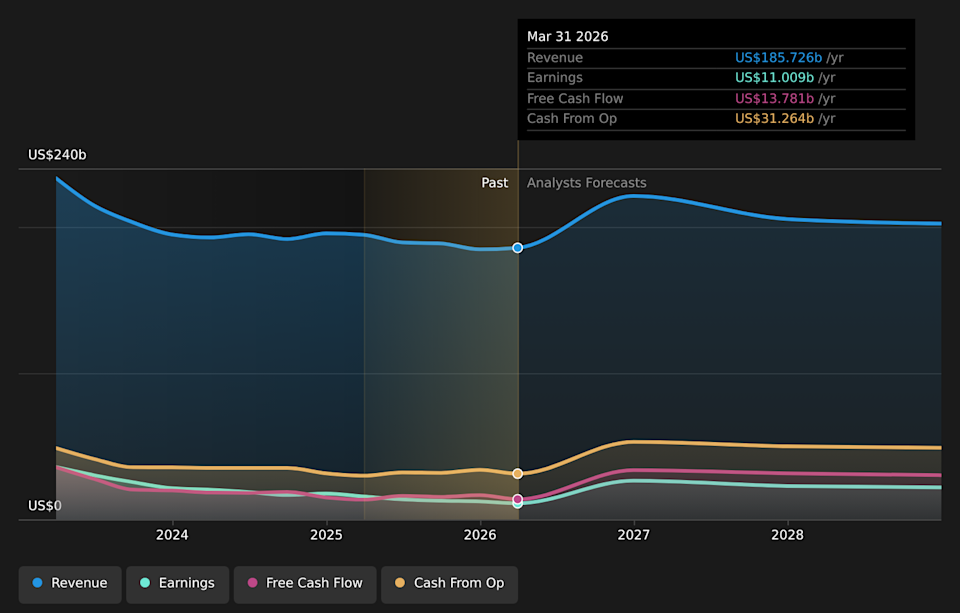 NYSE:CVX Earnings & Revenue Growth as at May 2026
Chevron’s latest news sits at the intersection of dividend reliability and rising geopolitical risk. The board has affirmed a quarterly dividend of US$1.78 per share, even as management deals with partial closure of the Strait of Hormuz and leans into new exploration south of Malta. On one hand, first quarter 2026 results show revenue of US$48.61b and net income of US$2.21b, plus higher net oil-equivalent production of 3,858 MBOED compared with 3,353 MBOED a year earlier. On the other hand, reported profit is lower than last year and Chevron is contending with supply disruptions and timing effects on hedges. For you as an income-focused investor, the key takeaway is that the company continues to prioritize cash returns, including dividends and a sizeable buyback, even while CEO Mike Wirth highlights supply shocks that could resemble the 1970s oil crises. That combination of higher operational risk, ongoing exploration spend and an affirmed dividend puts the spotlight on how resilient future cash flows really are if geopolitical tensions persist.
How This Fits Into The Chevron Narrative
The affirmed US$1.78 dividend and continued buybacks align with the narrative that Chevron is built to convert volatile commodity cycles into steady cash returns, supported by its integrated model and low-cost assets.
Wirth’s warning about physical shortages around the Strait of Hormuz tests the assumption that Chevron can rely on stable supply chains while pursuing long term production growth, especially as large projects and acquisitions increase operational complexity.
The early stage exploration south of Malta, and the specific risk of disruption in a key shipping chokepoint, are not fully captured in high level earnings and revenue assumptions that focus mainly on aggregate growth and margins.
Knowing what a company is worth starts with understanding its story. Check out one of the top narratives in the Simply Wall St Community for Chevron to help decide what it’s worth to you.
The Risks and Rewards Investors Should Consider
⚠️ The dividend yield of about 3.7% is flagged as not well covered by earnings or free cash flow, which can become more of a concern if supply disruptions or timing charges further pressure profitability.
⚠️ Analysts highlight 2 key risks overall, including execution risk on large international projects and exposure to regulatory and ESG pressures that could affect long term returns.
🎁 Earnings are expected by analysts to grow at around 10.56% per year, which, if realized, could support ongoing dividends and buybacks despite short term volatility in reported profit.
🎁 Chevron is assessed as trading materially below an internal fair value estimate, suggesting some cushion if geopolitical shocks or Hormuz-related disruptions create earnings swings versus peers like Exxon Mobil and BP.
What To Watch Going Forward
From here, focus on how Chevron’s cash generation tracks against its dividend and buyback commitments, especially if Hormuz-related disruptions persist or spread to other routes. Updates on Mediterranean exploration south of Malta, and how those prospects fit with existing projects in regions such as Guyana or the Permian, will help you judge whether the company is adding resilient future barrels or simply taking on more geopolitical exposure. Keep an eye on management commentary in upcoming quarters about supply security, capital spending and any tweaks to shareholder return targets, as those signals will show how comfortable the board really is with maintaining the current dividend profile in a higher risk setting.
To ensure you’re always in the loop on how the latest news impacts the investment narrative for Chevron, head to the community page for Chevron to never miss an update on the top community narratives.
This article by Simply Wall St is general in nature. We provide commentary based on historical data and analyst forecasts only using an unbiased methodology and our articles are not intended to be financial advice. It does not constitute a recommendation to buy or sell any stock, and does not take account of your objectives, or your financial situation. We aim to bring you long-term focused analysis driven by fundamental data. Note that our analysis may not factor in the latest price-sensitive company announcements or qualitative material. Simply Wall St has no position in any stocks mentioned.
Companies discussed in this article include CVX.
Have feedback on this article? Concerned about the content? Get in touch with us directly. Alternatively, email editorial-team@simplywallst.com