
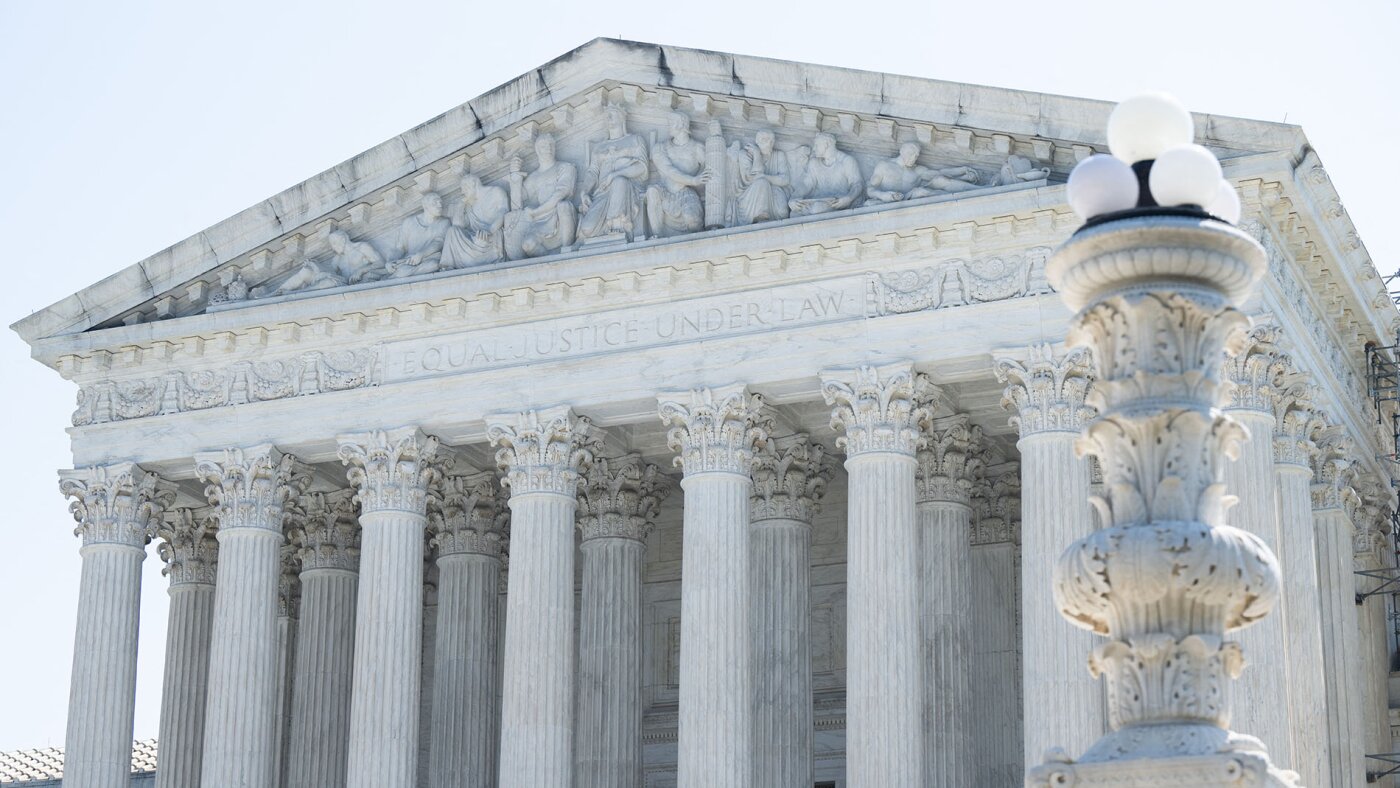
A view of the US Supreme Court in Washington, DC.
SAUL LOEB/AFP via Getty Images
hide caption
toggle caption
SAUL LOEB/AFP via Getty Images
One drug is at the center of the current legal battle over abortion: mifepristone.
Since the Supreme Court overturned Roe v. Wade in 2022, mifepristone has become the dominant method of abortion in the United States, filling the gap left by clinic closures in states with abortion bans. And the number of abortions has actually risen nationally as a result.
That’s a problem for abortion access opponents. Now, they’re taking aim at one of the main ways it’s prescribed – via telehealth. And last week, they scored their first big win.
A federal appeals court blocked remote prescription of mifepristone. Louisiana sued the FDA, arguing that mail access undermines the state’s near-total ban on abortion. But two days later, the drug’s manufacturers went to the Supreme Court and it temporarily restored telehealth access while it considers the case. But that stay is set to expire soon.
So, what’s next in this legal battle? And what does it mean for patients and reproductive health providers?
Find more of our programs online. Listen to 1A sponsor-free by signing up for 1A+ at plus.npr.org/the1a.