
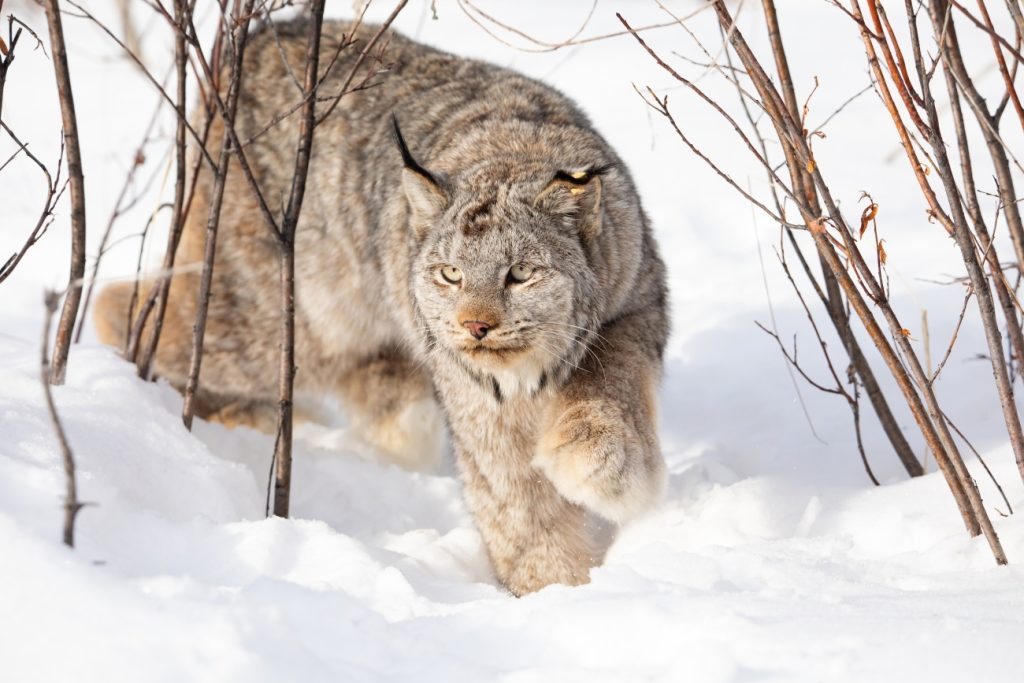
Colorado Parks and Wildlife is about to submit a paper that puts the agency’s best estimate for lynx in the state at around 65 individuals, with a credible range of 45 to 92. This includes animals that have been spotted in the Aspen area.
While CPW Mammals Researcher Jake Ivan said it’s difficult to estimate the abundance of a reclusive, low-density species like lynx, the agency has been monitoring lynx in the state for 10 years. Monitoring has primarily been done in the San Juans with annual surveys, but CPW will conduct a statement survey every five years to get what Ivan called a “snapshot” of current distribution throughout Colorado.
“According to records I have, lynx have been recorded in the Aspen area (toward Independence Pass) and White River National Forest (e.g., near Copper Mountain) periodically up through winter 2024-25,” Ivan shared with The Aspen Times.
Independence Pass Foundation Executive Director Karin Teague confirmed she’s also seen lynx tracks on the pass in the past five to 10 years.
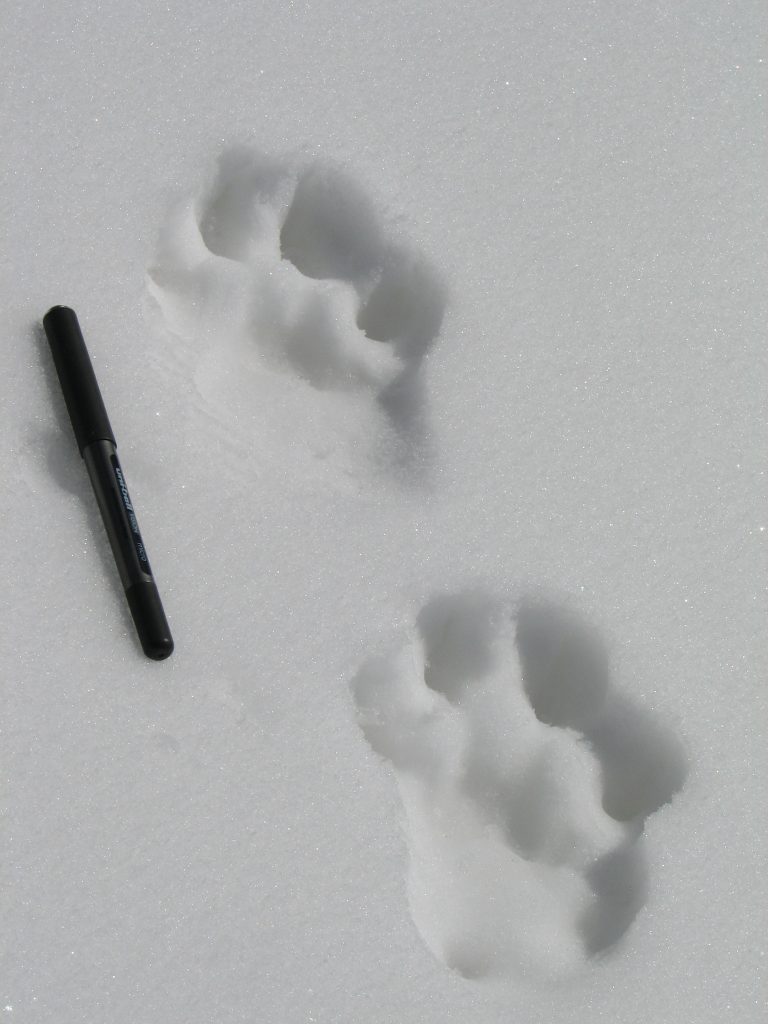 Lynx tracks.CPW/Courtesy photo
Ivan noted that CPW does not conduct surveys in the Aspen area often, depending largely on the efforts of U.S. Forest Service collaborators.
“Lynx or lynx signs are regularly documented through monitoring efforts on the White River National Forest, including during the spring and winter of 2025,” said White River National Forest Public Affairs Officer David Boyd.
Ivan noted there is a lot of forest around Aspen recently mapped as “Likely Lynx Habitat,” including to the west, south and east.
Lynx are native to Colorado, but the population was extirpated by the 1970s as a result of unregulated trapping, poisoning and local habitat loss, according to a March 31 article written by John Livingston, public information officer of the Southwest Region for CPW, for CPW’s magazine.
What’s happening in Aspen, in one click.
Sign up for daily or weekly newsletters AspenTimes.com/newsletter
According to the article, a “pie-in-the-sky” idea during a rafting trip between biologists and other higher-up employees at the agency led to the reintroduction of 96 lynx between 1999 and 2000. CPW ultimately released more than 200 lynx in the San Juans during the seven-year reintroduction phase, using lynx from Alaska and Canadian provinces.
Lynx have been listed as a state endangered species since 1976 and was federally listed as a threatened species in 2000, according to CPW’s website. The species remains endangered in Colorado today.
The biggest threat they currently face in the state, according to Ivan, is fire.
“There are other threats, but in my opinion they pale in comparison to fire, which can impact large chunks of habitat in a hurry, and render much of the impact zone largely useless to lynx for decades,” Ivan said.
He added that other potential threats include bark beetle outbreaks, dispersed winter recreation and “certain forest management practices,” although recent research suggests lynx will likely endure “fairly well” during bark beetle outbreaks. The caveat is the negative impact of bark beetle outbreaks on red squirrels, an important secondary food source for lynx (Livingston wrote they make up about 28% of a lynx’s diet).
The intensity of winter recreation in some areas can also cause lynx behavior to change, such as becoming more active at night relative to the day, Ivan added, although “lynx are surprisingly more tolerant of various recreation activities than one might think.”
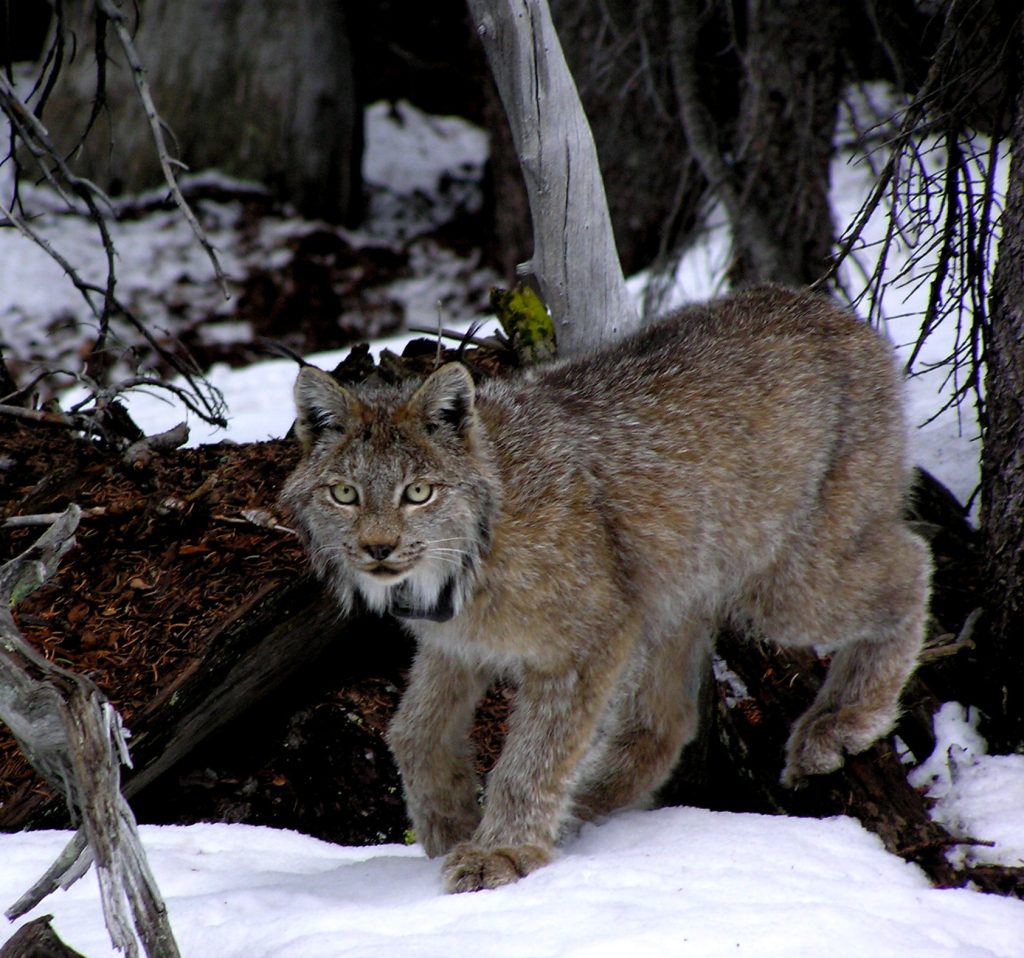 A mother lynx looking out.CPW/Courtesy photo
As of now, forest management within the National Forest System in Colorado is aligned with the best available science via the Southern Rockies Lynx Amendment (to Forest Plans), providing standards and guidelines that balance conservation of lynx and their primary food source — snowshoe hares (that Livingston wrote make up 70% of a lynx’s diet) — with forest management.
“THE threat is really fire,” Ivan wrote.
The past decade of lynx monitoring also suggests there might be some type of interference competition that exists between lynx and bobcats, according to Livingston, as well as lynx and foxes. The pattern observed is a “direct-displacement,” where a bobcat or fox moves into an area to establish a territory and are more aggressive than the lynx, effectively pushing them out. Fox also provide food competition for snowshoe hares.
There could be, however, a positive association between lynx and coyotes, the research suggests. More coyotes typically means less foxes, Livingston writes, which could in turn mean more lynx. A Ph.D. student at Colorado State University is currently taking a deeper dive into the co-occurrence of these species with lynx based on the camera data collected over the 10-year monitoring plan.
The next statewide survey is scheduled for winter 2027/28.