
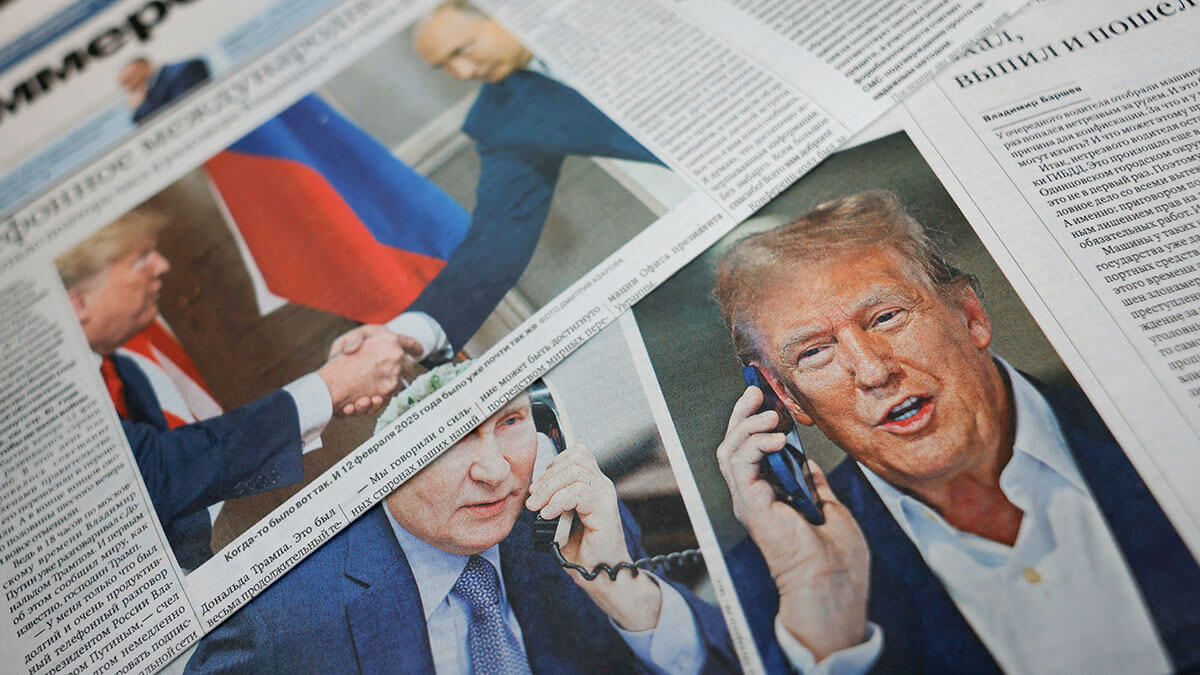
The telephone conversation between Donald Trump and Vladimir Putin takes place against a backdrop already shaped by the announcement of a one-day ceasefire around 9 May in Moscow.
The call also addresses the war in Ukraine, the situation in Iran and other international issues, whilst the European Union and the United States are activating new aid packages for Kyiv in a scenario where the conflict remains unchanged on the ground.
What did Donald Trump discuss with Vladimir Putin and what does it mean for the war in Ukraine?
The telephone conversation between Donald Trump and Vladimir Putin has once again placed the war in Ukraine at the centre of the international agenda. According to reports, Trump reportedly responded to Putin’s offer to mediate in the conflict with Iran, though he is said to have made any progress conditional on a prior priority: the need to move towards ending the conflict in Ukraine.
The exchange is also said to have touched upon the one-day ceasefire announced around 9 May, coinciding with Victory Day in Moscow, one of the most symbolic dates on the Russian calendar, marked by the traditional military parade.
The fact that this proposal arose within the framework of a bilateral conversation between Washington and Moscow has drawn attention, as it did not directly include Ukraine in that initial announcement.
Trump is reported to have described the conversation as positive, covering the war in Ukraine, the situation in Iran and other international issues. The Kremlin is said to have conveyed the intention to link this one-off truce to the commemoration of 9 May, against a backdrop of heightened military tension.
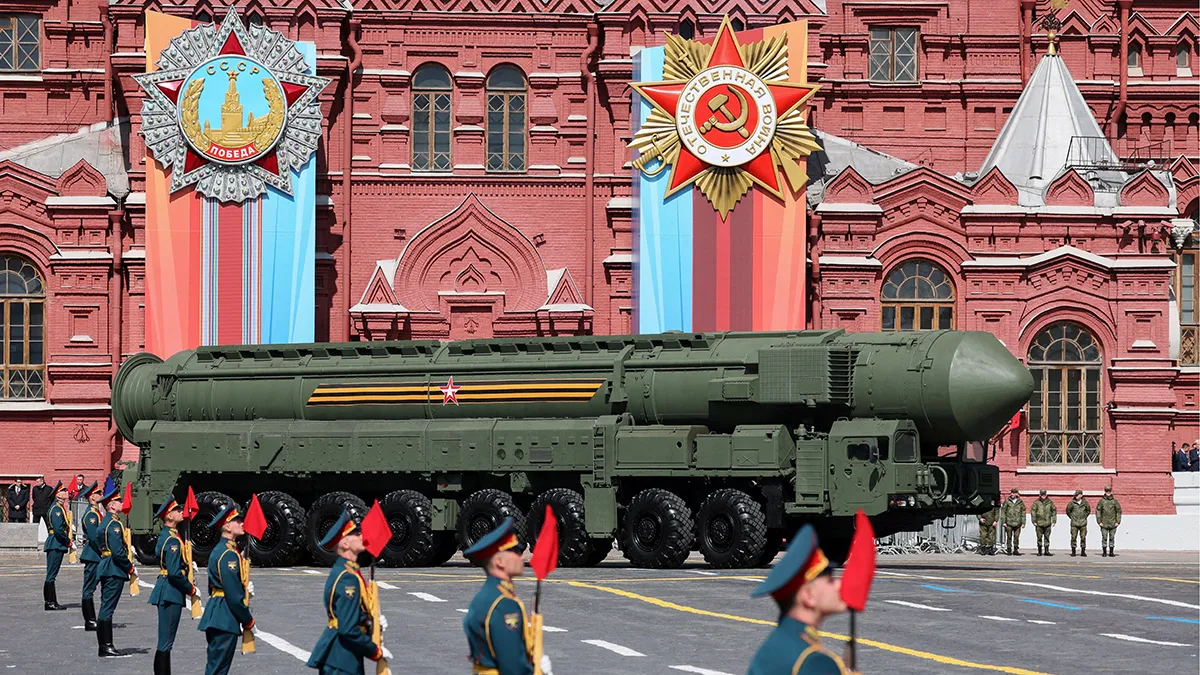
A Russian Yars intercontinental ballistic missile system passes through Red Square during a military parade on Victory Day – Sputnik/Gavriil Grigorov/Pool via REUTERS
What would the 9 May ceasefire entail and how is Moscow preparing?
On the ground, the mood is one of caution. Announcements of this kind linked to commemorative dates have been made on other occasions, though they have rarely been effectively implemented.
In this case, Moscow is said to have considered adjustments to the arrangements for the 9 May parade, against a backdrop of heightened security measures in the face of possible long-range Ukrainian attacks. Ukraine possesses capabilities that could strike deep into Russian territory, which heightens the tension surrounding that day.
On previous occasions, such as during Easter, there have already been supposed pauses in the fighting that were not fully respected on the ground, even in areas far from the front line.
Are these talks between international leaders useful?
The usefulness of these contacts is viewed with scepticism in Ukraine. Although it is recognised that every war ends at a negotiating table, it is insisted that dialogue must translate into concrete results.
In this case, the assessment is that the talks between Putin and Trump have generated headlines, but with no verifiable effects so far on the dynamics of the conflict. Since Trump’s arrival at the White House, there have been multiple contacts and statements regarding possible avenues for a solution, though without any substantial changes in the course of the war.
On the ground, the situation remains marked by daily shelling, constant evacuations in regions such as the Donbas and sustained pressure on the civilian population. Added to this is concern over attacks on critical infrastructure, such as dams, which could exacerbate the humanitarian situation if they intensify.
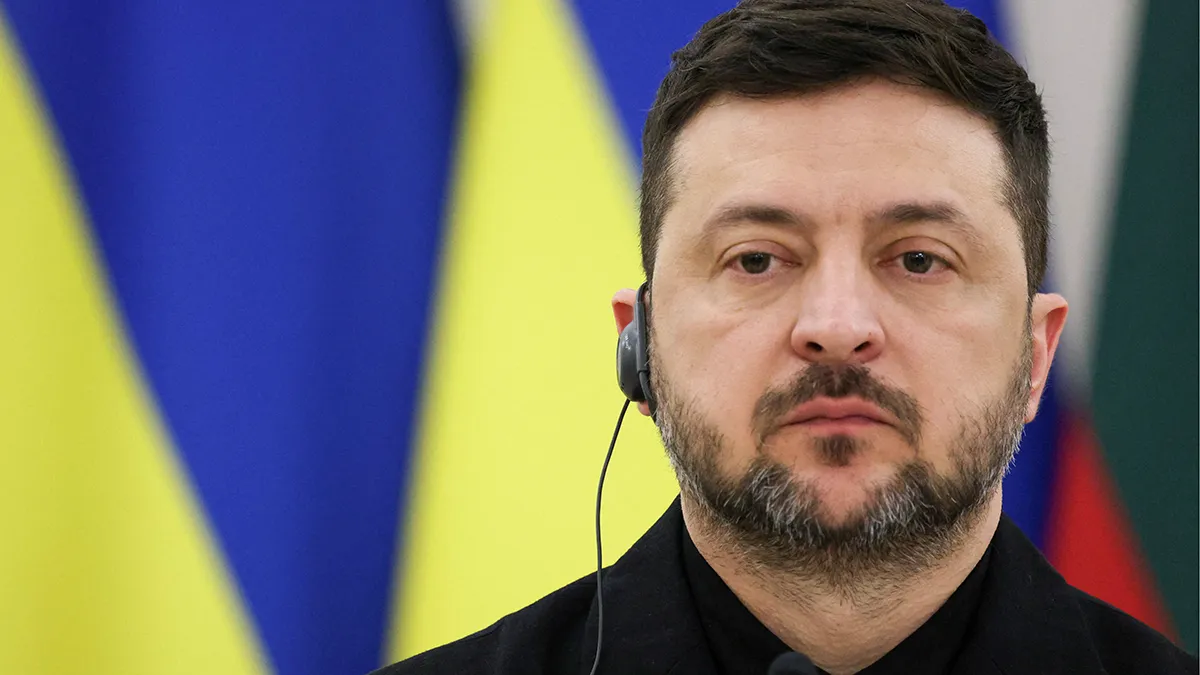
Ukrainian President Volodymyr Zelensky – REUTERS/KUBA STEZYCKI
What role does international aid to Ukraine play?
In parallel with diplomatic activity, there have been new developments in financial support for Ukraine. The European Union has released a package of around 90 billion euros earmarked for the coming years, with an initial tranche of some 6 billion to be activated in the coming weeks.
These funds are primarily directed towards unmanned systems, particularly drones, which have become a key element in the conflict. This package had been blocked for some time by a veto from the then Hungarian Prime Minister Viktor Orbán, although the political situation in Hungary has allowed its implementation to be unblocked.
There has also been news from the United States, where the Pentagon has released an additional $400 million for Ukraine. This marks a shift from previous months, during which US aid had been virtually frozen. These funds, already authorised by Congress, are intended to bolster military capabilities and support Kyiv within the European framework, although full details of their distribution have not yet been provided.
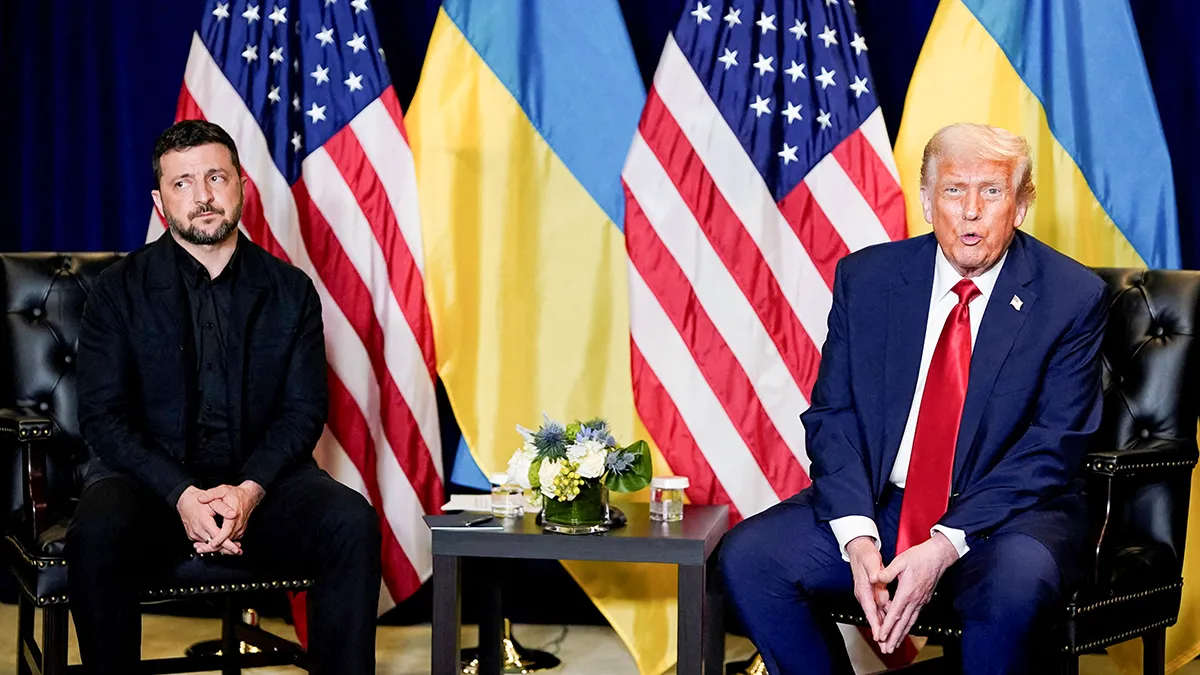
US President Donald Trump meets Ukrainian President Volodymyr Zelenskiy at the 80th United Nations General Assembly in New York, USA, on 23 September 2025 – REUTERS/AL DRAGO
How is the conversation between Trump and Putin interpreted politically?
The Kremlin has viewed the conversation positively, noting that Putin reportedly informed Trump of his intention to propose a truce around 9 May. Trump, for his part, reportedly described the exchange as constructive.
Putin is also said to have raised the possibility of cooperation on the crisis with Iran, to which Trump reportedly replied that any progress in that area should be preceded by progress in resolving the conflict in Ukraine. From Ukraine, however, it is emphasised that these contacts have so far failed to bring about any real changes in the course of the war.
What does this scenario leave us with?
The current situation combines diplomatic contacts, symbolic ceasefire proposals and new packages of international aid, but with no clear signs of an immediate change in the course of the conflict.
The war in Ukraine continues to be marked by fighting, attacks on infrastructure and constant pressure on the civilian population. On the ground, the conclusion remains the same: beyond the talks between leaders, the war continues to be defined on the front line.