
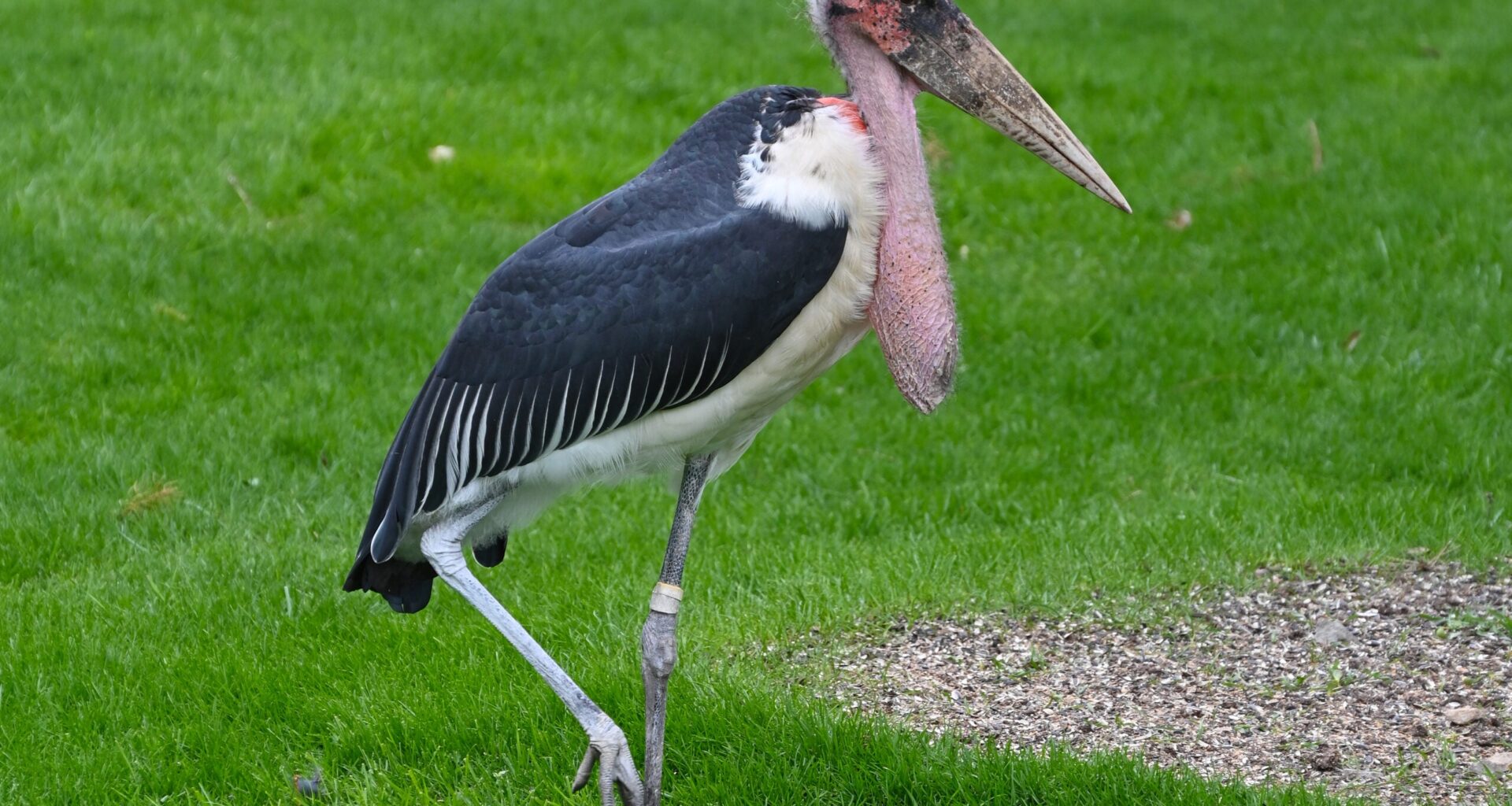
A large bird native to Sub-Saharan Africa has been spotted in northeast Wisconsin. The black and white Marabou stork can grow up to nearly 5 feet tall, with a wingspan of 10 feet.
So Mark Stevens of Sheboygan was surprised, and a little scared, to see one picking at frogs and bugs in the ditch in front of his house.
“We’ve had sandhill cranes in our backyard before … but this one is definitely bigger than that,” Stevens said, estimating that this particular stork is about 3.5 feet tall.
Understanding Wisconsin, Together.
WPR’s “Wisconsin Today” newsletter keeps you connected to the state you love without feeling overwhelmed. No paywall. No agenda. No corporate filter.
The Marabou stork was first spotted in Wisconsin on Tuesday in Fond du Lac and has since been seen in the Green Bay, Appleton and Sheboygan areas. It appears the stork has been traveling north, as it made an appearance near Byron, Illinois, in late April.
Local wildlife professionals say the enormous bird likely escaped from captivity, although it’s unclear exactly when or where. It has some sort of identification band on its leg, but no one has been able to get a close look at it.
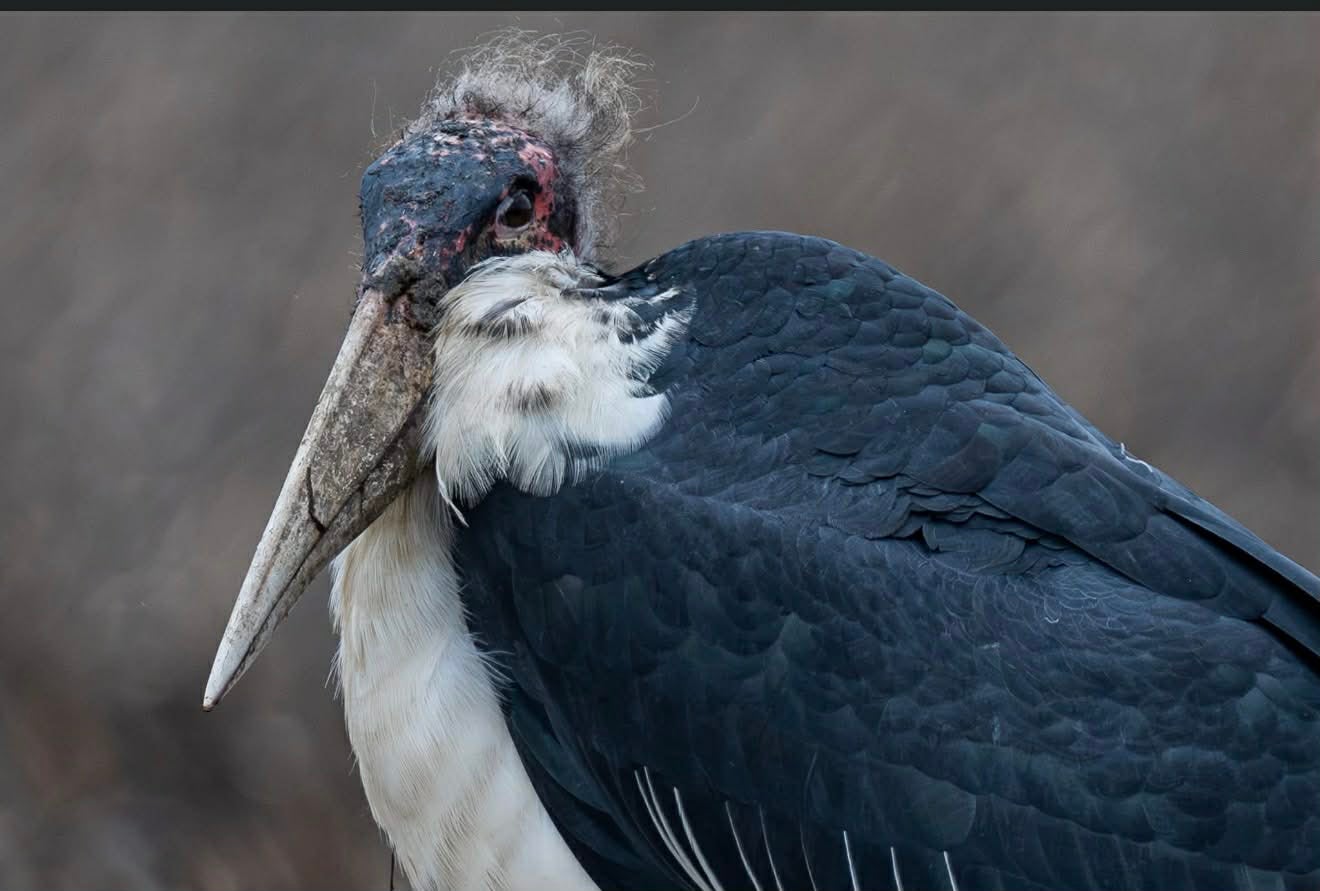 A Marabou stork is seen near Byron, Illinois. Photo courtesy of Ken Reinert
Stevens immediately began taking photos of the bird’s long bill, loose neck skin and nearly-bald head.
“Actually, he’s very ugly,” Stevens said. “He’s an ugly bird, I’m sorry. He’s almost got, like, a turkey head, and then he has that big jowl.”
Susan Theys is a rehabilitator at Wildlife of Wisconsin, based in Cato. She said a volunteer went out to see if the stork was injured or sick. The bird eluded the volunteer, but several more eyewitness reports led the rehabilitators to believe that the bird is healthy at this point, according to Theys.
Theys said people who encounter the bird should likely leave it alone.
“If it appears to be healthy and able to fly, I guess they should just leave it be,” she said, adding that if it appears to be in distress or flying low, they could call her organization for assistance.
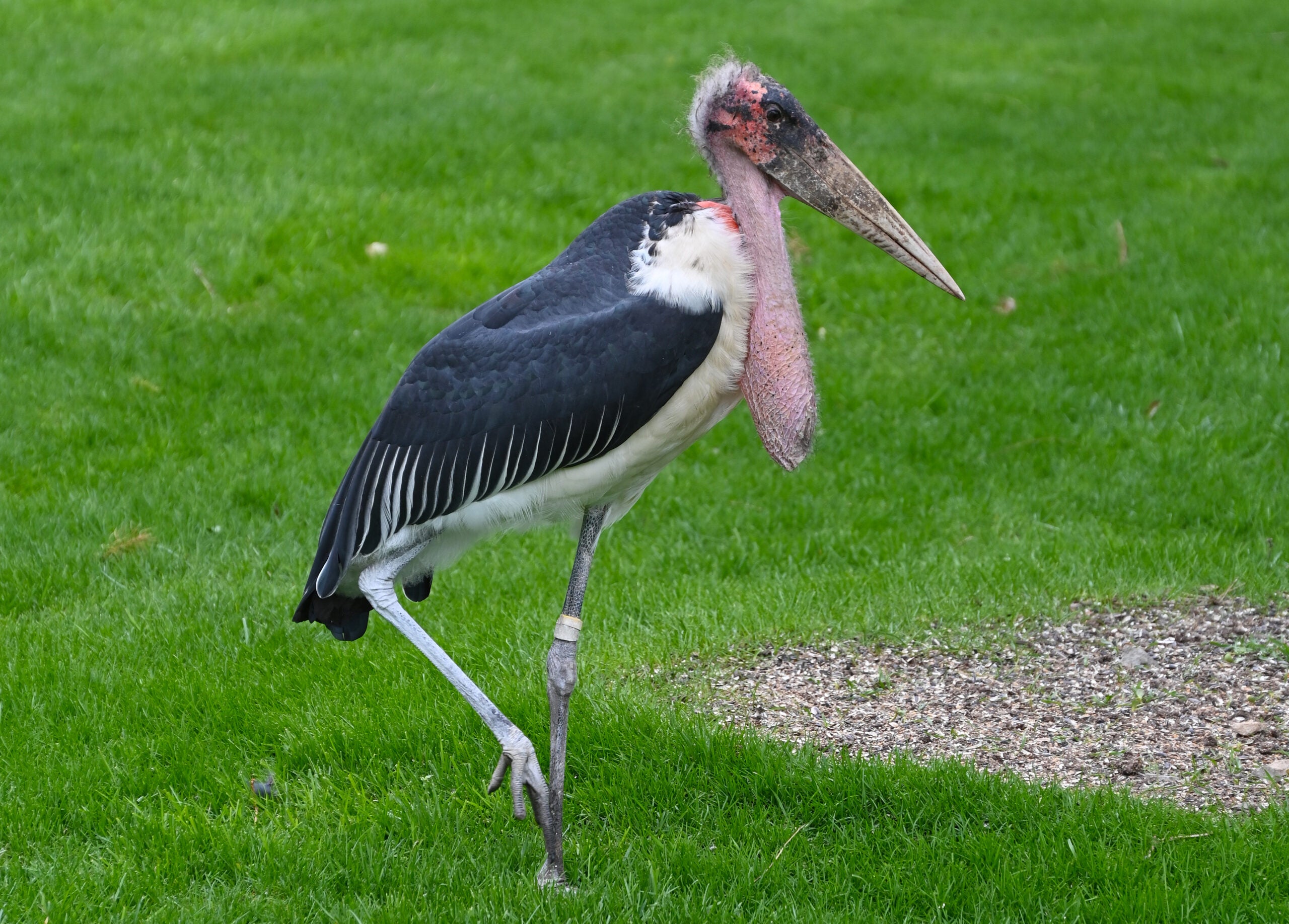 A Marabou stork, believed to have escaped from captivity, was spotted in Sheboygan on May 7, 2026. Photo courtesy of Mark Stevens
Former wildlife transporter and rescuer Jessica Saunders, the volunteer, first heard about the bird from a friend of a friend who thought it was an injured pelican. After more and more people reported sightings, it became clear that she was looking for something more exotic.
Saunders wrote a Facebook post about the stork, where people began to connect the dots between recent Midwestern sightings and tried to trace the bird’s origins.
“I started reaching out and doing some research, and that was when it turned into this big thing of finding out the history of it, and where it potentially came from, and tracking its movements,” Saunders said. “It got a lot bigger than I expected.”
A representative from the Wisconsin Department of Natural Resources said in an email that it is not a wild bird, and the agency does not deal with lost pets or zoo animals.
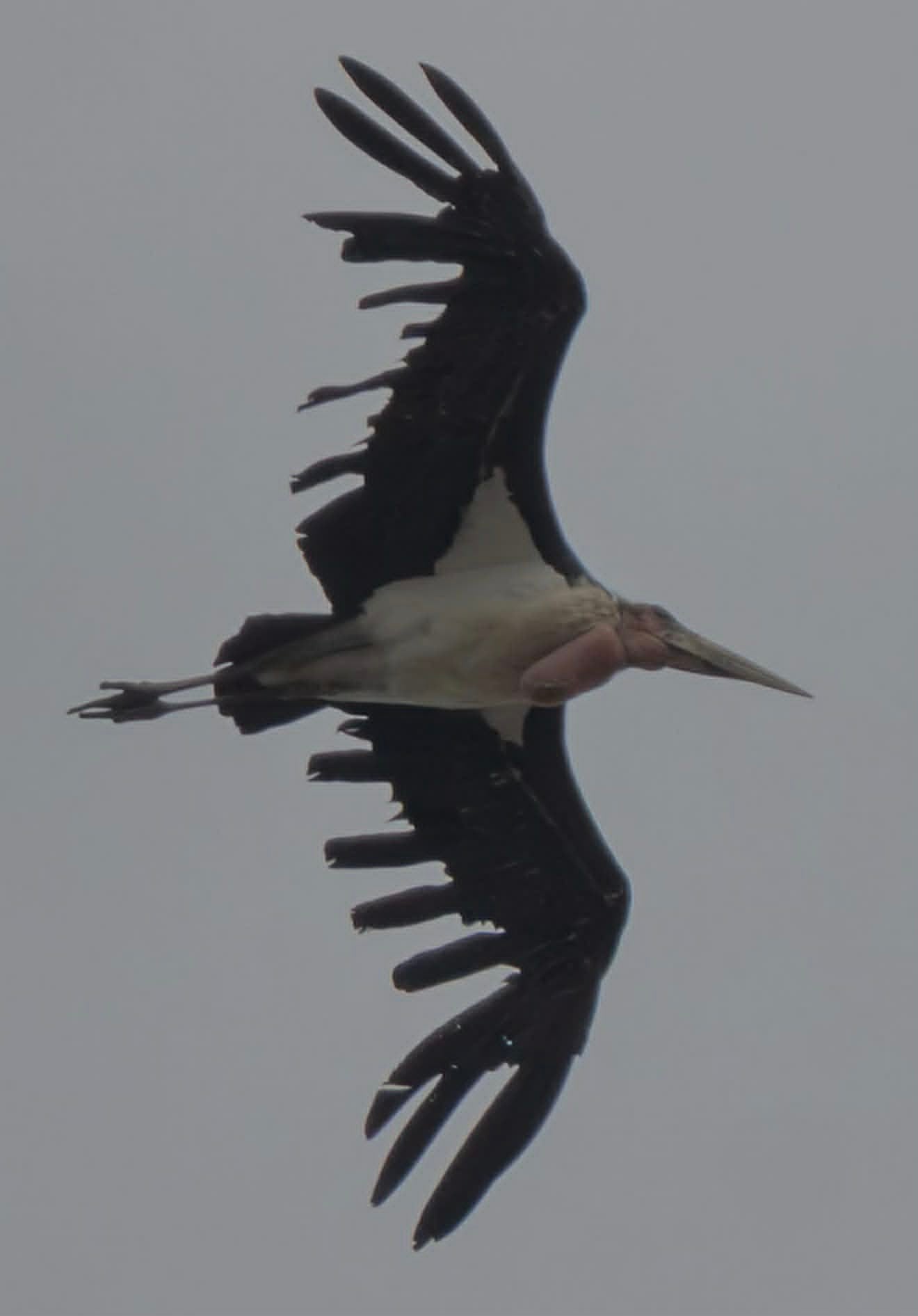 A Marabou stork is seen near Byron, Illinois. Photo courtesy of Ken Reinert
Wisconsin Public Radio, © Copyright 2026, Board of Regents of the University of Wisconsin System and Wisconsin Educational Communications Board.