
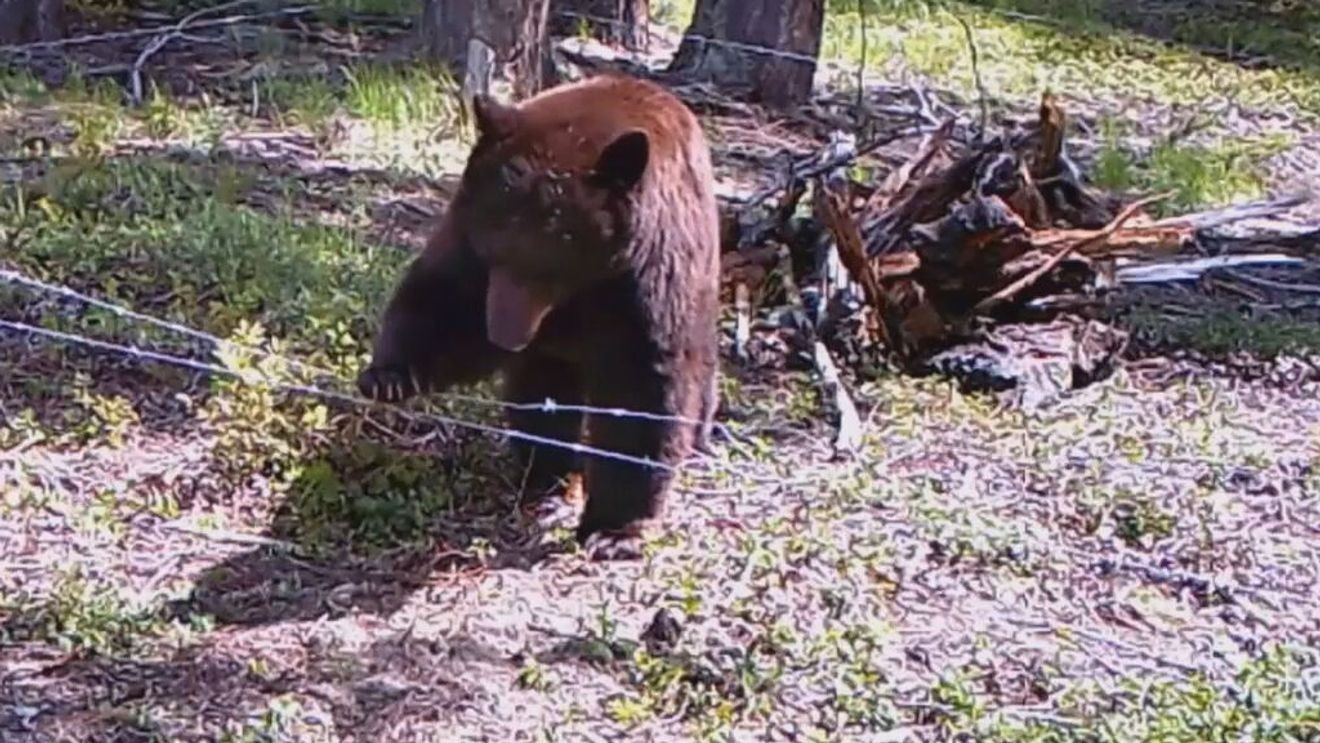
RENTON, Wash. — Renton police are warning residents to be on the lookout after a bear was reported in the Highlands Park neighborhood.
Police said a bear was spotted in the 1100 block of Shelton Avenue NE on May 8.
Bears and other wildlife are not unusual in the area, with Cougar Mountain Regional Wildland nearby. The Washington Department of Fish and Wildlife says bear activity starts to increase this time of year, and that as more homes are built on bear habitat, the chances of encountering a bear increase.
Fish and Wildlife said black bear sightings are “fairly common” in Renton and other suburbs in eastern King, Snohomish, and Pierce counties.
Huy Nguyen, who lives in the Fairwood area in Renton, has seen bears on his property before. “We’ve actually had a black bear visit us on our property quite a few times. We store our compost bin outside, so we’ve had the bear come through and go through the compost. It seems to know when the garbage days are,” he said.
Zach Thompson, who lives in the Maplewood Heights area in Renton, said the region’s forested public lands can bring wildlife into neighborhoods. “Thousands of acres of public lands that are forests,” Thompson said. “Black bears, we’ve seen come through our old house. We have a couple of them,” he said.
Fish and Wildlife said bears are more likely to look for food in suburban areas in the spring, before natural foods become available, and in the fall as bears prepare to hibernate.
“It’s a concern. With bears, they’re wild animals, so it’s not something you want to approach and not something you want in your neighborhood. But they live around here. They’re scavenging, they’re looking for food,” Nguyen said.
Renton police and the Washington Department of Fish and Wildlife urged residents to never feed bears or other wildlife, keep trash cans in a secure and preferably enclosed location, watch pets outside and keep them on a leash, and move to a safe location if a bear is seen.
If a bear does not leave after an extended period of time and you feel unsafe, residents can call 911 or Fish and Wildlife.