
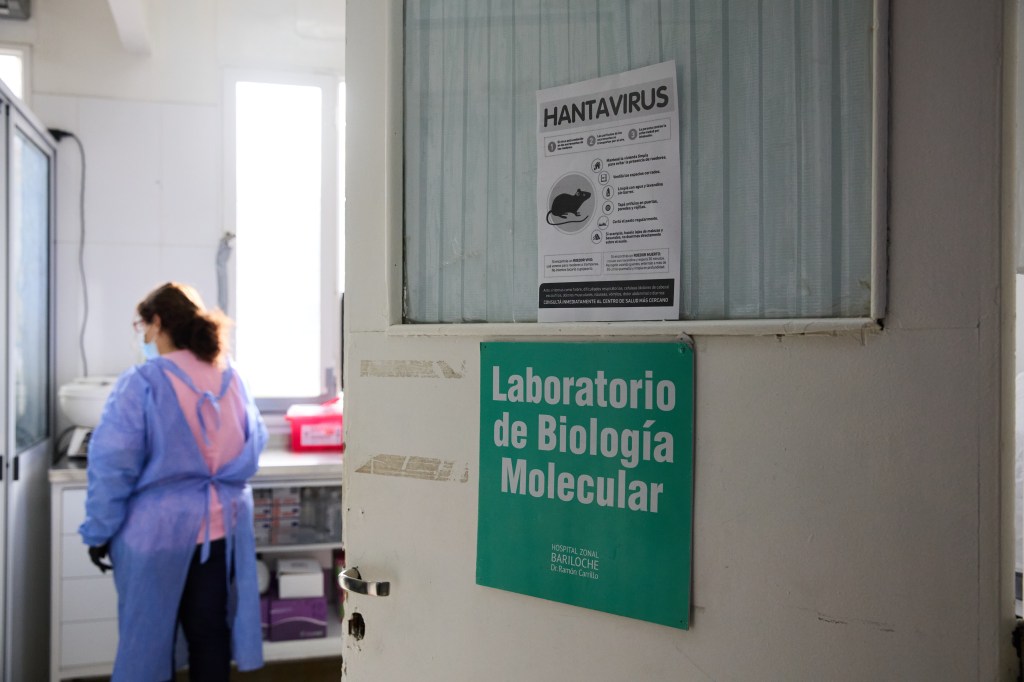
Health officials are investigating a potential hantavirus case in Illinois, though the case is not linked to a recent outbreak of the illness on a cruise ship, the Illinois Department of Public Health announced Tuesday.
It is believed a Winnebago County resident may have contracted the virus while cleaning a home where rodent droppings were present, according to the state health department. The individual is believed to have caught the North American strain of the hantavirus, which does not spread from person to person.
The Centers for Disease Control and Prevention is conducting additional testing to confirm the individual in Illinois is positive for hantavirus — a process that could take up to 10 days.
The risk of Illinois residents contracting hantavirus remains “very low,” the state health department said in a statement Tuesday.
So far, as part of the cruise ship outbreak, three people have died, according to the World Health Organization. That outbreak involves the Andes strain of the virus, which can spread between people who are in close and prolonged contact.
Illinois has not been notified of any residents who were on the cruise ship, according to the state health department.
The Illinois resident who potentially caught the virus is not seriously ill and is recovering after experiencing mild symptoms that did not require hospitalization, according to the health department.
Before this latest potential case, Illinois had seven positive cases of hantavirus since 1993, most recently in March 2025.
Nationally, there were 890 cases of hantavirus between 1993 and 2023, according to the CDC. The virus made national news last year when actor Gene Hackman’s wife Betsy Arakawa died of hantavirus in their New Mexico home. Hackman died about a week later of heart disease with complications from Alzheimer’s disease, according to the Associated Press.
Hantaviruses are a group of viruses carried by rodents that can make people severely ill. People can contract the viruses through contact with infected rodents or their droppings, saliva or urine. There is no antiviral treatment or vaccine for hantavirus.
Strains of hantavirus can cause hantavirus pulmonary syndrome, which can cause damage to the lungs, according to the CDC. It can take one to eight weeks for symptoms to develop after contact with an infected rodent. Early symptoms of hantavirus pulmonary syndrome can include fatigue, fever, muscle aches, and later symptoms can include coughing and shortness of breath. Thirty-eight percent of people who develop respiratory symptoms may die from the disease, according to the CDC.
Hantaviruses can also cause hemorrhagic fever with renal syndrome, with initial symptoms including intense headaches, back and abdominal pain, fever, chills, nausea and blurred vision. Later symptoms can include low blood pressure, lack of blood flow, internal bleeding and acute kidney failure.
Though the risk in Illinois remains very low, Gov. JB Pritzker’s office released a statement Monday saying, the “State of Illinois maintains serious concerns about the federal government’s capacity to support international and domestic public health preparedness.”
 The Centers for Disease Control and Prevention headquarters in Atlanta, Jan. 17, 2026. (Dustin Chambers/The New York Times)
According to that statement, Illinois officials are requesting “answers, oversight and accountability” from the federal government on a number of questions, including, “What impact are reductions at the CDC, National Institutes of Health (NIH), and Administration for Strategic Preparedness & Response (ASPR) having on the federal government’s preparedness, surveillance, and response capacity regarding Hantavirus?”
The state is also questioning the federal government on whether the elimination of positions at the CDC and the federal government’s decision to withdraw from the World Health Organization are affecting its handling of the situation.
The U.S. Department of Health and Human Services did not immediately respond to a request for comment Tuesday afternoon.
The U.S. withdrew from the World Health Organization in January, citing the WHO’s “mishandling of the COVID-19 pandemic,” a “failure to adopt urgently needed reforms” and “unfairly onerous payments” from the U.S., among other things, in an order signed by Trump a year earlier initiating the withdrawal. Many public health officials have criticized the U.S.’s withdrawal, saying it could leave the U.S. without important information about health threats in other parts of the world.
Following the U.S.’s resignation from the WHO, the Illinois Department of Public Health joined the World Health Organization’s Global Outbreak Alert and Response Network (GOARN), which provides resources and information intended to help control outbreaks and public health emergencies around the world. Illinois joined that network partly to keep information flowing to the state.