
Who knew the second week of May was Bash Ole Miss Week?
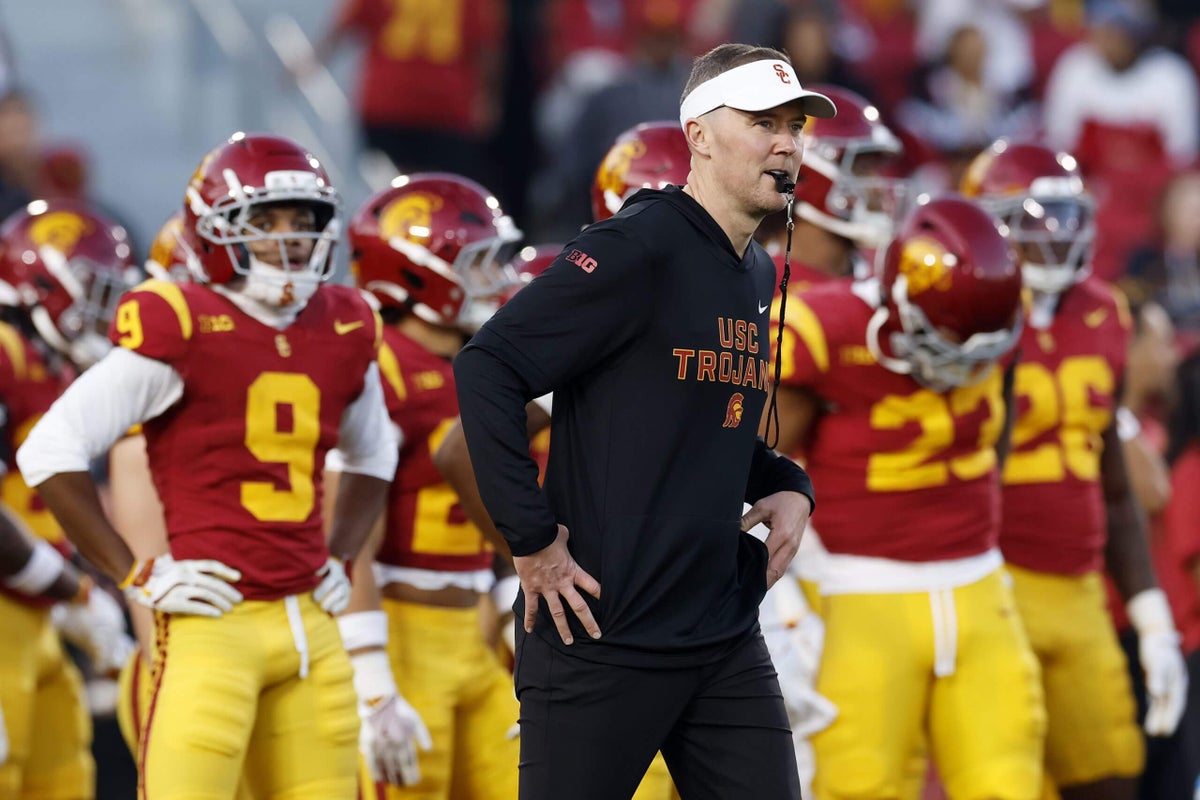
First, our old pal Lane Kiffin implied grandparents don’t want their kids going to Mississippi. Then his old buddy Steve Sarkisian decided to go scorched earth with an “All you have to do is take basket weaving, and you can get an Ole Miss degree.”
It just so happens Ole Miss faces both of those guys this fall. Now we need to add Clemson to the schedule so Pete Golding can have a season full of awkward handshakes.
In your opinion, who’s had the better coaching career, Lane Kiffin or Lincoln Riley? Both are considered offensive geniuses, both made controversial coaching moves and both face high expectations. — Cedrick F.
Phenomenally vexing question.
Say what you will about Riley, but his Oklahoma tenure was a rousing success. He earned three straight College Football Playoff berths when the postseason was still a four-team field. Even his last two Sooners teams, which fell short of the Playoff, went a combined 19-4. Since his 11-2 debut season at USC, though, Riley’s teams have regressed to 8-5, 7-6 and 9-4.
Kiffin’s career arc has been the complete opposite. He began with underwhelming tenures at Tennessee (7-6) and USC (28-15) from 2009 to 2013, then emerged from his three-year Nick Saban rehabilitation stint to produce six double-digit win totals over nine seasons at FAU and Ole Miss. Both tenures were well above the historical norms for those programs.
If you’re making the case against Riley, you might note Riley took over a program from Bob Stoops that had already been elite for two decades, whereas Kiffin rebuilt FAU and Ole Miss from mediocrity. Riley has also coached exclusively at two elite programs, whereas Kiffin’s past two stops were far from that. I take that into account when comparing Riley’s 90-28 (.763) career record with Kiffin’s 116-53 (.687), but that’s still a significant difference.
Riley also developed three straight Heisman-winning or finalist quarterbacks there (Baker Mayfield, Kyler Murray and Jalen Hurts) before adding a fourth at USC (Caleb Williams). Kiffin has had his successes as well, first with Matt Barkley at USC and then with three straight All-SEC quarterbacks at Ole Miss: Matt Corral, Jaxson Dart and Trinidad Chambliss. But Riley still developed four NFL starting quarterbacks to Kiffin’s one.
The two are exactly equal in one area: number of wins in the College Football Playoff (zero). But Riley led teams to three appearances, and Kiffin led his to one — and that appearance was only possible under a 12-team Playoff.
Nearly all the evidence leads me to conclude Riley has had the better coaching career than Kiffin. And yet, if you were to ask me which I have more confidence in at their current schools over the next five years, I’d say Kiffin. He’s on the rise, whereas Riley has gone stagnant.
Why can Penn State be better than Iowa State was last year? — Daniel B.
Who has more wins? 2025 Iowa State or 2026 Penn State? — Braden R.
You guys continue to be noted Matt Campbell enthusiasts.
Iowa State went 8-4 last season despite some rotten injury luck. Not what they were hoping for, but hardly a disaster. The Cyclones started 5-0, beating Kansas State, Iowa and an eventual nine-win Arizona team, which they beat 39-14. But then they lost both of their All-Big 12 starting cornerbacks (Jontez Williams and Jeremiah Cooper) to season-ending knee injuries and had to replace them with freshmen. They then suffered more injuries and lost four of their last seven.
One reason 2026 Penn State could be better than 2025 Iowa State? Stay healthy.
Admittedly, not much remains of the Nittany Lions’ underachieving Pinstripe Bowl team, but the cupboard wasn’t completely bare. New starting left tackle Malachi Goodman was a five-star recruit in James Franklin’s last class — the kind of guy Campbell could never have landed in Ames. Linebacker Tony Rojas was one of their best defensive players in 2024 before missing most of last season. Second-year cornerback Daryus Dixson, a former top 100 recruit, came on late in the year.
The core of Penn State’s lineup will be the 24 guys who followed Campbell from Iowa State. Coming out of spring, there are expected to be 10 or more ex-Cyclones starters, most notably three-year starting quarterback Rocco Becht, 971-yard running back Carson Hansen, likely No. 1 receiver Chase Sowell, No. 2 tackler/safety Marcus Neal Jr., Cooper and middle linebacker Caleb Bacon. That’s a lot of proven P4 transfers.
To answer Braden’s question: Is 2026 Penn State going to win nine games or more to top 2025 Iowa State? The Nittany Lions’ schedule is certainly conducive to it: three G6 nonconference games, no Ohio State, Indiana or Oregon, and USC at home. But I’m going to say probably not. Nothing against those players, it’s just hard to come in after the last guy was there for 12 years, bring in an almost entirely new staff, blow up the entire roster and win big from the jump.
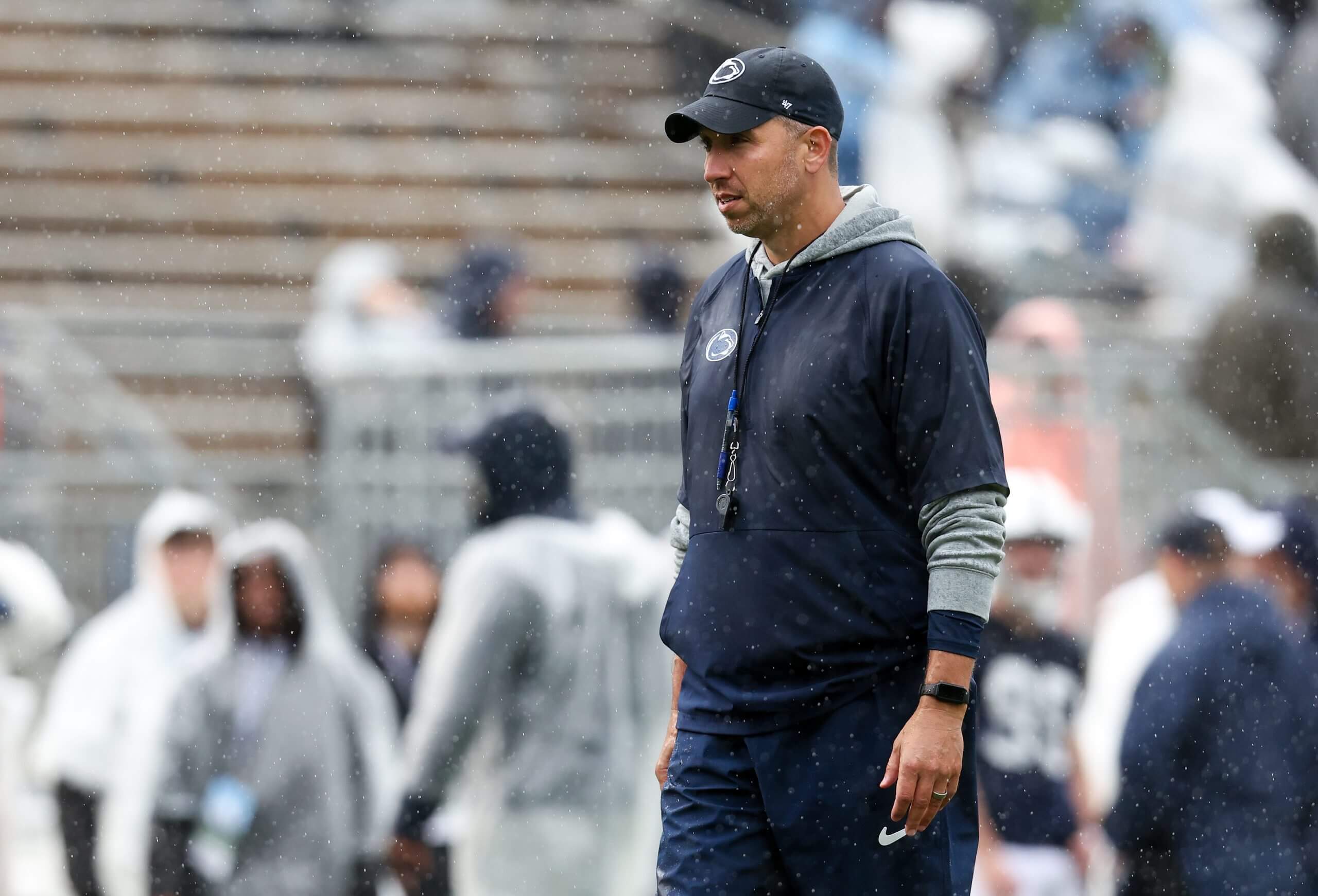
Matt Campbell brought over a large group of players from Iowa State to Penn State. (Matthew O’Haren / Imagn Images)
The Nebraska NIL arbitration case seems to be a bigger deal than the amount of attention it is getting. Didn’t schools sign off on the creation and enforcement mechanism of the College Sports Commission? If Nebraska’s state law regarding NIL stands, what’s to stop a state from passing a law allowing for unlimited eligibility? — Abala S.
If you have no idea what Abala is referencing, you can read our full story here. But the TL;DR version: CSC, the Power 4’s new name, image and likeness enforcement arm (separate from the NCAA), recently denied 18 Nebraska players’ deals worth a combined $7.5 million they received from Playfly Sports, a marketing agency that partners with athletic departments. It helped the program go “over the cap” by buying the athletes’ NIL rights, without lining up any actual deals. CSC said, Sorry, you can’t do that. You’re basically a collective by another name.
In the first major test of the system, an arbitrator Monday upheld CSC’s decision. And it is definitely a big deal in the college athletics ecosystem because Nebraska was hardly the only school doing this. From day one, major football and basketball schools everywhere — yes, the same ones that swore they wanted a hard revenue-share cap and strict enforcement — have been plotting to go over the $20.5 million cap. Had the arbitrator ruled against CSC, you would have seen a mad dash by everyone to strike similar deals.
For now, they might need to rein things in. The question is, for how long?
It’s no coincidence Nebraska went first. The state has a law that “prohibits any organization from penalizing a college athlete because he or she was paid for use of their NIL rights.” As such, many expect the state attorney general to come after the CSC, though technically the players haven’t been penalized yet. Only if they keep the money and try to suit up for the Huskers will they be ruled ineligible. More realistically, the CSC’s leader, Bryan Seeley, believes the school will land them other deals. Stay tuned.
I’ve long believed the CSC system will not withstand a legal challenge. Any attempt to deny athletes their free-market value seems like the same antitrust issue that led us here. But I’ll note one key distinction with the Nebraska case. The arbitrator did not weigh in one way or the other whether the deals met an acceptable “range of compensation.” He focused entirely on whether these multimedia rights companies are considered an “associated entity,” like collectives, and thus serve a “valid business purpose,” like State Farm paying Caitlin Clark to do commercials.
All of this nonsense could be avoided if the schools stopped pretending there’s any difference between their paying an athlete directly versus outsourcing it to someone else.
Well, Stew, the Division softball bracket is out. Who you got? — Eric
Still deciding, but I’m a firm believer you need a dominant pitcher to win the thing. So that rules out Oklahoma, Florida and UCLA.
Recognizing that you are a college football writer and focused on that sport, what are your thoughts on the impact of paying college football/basketball players and the financial demands that it’s placing on athletic departments? Thinking specifically of Arkansas dropping men’s and women’s tennis, or Michigan athletics requiring a $15 million infusion from the university to balance its budget? — Brian S.
I find it difficult to answer that with one broad brush.
Let’s put aside the big boys for a moment. Last week alone, Saint Louis, Illinois State and North Dakota dropped tennis as well. I have genuine sympathy for schools such as these that are trying to field broad-based athletics programs with a tiny fraction of the media revenue available in the major football conferences.
Though participation in revenue-sharing/NIL is voluntary outside the Power 4, Saint Louis has had a nationally competitive basketball program for decades and wants to keep it that way. Matt Norlander of CBS Sports reported in March the program will have a $10 million payroll this year, which is wild given the entire Atlantic 10 conference reported $21.3 million in revenue in 2024.
So yes, the NIL era is not doing mid-majors (and below) any favors. And if the day ever comes when all Division I athletes are declared employees entitled to salaries and benefits, it will likely be devastating at that level. Almost none of them can afford that.
However, I have zero sympathy for any Big Ten or SEC school that says it can’t fund its nonrevenue sports. If that’s true, it’s because they have been spending recklessly and negligently for years. In a story last year, my colleague Scott Dochterman found that a typical Power 4 school’s revenues increased by 212.4 percent (!) from 2005 to 2023. But of course, their expenses just happened to increase by 210.8 percent over the same time. Boy, did helmets and chinstraps get expensive.
Apparently, Arkansas is so darn cash-strapped, despite its $196 million in revenue last year (pre-House settlement), it can no longer sustain the tennis programs’ $2.6 million annual expenses. The school owes $7.7 million — enough to fund three years of tennis — to former coach Sam Pittman, who absolutely no one was trying to hire away when he received that contract. In total, the school spent $38.7 million on coaches’ salaries (across all sports) in 2024-25, compared with $12.7 million on athletes’ scholarships, meaning even with the full $20.5 million revenue share, it would still spend more on coaches than on athletes.
College sports do not have a revenue problem; they have an expense problem. If the P4 schools are truly committed to preserving their Olympic sports, they should stop letting Jimmy Sexton con them into giving his clients remarkably one-sided contracts, holding conference meetings at the Ritz-Carlton and competing with each other for the honor of who can build the largest weight room.
Josh Heupel clearly deserves credit for stabilizing Tennessee after the Jeremy Pruitt era, but with the program seemingly plateauing over the last year or two, do you think his seat is starting to warm? Or is the foundation he built enough to buy him more runway? — Scott P.
Remember a little over a year ago when then-savior quarterback Nico Iamaleava abruptly divorced Tennessee? My mailbag that week led with a reader asking, “Does Nico’s departure and how it occurred, give Josh Heupel a mulligan should they miss the Playoff?” To which I answered, “The Nico saga is going to seem like ancient history five months from now.”
One 8-5 season later, here we are.
I’m reluctant to declare that Tennessee is plateauing, only one season removed from a 10-win CFP season. But last year did feel like a particularly “bad” 8-5 thanks to the Vols’ blowout losses to rivals Alabama (37-20) and, in particular, Vanderbilt at home (45-24). Then they topped it off by losing to Illinois (30-28) in the home-state Music City Bowl.
Heupel’s offseason didn’t do much to inspire confidence, either. He didn’t bring in an experienced quarterback and instead is going with a seemingly quaint competition between redshirt freshman George MacIntyre and true freshman Faizon Brandon. Tennessee did not land in Sam Khan Jr.’s top 25 portal classes. Granted, the Vols didn’t need an overhaul on offense, given they bring back 1,076-yard running back DeSean Bishop, breakout receivers Braylon Staley and Mike Matthews and four offensive line starters.
But the defense mostly stunk last year, and that was before the entire D-line and NFL cornerbacks Colton Hood and Jermod McCoy left town. New defensive coordinator Jim Knowles (remember him?) got a nice boost when standout linebacker Arion Carter pulled out of the draft, and a couple of expected starters, defensive tackle Xavier Gilliam and linebacker Amare Campbell, followed Knowles from Penn State. But this side of the ball still has a lot of questions.
Heupel is an admirable 45-20 in his five seasons in Knoxville, but he’s yet to string together back-to-back big seasons. So far, he’s bounced back strong after each dip. Whether that happens again in 2026 will depend on whether one of the young quarterbacks comes in and plays at a high level immediately.
If they don’t — you know how the SEC is. Everyone is one bad season from the hot seat.
As a fan, how in the world am I supposed to keep up with all the transfer portal comings and goings? It’s manageable for basketball, but football is almost impossible. Do you see a long-term fallout in fan interest (except the football-crazy SEC and Big Ten)? — John D.
@John D. In 10-15 years, there will be no off-campus coverage of CFB outside of the B1G and SEC. The whole country will be like the Northeast today. — Andre M.
Someday, you guys are going to have to explain to me why certain subscribers to this sports site make an effort to click on college football stories solely to tell other subscribers that the sport is about to die.
Is this before or after morning coffee?
I’m surprised John says he’s having an easier time following basketball movement. Though I’m being paid to follow football a lot more closely than basketball, man, some of those teams are now fielding an entirely new roster from one year to the next, even among the big boys. I often joke the Champions Classic in early November is when I learn who plays for Duke now.
But no question, football requires knowing more names and numbers. Fortunately, you have many resources, across the national landscape and with your favorite team.
Our Sam Khan Jr. has spent the offseason doing deep dives on the teams that had the best portal classes and the top portal players, not just across the board but at every position. Another colleague, Manny Navarro, went conference by conference. And Antonio Morales always finds interesting subplots in the portal.
Meanwhile, I’m not sure there’s ever been a better time for fans who truly want to geek out on their favorite teams’ rosters. Not just beat reporters, mind you, but fan sites, Substacks, podcasts and YouTube channels, all of which spend eight months dissecting every name at every position — a media climate befitting modern college football.
Is the transfer portal going to depress long-term fan interest? I wouldn’t rule it out, but as I’ve said many times over the past several years, I’ve yet to see any discernible sign that interest in college football is declining.
Which is not to say it won’t happen, but if it does, NIL and the portal won’t be the leading cause. We’ve got a much bigger asteroid threatening to destroy the planet.
A 24-team Playoff.
What is your favorite stadium and town to travel to, and which do you dread having to travel to? — Jt F.
My customary answer to the first part has long been LSU. Unbelievable atmosphere exceeded only by the cuisine and the accents. Though I’m not sure how I’ll feel the next time I visit Baton Rouge and everyone is wearing Lane shirts.
I’m afraid you will never get an answer out of me to the second part. Unlike Sark and Kiffin, I would prefer not to be cannon fodder for an entire campus/city/state.