
Students nationwide are facing what researchers describe as a decade-long learning recession as test scores continue to decline.According to a recent report using data from the Education Scorecard and The Educational Opportunity Project, students across the country, including in New Hampshire, are performing worse academically than they were 10 years ago. Dartmouth College economics professor Doug Staiger was one of the report’s authors and said the findings are concerning. “From 2019 to 2022, students in New Hampshire, on average, lost about two-thirds of a grade level. That’s a lot,” Staiger said. He said the decline began before the COVID-19 pandemic, though the pandemic accelerated the trend. While math scores have started to recover, reading scores continue to lag behind.>> Download the free WMUR app to get updates on the go << Stagier said several factors could be contributing to the decline, including chronic absenteeism and the rise of social media. “The evidence that suggests social media is playing a role is first, the timing,” he said. “The turning in test scores all happened right when social media was really taking off.”New Hampshire educators agree that social media and cellphone use have disrupted learning in the classroom.”We’re looking at do we need to adapt different policies, thing like that, about screen time,” said Megan Tuttle, president of NEA-New Hampshire. “We also have to balance out is where is that balance of technology that we still have to teach the children how to use it responsibility.” Starting this past school year, Gov. Kelly Ayotte introduced a cellphone ban in schools. Staiger and Tuttle said it will take time to determine how much of an impact the policy will have. In the meantime, Staiger recommends schools focus on addressing absenteeism and directing resources to districts that need the most support.
MANCHESTER, N.H. —
Students nationwide are facing what researchers describe as a decade-long learning recession as test scores continue to decline.
According to a recent report using data from the Education Scorecard and The Educational Opportunity Project, students across the country, including in New Hampshire, are performing worse academically than they were 10 years ago.
Dartmouth College economics professor Doug Staiger was one of the report’s authors and said the findings are concerning.
“From 2019 to 2022, students in New Hampshire, on average, lost about two-thirds of a grade level. That’s a lot,” Staiger said.
He said the decline began before the COVID-19 pandemic, though the pandemic accelerated the trend. While math scores have started to recover, reading scores continue to lag behind.
>> Download the free WMUR app to get updates on the go <<
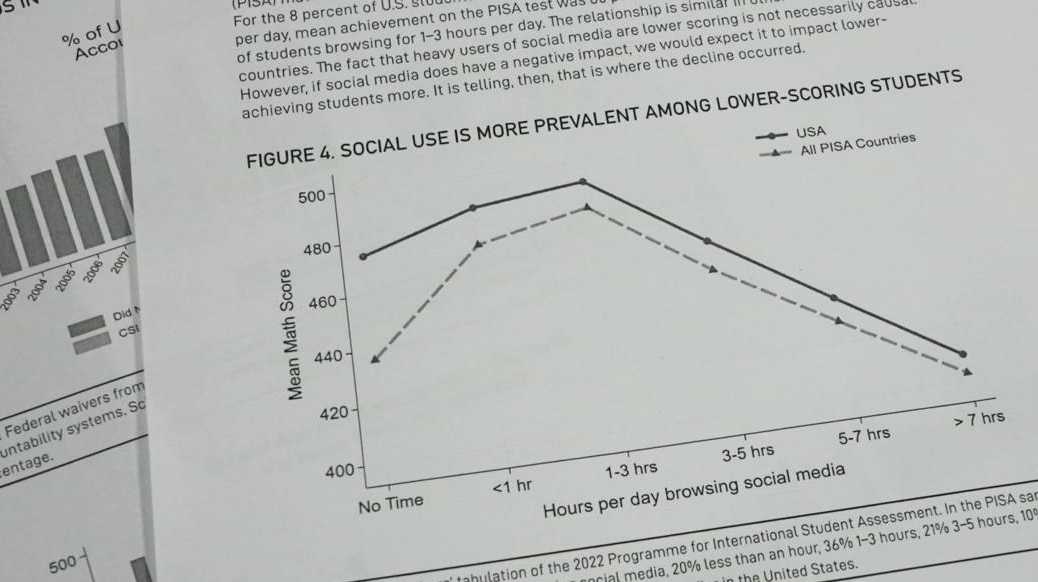
Stagier said several factors could be contributing to the decline, including chronic absenteeism and the rise of social media.
“The evidence that suggests social media is playing a role is first, the timing,” he said. “The turning in test scores all happened right when social media was really taking off.”
New Hampshire educators agree that social media and cellphone use have disrupted learning in the classroom.
“We’re looking at do we need to adapt different policies, thing like that, about screen time,” said Megan Tuttle, president of NEA-New Hampshire. “We also have to balance out is where is that balance of technology that we still have to teach the children how to use it responsibility.”
Starting this past school year, Gov. Kelly Ayotte introduced a cellphone ban in schools. Staiger and Tuttle said it will take time to determine how much of an impact the policy will have.
In the meantime, Staiger recommends schools focus on addressing absenteeism and directing resources to districts that need the most support.