
While the U.S. hits international visitors with additional fees to enter national parks this year, our neighbors to the north are trying a different approach: Canada’s national parks will be free to enter during the peak summer travel season.

The Canada Strong Pass, available to Canadians and international visitors, allows anyone to visit any of the country’s 48 national parks free of charge between June 19 and Sept. 7. The program also provides a 25% discount on camping fees, discounts for young adults at national museums and reduced fares on the cross-country VIA Rail.
The initiative launched in 2025 as the federal government sought to boost domestic tourism and encourage Canadians to travel at home amid an ongoing boycott of U.S. travel tied to trade tensions. The free access to parks immediately boosted summer travel last year, with Parks Canada reporting a 13% increase in the number of visitors over the summer compared with 2023, amounting to a total of 14.5 million visitors. The agency reported that visitors added $4 billion to the national GDP and that they “spend the equivalent of more than $11 million every day in communities across the country.”
Article continues below this ad
“It’s clear that the Canada Strong Pass inspired Canadians to stay at home and explore the country,” a Parks Canada spokesperson told SFGATE in an email.
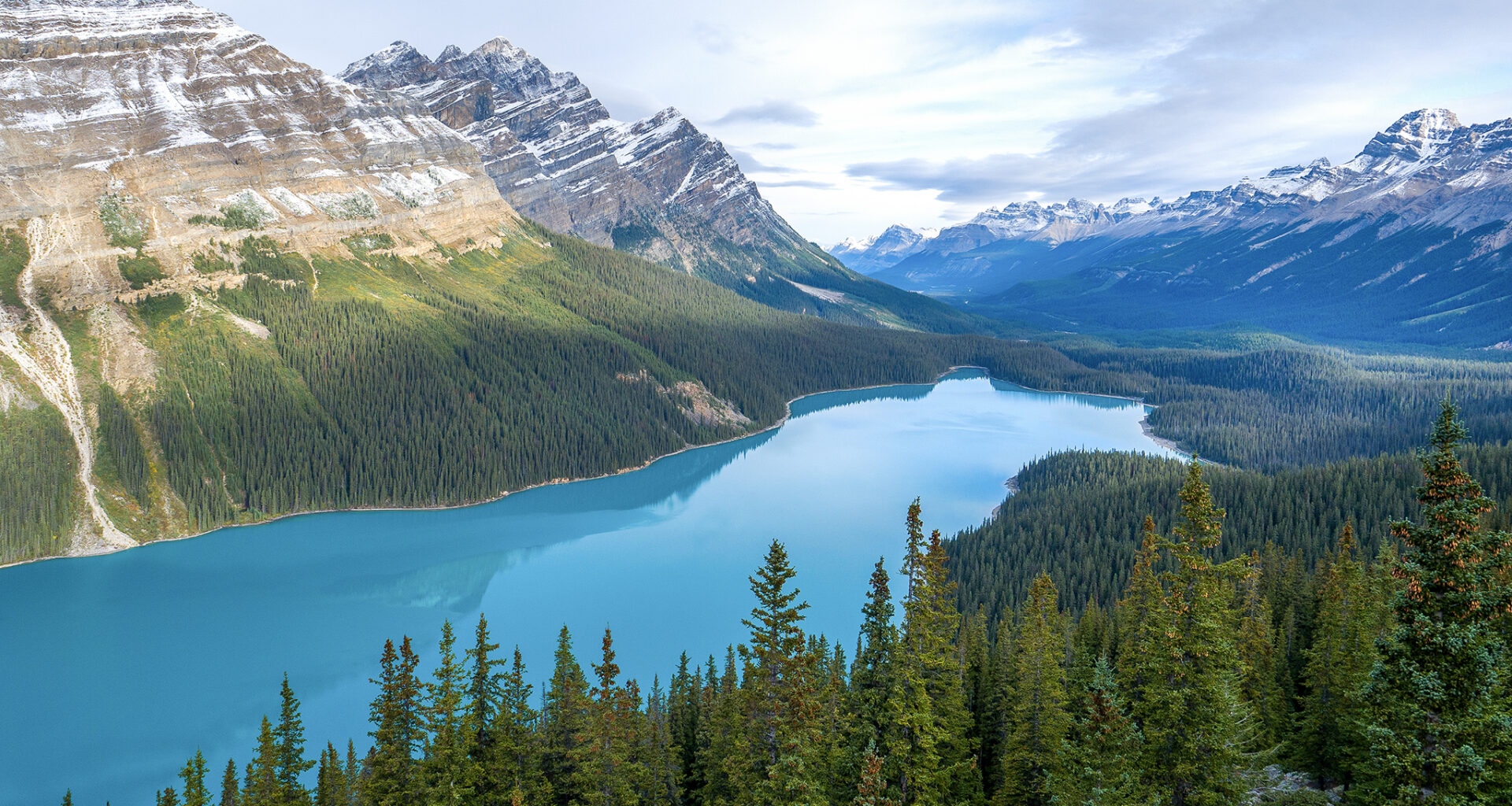
Peyto Lake along the Icefields Parkway in the Canadian Rockies in Banff National Park.
K. D. Kirchmeier/Getty Images
The northern lights over Patricia Lake in Jasper National Park in Alberta, Canada.
Daniel Viñé Garcia/Getty
While there was some debate last year over whether international tourists should be allowed to access the summer deal, Parks Canada ultimately decided to bring it back in 2026, choosing the increased visitation to parks and gateway economies over park revenue.
Article continues below this ad
The U.S. is taking an opposite approach to international tourism at national parks.
Under a new policy rolled out at the start of the year, international visitors must now pay $250 for an annual America the Beautiful pass, compared with $80 for U.S. residents. At 11 of the country’s busiest parks, they face a $100 entry surcharge without an annual pass.
This upcharge for tourists comes after a year when Canadian tourism to the U.S. plummeted. According to a May report from the U.S. Congress Joint Economic Committee, 9.9 million fewer Canadians visited the U.S. compared with 2024, and visitation to national parks and other National Park Service sites fell by 15 million in 2025 compared with 2024, “costing nearby communities an estimated $1.3 billion in revenue.”
Article continues below this ad
The economic blow spreads far beyond national parks gates, Marco Jahn, the CEO of North American tour operator New World Travel, told SFGATE.
Sunwapta Falls in Jasper National Park in Alberta, Canada.
tobiasjo/Getty Images
“Every time you introduce any uncertainty or sudden change in international travel, it’s easy for visitors to change their minds, to go somewhere else,” Jahn said earlier this month about international fee increases. “For Europeans wanting to visit national parks, they’re likely to shift and start going to Canada instead. Canadian and Asian tourists might visit the U.K. instead of here. It’s a lost opportunity for us.”
Visitors might decide to explore Banff National Park or Jasper National Park, skipping out on Montana’s Glacier National Park, which is struggling to deal with overcrowding. And anyone considering a trip to Olympic National Park in Washington could easily make the switch to visiting the Pacific Rim National Park Reserve just up the coast in British Columbia.
Article continues below this ad
According to the U.S. Travel Association, international visitors spend $4,000 per trip to the U.S., or eight times what domestic travelers spend.
“Overseas visitors take long drive vacations to experience our country,” Jahn told SFGATE in an email. “Their road trip dollars go to rural areas and support local communities, restaurants, hotels, and shops. Their dollars circulate through the economy, creating a multiplier, and raise billions in taxes.”
Two Jack Lake and Mount Rundle near Banff National Park in Alberta, Canada.
TerenceLeezy/Getty Images
The scenic beauty of the Pacific Rim National Park Preserve, which is located along western Vancouver Island in British Columbia, Canada.
Emil Norton/Getty Images
The U.S. may gain $250 for each international family that purchases the more expensive America the Beautiful pass, but the agency isn’t taking into account the money lost when visitors choose to skip the U.S., Jahn said.
Article continues below this ad

Stay informed, and entertained.
By signing up, you agree to our Terms Of Use and acknowledge that your information will be used as described in our Privacy Policy.
According to presentations from Brand USA, the nation’s tourism marketing agency, projected international travel to the U.S. in 2027 has fallen by more than 20 million visitors in the past year — from 94.5 million projected in November 2024 to 74.2 million by April 2026.
“Ask yourself this question: For the celebration of our country’s 250th birthday, what if we had given every visitor free (America the Beautiful) entry to our national parks to stimulate visitation?” Jahn said. “… For each million additional visitors, we would have directly taken in close to $5 billion. The economic multiplier makes this somewhere in the range of $10 billion in value to the nation. Seems to me we have this all backwards while Canada and others see this clearly.”
We love national parks just as much as you do, so we have a newsletter that covers them from top to bottom. Sign up here.
Article continues below this ad