
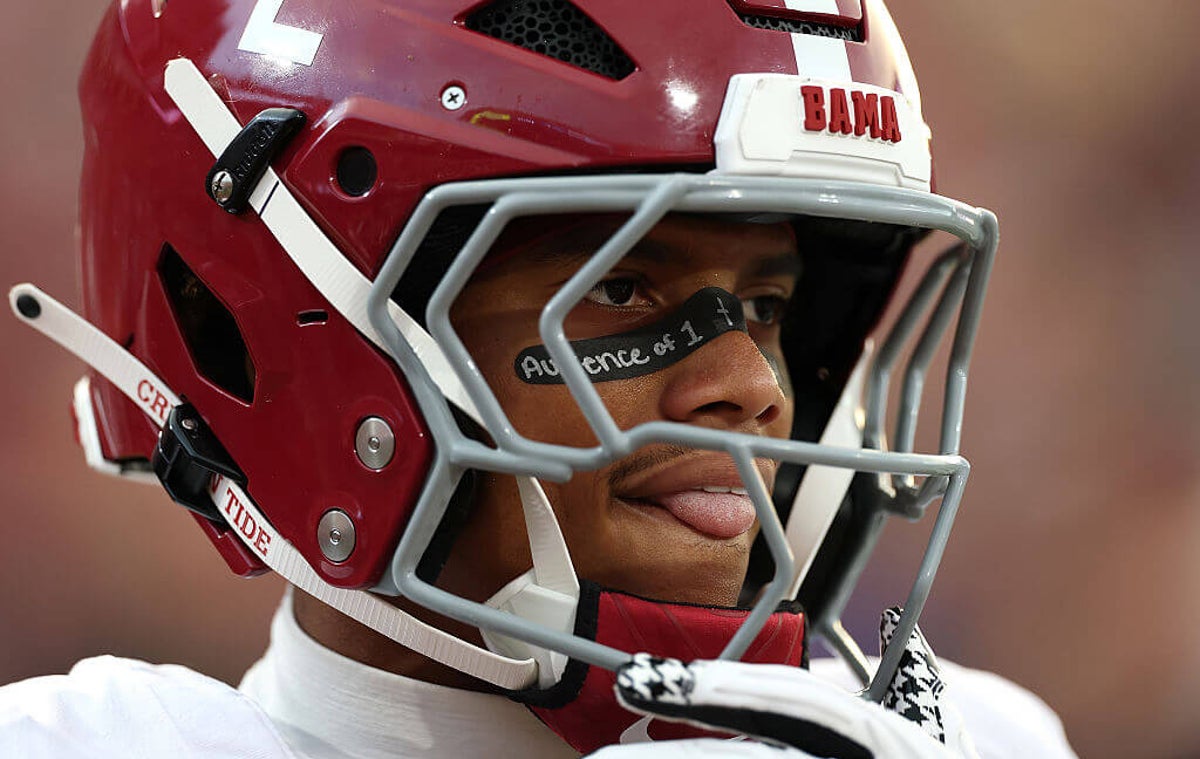
TUSCALOOSA, Ala. — He had just finished an offseason photo shoot for Alabama when his phone buzzed with a request.
“Can you send me a photo?” Tiffany Coleman asked her son.
Ryan Williams — now Ryan Coleman-Williams — declined. She’d have to wait. Maybe until August. He didn’t want the tears to flow again.
His mom had already cried “like four times,” he said, since he told her in January he was adding a name and a hyphen to the back of his jersey to acknowledge both sides of his family. Now it was real: His new number — No. 1 — was on the front and back of his Crimson Tide jersey. And across the back of his shoulders, his new name. Coleman-Williams.
Neither is technically new. Through most of his football career, he wore No. 1. And it had always been his name.
But after a difficult 2025, it’s a way for the Alabama wide receiver to enter 2026 with a clean slate while paying homage to those who raised him.
This time last year, Williams was one of college football’s biggest stars. He shared the cover of EA Sports’ college football video game with fellow freshman phenom receiver Jeremiah Smith of Ohio State. He was a preseason All-American and dark horse Heisman Trophy candidate.
But he battled a string of injuries all year. He struggled to balance the demands of his newfound fame with his football work, too. By season’s end, he dropped a nation-high 14 passes on 76 targets, a drop rate higher than any Alabama receiver in a decade.
“A confidence thing,” Coleman-Williams said.
He finished third on the team in touchdown catches and second in yardage. He topped 100 yards just once. It was a jarring, confusing, unexpected sophomore slump for a player whose freshman season had built expectations to astounding levels.
Now, he’s looking to make 2026 look a lot more like 2024. He’s healthy for the first time in a year. He has tried to rebuild the shaky confidence that spread to his usually reliable hands.
And he’s wearing a new number and new name on his crimson jersey.
“It’s a rebirth for him,” said his grandfather, Michael Coleman.
Michael Coleman worked as a firefighter, was in the Army Reserve, worked at Walmart and served as a pastor for a church. Once in a while, he’d take his grandson to the military base or to watch training exercises as Coleman put out a fire.
Sometimes, he’d work two weeks in a row without a day off. But when he was off, he and Coleman-Williams would grab a pizza or see a movie or go on a short trip from Mobile, Ala., to Atlanta to visit the College Football Hall of Fame. He’d show him around the military base or tour the USS Alabama in Mobile, too. He was part of the village that helped raise Ryan.
For most of the family, the name change came, seemingly, from nowhere. But Coleman-Williams and his grandfather had talked about the family name and its significance many times over the years. Every year since 1917, a Coleman man in the family line had served in the military.
Coleman-Williams’ great-great-grandfather was White. His last name was Coleman.
“Slaves were given their name. But we were birthed our name. And I told him that. The name is special to me,” Michael Coleman said.
Ryan, though, was likely to be the last male in the family line to carry the name.
His father, Ryan Williams Sr., played defensive back at Auburn. His mother, Tiffany Coleman, gave birth to him when she was just a teenager. His birth certificate reads Ryan Alexander Coleman Williams.
“That was the name he had since I popped him out. But me being young, I didn’t know about hyphenating last names. I was thinking of my dad but didn’t realize people wouldn’t say Coleman Williams if it wasn’t hyphenated,” Tiffany Coleman said.
Coleman-Williams said his mom is his best friend. Last Mother’s Day, she came to Tuscaloosa for one of her many visits during his freshman year. Coleman-Williams hosted family when they were in town to see him play and he was looking at a bigger space.
He asked her if she liked it. She said she did.
“Well, then y’all better get ready because when school’s out, you’re all coming here,” he told her.
A few months later, Coleman-Williams, his mother and five younger siblings were back under the same roof. The plan, he said, is for them to follow him wherever the NFL takes him.
Last year, his mother was able to quit her job at a plasma center in Mobile, too.
“It’s amazing because he doesn’t have to do this,” Tiffany Coleman said. “At the end of the day, Ryan doesn’t owe me anything. All I want is to see him be great.”
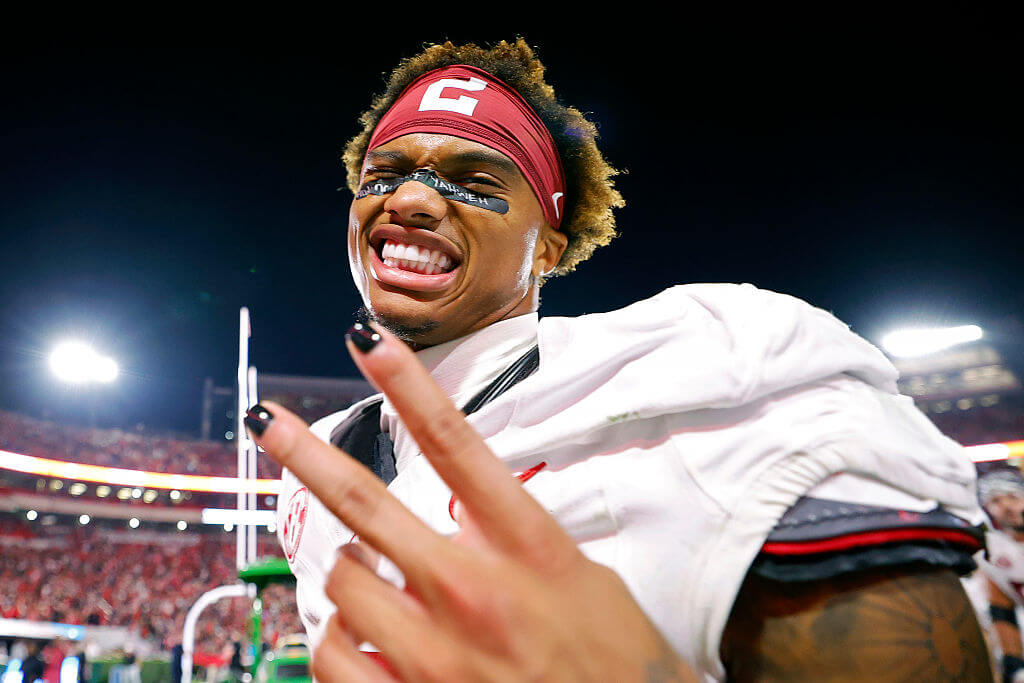
Ryan Coleman-Williams wore No. 2 his first two seasons at Alabama but switched to No. 1 this offseason. (Todd Kirkland / Getty Images)
The decision this year to change his name was to honor her, but he heard his grandfather’s voice in his head when he made it.
As for the number? When Coleman-Williams arrived at Alabama, Kendrick Law wore No. 1. Last year, Coleman-Williams let new teammate Isaiah Horton take it after transferring to Alabama from Miami.
This year, he reclaimed it.
It was always going to be Alabama. In Coleman-Williams’ earliest years, he was an Auburn fan because his father played there. But when Coleman-Williams was 8, his mom began a relationship with an Alabama fan who coaxed the family into joining the “winning side” of the Iron Bowl.
“We called ourselves converted,” Tiffany Coleman said.
The day Nick Saban retired from Alabama, Coleman-Williams decommitted. But Coleman knew her son would end up playing for his dream school. Two weeks later, after an official visit, he was back in Alabama’s recruiting class. He reclassified and signed with the Crimson Tide as the nation’s No. 8 overall recruit.
His first two career catches went for touchdowns. A month later, a leaping, twisting catch and a spin move to elude a pair of Georgia defensive backs for a decisive touchdown in Kalen DeBoer’s SEC opener made Williams a 17-year-old sensation. It propelled him into the sport’s collective consciousness — and intensified the spotlight.
ABSOLUTE SCENES IN TUSCALOOSA!!!
RYAN WILLIAMS WITH A 75-YARD TD TO RETAKE THE LEAD! pic.twitter.com/pvc9ML7E7G
— SportsCenter (@SportsCenter) September 29, 2024
The spotlight brought expectations.
After the season, multiple programs reached out with blank check offers to transfer. Williams never considered it.
“I take ‘committed’ very strongly. That’s how I was raised my entire life. When I came out of high school and said I was coming to Alabama, that’s all I wanted to be a part of,” Coleman-Williams said. “And I wanted to be able to put on for my state and kids literally in the same classroom I was in, be able to show them it’s possible.”
But the spring brought with it injuries. First, a bruised knee. Then a shoulder injury. He didn’t participate in the spring game either, but his autograph line for fans dwarfed the lines of his teammates.
His breakout freshman season provided plenty of off-field opportunities, highlighted by the video game cover. He was working harder than he’d ever worked, but this offseason, he saw there was more in the tank he didn’t recognize he had. Other “external issues” were on his plate, too.
“I wasn’t able to focus on why people wanted me to do those things: Because I’m pretty good at football. And last offseason, I really didn’t have a chance to focus on that because there were so many other places I was getting pulled left and right,” Coleman-Williams said. “I can only look myself in the mirror and say you gotta do better. That’s what I’m doing this offseason.”
The injuries continued in the fall. He suffered a concussion in a season-opening loss to Florida State. In October, he suffered a leg injury. He wasn’t 100 percent, and over time, he forgot what that felt like.
The injuries weren’t enough to keep him out of games but heavily limited his availability in practice during the week.
“It wasn’t just one thing. That takes a toll on you physically. I was more than 90 percent but it was a matter of that confidence. Imagine, as soon as you’re over it. You’re good. Then it’s something else. That’s where my mental was,” he said.
He hadn’t dealt with injuries in high school or as a freshman. As he struggled, mounting criticism from fans weighed on him, too.
And DeBoer and his offensive staff were looking to grow his role in the offense as well, using him primarily in the slot instead of outside, where he had made the most impact in his first season.
Williams learned his comfort level was far greater on the outside, and by season’s end, the Crimson Tide were using him more on the outside again.
“You’re still learning with him. You’re trying to expand his game and use him in more ways, so he isn’t in just one spot. Along with that, you’re trying to figure out, ‘OK, how much is too much?’ And the quarterback and receiver have to be on the same page,” DeBoer said.
As a freshman, he earned double-digit targets in three games. But in his sophomore season, he was targeted three or fewer times in four games, including none in a win over Auburn, once in a win over Tennessee and just three in a Playoff win over Oklahoma.
His receivers coach, JaMarcus Shephard, said they never had conversations about targets.
“He’s never going to complain. Now, was he frustrated? Sure, you could see it all over him,” said Shephard, who is now the head coach at Oregon State.
Coleman-Williams did his best to infuse his team with energy on the sidelines when he wasn’t making an impact on the field, but it weighed on him. So did a 38-3 Rose Bowl loss to Indiana that ended Alabama’s season, leaving the aftertaste of the program’s worst loss since 1998 in players and coaches mouths.
He spent this spring hoping to build the confidence that produced the plague of drops as a sophomore. And to this point, he’s been injury-free.
Tiffany Coleman sat in the stands at Alabama’s A-Day scrimmage this spring and saw something she hadn’t seen in a while: Ryan looking like his old self. Defensive backs couldn’t cover him.
He caught three passes for 59 yards. She wasn’t concerned with his number or that his nameplate hadn’t debuted. She was concerned with what she saw under his helmet.
A smile.
“People better watch out,” she said.