
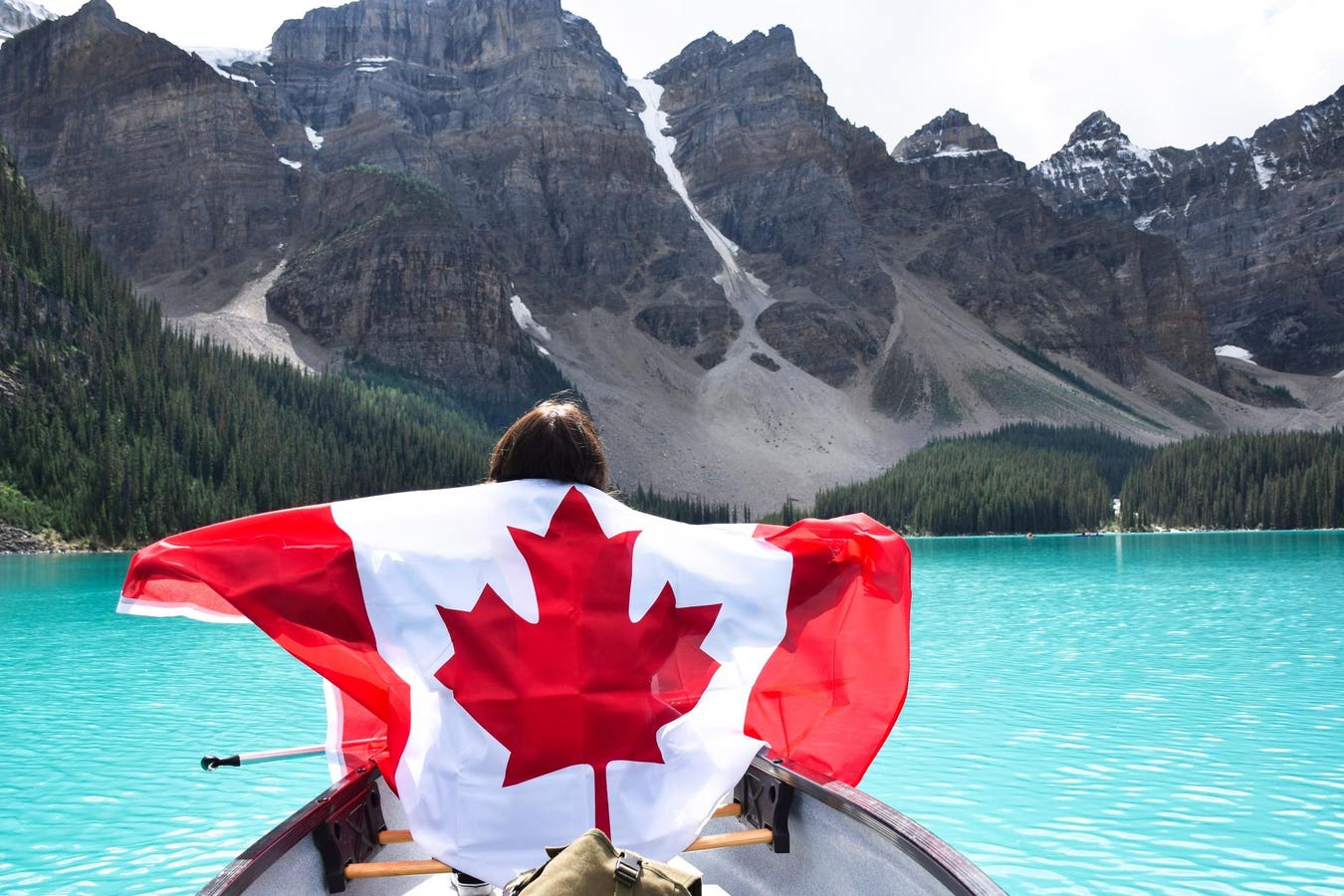
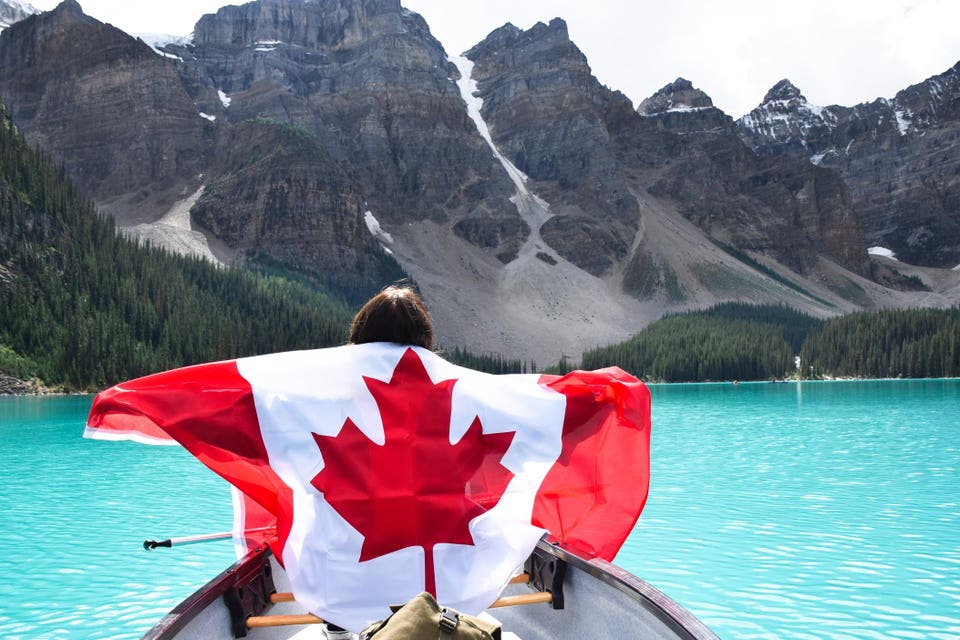
Young girl in a canoe from behind holding canadian flag spreading her arms, surrounded by turqouise blue of Lake Moraine.
getty
The Canadian government is opening the gates to over 200 spectacular landscapes this summer by waiving admission fees to national parks, historic sites, urban parks and marine conservation areas and lockage fees at canals on historic waterways.
On paper, it is free, but those who fail to read the fine print on parking mandates, camping discounts and provincial jurisdictions could be surprised.
What The ‘Canada Strong Pass’ Actually Covers
Last month, Parks Canada updated its website with new information for summer travelers stating that from June 19 to Sept. 7, the Canada Strong Pass grants free admission to 223 sites.
Welcome sign at the entrance to Jasper National Park, Alberta, Canada
getty
There are no geographical or citizenship restrictions. The gates are open for Canadians and international visitors alike.
Furthermore, visitors don’t need to apply for a physical card or download an app. They can simply arrive at the gate and enter.
Free daily admission applies across 48 national parks, 171 national historic sites, 5 national marine conservation areas and the Rouge National Urban Park in Toronto, all managed by Parks Canada.
Spirit Island in Maligne Lake at sunset, Jasper National Park, Alberta, Canada.
getty
Popular Canadian national parks such as Banff and Jasper in Alberta, Pacific Rim in British Columbia, Gros Morne in Newfoundland and Labrador and the Saguenay–St. Lawrence Marine Park in Québec are all included.
The waiver also applies to lockage at canals on historic waterways such as the Rideau Canal National Historic Site in Ontario, which Parks Canada administers.
Parking Surcharges And Mandatory Shuttles For Daily Visitors
Parks Canada has explicitly excluded parking from this waiver. Therefore, when visitors are driving through the park gate for free, they will not be parking for free.
In Banff, parking at Lake Louise is not only difficult in summer, it costs CA$42 per vehicle.
A bus waits for passengers at the Fairmont Lake Louise.
getty
Since parking at Lake Louise usually fills up by sunset and nearby Moraine Lake is completely closed to personal vehicles, visitors are required to book a commercial tour, public transit or a dedicated shuttle.
For all visitors, the Parks Canada Shuttle costs CA$12.75 for adults, $6 for seniors 65+, and $4 for youth under 17, plus a nonrefundable reservation fee of $3.5 online or $5.5 by phone. The shuttle of a private operator, Moraine Lake Bus Company, costs between $70 and $115.
Guided Tours, Hikes And Programs May Still Cost Extra
Parks Canada’s website states that fees still apply for guided tours, hikes, and programs that are not usually included with admission, as well as for services provided by third parties.
A ranger is talking about bear safety in Banff National Park, Lake Louise, Canada.
getty
This distinction matters in places where the main experience is not just walking through the gate, but joining a guided wildlife walk, booking a boat trip or taking part in a historic program.
Some participating sites may offer guided tours at special rates, but visitors should check directly before building a free summer itinerary around a paid activity.
Even though Radium, Miette and Banff Upper Hot Springs are within national park borders, they are managed by the Canadian Rockies Hot Springs Enterprise Unit, and not Parks Canada. Hence, they are also excluded. Visitors should expect to pay regular admission fees.
The buildings and pool of the Banff Upper Hot Springs.
getty25% Discount For Overnight Visitors
Canada Strong Pass means free admission, but not free lodging. However, Parks Canada is offering a 25% discount for the same period on camping and other overnight stays operated by Parks Canada.
The discount applies to tents, RVs and unique roofed options, such as oTENTiks (a hybrid A-frame cabin/tent), MicrOcubes, Yurts, Tipis, rustic cabins and the suspended water-drop-shaped Ôasis pods.
Group of mountaineer resting and enjoying view of Moraine Lake at Banff National Park, Canada
getty
Not included are private lodges, third-party hostels and historic hotels within national park boundaries, such as the Fairmont Chateau Lake Louise and the Rimrock Banff, Emblems Collection, which is set to reopen in July 2026.
Federal Or Provincial Parks
One of the easiest mistakes travelers could make is assuming that all parks in Canada are included. But the Canada Strong Pass does not apply to provincial, territorial, municipal or private parks. And that distinction is quite important.
Visitors planning to explore popular provincial destinations such as Algonquin Provincial Park in Ontario, Garibaldi Provincial Park in British Columbia, or Mont-Tremblant National Park in Québec should expect to pay admission fees.
Woman sitting on a rock overlooking Algonquin Provincial Park forest and lakes.
getty
In recent years, U.S.-Canada travel patterns have become volatile.
Last year, summer flight bookings on Canada-U.S. routes were down more than 70% year-over-year. This year, U.S. domestic travel spending is expected to climb to $909 billion in 2026, according to U.S. Travel Association’s latest forecast.
Against that backdrop, the Canada Strong Pass could be a way to attract more U.S. travelers to Canada. But the fine print matters. Free admission is not the same as a free trip.