
Sign up for the Slatest to get the most insightful analysis, criticism, and advice out there, delivered to your inbox daily.
There are some good reasons to be wary of cruises. One of the most striking memories for many of us from the early days of the COVID-19 pandemic is the Diamond Princess. At one point, the luxury ship accounted for a remarkable 50 percent of all confirmed coronavirus cases.
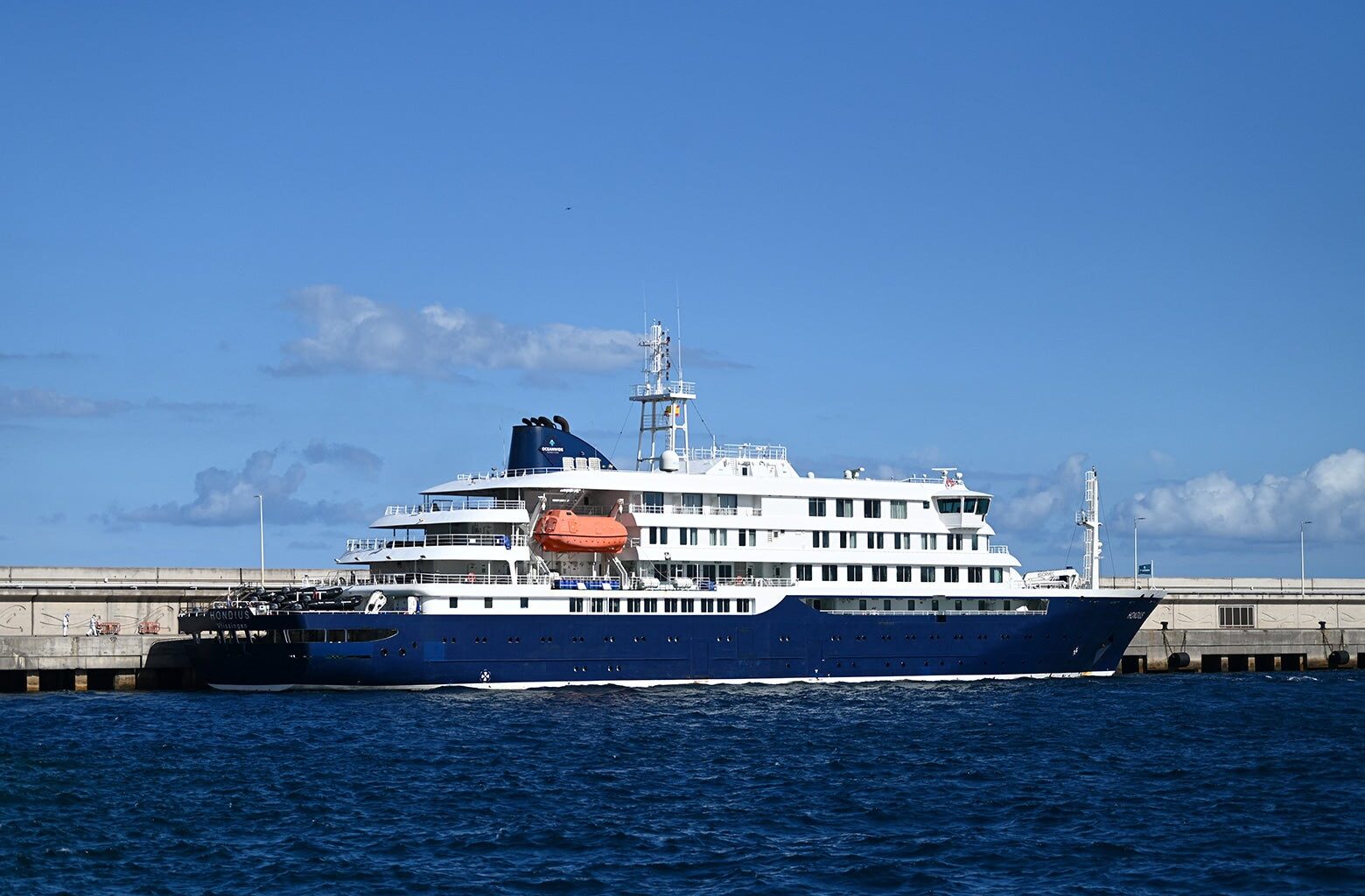
More recently, the hantavirus has infected passengers aboard the MV Hondius, and although it doesn’t look as if the virus will cause a pandemic, in some ways the situation is worse (at least for those on the cruise). With hantavirus, the incubation period can take up to six weeks, so people must be isolated for a really long time to ensure they won’t get sick and start infecting others. That’s not even the only cruise in the news right now for public health reasons—a norovirus outbreak on a ship called Ambition recently made dozens of passengers sick shortly after the trip began.
As an epidemiologist, I am regularly asked whether I’d take a cruise. There are constant outbreaks of infectious disease on these floating holidays, and people want to know whether I would tolerate the risk of getting ill on a cruise ship. So, as someone who knows a fair bit about disease spread, do I think cruises are worth it, health-wise? The answer, as with many things, is a bit complicated.
From a theoretical perspective, cruises are absolutely great places for illnesses to thrive . A 2022 study gave participants contact-tracing devices to estimate how many close contacts they had each day while on a cruise—basically, evaluating the likelihood of an infectious disease’s spread. They found that the average cruise ship passenger had a total of 20 unique close contacts a day, despite measures on the ship in question to try to reduce the number of COVID-19 cases aboard. That’s a lot of potential for an infection to pass from person to person.
The problem is, we don’t have a great deal of evidence showing that infections are more likely on cruises than they are on land. (Maybe highly social people go on cruises; maybe people just generally come into contact with lots of others on vacation.) Cruises with big outbreaks can make the news because of the drama involved, even when the infection aboard isn’t novel. For example, in the case of the cruise with norovirus, the French authorities temporarily prevented anyone from getting off the ship, leaving passengers trapped on the vessel with norovirus. A cruise full of sick people is a news event. Some of those cruises are also famous in the scientific literature—one of the foundations of modern contact tracing comes from an outbreak of gastroenteritis on a cruise ship.
When it comes to evidence of how common illness in fact is, what we mostly have is research looking at why people saw a doctor on a cruise. A study of a 105-day, around-the-world cruise found that about 20 percent of the passengers visited the ship’s doctor for an infection, mostly respiratory or gastrointestinal. If that were the true rate of disease on the vessel, it would actually be quite low—on average, adults have more than one respiratory infection a year. That comes out to less than one respiratory infection in 365 days.
But the issue with studies like this is that they tell us little about the true number of infections. They take into account only those bad enough to interrupt a passenger’s holiday and force them to seek medical attention. Many cruise lines require travelers to isolate in their cabins if they have an infectious disease—sometimes even after they recover, if the cruise is still going. This rule almost certainly makes passengers much less likely to see a doctor unless they’re feeling very unwell.
The Diamond Princess is actually quite an informative example of how many people might be evading doctors on cruise ships. In that outbreak, 20 percent of passengers eventually tested positive for COVID-19 as a result of their time aboard. Modeling, however, suggests that the true number was likely far higher, possibly as much as 30 percent of the entire ship. And that’s just one disease. Think about all the other ones passengers could bring with them when they embark on a cruise.

Gideon Meyerowitz-Katz
What You Should Take Away From That New Ozempic Study
Read More
In other words, cruise ships almost definitely pose a high risk for infection, but it’s hard to assess exactly what that risk looks like in practice. We know that diseases can and do spread easily between people on cruises, but how much worse they are than in general life is hard to evaluate for sure.
So, knowing all of this, would I go on a cruise? The answer is … maybe.
This Content is Available for Slate Plus members only
I Know Way Too Much About Infectious Diseases. Here’s Why I’m Considering Taking a Cruise With My Family Anyway.
Here’s how I see it: You are probably more likely to get sick on a cruise than on many other kinds of holidays. (A beach vacation in a cottage, for example, wouldn’t bring you into contact with that many other people.) But I happen to have two young children, which means that my tolerance for getting a bit unwell is actually quite high. Our entire household gets sick at least six times a year. And as a parent, I appreciate all of the services that a cruise offers. I don’t have to think about what we’ll eat for dinner. I don’t have to think about where we’ll go that day. My family has to balance the risk that we might all catch something nasty against the risk of losing our minds if we choose something else to do with our vacation time. If you’re an older adult, you might want to weigh the fact that you could be more vulnerable to infection on a cruise. Then again, maybe you’d also appreciate getting to see the world without having to catch a series of flights or drive a long distance. Cruises do have a lot going for them.
If you’ve got a cruise booked, it’s perhaps worth thinking about how you might reduce your risk of infectious disease. Wearing a mask, washing your hands regularly, and spending time outside on deck are all practical things you can do to make it less likely that you’re the one who has to self-isolate until you reach port.
As an epidemiologist who knows far too much about infectious disease, I’m still toying with going on a cruise next year with my family. It’s not a choice I’d make lightly. But, weighing the risks and benefits, it doesn’t seem like the worst idea in the world.

Sign up for Slate’s evening newsletter.