
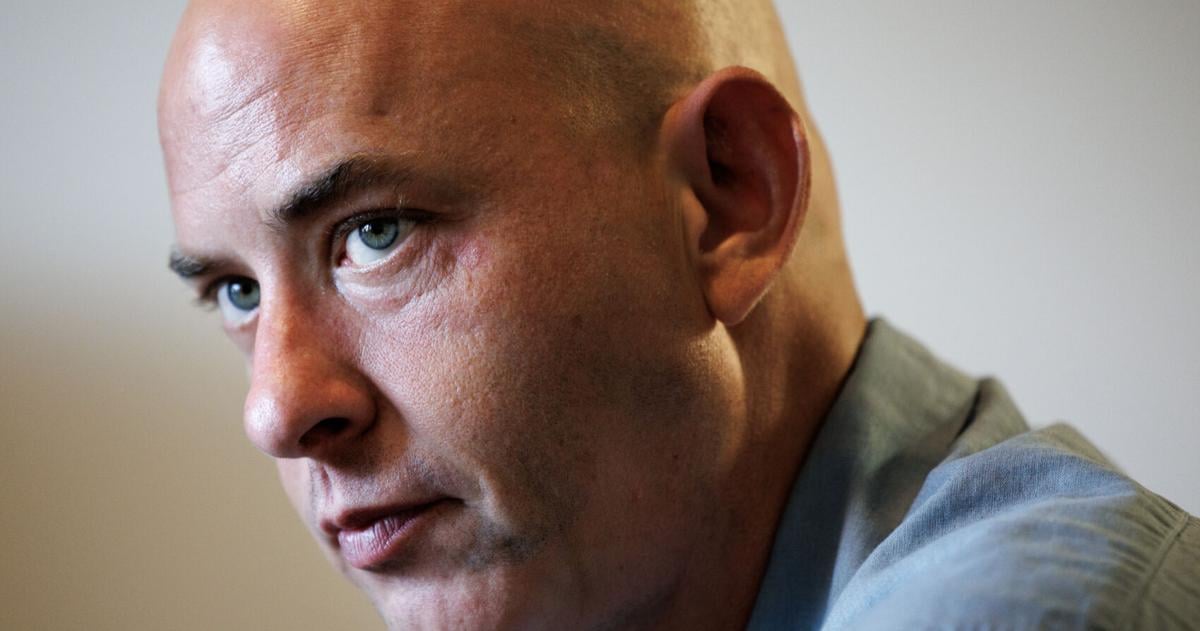
Niemiec, who joined the department in 2004, recalled a story from his rookie days.
A father dialed 911 because he could no longer handle his son — a towering 20-year-old whose developmental disability left him with the temperament of a 9-year-old. Niemiec, who had no crisis intervention training, strode into the home and told the son he needed to listen. He threw a tantrum, Niemiec said, and the pair fought.
If he could redo the interaction today, Niemiec would step back, be patient and recognize the man had a disability.
“NAMI is helping us prevent … those mistakes,” he said, “which inevitably saves lives.”

Members with the National Alliance on Mental Illness help train officers with the Charleston County Sheriff’s Office in 2017.
File/Grace Beahm Alford/Staff
Expanding crisis training across SC
Some South Carolina law enforcement agencies have dedicated crisis intervention teams. The city of Greenville’s police department created one in 2010 after a 39-year-old man with schizophrenia died in its custody.
Andrew Torres’ family members requested that he be taken to a hospital for involuntary commitment by plainclothes officers trained in dealing with the mentally ill. None was available, according to court documents. A struggle ensued between Torres and officers when they arrived at his house. Torres went into cardiac arrest and soon died.
Prosecutors didn’t bring charges against the officers, and the police department’s investigators determined they didn’t violate any policies or procedures. But Torres’ death made the top brass take a hard look at how they could improve encounters with people experiencing a mental health crisis, said Stacey Owens, a former Greenville police captain.
Owens’ chief asked him to head up the effort. He worked with the local NAMI chapter to organize the department’s first training, which hosted about 25 officers. The program grew from there.
Officers become certified members of the crisis intervention team after completing the training, a Greenville police spokesperson said. The goal is to send every patrol officer, and new employees must attend within their first year.