
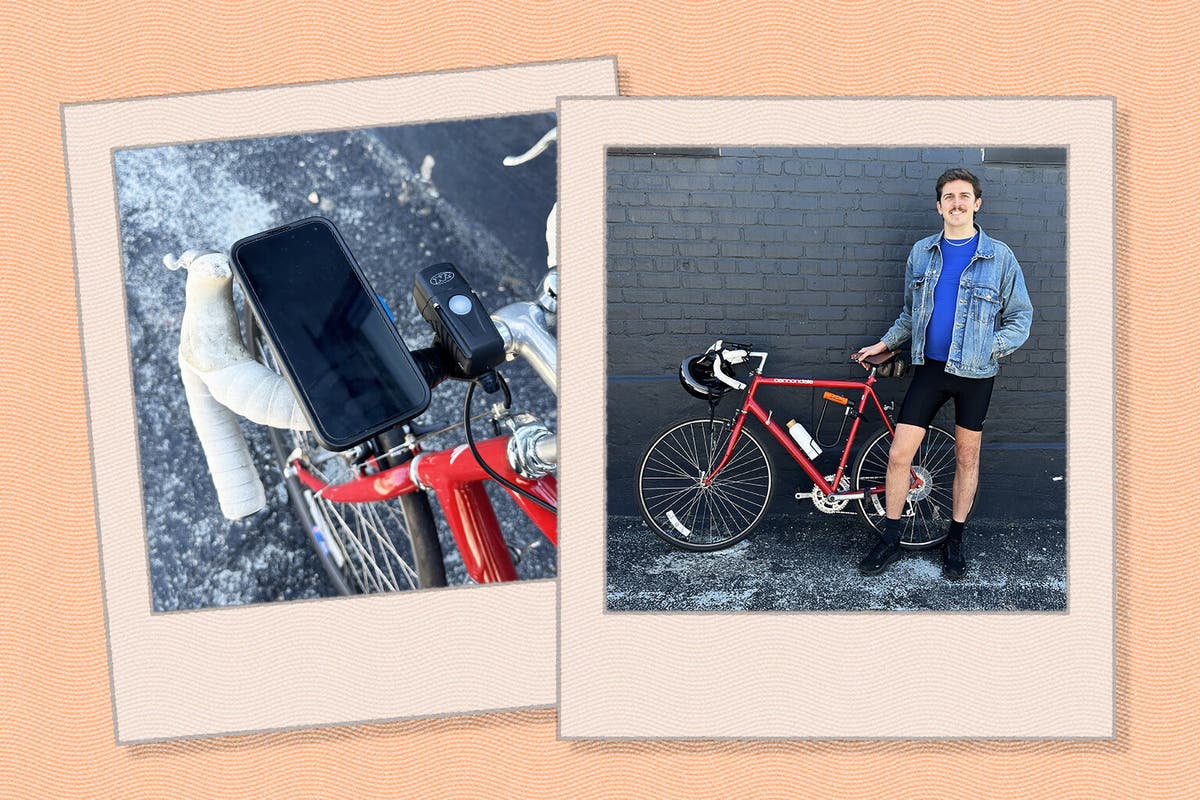
I have been trying to be a city biker for over a decade.
As a teen, I put in a lot of hours on two wheels. My father, who was an avid cyclist, and I would regularly drive upwards of 45 minutes from our Pennsylvania town for scenic bike routes in state parks; we’d also take them on our annual vacations to the Outer Banks. We’d even bike 17 miles through the covered bridges that dotted the state. I always looked forward to time spent outdoors behind the handlebars of my sleek, black Jamis Coda.
But once I decided I wanted to live a car-less life in the city, it dawned on me that the only way I could regularly bike wasn’t by going on scenic trips. It was by making the bike my primary mode of transportation.
The problem was, I’d never biked anywhere that cars also were. The idea of hitting congested streets daunted me, but still I schlepped my teenage Jamis Coda from Pennsylvania to Boston to New York, telling myself I’d face my fear eventually.
Eventually, last year, my brother-in-law offered me his immaculately kept 1990 Cannondale ST-600 for the whole price of free. I resolved to take the bike on one condition: I’d become a city biker for real.
To me, that meant replacing my bus-and-two-train commute from Bushwick to Wirecutter’s Long Island City office with a bike ride at least once a week, weather permitting. To prepare, I spent hours browsing Wirecutter’s extensive and thorough coverage of bike gear and purchased a medley of new equipment, namely a bike lock, a bell, front lights, and a multi-tool to install them all. I even practiced the 6-mile route to get the lay of the land.
Despite my hours of research and planning, at that point I did not buy the one thing I would come to rely on most: my Quad Lock Out Front Mount.
Top pick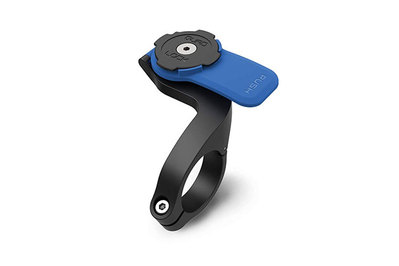
This clamp-on mount fits any handlebar size. Once you’ve locked your phone into it (using a Quad Lock case or the Universal Adaptor), the phone stays safely and securely in place.
The fateful September Tuesday of my first bike commute was crisp with promise. My phone was tucked in my jacket pocket, patching Google Maps directions into my one earbud. I was a quarter of the way through my journey when the flat Jefferson Street became a moderate downhill, nothing scary. I clipped a little bump along the way, but I recovered and kept rolling.
That’s when I heard it: a loud thud on the concrete. My phone had flown out of my jacket pocket into traffic.
Despite the odds, it survived without a crack. My ego, however, was bruised enough that I bought the mount and a matching phone case the next day.
The phone case twists and locks onto the mount, which in turn clamps onto a bike’s handlebars. My phone hardly vibrates at all in the Quad Lock gear, no matter how bumpy the road becomes. Hannah Rimm/NYT Wirecutter
During my research, I had considered buying a phone mount, but it seemed like a nice-to-have compared to all the true necessities I purchased. I told myself that I would learn the route quickly enough and voiced Google Maps instructions would carry me through until then.
I was mistaken. That first commute taught me that city biking is exhilarating but unpredictable: not only can a bump in the road make your phone’s warranty policy flash before your eyes, but also traffic jams can clog quiet streets, cars can make unforecasted turns, and road repavings can throw you off your route.
To deal with hazards on the fly in unfamiliar places, I would need up-to-the-minute directions, yes, but also a visible map of my journey and the certainty that my phone wouldn’t become roadkill in the process. And after eight months and 200 miles of concrete, I can now confidently say the Quad Lock Out Front Mount has been the most transformative of everything I bought for my new life of city biking.
The top recommendation in our guide since we first published it in 2019, the Quad Lock Out Front emerged as the best option for keeping a phone safely and securely in place across both smooth and rough roads. My commute covers everything from freshly paved roads to rocky industrial streets to bumpy railcar tracks, and my phone remains in place across them all. Securing the mount to my handlebars was a little finicky because of the drop bars and handlebar tape, but the mount comes with three different spacers so that you can find the right fit.
Hannah Rimm and Lucas Vieira/NYT Wirecutter
The mount connects to your phone through either a proprietary phone case (available for Apple iPhone, Samsung Galaxy, and Google Pixel handsets) or the Quad Lock Universal Adaptor, which you attach to an existing case. I opted for Quad Lock’s case to avoid worries about proper application, but our testing found both options to be secure.
The ability to see my route in real time has been a game changer. Relying exclusively on a preplanned route means remembering every turn, which can be dizzying for a newbie on longer commutes, not to mention unresponsive to traffic conditions and road work. Being able to peek at my path while pedaling lets me focus less on navigating and more on getting to my destination safely.
A phone bike mount is a worthwhile investment for anyone who bikes regularly to get around — even for people who use bike shares, such as New York’s Citi Bike program. If that’s you, consider the Nite Ize Wraptor, our phone-mount budget pick, which is small enough to fit in a pocket and doesn’t require a tool to install, so it’s easily moved across bikes (at the expense of being less steady during a ride).
Budget pick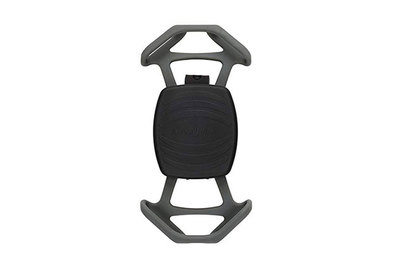
Although not as rock-solid as the Quad Lock system, this mount held phones the most securely of any silicone-strap models we tested, and it should be just fine for occasional use or for bike-share riders.
Since I got my Quad Lock Out Front Mount, my commutes have become highlights of my week. I’ve relied on phone navigation less as I’ve gotten comfortable with my standard route, but it’s crucial anytime I go to meet friends after work or take a new journey on weekends. It has even made my partner more comfortable biking with me, because I can let him know early and often about turns and busier areas.
Of course, no single tool can change the reality that city biking is a dangerous and occasionally unpleasant endeavor.
There will always be roads without a bike lane, angry drivers honking or yelling, and cars forcing me into traffic. There will always be disagreeable interactions with drivers about who was in the wrong. There will always be days where I greet my co-workers in office wear and compression shorts soaked in sweat. And despite my best efforts, the experience has never felt quite like the car-less miles and miles I put in with my father.
But that feeling I get every morning, as I lock my phone into the mount with the knowledge that I’ll be crossing boroughs and bridges and miles of concrete, watching the city transform with every stroke of the pedals? That’s something better.
This article was edited by Maxine Builder and Sofia Sokolove.