
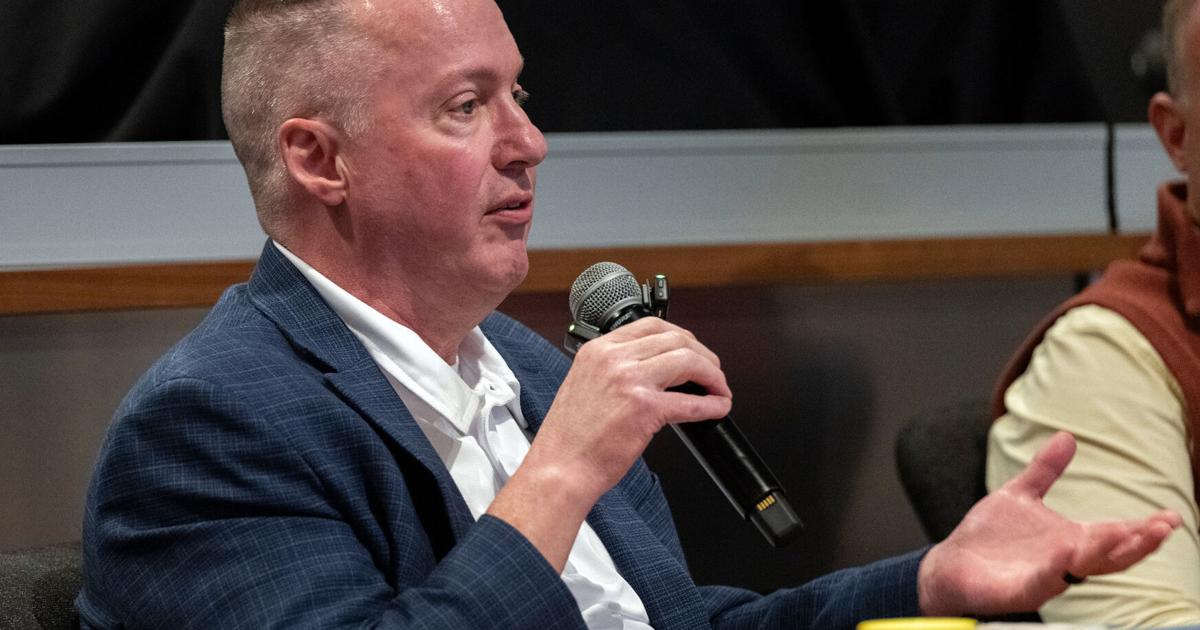
John Roberts and Mickal Adler, who formed the Metairie-based private equity and venture capital fund Boot64 in 2023, are among the state’s most active investors. Over the past three years, they’ve written 51 checks approaching $7.5 million to 40 different startup companies around Louisiana — and a few elsewhere.
Several more deals are scheduled to close over the next two months.
The partners are participating in a state-run program that supplies federal matching dollars for private investment in early-stage companies that have the potential to grow. A few companies in their portfolio have doubled or more than doubled in value.
Roberts, a Tulane University graduate who spent more than two decades running a chain of convenience stores before partnering to launch Boot64, now spends his days seeking promising companies and evaluating their potential to pay off for his public and private investment partners.
In this week’s Talking Business, Roberts shares his thoughts on how the state’s small business investment program is working three years in and what entrepreneurs should — and shouldn’t — do when seeking startup capital from investors.
This conversation has been edited for brevity and clarity.
How did you and Mickal launch Boot64?
In 2022, we learned that Louisiana Economic Development had received federal funding that could be used as matching funds for venture capital firms. We responded to a request for qualifications and became the first to close with the program. We launched June 1, 2023.
Three years later, we will have almost invested our entire $10 million fund. After completing four committed deals that we haven’t closed yet, we’ll probably only write one or two more checks, and then within about 60 days we’ll be fully invested. Then, we are planning to launch a $20 million fund with LED as an investor again.
How has the state’s startup community evolved since Boot64 debuted?
There are certainly more funds in operation now, so when any of us find a good deal, we have more investors call to say, “Hey, I found this great deal. Are you interested?” And that’s good because any professional investor is never going to be the only check in the round.
Also, the founders are better educated, the whole ecosystem has matured, and there are more networking events. Founders are having more interactions with investors, and information sharing and conversations like this are happening over beers.
What types of startups are hot right now?
Health and wellness have gotten big. We’ve invested in a couple of sleep, longevity and wellness companies as well as pure biotech companies like Beken Bio and Informuta, which tackle cancer screening and antibiotic identification, respectively.
As you look at the 40 companies you’ve invested in, what are some of their common characteristics?
We really like domain expertise. If you’ve worked in a particular job or industry for years and you’ve seen a recurring problem and know how to fix it, we love that. For instance, SleepNavigator founder Lea Desmarteau has years of experience working in and owning sleep clinics. She saw the communication problems between doctors’ offices, sleep clinics and insurance companies, and she created software to solve the problem.
With AI, anybody can build anything, but they might lack the domain expertise. If we meet somebody who’s just arrived from Arkansas, and they decide they want to track barges on the river but have never worked in that industry, 99% of the time we’re not interested.
You’ve learned a lot about startups over the last few years. What advice would you give to founders looking to raise money and build successful ventures?
No. 1, they need to be prepared to talk about their businesses with investors in detail.
Even though we’re investing a relatively small portion of the company, we are essentially becoming their business partner, so we have to verify all their incorporation documents, sales documents and vendor contracts, and we need to understand the founders’ backgrounds.
In our industry, the traditional way to present all that material is through a collection of documents called a “data room,” which contains all the necessary information for an investor to do due diligence.
Sometimes, we’ll be excited about a potential investment, and we’ll ask the founder to send us their data room, but they won’t know what we’re talking about. Then we send them a template, and they respond with disorganized, incomplete or out-of-date information.
Any of those things throws cold water on an investor’s enthusiasm because time kills deals … and you’re wondering, “Is this founder capable of running a complex organization, building a team and making sales?” If they can’t put together a good data room, that’s a yellow flag or a red flag.
What else do founders looking for investment need to know?
They need to raise money with specific goals and milestones in mind.
Don’t raise $1 million, hire a bunch of people and figure out how long the money can last. No investor cares how long you can pay yourself and your people.
Investors care about what milestones and what accomplishments you can achieve with that $1 million that will set you up to be prepared for the next funding round. That means boosting your daily active users or reaching a revenue milestone or creating the minimum viable product version of your software. Obviously, being profitable is the best and ultimate goal.
What kind of revenue are startups targeting?
At the early stage, $1 million in annual recurring revenue is the goal. For Series A rounds, investors are going to want to see around three times that.
I tell founders not to raise more money than they need. That makes people a little loosey-goosey with it, and they end up making big mistakes. They need to treat it like it’s their own money.
What do founders get wrong?
They can be perfectionists, which is a mistake.
It’s important to get paying customers before you try to make everything perfect about your company. They will be your true believers and help you develop your product or service.
Your business can die if you spend a year building a totally free pilot, and then another six months trying to get people to start paying for it rather than getting just a small number of customers who have the problem you’re addressing.