
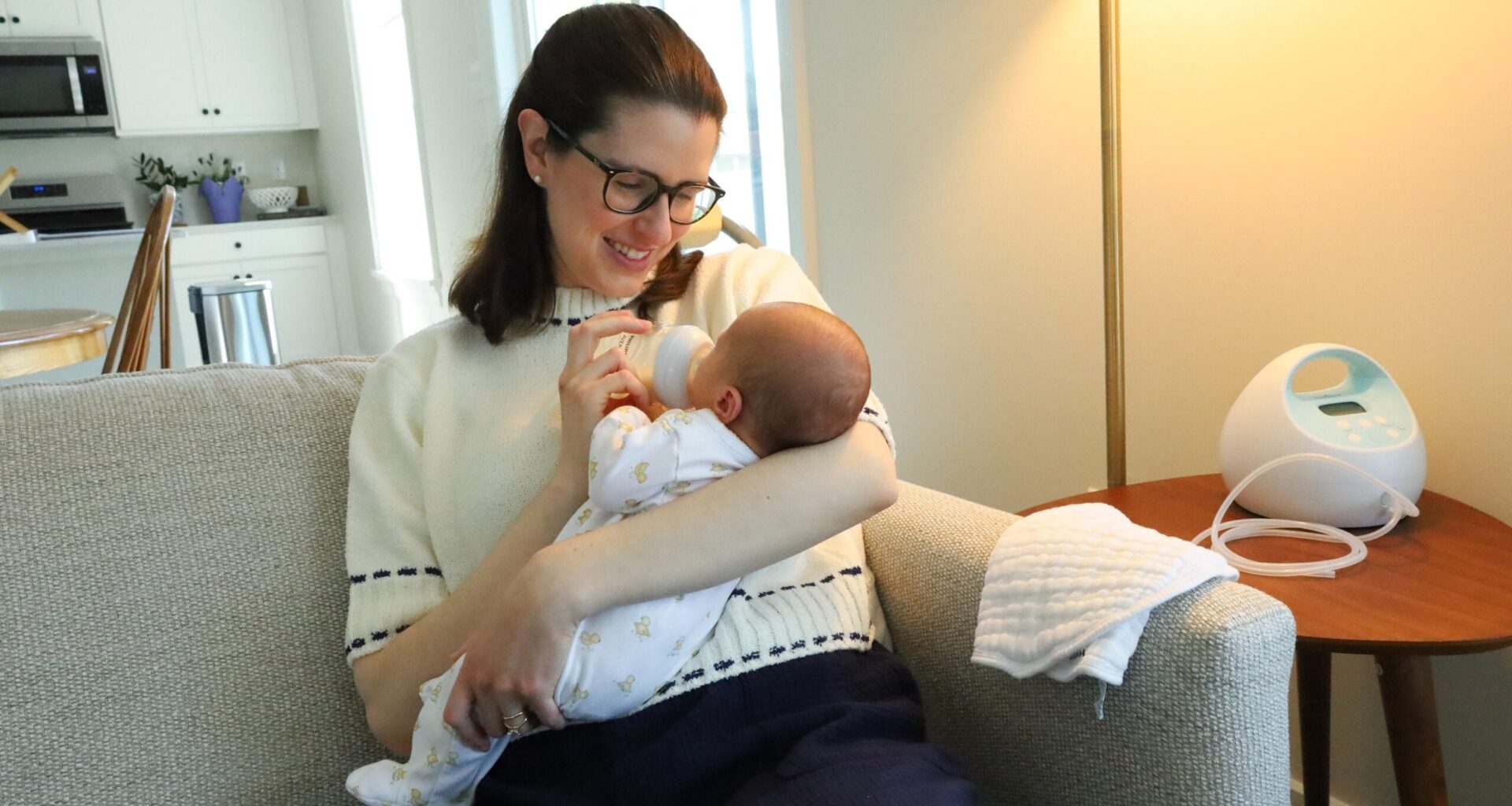
Traveling with the ‘Mary Poppins bag’ to catch early signs of complications
New Jersey has had some of the worst maternal mortality and morbidity rates when compared to neighboring states. Reports have shown significant racial disparities and high numbers of cesarean surgical deliveries.
Pregnancy-associated maternal deaths are still considered rare. There were 258 fatal cases among more than 500,000 live births from 2019 through 2023, state data shows. But most of those deaths, 86.7%, were preventable, according to the state’s maternal mortality review committee. Other serious, nonfatal complications could also be avoided, experts say.
Family Connects NJ, modeled after a foundational program that originated at Duke University in North Carolina, is among several initiatives that the state has launched in recent years to address the public health issue.
The New Jersey Department of Children and Families oversees and funds the local postpartum home visitation program. It contracts with regional community organizations, which provide the boots on the ground.
Participation is voluntary and open to any family with a newborn, either through birth, adoption or fostering. Home visiting services are also offered to parents and families who’ve had stillborn births or are grieving another kind of infant loss.
Nurses visit parents and babies within the first two weeks after delivery, or whenever the newborn comes home. That’s usually before most women have their first postpartum follow-up appointment with their obstetrician or primary care doctor.
“Our goal is to get in there early to check both mom and baby for maybe something that that mom was going to wait until that next appointment for,” said Cassie Scanlon, a registered nurse and nursing supervisor at The Cooperative.
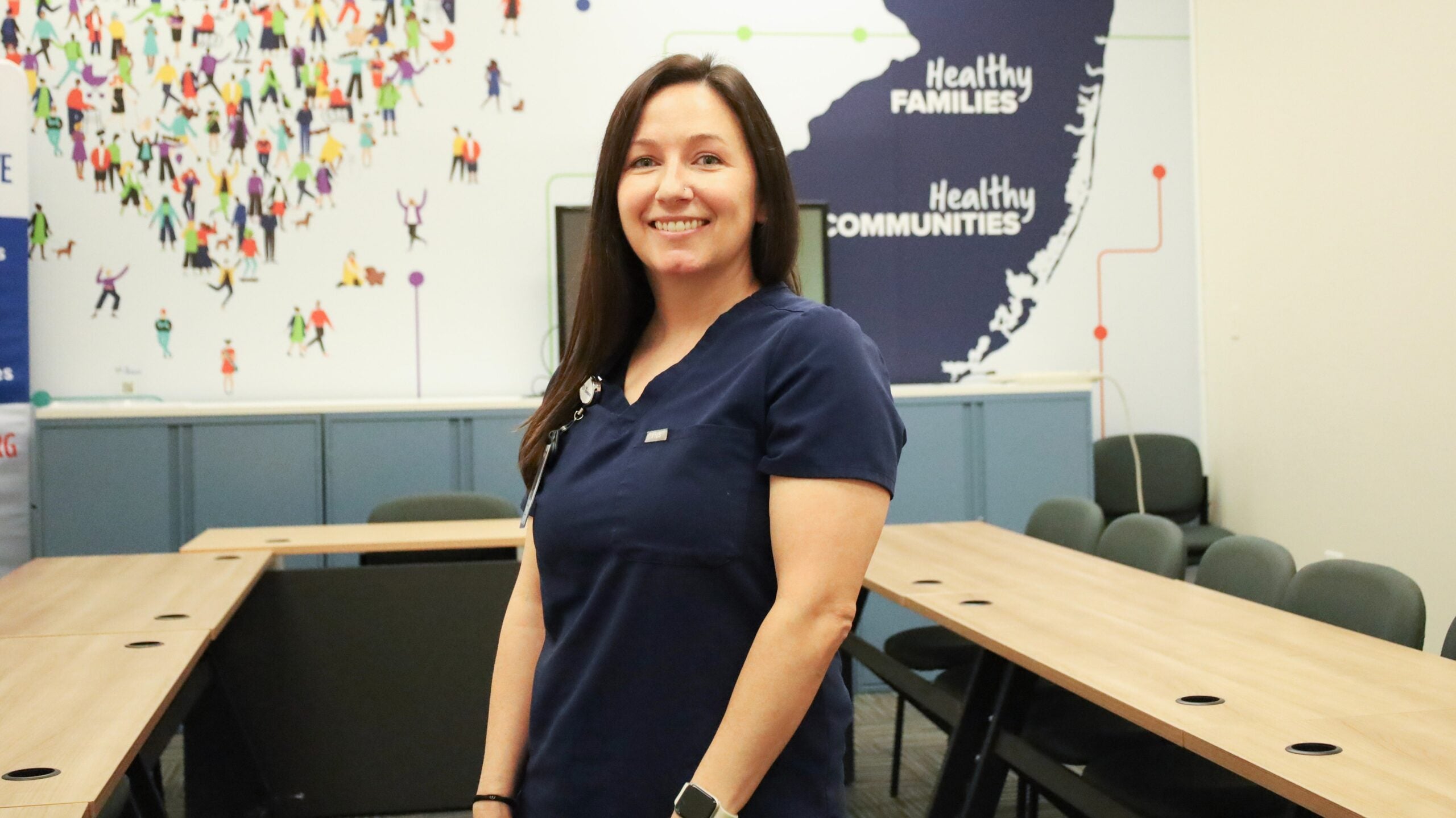 Cassie Scanlon, registered nurse and nursing supervisor at The Cooperative in Atlantic County, provides free home health visits to families with newborn babies within the first two weeks of the postpartum period through Family Connects NJ. (Nicole Leonard/WHYY)
The community consortium contracts with the state to do postpartum home visits in all South Jersey counties, including Atlantic County.
Each visit can last up to two hours or more, Scanlon said. She’s always prepared with her “Mary Poppins” backpack of supplies, which contains a blood pressure cuff, a stethoscope, thermometers, a pulse oximeter to check mom’s oxygen level and heart rate, gloves, and hand sanitizer.
“And then, of course, the portable scale,” she said, taking out what looked like two flat, rectangular white plastic boards. They snapped together to create one longer board and were attached to a digital scale. “And we weigh baby naked on here so we get a nice accurate reading.”
How much food babies are getting is a top concern among mothers Scanlon sees on her visits. It can lead to a lot of anxiety and stress, she said. Nurses can use the scale to show parents a difference in weight before and immediately after a feeding.
The home visits also prioritize maternal health. Nurses give all mothers and birthing parents a “head-to-toe” assessment and take their blood pressure, record vitals like heart rate, examine incision sites and go over healing progress after vaginal deliveries.
Health providers identified a “serious postpartum health concern” that could not wait for a future doctor’s appointment in 18% of home visits in 2025, state officials said.
In these situations, Scanlon said nurses will arrange an immediate appointment with a patient’s obstetrician or regular doctor. In rare, but serious cases, they may need to go to the hospital for emergency care.
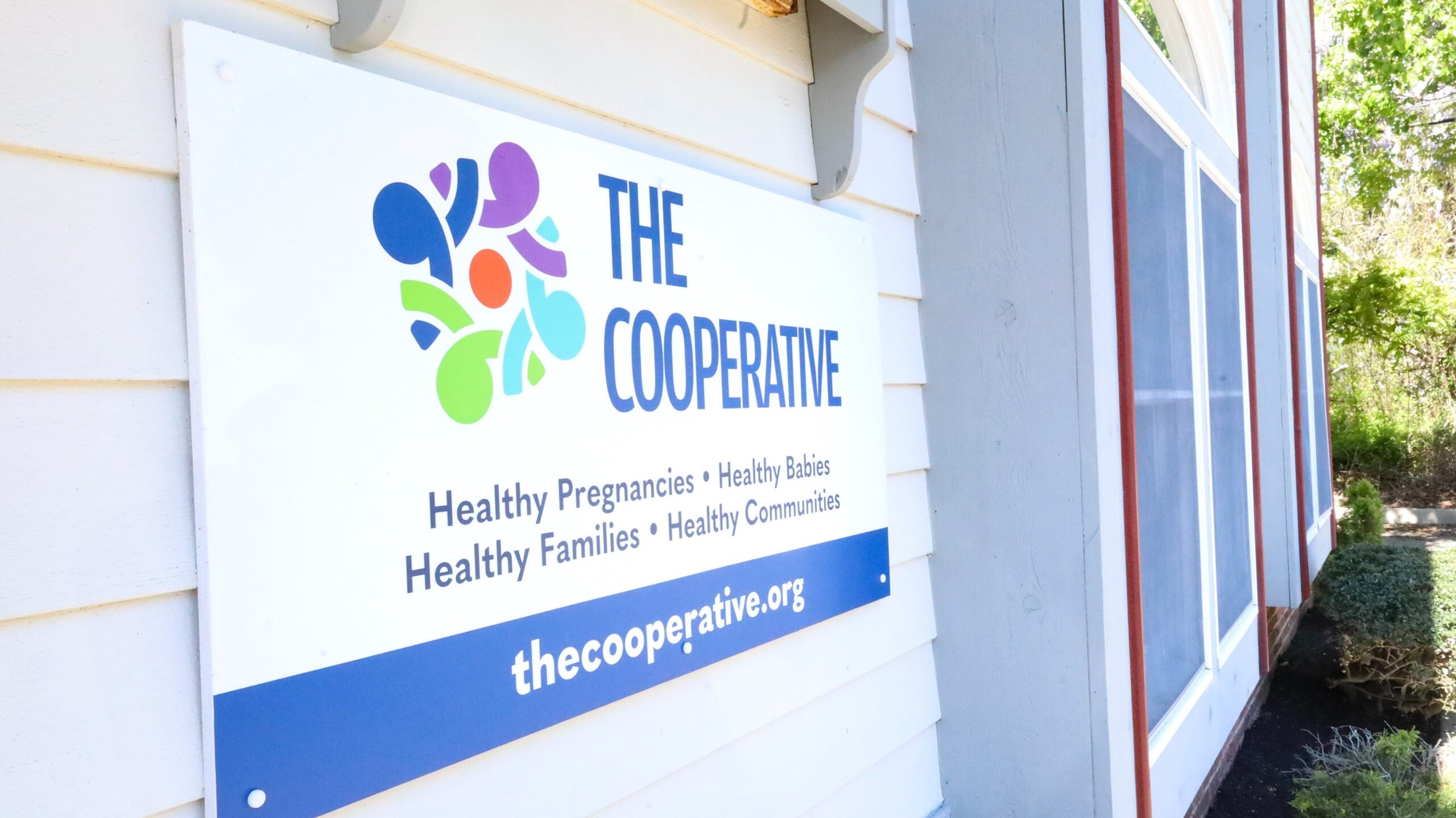 The Cooperative is a community organization that sends nurses to people’s homes in South Jersey to conduct free postpartum wellness visits through Family Connects NJ, a new statewide universal postpartum home visitation program. (Nicole Leonard/WHYY)
Visiting nurses also offer postpartum mental health screenings.
“If they potentially scored high on that, we would wait with them, we would call their obstetrician, we would potentially call 911 in a scenario,” Scanlon said. “And it has been done where we were really concerned about the mom’s well-being and she was potentially suicidal.”
In most cases, though, Scanlon said nurses become someone that new parents can confide in and share their fears, struggles and concerns, while in the comfort of their own home.
“It’s great to just be able to talk through your labor experience and your current experience with a newborn with somebody who’s knowledgeable and truly here to help you through the process,” McPeak said of her visit with Scanlon.