
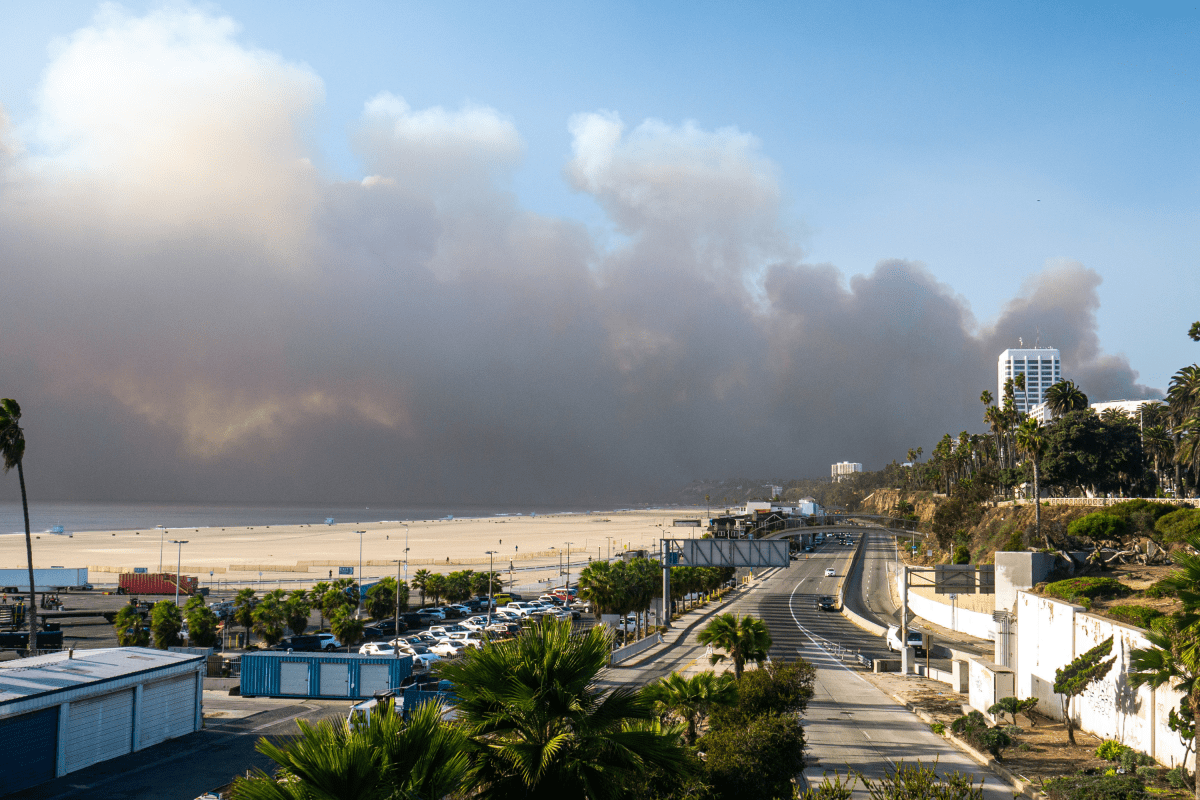
Millions of Americans across at least 11 states are being urged to stay indoors and limit outdoor activity as dangerous air quality alerts are in place across parts of the Northeast, Mid-Atlantic and Southern California.
According to the National Weather Service (NWS), air quality alerts stretch across states including New Jersey, New York, Connecticut, Massachusetts, Rhode Island, New Hampshire, Maine, Pennsylvania, Delaware, and Maryland—as well as parts of Southern California, where wildfire smoke is worsening conditions.
Where Air Quality Alerts Are in Effect
Air quality alerts stretch across major metropolitan areas in the Northeast and Mid-Atlantic, including New York City, Long Island, northern New Jersey, Philadelphia and parts of Connecticut, Massachusetts, Rhode Island, New Hampshire, Maine, Delaware and Maryland.
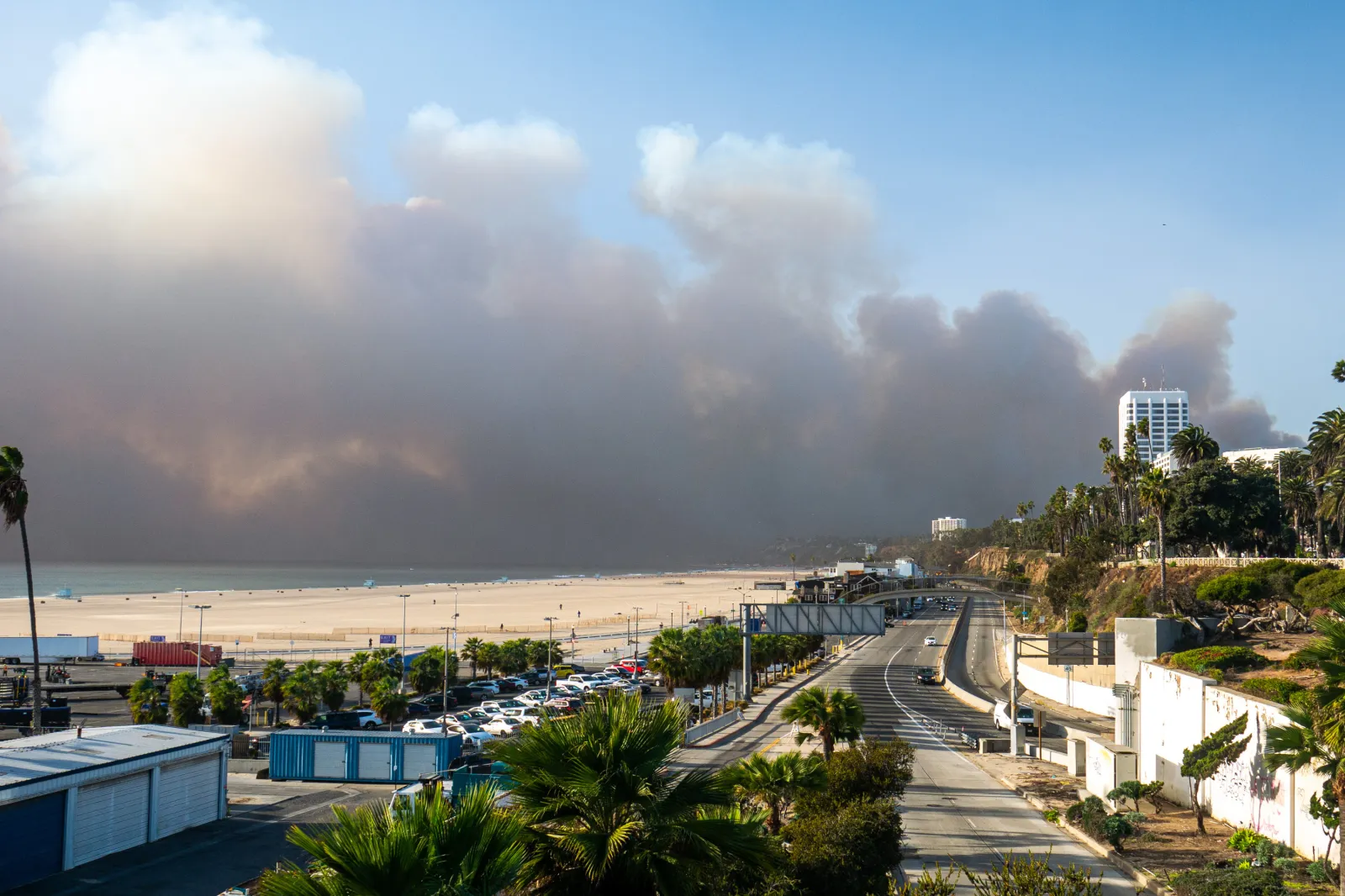
On the West Coast, alerts are also active across parts of Southern California, including Los Angeles and Orange Counties, where wildfire smoke is worsening conditions.
Most alerts remain in effect from Tuesday morning through Tuesday evening.
 What People Are Being Told To Do
Health officials are urging residents—especially vulnerable groups—to take precautions.
Recommended actions
Limit outdoor activity, especially strenuous exerciseStay indoors during peak afternoon hoursKeep windows closed and use air conditioning or purifiersIn wildfire areas, consider wearing an N95 mask outdoorsAvoid additional indoor pollution (candles, grilling, etc.)Why Air Quality Is So PoorOzone Pollution Across the East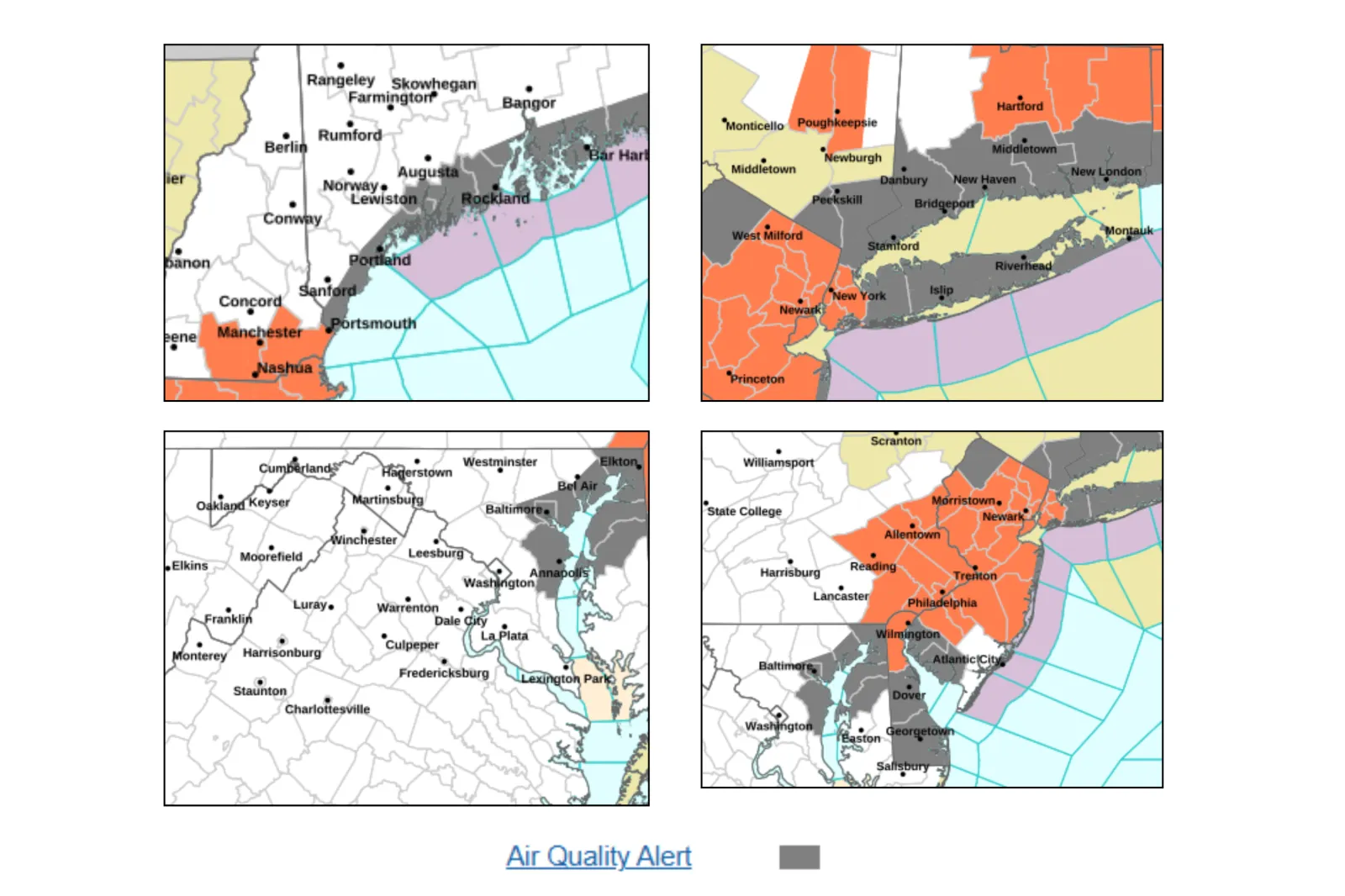
The NWS says the primary issue in the Northeast is ground-level ozone, a major component of smog.
Ozone forms when vehicle and industrial emissions react with sunlight Hot, sunny conditions accelerate this chemical reaction, causing pollution to spike Urban density and vehicle traffic in major cities can further intensify the problem
High-pressure weather systems can also trap pollutants, allowing ozone to build to unhealthy levels.
Wildfire Smoke in California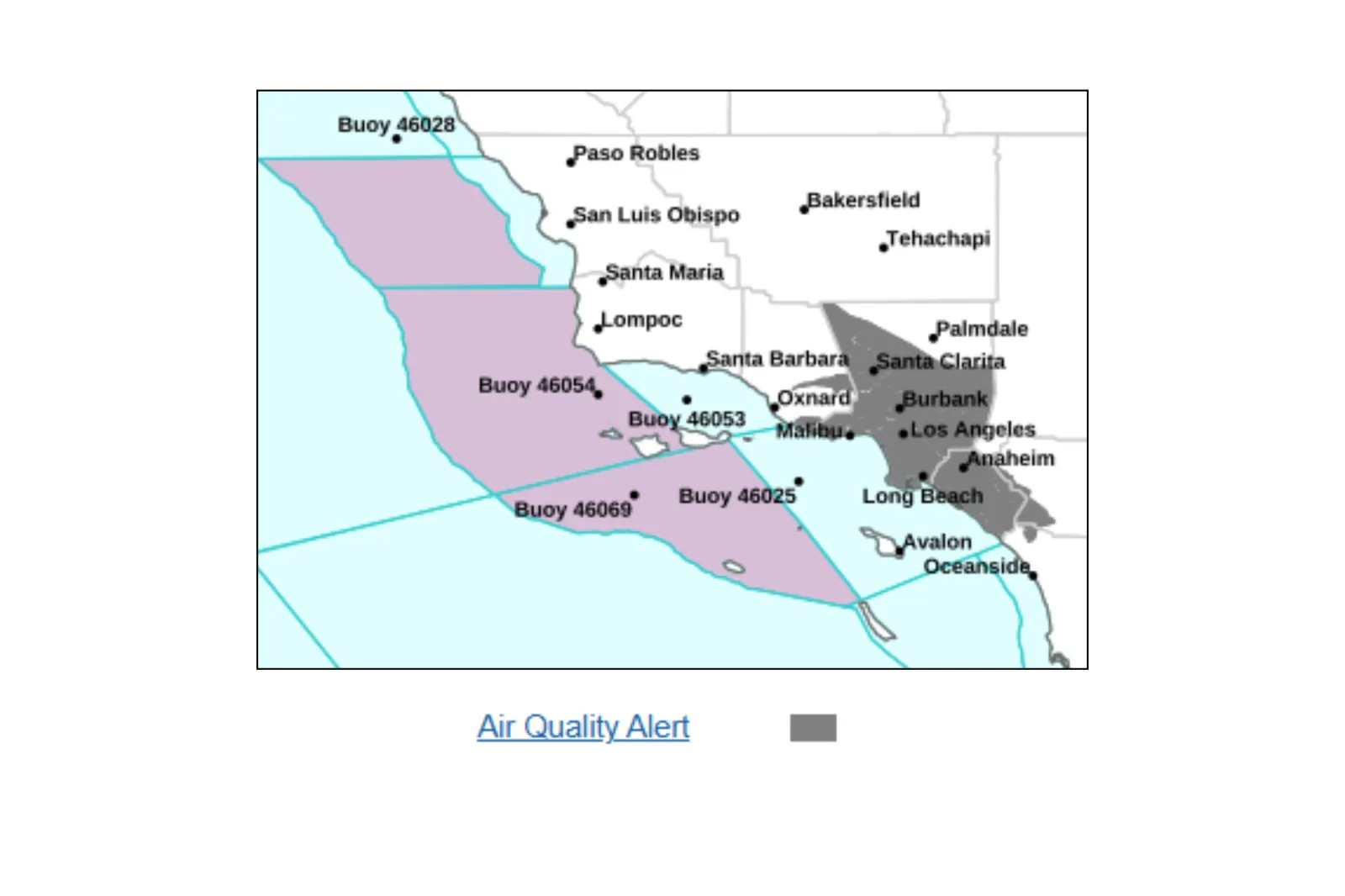
In Southern California, air quality is being hit by active wildfires, including the Sandy Fire near Simi Valley.
Winds are pushing smoke into Los Angeles and coastal areas Air quality may reach “Unhealthy” or “Unhealthy for Sensitive Groups” levels Smoke contains fine particles that penetrate deep into the lungsWhy Air Pollution Is Dangerous
Air pollution—especially ozone and fine particulate matter—is considered one of the most serious environmental health risks.
Key health effects include:
Irritated lungs and airways, causing coughing, wheezing, and shortness of breath Asthma attacks and worsening heart and lung disease Increased risk of hospitalizations and respiratory infections
According to the American Lung Association:
Over 129 million Americans (38 percent) were exposed to unhealthy ozone levels in recent years, which “put their health at risk” Around four in 10 people live in places that have “unhealthy” levels of pollutionNearly 46 percent of U.S. children live in areas with unsafe air pollution levels
Ozone is particularly dangerous because it acts as a powerful oxidant, damaging lung tissue and increasing susceptibility to illness.
Who Is Most Impacted by Poor Air Quality?
Those in sensitive groups are most likely to be affected when air quality declines. These include:
Children and older adultsPeople with asthma, heart disease, or lung diseaseOutdoor workers and active individualsHow Does Your State Rank When It Comes To Air Quality?
While many Northeastern states generally rank mid-range to relatively cleaner for overall air quality, they still experience periodic spikes. By contrast, California consistently ranks among the worst for air pollution due to wildfire smoke, traffic, and geography.
Even states with relatively good rankings can see temporary but dangerous pollution events, particularly during heat and stagnant air conditions.