
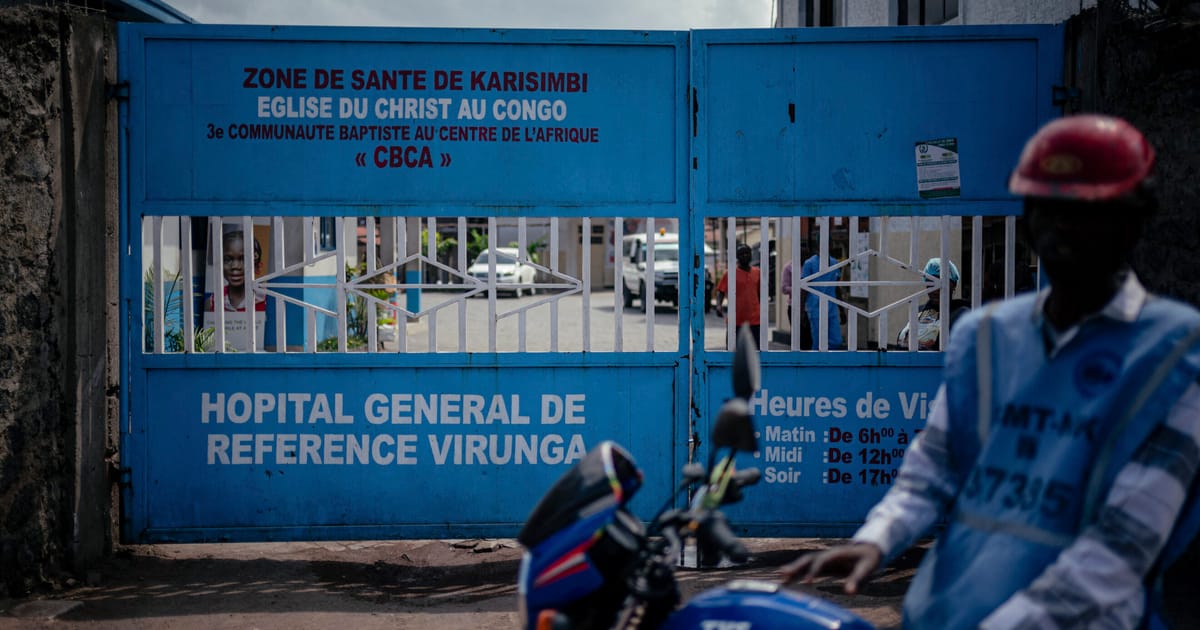
There are “at least 395 suspected cases” across the two countries, and “more than 100 people” have died, Jean Kaseya, director general of the Africa Centers for Disease Control and Prevention, said.
But the real figures are likely much higher: A high rate of positive samples and increasing clusters point to a potentially much larger outbreak than currently detected, the WHO warned.
Health officials are also faced with a lack of vaccines or effective treatments.
“This is my biggest worry because we need to see how to stop the transmission,” Kaseya told the BBC, adding that Africa CDC was working with authorities in both countries to contain the spread.
Jennifer Serwanga, a Uganda-based Ebola expert at the London School of Hygiene and Tropical Medicine, said the Bundibugyo strain driving the outbreak was “very serious,” with a fatality rate of between 30 and 50 percent.
“It doesn’t have any vaccines, doesn’t have any treatments,” Serwanga, who is also principal research scientist at the Uganda Virus Research Institute, said. She warned that the outbreak appeared not to have been detected early, resulting in “already very many deaths.”