
FILE: Hikers heading south descend from Mather Pass on the Pacific Crest Trail in Kings Canyon National Park, Calif.
David Madison/Getty Images
An outbreak of the highly contagious norovirus seemingly has sickened dozens of hikers along the Pacific Crest Trail near Los Angeles, leading to at least one air rescue and prompting rural communities to take precautions aimed at preserving public health.

Norovirus is a common and contagious virus that accounts for most foodborne illnesses in the United States. People with the virus may experience nausea, vomiting and diarrhea, which can in turn lead to severe dehydration. The virus spreads through direct contact with infected sources — which can include bodily fluids from ill people but also contaminated surfaces or foods and beverages — and unlike some viruses, norovirus cannot be reliably killed using hand sanitizer. Instead, the U.S. Centers for Disease Control and Prevention recommends washing hands frequently with soap and water and cleaning surfaces with bleach.
Article continues below this ad
Cases of the virus typically peak between November and April in the northern hemisphere, yet in the past week, dozens of people have fallen ill in the area around Wrightwood, California, roughly an hour’s drive from downtown Los Angeles. The virus appears to be spreading among hikers on the Pacific Crest Trail, a long-distance trek spanning 2,650 miles from the Mexican border in California to the Canadian border in Washington. Outdoor recreationists in remote areas can be particularly susceptible when they lack appropriate sanitation; hikers along the 2,200-mile Appalachian Trail weathered a norovirus outbreak last summer, while a 2022 outbreak sickened at least 222 people in Grand Canyon National Park.
“Norovirus is like the cockroach of viruses,” Noelle Harrison, a retired public health educator and hiker in Dunsmuir, told SFGATE. “It’s almost impossible to kill, and if you end up getting sick in really remote areas, some of its more severe symptoms can put you in a really bad place.”
Members of the PCT community with whom SFGATE connected through Reddit said that reports of sick hikers first began to emerge around May 8. While many healthcare facilities do not test for norovirus, hikers who were taken to urgent care in Hesperia and Victorville were told by staff there that they had norovirus, and people hiking with them later developed symptoms. In total, roughly two dozen hikers have reported symptoms, and at least seven of those have received a confirmed diagnosis.
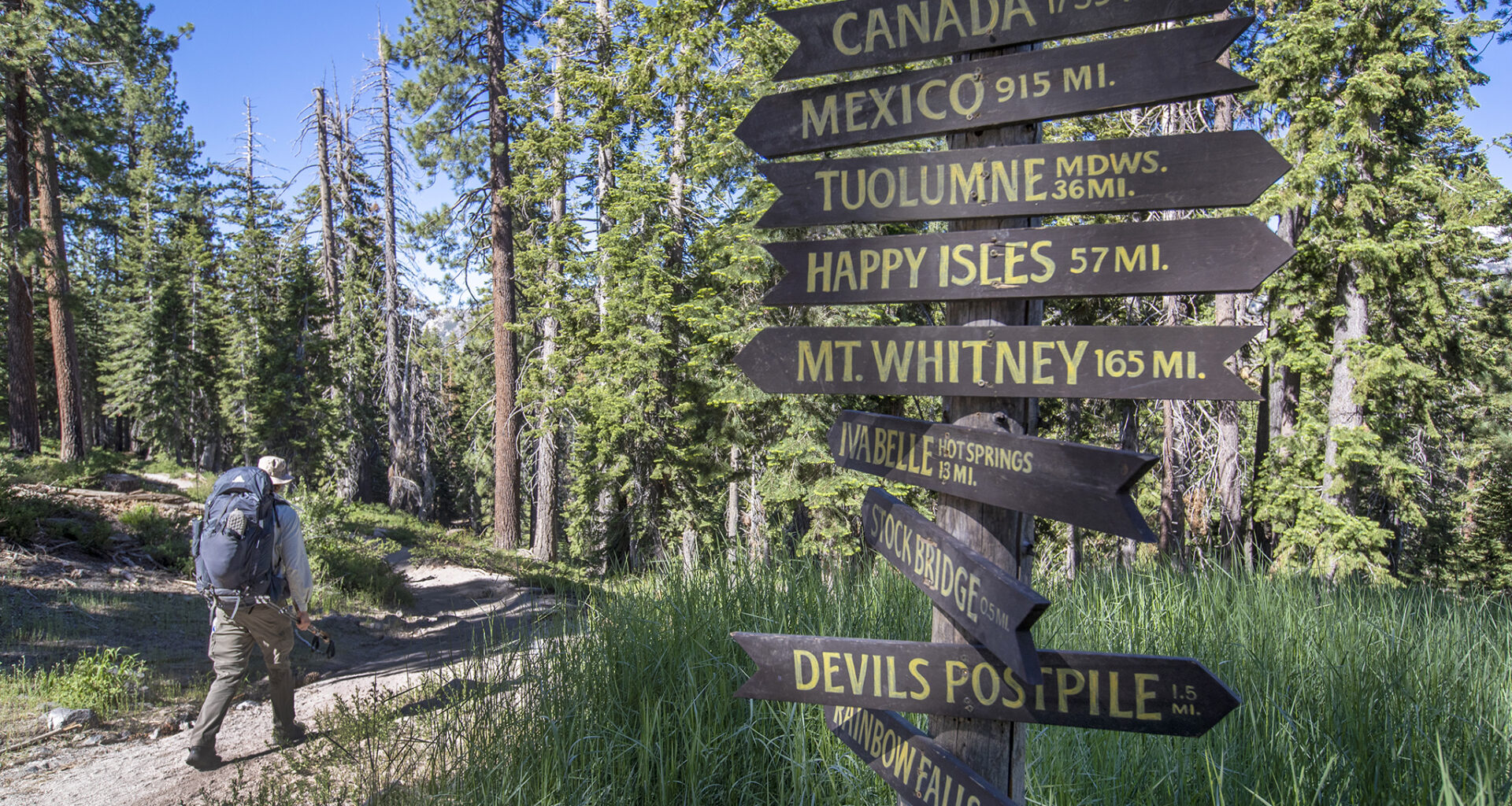
FILE: A hiker on the Pacific Crest Trail passes signs near Red’s Meadow Resort & Pack Station, in Mammoth Lakes, Calif.
Allen J. Schaben/LA Times via Getty
Ron Hals, a 73 year-old retiree from Fort Bragg, is one of them. Hals decided to hike the first 1,000 miles of the trail as a personal challenge after his wife died. Prior to starting the PCT, he had only completed a handful of multiday backpacking trips, Hals told SFGATE. When he began, he wasn’t sure how far he’d make it, but by the time he reached the area around Wrightwood in mid-May, Hals had already hiked more than 370 miles over several weeks and was feeling strong.
Article continues below this ad
On the evening of May 14, however, shortly after settling into his camp for the night, Hals became violently ill. “I’ve never been that weak,” he told SFGATE, adding that within an hour or so, he struggled just to stand and move away from his tent to be sick. “When I finally managed to fall asleep the next morning, I didn’t even take my shoes off or cover myself with a blanket.”
Hals called 911 that morning not for a rescue but to ask what he needed to do to recover. After other hikers independently called in Hals’ condition to local dispatch, though, search and rescue was deployed to his location. A man rappelled in from a helicopter, and while Hals was adamant he didn’t require a rescue, he was left with little choice.
Article continues below this ad
“My emotions were very much on the surface, and I admit that I cried because I didn’t want to go,” he said. “But I knew that these people had risked their lives to come find me, and I couldn’t just tell them to go away.”
FILE: A hiker heading south on the John Muir Trail and the Pacific Crest Trail crosses the Woods Creek suspension bridge in Kings Canyon National Park, Calif.
David Madison/Getty Images
Hals was flown to a nearby medical facility in Lancaster, where he was diagnosed with norovirus and held for a few hours before being released. The search and rescue team hadn’t allowed him to retrieve his supplies, which may be contaminated, so Hals landed on the street with few belongings and no idea what town he was in. “I had my wallet and my phone, but no coat, and my shirt was covered in sick,” he said.
Unable to walk down the street, Hals hired a driver to take him to a motel in town, where he has been recovering for the past few days as he coordinates the return of his gear. His plan moving forward, he says, is to return to Fort Bragg for a few weeks before attempting to finish his journey. “I don’t want to be done,” he told SFAGTE. “I wanted adventure in my old age, and it certainly has been that.”
Article continues below this ad
It’s unclear where the outbreak may have started, but some cases appear to be linked to a water cache in Swarthout Valley between Cajon Pass and Mount Baden-Powell. At the cache, “trail angels” support hikers by leaving water and other resources. Trail angels and other hikers reported seeing two people camped near the cache on May 10 and May 11 and showing symptoms consistent with the virus. As of May 13, volunteers replaced the containers there with sealed water bottles and have asked hikers to separate used bottles from clean ones.
Scott David Matheson, one of the volunteers who swapped out the bottles, told SFGATE that the origin may stretch farther south, however, as the two hikers seemingly arrived at the cache already ill. Assuming a 48-hour incubation period, that would place the hikers’ infection somewhere near Deep Creek, closer to Big Bear.
Francis Delapaz, a spokesperson for the San Bernardino County Department of Public Health, told SFGATE in an emailed statement that the department is aware of one case reported on May 18, but that at this time, the department “does not have evidence of a confirmed increase or cluster of norovirus cases in the Wrightwood area beyond what would typically be expected.” Still, they plan to continue monitoring for and responding to suspected outbreaks.
Regardless of where the cases began, Hals has begun to suspect he caught the virus in Wrightwood while he was resupplying. Now, local businesses — including the hardware store and grocery store — have been wiping down surfaces, staff tell SFGATE, and one company that provides shuttle services to PCT hikers noted that it always cleans its vans daily.
Article continues below this ad
FILE: Hikers heading south walk toward Pinchot Pass on the Pacific Crest Trail in Kings Canyon National Park, Calif.
David Madison/Getty Images
Teri Okarma serves as a hiker minister at Angeles Crest Christian Camp with her husband, and the pair have welcomed hundreds of hikers each season over the past three years, providing them with accommodations, showers, laundry, Wi-Fi and other amenities. It’s always been a joy having them pass through, Okarma tells SFGATE, but out of an abundance of caution, they’ve decided to close the camp to hikers until May 24.
“We have to be considerate of our staff, many of whom live out here,” Okarma said, adding that even as the camp has had to turn hikers away, they’ve still helped coordinate assistance for Hals and others needing help getting off the trail. “We hope to be able to open up again to hikers in the next few days, if things seem safe.”

Stay informed, and entertained.
By signing up, you agree to our Terms Of Use and acknowledge that your information will be used as described in our Privacy Policy.
The Pacific Crest Trail Association, a nonprofit that maintains and advocates for the trail, similarly told SFGATE that the group is aware of the outbreak and working to help hikers in need, including by coordinating with public health officials.
Article continues below this ad
“We are monitoring the situation and have worked with public health officials in the past to share official health notices. So far, we have not been contacted by local health officials regarding this matter, but we are available to support them in messaging to PCT communities,” Chris Rylee, the director of communications, said in a statement. “Illnesses like norovirus or other communicable diseases are serious issues, people should prioritize their health and safety. We sincerely wish for all affected hikers a speedy recovery and the chance to get back to the trail.”
This news story has been updated.
We love national parks just as much as you do, so we have a newsletter that covers them from top to bottom. Sign up here.