
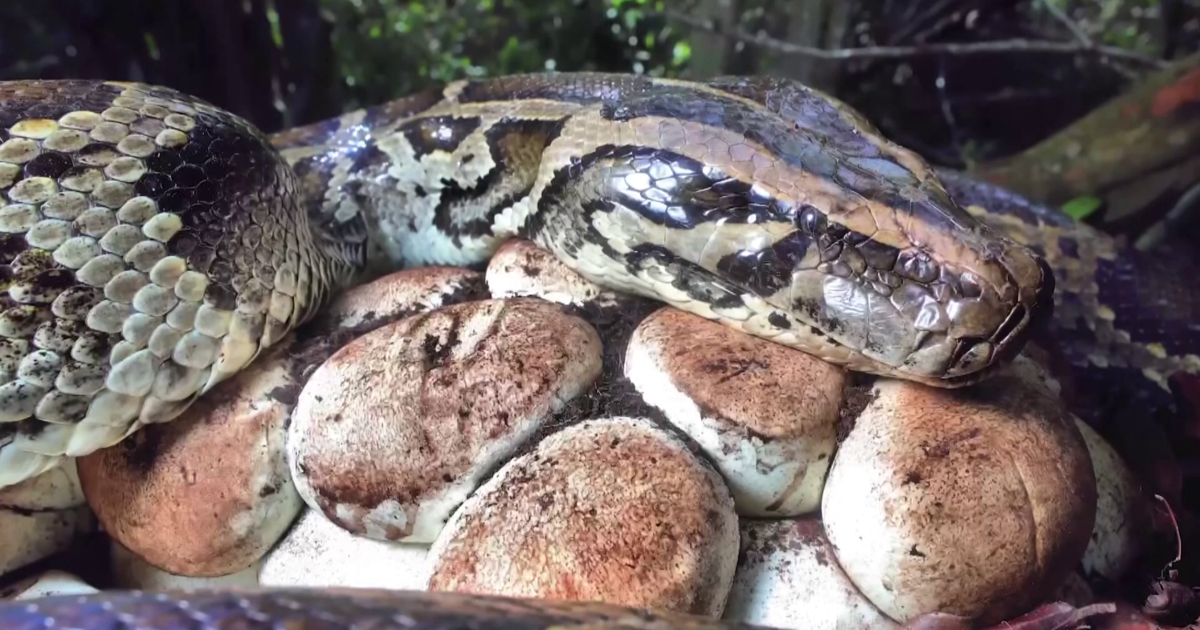
CHARLOTTE COUNTY, Fla. (WINK)—Florida is spending billions to restore the Everglades, but restoring the water is only part of the fight.
The other part is protecting what still lives there from a predator that is already established, hard to count and even harder to find.
The challenge lasts 10 days. The invasion does not.
“The goal isn’t to get rid of all of the pythons. This challenge will not do that,” Dr. Tom Reinhart said.
This is not eradication. Instead, Florida Fish and Wildlife Conservation Commission officials say the Florida Python Challenge raises awareness about the invasion.

“We’re just fighting the fight to make it not get worse,” Taylor Stanberry said.
However, last year’s winner Stanberry is seeing some improvement.
“I’m seeing more native wildlife again, so I do think it is helping in certain areas,” Stanberry said.
The hot zone is still South Florida. Reports outside the core range are raising questions about how far the watch zone may need to go.
Dolan met python contractor Carl Jackson after he caught a 202-pound snake. Jackson says if the snakes are showing up outside the line, the search area may need to move with them.
“We need to watch them closely, and I think they need to give us a little more area to hunt as well, because they are getting out of the area,” Jackson said.
Removing 294 pythons in last year’s challenge isn’t nothing, but against an unknown population that could be in the tens of thousands, it raises the harder question: How much impact can one challenge really have?
“It does matter, but taking the Python moms, the females, big females, out of the equation helps immensely, because one female can equivalent thousands of babies,” Jackson said.
“I would definitely say it is highly a publicity thing,” Stanberry said. “But it definitely helps bringing people here to be able to experience Everglades, enjoy the Everglades, and if they can remove a python while they’re doing it, that is a bonus.”
The Python Challenge starts July 10. The python hot zone is still in the Everglades, but reported sightings in Charlotte County and further north are part of the bigger concern.
The question isn’t whether one challenge can catch them all. It’s whether Florida can find the next problem area before it grows.
The bigger test is year-round: find them, report them and stop the spread before it moves farther north. That’s why the work continues—not because victory is inevitable, but because the alternative is surrender.