
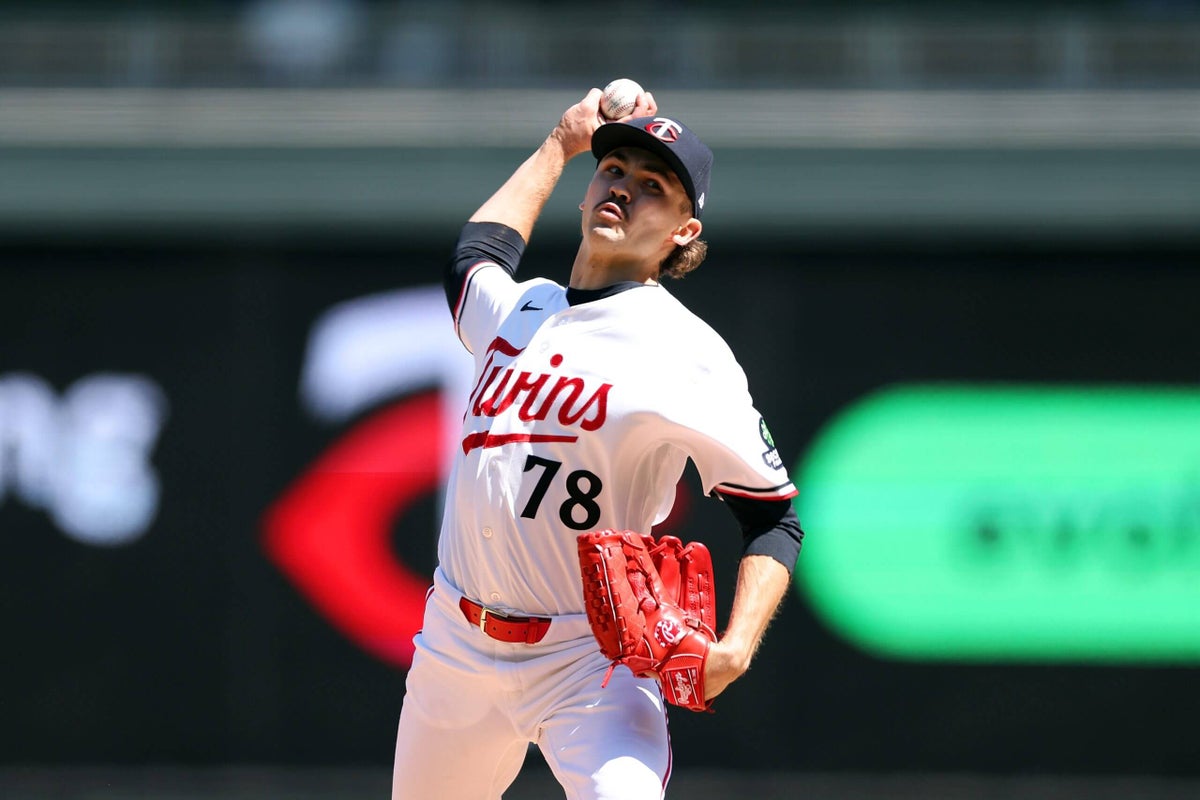
MINNEAPOLIS — Though Andrew Morris has handled a multitude of relief pitching roles for the Minnesota Twins this season, his manager has identified one constant through it all.
“Lack of heartbeat, and I mean that in such a beautiful way,” manager Derek Shelton said.
He’s only a rookie, but Morris is showing the type of maturity that comes with experience as he adapts to life in the bullpen. Morris’ even-keel nature, and a 96 mph fastball, is leading to increasingly more opportunities such as Wednesday’s, when the rookie was tasked with closing the game.
Making the first save attempt of his career, Morris breezed through the middle of the Houston Astros lineup to close out a 4-1 victory. Morris retired the side on 10 pitches to make a winner of Joe Ryan, who struck out nine over six dominant innings.
“You love that about (Morris), that he doesn’t get too high or too low,” Shelton said. “Nothing has really affected him. The transition to the bullpen, the transition then to a smaller role, then transition to leverage, he’s handled everything about as well as a young kid could.”
Pitching for the third time in four days, Shelton was interested to see how Morris’ velocity looked. Until earlier this month, Morris never pitched on consecutive days. The Twins are looking for signs of how he’s holding up to throwing more frequently.
When Morris’ first offering to Yordan Alvarez registered 95.2 mph, Shelton knew his pitcher was in a good spot. Morris needed only nine more pitches to retire Alvarez, Christian Walker and Jake Meyers and convert the save. Not only did Morris generate two swings-and-misses in his 10-pitch outing, but also his fastball average increased to 96.6 mph, up from his 95.8 mph season average.
“I was trying to tell myself that’s what I’ve been working towards,” Morris said. “I want to be the guy in those spots. I think I can be really good at it. I appreciate the trust and the experience that I’ve been building.”
After joining the Twins two weeks into the season, Morris primarily worked as a long reliever. His first six outings all went one-plus innings, and four were 2 2/3 innings or longer.
But as the Twins hold open auditions to fill the back-end void in their bullpen, Morris is finding himself pitching in more high-leverage situations.
“He’s a jack-of-all trades right now,” pitching coach Pete Maki said. “He’s provided length. He’s provided short bursts. He’s been low maintenance about it, and he’s done a nice job.”
Though he’s been a starter for the majority of his career, Morris isn’t fighting a transition to relief. He wants to play a meaningful role in any way he can and thinks he can be successful in the role.
On the season, Morris is carrying a 4.29 ERA over 21 innings. But over his last 11 innings, Morris has allowed two earned runs.
Morris cites sound advice from veteran teammates on handling his new daily routine and how to attack hitters — he’ll dial back the velo a tick for better command — as keys to his early success.
Reliever Anthony Banda likes Morris’ personality and how he’s unfazed by the newness of his role. Banda also likes how the rookie is already adapting his midgame routine by watching the game with a better understanding of when he might be used.
“He’s done it so well,” Banda said. “There’s no hiccups. There’s nothing really that stands out to where we’ve got to pull him aside and let him know, coach him up a little bit. … He’s starting to get a sense of ‘This could be my lane, the opportunity where they need a right-handed thrower.’ He’s starting to find his groove with that and starts moving around on his own, getting prepared for it, doing his little routine.”
Morris likes the challenges he’s facing, figuring out which days to lift and which to skip. During games, he’s learning how to come in and unload his best stuff. He also acknowledges the calm nature he portrays isn’t always what’s occurring inside, but he’s learning how to handle that, too.
“Sometimes it doesn’t feel like the heart’s beating slow,” Morris said. “But I think those moments for me sometimes is when I’m at my best. I think I can be good at it.”
Here are three observations after the Twins won their third series:
• Whereas reliever Yoendrys Gómez previously threw as many as five pitch types as a starter, including four as often as 17.5 percent this season, the Twins are primarily focused on his using his four-seamer and sweeper.
As a result, the 26-year-old is throwing his fastball harder and more than ever. Averaging 95.0 mph, Gómez is throwing his four-seamer 56 percent of the time with the Twins after he used it 34 percent over the previous two seasons.
Acquired from the Tampa Bay Rays for cash May 6, Gómez is also throwing his sweeper 29 percent of the time in Minnesota. With the Twins, the combined usage of his changeup, two-seamer and cut-fastball is about 15 percent, down from 40 percent usage for the whole season (Gómez threw 17 1/3 innings for the Rays before he was designated for assignment).
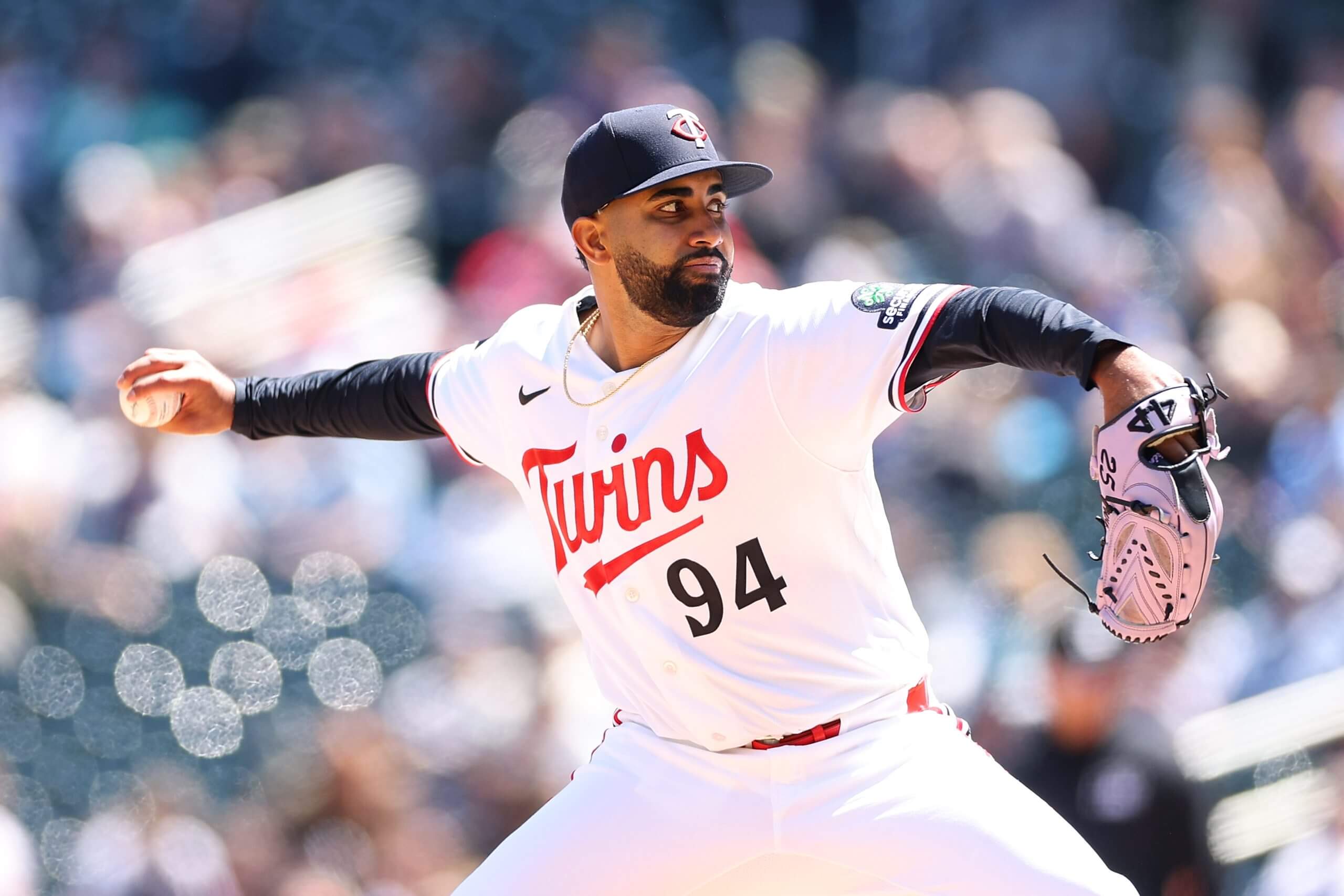
Like Andrew Morris, Yoendrys Gómez could find himself pitching in more high-leverage situations. (David Berding / Getty Images)
Gómez threw 19 fastballs, 13 sweepers, two cutters and two changeups in striking out five batters over two scoreless innings Wednesday.
One key to the increased fastball usage is command. When he started for them late in the 2025 season, the Chicago White Sox asked Gómez to throw all of his pitches because he was nibbling too much and walking batters. For his career, Gómez has issued 4.3 walks per nine innings.
Gómez’s command issues briefly surfaced Wednesday in his second inning. After striking out the side in the seventh inning, Gómez fell behind 3-1 in the count before Cam Smith hit a leadoff single. That prompted a visit from catcher Victor Caratini. Gómez eventually recovered, retiring the next three batters he faced.
“The fastball is really good, and it has some unique characteristics,” Shelton said. “When he throws it on the plate (it’s good). The only time he’s really had issues is when he hasn’t thrown strikes.”
Gómez has two holds, a save and six strikeouts in 5 1/3 scoreless innings for the Twins. Similar to Morris, Gómez is likely to see several high-leverage appearances because of his velocity.
• Ryan Kreidler feels more athletic in his swing and less concerned with the result compared with years past. He thinks it’s playing a part in his early home runs.
Kreidler belted a three-run homer in the fourth inning, his third round-tripper since joining the Twins in 32 plate appearances. In his previous 211 major-league plate appearances, Kreidler, who is hitting .296/.406/.667, hit two home runs.
“I had a productive offseason,” Kreidler said. “It felt like trying to free up my athlete a little bit inside and letting the athleticism come out because that’s kind of what I’m good at. It felt like last year and in years past, especially in the big leagues, I just didn’t really let that happen. (I was a) little afraid to fail. This year, I’m trying to just let it fly a little more and be an athlete.”
• The Twins hope a change of scenery allows Simeon Woods Richardson to regain the consistency he showed in his first two full seasons. The pitcher and his coaches discussed focusing on previously successful drills and keys in his delivery as possible solutions to his struggles.
Woods Richardson has a 7.53 ERA, in large part, because of ineffective secondary pitches.
Woods Richardson’s splitter has a minus-13 Run Value, tying it with Aaron Nola’s four-seam fastball for the worst pitch in baseball. With a minus-six Run Value, Woods Richardson’s slider is the worst slider in baseball.
As of now, there’s no set role for Woods Richardson in the bullpen. Out of minor-league options, Woods Richardson felt better mechanically Monday than he had in a while. He acknowledged getting a zero felt good.
“You’ve just got to chop the big-ass tree one (piece) at a time,” Woods Richardson said Monday. “You’ve just got to keep going.”