
Under the new rules, many Medicaid recipients between the ages of 19 and 64 will have to prove they work, attend school, or volunteer at least 80 hours a month unless they meet certain exemptions, including pregnancy, caring for children 14 and younger, and being medically frail. States will also have to check members’ eligibility twice a year instead of annually.
Based on the experiences of other states, most of those who lose their insurance will be people eligible for coverage who fail to keep up with the additional documentation.
Massachusetts’ goal is to automate as much of the documentation process as possible to take the burden off residents. But it’s hindered by a lack of guidance from the federal government, experts said.
The Centers for Medicare and Medicaid Services are expected to publicize formal guidelines in June, leaving states six months to prepare. It isn’t enough time, some experts said.
“CMS and states are under an impossible timeline right now,” said Adrianna McIntyre, an assistant professor of health policy and politics at Harvard’s T.H. Chan School of Public Health.
States are waiting for CMS to give them specifics on exemptions, including what defines medical frailty and how to prove it.
Without those answers, states also cannot be certain how many people will be left uninsured and how big of a burden that will place on crowded emergency rooms and safety net hospitals.
Massachusetts has never had a work requirement for Medicaid eligibility, and a March survey from the health policy analysis organization KFF found Massachusetts lagging other states in some key indicators.
“The main challenge, at least in Massachusetts, is it’s trying to prepare for a program it’s never run, on a timeline it didn’t choose, without the federal guidance it needs to make key decisions,” said Dr. Rishi Wadhera, a Harvard Medical School assistant professor who studied the people most likely to suffer under new Medicaid restrictions.
Elizabeth LaMontagne, chief operating officer for the state’s Medicaid administrator, MassHealth, is more optimistic. Work is underway, and the state has nailed down some specifics since the KFF survey.
She also noted that the January deadline only applies to new enrollees. The work requirement won’t apply to current Medicaid recipients until their routine renewals, which will be staggered throughout the coming year.
“We are in really good shape for launch come January,” she said. “We’ve got a proven track record of doing good work on this kind of really complicated campaign.”
 A man enrolls for Medicare on Jan. 8, 2024.JAMIE KELTER DAVIS/NYT
The new requirements and additional eligibility checks were part of the Big Beautiful Bill signed into law by President Trump last year. The Congressional Budget Office projected the requirement would save about $326 billion over a decade and would cost 5 million people nationwide their insurance.
In order to automate eligibility checks, states must identify new data sources they’ll use to verify income, community service, school enrollment, and medical status.
In March, Massachusetts was among 22 states that told KFF it had not yet determined what new data sources it would use. It also said it faced insufficient funds, staff, and time and was struggling to complete data sharing agreements.
In an interview last week, LaMontagne said MassHealth had made progress since then. It is linked to the Department of Revenue’s wage data and plans to be able to communicate with at least five additional databases, including data maintained by the Department of Transitional Assistance, Veterans Affairs, and the National Student Clearinghouse. MassHealth has access to claims data it will use to confirm medical frailty, officials said.
“We will have those datasets integrated before this program goes live,” said LaMontagne.
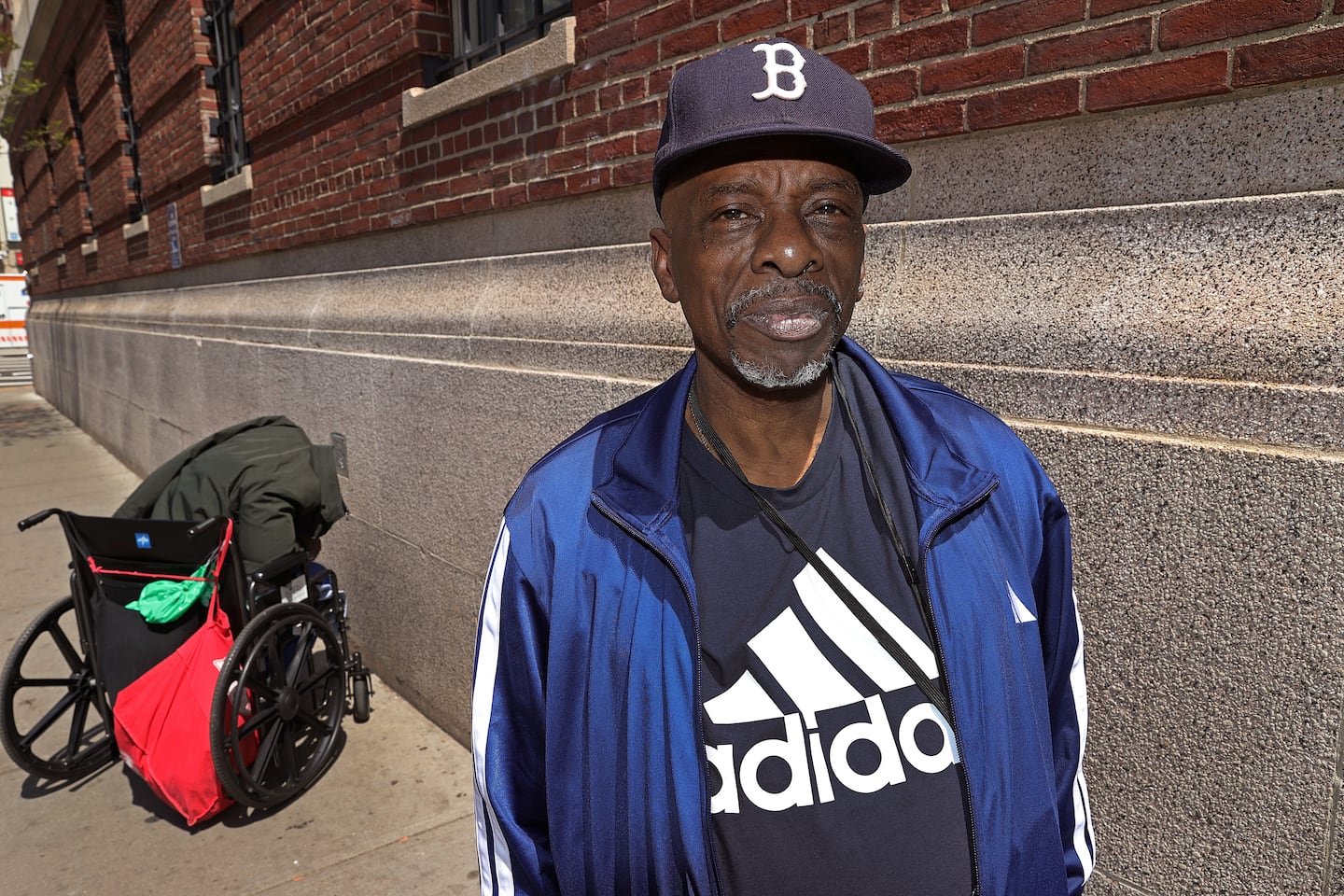
Derek Winbush, 63, of Boston, worries about the coming work requirements. He is part of a large population of people with chronic health conditions who are too unwell to work steadily but don’t qualify for a disability exemption. Winbush has cirrhosis, kidney disease, nerve damage in his feet, vision problems, vertigo, and is HIV positive. He’s the kind of person whose Medicaid coverage may hinge on what is considered medical frailty.
Winbush doubts he would be required to work to maintain coverage, but if he were, he would lose his insurance. His health issues would make it impossible for him to hold down a job, he said. And his health would almost immediately decline without coverage. He takes 11 pills a day to manage his conditions, he said, and has doctor appointments every month.
“It’s probably life or death with me,” he said. “It’s that serious.”
As a volunteer board member for Boston Health Care for the Homeless, Winbush stays informed about Medicaid policies. Many of the people most vulnerable to losing their coverage next year — people living with homelessness or addiction, most of whom suffer from mental health conditions — are completely unaware of the major changes less than a year away, he said.
“They don’t have a clue,” Winbush said.
MassHealth is preparing an outreach campaign this summer, including a new website that will give Medicaid members details about eligibility. Some of the people Winbush described will require direct outreach and assistance, but the work will be infinitely easier if the state can automate many eligibility checks.
The state’s problems could be mitigated this summer if the Legislature supports a provision in the governor’s budget proposal to spend $30 million to preserve health care access in the state, MassHealth reported. If approved, more than two-thirds of that money would support building connections with databases and vendors to help people navigate new requirements. Another $6.2 million would pay for about 70 new employees who would help people gain or keep Medicaid coverage, or appeal denials of coverage.
The hope, experts said, is that CMS recognizes states are facing an impossible deadline and will make it relatively easy to get exemptions at least through 2027. Self-attestation, allowing a member to assert an exemption without providing supporting documents, at least temporarily, is a possibility, even though Dr. Mehmet Oz, the CMS administrator, has said he would prefer not to allow it.
A CMS spokesperson also said the agency committed more than $600 million to pay for products and services from health technology companies to aid states and is distributing to states $200 million in grant money to help them prepare for the new requirements.
At UMass Memorial Health, where 27 percent of the system’s patients are on Medicaid, decisions about who is and isn’t subject to a work requirement will shape how the hospital approaches keeping as many patients as possible insured, said Dr. Eric Dickson, the hospital’s chief executive.
“We need to very quickly figure out what the rules are going to be,” he said. “We don’t know how bad it’s going to be, but we know it’s going to be bad.”
Jason Laughlin can be reached at jason.laughlin@globe.com. Follow him @jasmlaughlin.