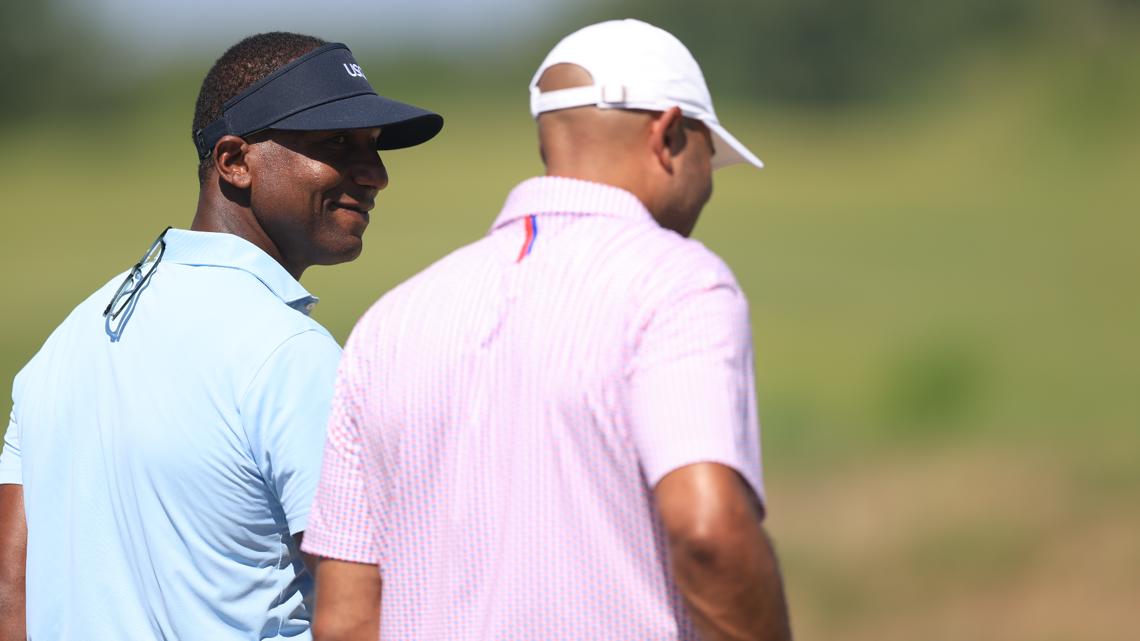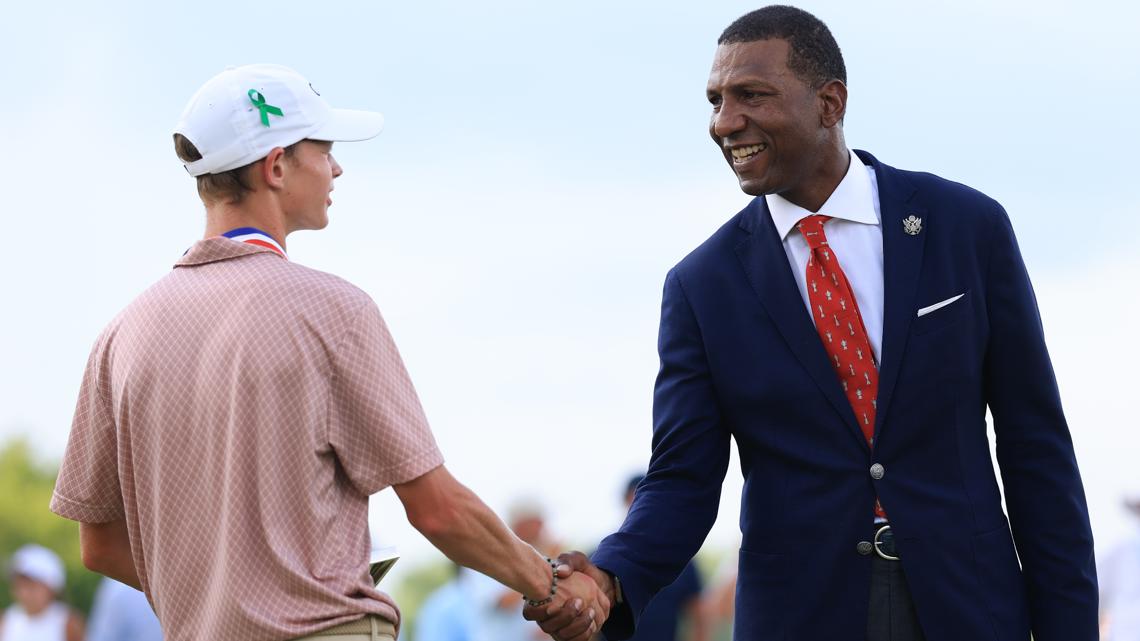
Fred Perpall keeps a busy calendar. Helping run the game of golf is part of it.
DALLAS — By day, Fred Perpall is CEO of The Beck Group, the storied Dallas architecture and construction firm with an office that overlooks a city dotted with its projects.
Also by day: Perpall holds one of the most important positions in the game of golf.
No, Perpall is not Batman, living a double life at his 9-to-5, then tending to his duties as president of the United States Golf Association. Instead, his days are intertwined between the two roles: Beck meetings, USGA calls, plus family life and a goal to hit golf balls every day (yes, every day).
“My two eyes,” he likes to say, “create one sight.”
Take last month, for example, when the U.S. Junior Amateur was staged at Trinity Forest Golf Club in Dallas. The tournament was a proud moment for Perpall — and a confluence of how he got here.
More than a decade ago, Beck was hired to build and design the new course’s clubhouse. Perpall, who had dabbled in golf but wasn’t a full-fledged addict just yet, dove headfirst into the project, scooping up books on golf architecture and design. The folks at Trinity Forest took to Perpall, too.
He joined the club and was invited to take a leadership role at Trinity Forest. A few years went by, and the club nominated Perpall to serve on a USGA committee. Then, in 2023, the USGA members elected Perpall as the organization’s president, a volunteer role that leads the USGA’s policy-making board.
In about a decade’s time, Perpall went from a relatively new golfer to leading the sport’s governing body — and becoming the first Texan and Black man to do so.
“I get teased a lot from my friends that few people have had a quicker rise in golf,” Perpall says, “but I think part of it is that it’s easy to serve what you love. And when you’re doing the things you would do anyway, with the people you want to do it with, then I think you can be your best.”
Perpall’s story, he points out, is part of his message as USGA president. How did a Black man who grew up playing basketball in the Bahamas become a leader in a sport often scrutinized for its exclusivity? And what does that say about where the game can go from here?
We sat down with Perpall last week at Beck’s Downtown Dallas office, which sits on the 28th floor of the Santander Building. Our wide-ranging discussion focused on Perpall’s journey but also on Trinity Forest’s path as a new course with championship aspirations (and a brief stint hosting the Byron Nelson); the explosive growth of golf in the last five years; and why the USGA wants to make golf balls fly shorter distances, a rollback that Perpall calls “a moral issue.”
Watch the full interview here:
Here are the highlights from our conversation, edited for clarity and length:
The U.S. Junior Amateur was just held at your home club. What are your thoughts reflecting on the week that was, bringing high-level championship golf to Dallas?
Last week was kind of a dream week for me, a dream come true. We say a lot, the work we do should take you closer to the life you want. And the people you love. And last week was kind of surreal for me, because my USGA family all came to my hometown, to my home club and in fact, what made it really special was my journey in golf began at Trinity Forest.
Trinity Forest we believe, is this wonderful oasis for elite championship golf here in Dallas, so it was wonderful to have the best juniors in the world come to Dallas get to test their skills on our championship golf course.
The US Open sites are pretty well planned out going forward. The rota seems to be set on very traditional historic courses. How does a newer course like Trinity Forest fit into the future of USGA championships?
We did a survey amongst the players, and one of the things we heard from our best professional players is it’s really important when you win the US Open, and a lot of what makes it important is the connection to history. And you can’t buy history — you have to earn history. And just like the players go on their journeys, from elite juniors to college players to young professionals to one day earning the right one day to win a major championship, we think golf courses need to go on their journey, too. Courses like Trinity Forest have to get started along that journey to the elite championships. So the Junior Amateur is a wonderful way to test the golf course to see if it can stand up to the best players in the game, whether the actual architecture can test all of the skills.
I predict in the future that Trinity Forest will continue to go on that journey, maybe hosting other amateur championships. Look, we had an opportunity at Trinity Forest to host a few Byron Nelsons (2018-2019), and it became clear that hosting a PGA Tour stop every year was not the ambition of the club. It was not a good match.
The course really was built as kind of an inland links. It’s a very different kind of golf course relative to what a Tour course may be in terms of a traditional parkland style. This is more of an inland links, and we thought it was just more appropriate for elite amateur golf. And of course the U.S. Junior Amateur is as elite as a tournament can be.
Of course, Trinity Forest already has a girls Junior Amateur coming (2031), and I think you can see more amateur competitions, not only USGA competitions, but amateur competitions of all kinds being conducted there. And if we’re successful, maybe one day we will earn our own history and earn the right to host the biggest golf championships.

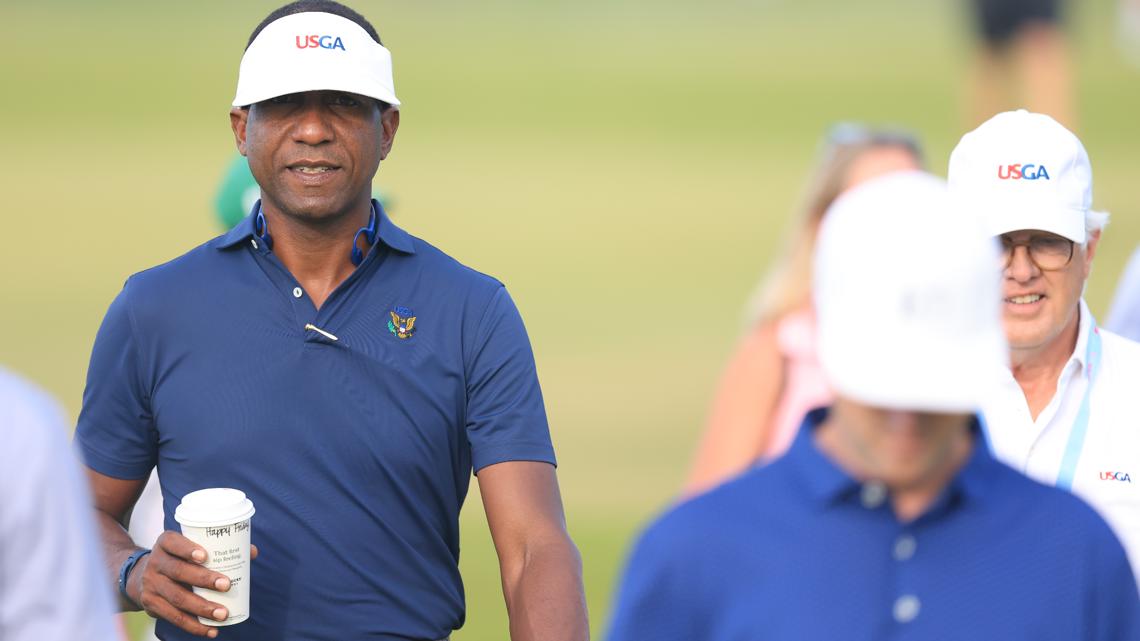
That’s an interesting contrast you mentioned between a USGA event and a PGA Tour setup.
Every championship has different objectives, right? At the USGA, championships are designed to be hard, to be difficult, to test every skill. The PGA Tour is more of an entertainment product. Players want to make a lot of birdies, and that time of year in May that the Byron Nelsons were held, that agronomy was not ideal. Trinity Forest was designed to be firm and fast, to have a little summer wind.
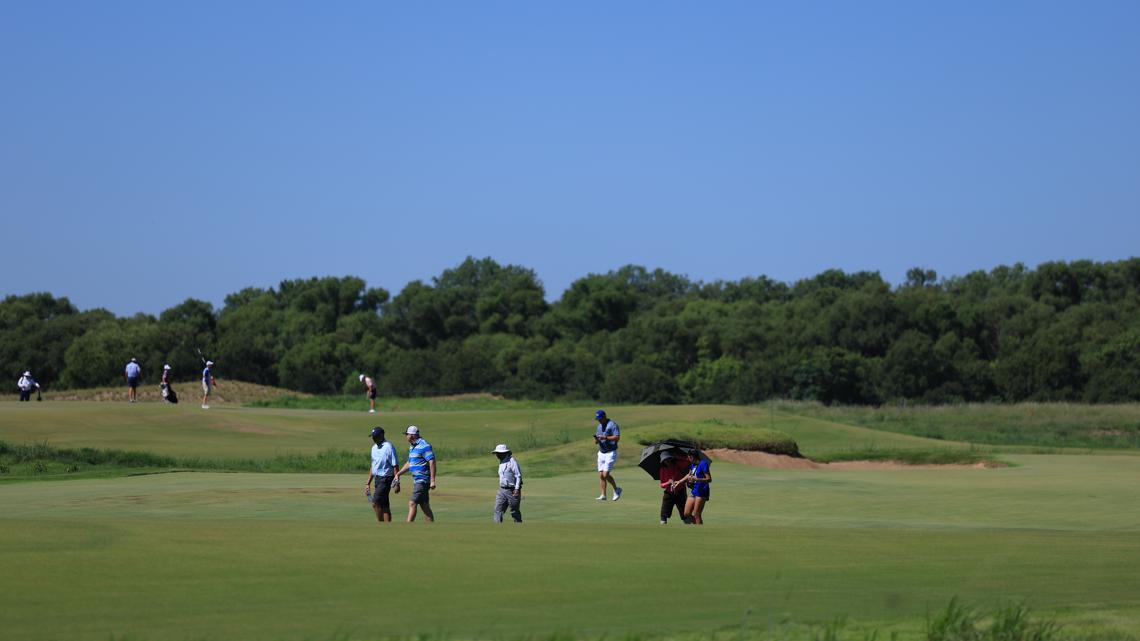
The turf and the grasses just perform a little better once you get into June and July, where that firmness of the fairways and the firmness of the greens stand up more. This past week we got to see Trinity Forest as Ben Crenshaw and Bill Coore designed it to be, which was more of an inland links style course to be firm, fast, where you have to use a lot of creativity, a lot of imagination.

Let’s rewind a little bit. You grew up in the Bahamas and came to UT Arlington to play basketball. How did you get into golf?
I like to tell the story, long before I was a golfer, golf was changing my life. My mother worked at a club in the summers and my first exposure to golf was just the stories she’d bring home from her job. Long before I picked up a golf club, I got to meet some of the members of the club she worked at and those club members helped me go to college. They literally paid for part of my education. It was then that I saw golf as this thing to aspire to, but also this force for good, because it was a force for good in my family’s life, and in my life personally.
But as a young professional, I just couldn’t afford to play golf. I didn’t have the time and I didn’t have the resources required to play. So it wasn’t until later on in my career, when I moved back to Dallas in 2013, that we could afford to join a club, and then my journey began. And really, Trinity Forest was where I went down the rabbit hole of golf.
We (Beck) were hired by the club to actually design and build the clubhouse. We were assisting with the design, but we actually built the clubhouse. They invited me to not only be part of constructing the buildings but also leading the club.
I wanted to learn everything I could about golf, so I started like any architect would do, I started buying all the golf architecture books, all the history books, and I have hundreds of golf books today. But I just fell in love with the game as I was learning to play the game and part of what we love most about golf is who golf puts you with. It’s the people, it’s the camaraderie, it’s actually the test that it gives you as a person. It brings out the best in you.
How a person behaves in golf is how they behave in life, and all these things were things that were very congruent with how I was trying to live my life. But then my friendships in the game just became so rich. I get teased a lot from my friends that few people have had a quicker rise in golf, but I think part of it is it’s easy to serve what you love.
And when you’re doing the things you would do anyway, with the people you want to do it with, then I think you can be your best. It’s been a matter of great personal pride that I’m the first Texan to be the president of the USGA, I’m the first Black man to be the president of the USGA, and I hope that story actually will create some inspiration.
It’s very difficult to write the story of American golf without writing the story of Texas golf, so it seems very appropriate that the state that has given so much to the game now has a leader for the game in our country that comes from our state.
The phrase “grow the game” gets thrown around a lot. But what does growing the game actually mean to you? And what does it mean to do it in a way that is sustainable for the game?
There’s no doubt what keeps people out of golf are two things: one, the lack of access — “I just can’t get on a golf course” — and two, the resources it takes to play golf, of which cost and time are the two greatest things.
So we’ve been working really hard to open up more access to build more small places for golf in the community. Not asking kids to come to golf but taking golf to the communities where we have the biggest opportunities. But we’ve also been trying to find ways to defray the cost that it takes to play golf, which is probably one of the main prohibiting facts.
The “grow the game” phrase is very slick and it’s thrown around a lot, but I do feel like we have a responsibility, and we have an opportunity at the USGA, to make sure that all Americans get to interact with that game. For me it’s nice to see our winner this past (Hamilton Coleman), he’s a Drive, Chip and Putt kid.

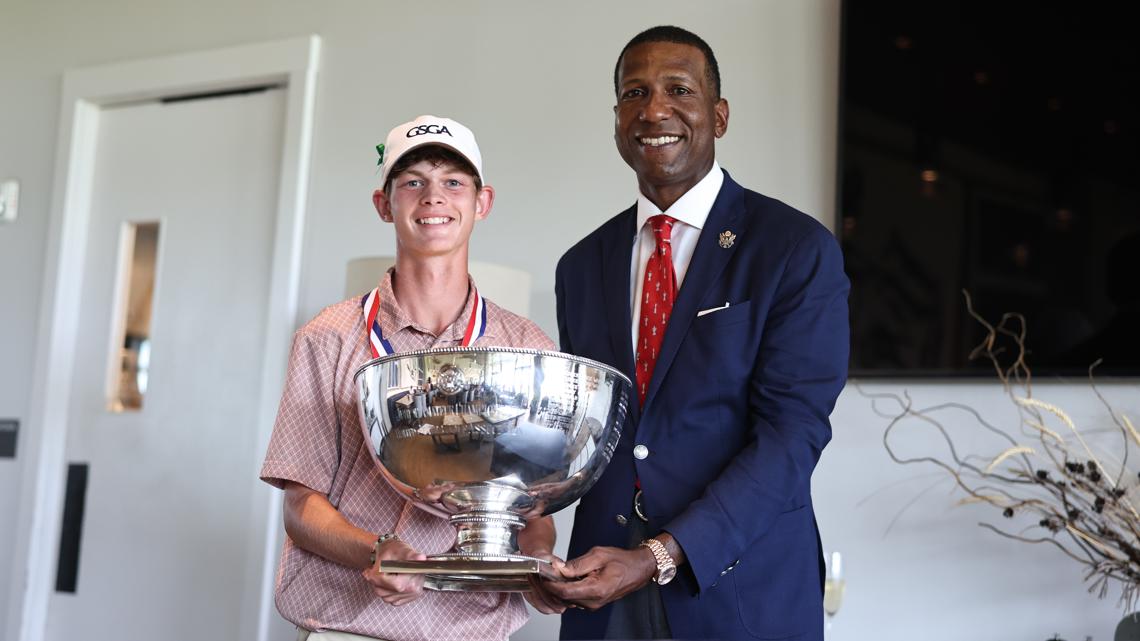
As someone who came to golf as an adult, what made you really feel like this could be a place for you?
It’s interesting, everyone who’s been important to my golf journey has generally been a middle-aged white man. And from the outside looking in, golf seems so exclusive, like that wall and that barrier to be included seems so high. And my experience has been, once you get inside the game, once you go through those gates that what seems so intimidating on the outside, is so welcoming and warm inside.
We’ve got to create more opportunities where the people that live in the community, where those people can be our people where we can actually find ways for people to connect and spend time together, because when you start walking the fairways in the game of golf, everything that’s different about you just fades away and our common humanity connects so for me, I’ve always felt very included in the game.
You’re a certified architect. How has that background shaped how you see golf, and specifically, golf courses?
For me there was such a congruency the day I got into the game because I understood a lot of the architecture principles, because I had been trained as an architect. Scale, proportion, rhythm, procession, sight lines — all of the devices that architects use for buildings, they also use for golf courses. But more importantly, the construction techniques that we employ in in golf courses are very similar to the construction techniques that we employ in buildings.
I feel like that gave me a real step change or kind of trampoline ahead, because the kind of concepts that we were working on while we were building Trinity Forest (clubhouse) were the exact things that I did every day.

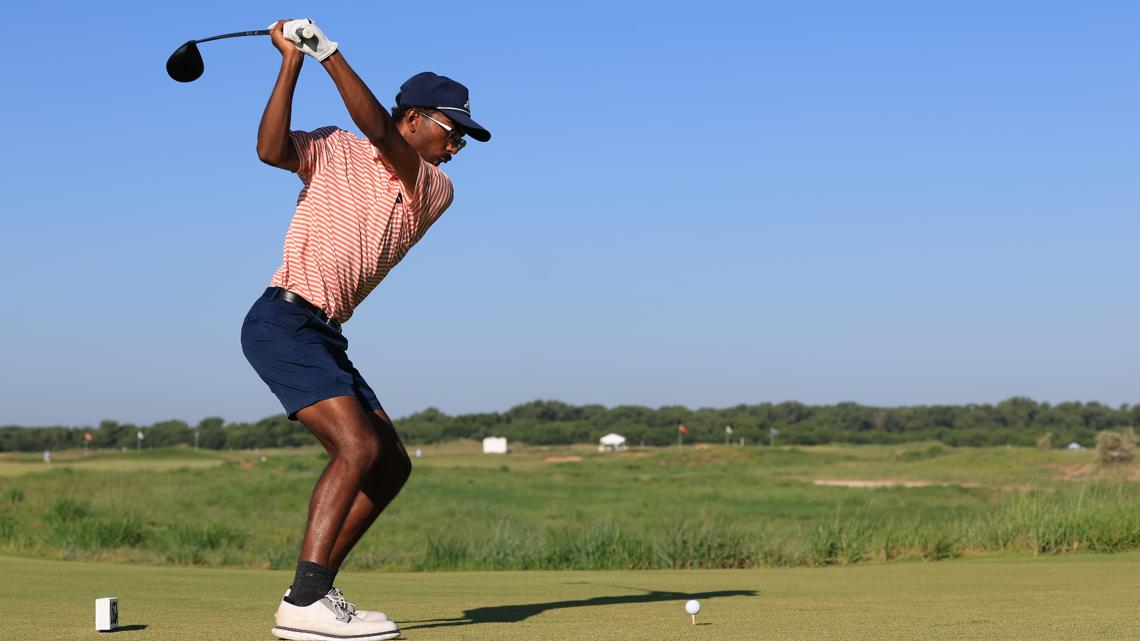
Why do you think rolling back the golf ball (shortening distances, which will go into effect in 2028) is important?
When I talk about extreme distances in golf, sometimes, as the folks responsible for governing the game, it may seem like we have a problem with the great athletes today who hit the ball so far. And I always like to start this conversation by saying everyone has done their job that has created the result of this extreme distance. The equipment manufacturers have done their job. They are manufacturing better equipment at higher levels of technical excellence, with better materials that are producing more extreme distances. The athletes have done their job. They all looked at Tiger Woods and they got bigger, faster, stronger. They have diets and nutrition. And they’ve become better athletes, so you look across the PGA Tour or any professional tour today, relative to 30 years ago, the athletes look like better athletes.
But we who are responsible for governing and for thinking about the game 50 years from now, 100 years from now, we now need to do our job. It is irresponsible to continue to consume more and more land and make the game more and more time consuming and more and more expensive. It’s literally irresponsible not to address this issue. It would be similar to tearing down Yankee Stadium, because we lack the courage to regulate the flight of baseballs. It would be like tearing down Fenway Park, because we’d like baseball players to use aluminum bats. Every sport has to deal with modern changes to its game.
And when the conditions change we have to change now there is no doubt that athletes who can swing at extreme speeds based on the modern construction of this golf ball gets a trampoline effect. In other words, a golf ball today when struck with extreme (swing) speeds, and I’m talking about speeds over 120 MPH, they get a exponential distance input that the regular golfer doesn’t get. So we’re building these big golf courses to accommodate a very small group of golfers.
And yet everyone has to bear their expense, and so at the same time that we’re trying to include more people and the barrier on that inclusion is time that it takes and cost that it takes, we have to address what’s baking more time and cost into the game which is this extreme distance. We’ve been studying this issue for over 10 years.
We’ve had an 8-year process, which has involved all of the stakeholders the PGA Tour, the PGA of America, the R&A, the USGA, all of our stakeholders have had a seat at the table and we’ve made compromises, but we now have a solution that will be implemented in 2028 and 2030, and it is a moral issue.
But it is also an issue that deals with the sustainability of the game. And so I like to come back to the point that everyone has done their job and now we’re doing our job, because we do not believe that these wonderful golf courses should be made obsolete because we lack the courage to regulate equipment.
Why do you think the rollback is so polarizing?
Look, I think there are economics at risk. And there are stakeholders that have real economic interests in no change. And I respect that they’re doing their job. I’m a CEO. I’m a capitalist, and I understand that you have to protect your interests. But we are looking across everyone’s interests, and so I do think that there is a little bit of a fear being baked because change is always tough. But I would remind the golfing public that the golf ball has continuously changed over the last 100 years. This solid core, hard-case ball has only been played for 25 years.
The golf ball technology continues to change and yet the game has not changed. I feel like this is one of those things where there’s a lot of ear because no golfer I know wants to hit the ball less far.
But I have to remind everyone, particularly the 99.9% of golfers who do not swing at extreme 120 mph speeds, that not much will change with the flight of their golf ball. I feel like the fear is probably just the fear of the unknown. Once we get on the other side of this change, I think it would be much to do about nothing. And we’re confident that the manufacturers are so good at these new specifications that they will make even better balls that conform to the rules of golf but that do not stress natural resources and the time that it takes to play the game.
We think this is a very important issue to address at this time, and I’m proud that the leaders who are involved all across the game are rising to the occasion to address something that I think will keep the game healthy and strong not only for our kids, but for our kids’ kids. I hope 100 years from now when all of us are gone, people are still enjoying championships at courses like Brook Hollow (1920s-built co-host of the U.S. Junior Amateur in Dallas), and that those do not become pitch and putts or Par 3 courses, essentially because we failed to do what was required in our time.