
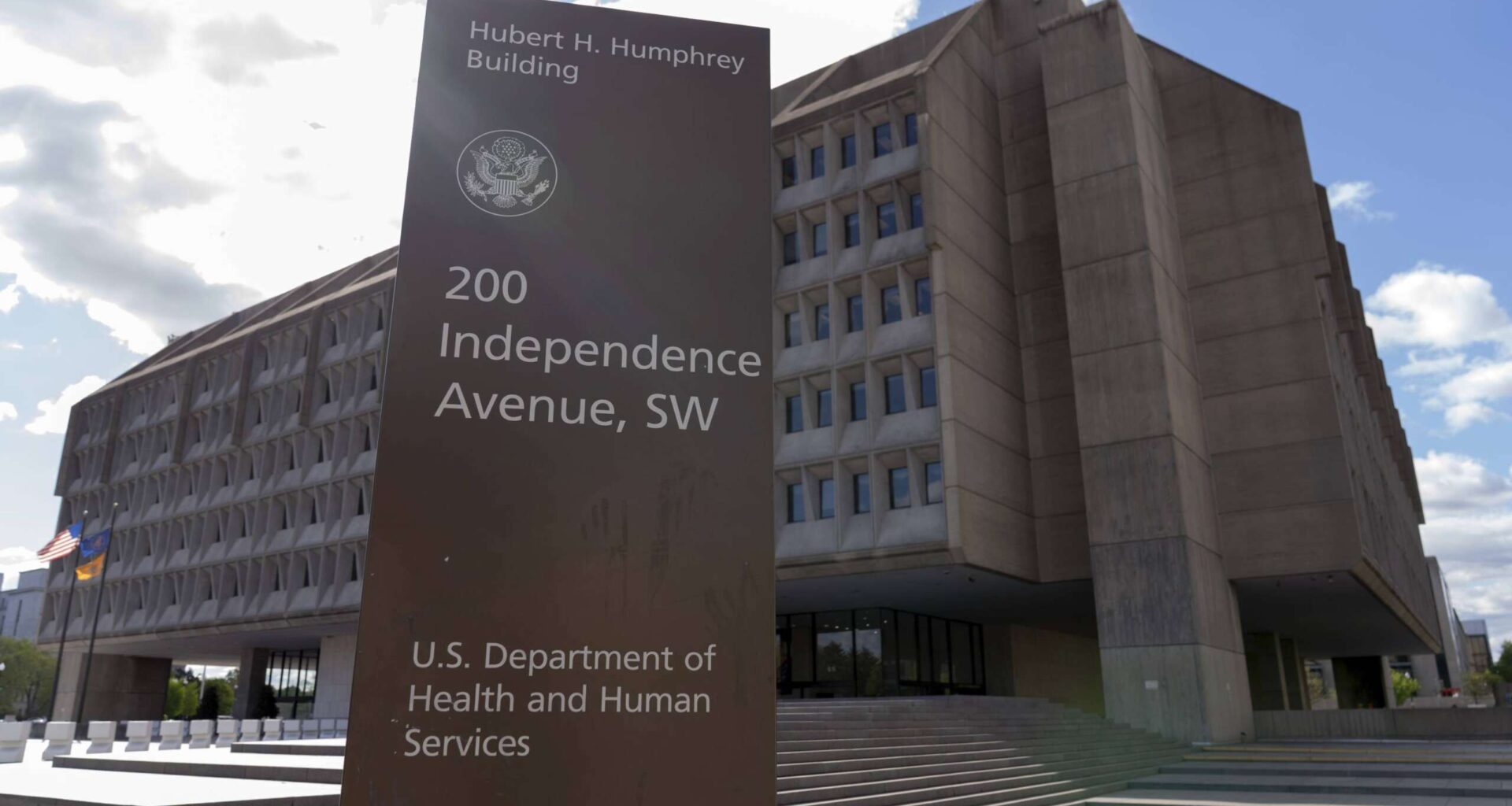
The Department of Health and Human Services is scaling back performance-based cash awards for its employees, opting instead to focus a majority of such funds on “special act” awards with less-defined eligibility criteria.
In many cases, these special act awards are meant to reward employees who contribute to the Trump administration’s goal of improving government efficiency, and who identify fraud, waste or abuse in government spending.
In a May 12 email, the Centers for Disease Control and Prevention told agency managers that financial awards for employees who received top scores on their 2025 performance evaluations “are undergoing a reduction in dollar amounts.”
An HHS spokeswoman confirmed that these changes to performance awards are happening across the department.
]]>
According to an internal email obtained by Federal News Network, the total awards budget for CDC and its Agency for Toxic Substances and Disease Registry (ATSDR) will remain the same, but the performance awards pool is capped at 40% of its awards budget. Incentive awards now make up 60% of the allocated budget.
“CDC and ATSDR have historically used approximately 80% of the total awards pool for performance awards, so this affects the upcoming performance award amounts,” the email states.
HHS Press Secretary Emily Hilliard told Federal News Network in a statement that updated HHS guidance “standardizes how awards funding is distributed across the department to better recognize both sustained high performance and mission-critical contributions throughout the year.”
“The updated framework is intended to create a more flexible and transparent recognition system while continuing to reward strong performance across the workforce,” Hilliard said.
According to the internal email, top-scoring employees will see the biggest reduction in performance awards.
In March, the CDC said employees with an “outstanding” rating would receive a bonus worth 4% of their basic pay. But under these changes, top-rated CDC employees will now receive a 2.58% bonus on average — about a third less than anticipated.
According to the internal email, these are the previous and current performance award rates for CDC employees:
]]>
Last percentages communicated (on 3/27 CDC and ATSDR):
Achieved expected results: 0.5%
Achieved more than expected results: 1%
Achieved outstanding results: 4%
Revised percentages (CDC):
Achieved expected results: average percentage of 0.48%
Achieved more than expected results: average percentage of 0.87%
Achieved outstanding results: average percentage of 2.58%
Revised percentages (ATSDR):
Achieved expected results: 0.5%
Achieved more than expected results: average percentage of 0.98%
Achieved outstanding results: average percentage of 3.04%
HHS, as part of its Performance Management Appraisal Program (PMAP), gives employees a one-out-of-five score on their job performance. The top score, a five, is reserved for employees who “achieved outstanding results.” On its website, HHS wrote that an “outstanding” rating is reserved for employees who “demonstrate exceptional initiative in achieving results critical to departmental success and strategic goals.”
Changes introduced by the Trump administration will make it harder for federal employees governmentwide to receive top evaluation scores over the next few years. In February, the Office of Personnel Management released a proposed rule that would limit how many federal employees can receive the highest ranking on their annual reviews.
The regulation removes a current ban on a “forced distribution” of performance ratings. OPM said a forced distribution system would make performance ratings “more accurate and rigorous,” hold federal employees “accountable” and better address poor performance across agencies.
CDC’s smaller budget for performance-based awards appears to fall short of OPM’s governmentwide standards. In a memo on federal employee awards last summer, OPM Director Scott Kupor told all agencies to set aside at least 60% of their bonus pools for employees who scored a 4 or 5 on their latest performance evaluation “to adequately incentivize high performance.”
OPM spokesperson McLaurine Pinover said in a statement that the agency’s guidance on performance awards “leaves final discretion up to agencies.”
One CDC employee described the decreased performance awards as an “attempt to demoralize us further.”
The CDC, like the rest of HHS, laid off a significant portion of its workforce through reductions in force last year. CDC and HHS later walked back many of those layoffs. But last week, HHS sent a second round of RIF notices to dozens of employees — including several at CDC — who initially were spared when the department laid off everyone else from their offices and programs.
The CDC is also cracking down on telework and workplace flexibilities as a reasonable accommodation for employees with disabilities. The agency, as part of a new HHS policy rolled out last year, rescinded reasonable accommodations for employees who were using telework to manage their medical conditions. HHS took these actions to comply with President Donald Trump’s mandate to bring all federal employees into the office full-time. As a result, HHS now faces a backlog of 9,000 new reasonable accommodation requests that will take six to nine months to process.
Hundreds of CDC employees with disabilities have filed complaints with the Equal Employment Opportunity Commission. A union representing CDC headquarters employees estimates the agency will spend about $200 million to resolve the surge in EEOC complaints.
]]>
Last summer, a gunman fired more than 180 shots into the CDC’s headquarters, killing a police officer who responded to the scene.
“Basically, they are lowering how much we can get for a performance-based cash award,” the CDC employee said.
According to Hilliard, “CDC’s total awards budget has not been reduced,” and employees with top ratings remain eligible for cash awards, time-off awards and quality step increases (QSIs.)
Employees who receive QSIs are given a “within-grade increase,” and move up a step on the General Services pay scale used for most civilian federal employees. Agencies award fewer QSIs than one-time cash or time-off awards, because the employees who receive them are given a bump in salary. To qualify for a QSI, employees must receive top marks on their latest performance evaluations.
Federal News Network previously reported that only 3% of HHS employees eligible to receive a QSI will actually get one. The CDC awarded QSIs to 87 of its employees based on 2025 performance. The agency relied on a “computer-generated, randomized selection process” to determine which qualifying employees would receive the QSIs. One CDC employee told Federal News Network that the odds of getting a QSI were like “winning the lottery.”
CDC’s internal email acknowledges that “there is a significantly higher budget allocated to components for incentive awards (or nonperformance-based awards).” However, the agency’s leadership suggested that this reduction in performance awards “can be offset in many ways.”
The CDC said it would reopen its Performance Management Appraisal System (PMAS) from May 14 through May 19 to give employees a chance to review their updated performance award and opt for a time-off award instead of a cash award if preferred. In a separate email obtained by Federal News Network, all award elections not made by employees before the May 19 deadline will default to the “all cash” performance award option.
The email also states that “on-the-spot awards” or “special act awards” are available to employees facing these bonus “deficits.” Unlike performance awards, these special act awards are given out throughout the year and are not tied to the annual employee evaluation process.
“Making up the difference your employee is losing in their PMAP award with an incentive award is an alternative route that could be encouraged,” the internal email stated.
OPM, in guidance released last summer, advised agencies to give out special act awards for “a special act or service in the public interest related to official employment or a suggestion, invention or superior accomplishment that contributes to the efficiency of government operations.”
OPM wrote that agencies are “highly encouraged” to reward employees who identify fraud, waste or abuse within government contracts or who “identify actionable opportunities for the government to increase its operational efficiency.” According to OPM’s guidance, all career employees are eligible to receive special act awards.
Hilliard said incentive awards “are designed to recognize specific accomplishments, special projects, operational achievements and other contributions that directly support the agency’s mission, regardless of annual rating cycle timing.”
If you would like to contact this reporter about recent changes in the federal government, please email jheckman@federalnewsnetwork.com, or reach out on Signal at jheckman.29
Copyright
© 2026 Federal News Network. All rights reserved. This website is not intended for users located within the European Economic Area.