
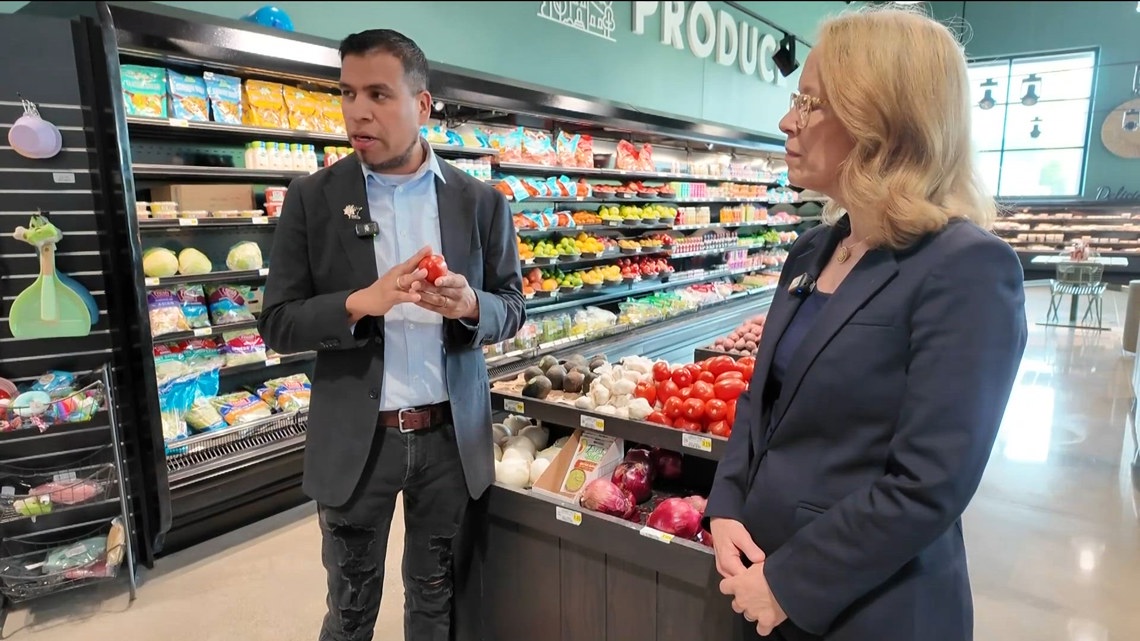
“Less than three weeks ago, we paid $15.20 for a box of tomatoes… now it’s $75,” Hernandez said during a tour of the store. “That’s because of tariffs.”
BLOOMINGTON, Minn. — At Colonial Market in Bloomington, owner Danny Hernandez says the pressures facing grocery stores have intensified in recent months, and shoppers are noticing it at the checkout line.
“Less than three weeks ago, we paid $15.20 for a box of tomatoes… now it’s $75,” Hernandez said during a tour of the store with Congresswoman Kelly Morrison. “That’s because of tariffs.”
Hernandez says rising transportation costs, fuel prices and uncertainty tied to the war in Iran are also driving up prices throughout the store.
“If a family comes in, instead of $300, now they spend $150,” Hernandez said. “Should we buy chicken, or should we buy beef, which is five times more expensive?”
According to the latest data from the U.S. Bureau of Labor Statistics Consumer Price Index, grocery prices nationally remain elevated compared to pre-pandemic levels, with categories like meat, eggs and produce continuing to fluctuate because of supply chain disruptions, fuel costs and global market instability.
The U.S. Department of Agriculture Food Price Outlook projects food prices will continue rising in 2026, though at a slower pace than the inflation spikes seen in recent years.
Hernandez says customers at Colonial Market are increasingly shifting toward cheaper, processed foods and cutting back on fresh products and meat.
Congresswoman Morrison, who serves on the House Small Business Committee, said those economic pressures are becoming a broader health issue for Minnesota families.
“We know that nutritious food is so important for kids’ growth and development,” Morrison said.
Researchers from the University of Minnesota School of Public Health have linked food insecurity and rising grocery costs to poorer long-term health outcomes, especially for children and low-income households.
During the tour, Morrison also connected the economic strain to what she described as the lingering impacts of “Operation Metro Surge,” the federal immigration enforcement operation that drew widespread protests and criticism across Minnesota earlier this year.
“People were afraid to come to work, they were afraid to shop,” Morrison said. “Operation Metro Surge was devastating to our community at large.”
Morrison also used the visit to make one of her strongest comments yet about federal immigration enforcement, saying the system may need major restructuring after what she says she witnessed during congressional oversight visits to detention facilities.
“I think we need such massive reforms that I would consider a complete restructuring,” Morrison said.
President Donald Trump has repeatedly defended both his tariff policies and immigration operations, saying the economic impacts are temporary and prices will eventually come down.
Meanwhile, Hernandez says families are already being forced to make difficult choices in grocery aisles right now.
“Who is suffering now?” Hernandez said. “It’s Americans. It’s Minnesotans.”