
The United States bakeware market is experiencing steady growth as Americans increasingly embrace home baking, creative cooking, and premium kitchen experiences. What was once considered a seasonal hobby has evolved into a year-round lifestyle activity fueled by social media inspiration, health-conscious cooking habits, and rising interest in homemade food preparation.
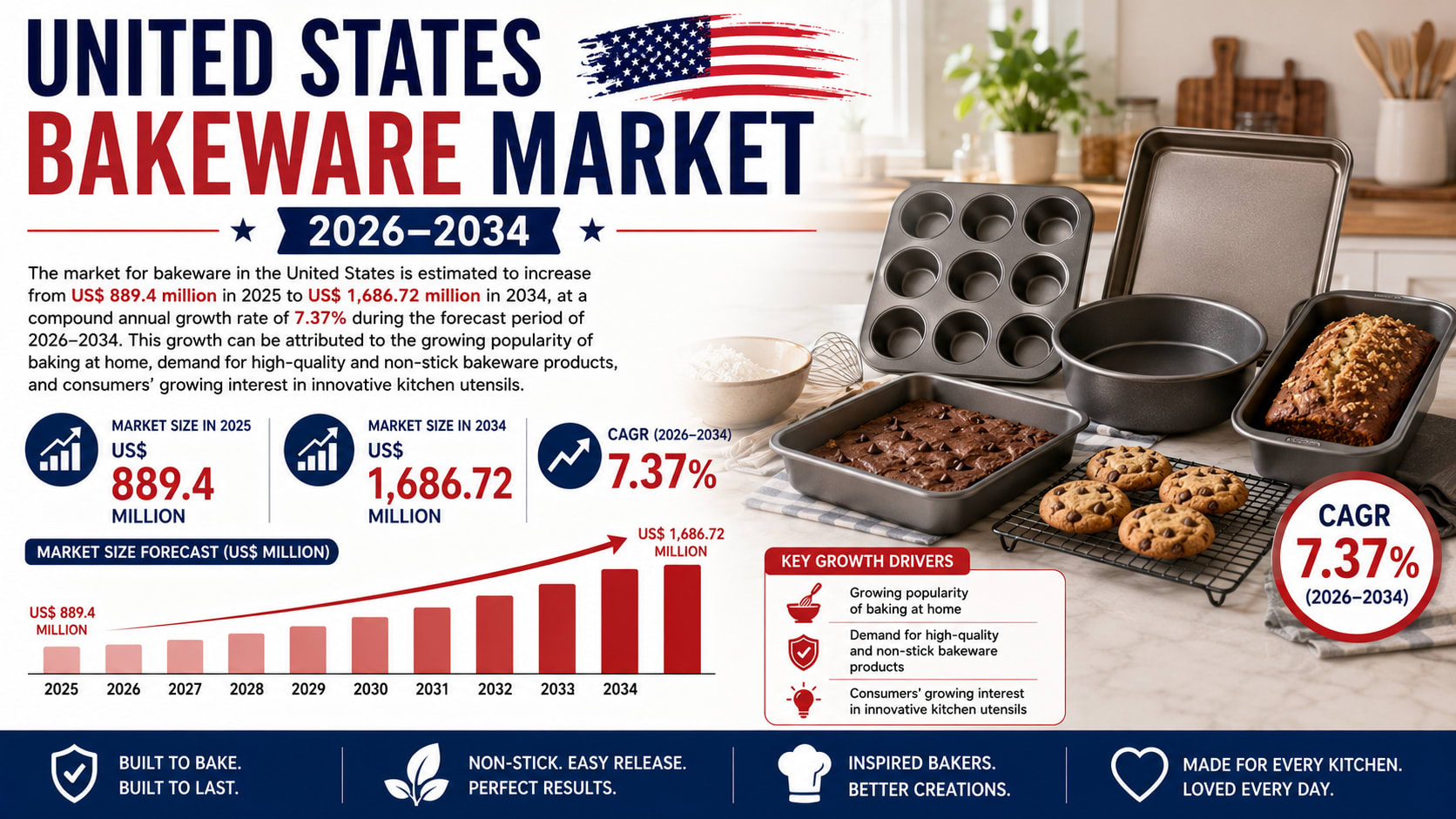
According to Renub Research, the United States bakeware market is projected to grow from US$889.4 million in 2025 to approximately US$1.69 billion by 2034, registering a compound annual growth rate of 7.37% between 2026 and 2034.
The growth is being driven by increasing popularity of baking at home, rising demand for premium non-stick bakeware, and continuous innovation in kitchen utensils and baking accessories. As consumers become more engaged with cooking culture and personalized food experiences, bakeware products are evolving from basic kitchen tools into lifestyle-oriented essentials.
Home Baking Has Become a Major Lifestyle Trend
One of the biggest factors driving the U.S. bakeware market is the growing popularity of home baking and cooking.
Bakeware products such as baking trays, muffin pans, molds, rolling pins, cake tins, and baking dishes are increasingly becoming staples in American kitchens. These products support the preparation of cakes, pastries, cookies, breads, pies, and other baked foods.
Changing lifestyles and increased interest in homemade meals are encouraging consumers to spend more time in the kitchen. Many Americans now prefer preparing baked goods at home because it offers greater control over ingredients, freshness, and nutritional quality.
Consumer confidence around cooking also remains high. According to the report:
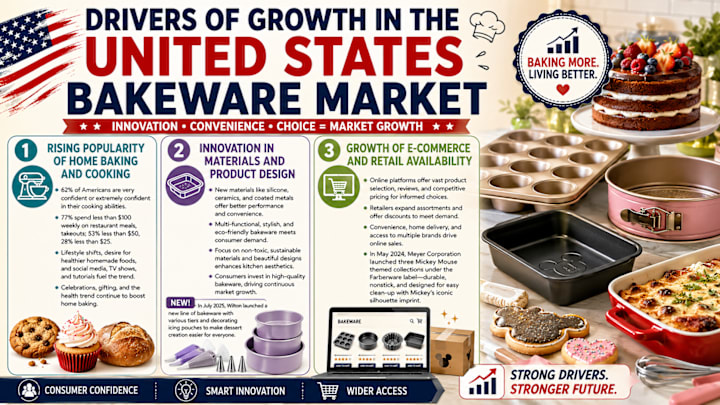
62% of Americans consider themselves confident or extremely confident in their cooking abilities 77% spend less than US$100 weekly on restaurant meals or takeout 53% spend less than US$50 weekly on outside dining
These trends indicate a strong shift toward home-centered food preparation, directly benefiting bakeware manufacturers and retailers.
 Social Media and Cooking Shows Are Influencing Consumer Demand
The rise of food-focused social media platforms, online cooking tutorials, and television baking competitions has significantly influenced consumer behavior.
Platforms like YouTube, Instagram, Pinterest, and TikTok have transformed baking into both a creative hobby and a form of self-expression. Consumers are increasingly experimenting with:
Artisan breads Gourmet desserts Custom cakes Pastries Seasonal baked treats Decorative cupcake creations
This growing interest has encouraged consumers to purchase specialized bakeware products that improve both functionality and presentation.
Cooking influencers and celebrity chefs are also helping popularize premium kitchen products and innovative baking accessories.
As baking culture becomes increasingly integrated into mainstream entertainment and lifestyle content, demand for modern bakeware solutions is expected to continue rising.
Product Innovation Is Reshaping the Bakeware Industry
Innovation in materials and product design is one of the most important forces transforming the U.S. bakeware market.
Manufacturers are introducing advanced bakeware products made from:
Silicone Ceramic Stainless steel Carbon steel Glass Coated aluminum
These materials offer benefits such as better heat distribution, improved durability, easier cleaning, and enhanced non-stick performance.
Consumers are increasingly looking for bakeware that combines:
Practical functionality Attractive aesthetics Safety features Durability Multi-purpose usability
The growing popularity of toxin-free and eco-friendly materials is also influencing purchasing decisions as consumers become more health conscious.
In July 2025, Wilton introduced a new bakeware line designed to simplify dessert preparation for consumers of all skill levels.
The emphasis on innovation is helping brands differentiate themselves in an increasingly competitive marketplace.
E-Commerce Is Expanding Consumer Access
The rapid growth of e-commerce is playing a major role in market expansion.
Consumers now have access to a massive range of bakeware products through online retail platforms, including specialty products that may not be available in traditional stores. Online shopping allows buyers to compare prices, read customer reviews, and access promotional discounts more easily.
The convenience of home delivery has further accelerated online bakeware sales.
At the same time, physical retail channels such as grocery stores, home goods retailers, and specialty kitchen stores continue expanding their bakeware offerings to meet rising demand.
A notable example came in 2024 when Meyer Corporation introduced Disney-themed bakeware collections under the Farberware label featuring Mickey Mouse-inspired designs.
The blend of functionality and visual appeal is becoming increasingly important in attracting modern consumers.
Consumers Continue Prioritizing Non-Stick and Easy-to-Clean Products
Convenience has become a major factor influencing purchasing decisions within the bakeware market.
Consumers increasingly seek products that are:
Non-stick Dishwasher-safe Lightweight Durable Easy to maintain
Busy lifestyles and growing interest in efficient cooking experiences are encouraging demand for bakeware that simplifies preparation and cleanup.
The demand for healthier cooking methods is also driving interest in products that reduce the need for excessive oils or butter during baking.
Manufacturers are responding with advanced non-stick coatings and user-friendly designs that improve performance while maintaining safety standards.
Price Sensitivity Remains a Significant Challenge
Despite strong market growth, price sensitivity continues to present challenges for premium bakeware manufacturers.
Although many consumers value high-quality kitchen tools, inexpensive alternatives available through mass-market retailers and imported products create intense competition.
Budget-conscious consumers often prioritize affordability over premium features unless they bake frequently or view baking as a long-term hobby.
Economic uncertainty can also reduce discretionary spending on kitchenware products, impacting demand for higher-end bakeware collections.
To remain competitive, brands must balance innovation and quality with affordability.
Durability Concerns Affect Consumer Trust
Durability and product lifespan also play a major role in consumer purchasing decisions.
Bakeware products are generally designed for long-term use, which can reduce replacement frequency and slow repeat purchases. However, lower-quality products may suffer from:
Warping Coating deterioration Uneven heating Reduced non-stick performance
Consumers are becoming increasingly aware of issues related to bakeware safety and durability, especially regarding non-stick coatings and material quality.
Manufacturers therefore face growing pressure to develop products that offer both longevity and safety while maintaining competitive pricing.
Tins and Trays Continue Dominating Product Demand
Among product categories, tins and trays remain some of the most widely used bakeware items in American households.
These products are essential for preparing cookies, pastries, cakes, and baked snacks. Consumers value them for their durability, heat resistance, and ease of cleaning.
Manufacturers are increasingly developing reusable and environmentally friendly trays and tins in response to sustainability trends.
Decorative and themed baking products are also becoming more popular for holidays, celebrations, and special occasions.
Sustainable Baking Cups Are Gaining Popularity
The baking cups segment is also experiencing growth due to rising demand for cupcakes, muffins, and decorative desserts.
Silicone, paper, and metal baking cups are increasingly available in themed designs, colors, and reusable formats.
Consumers are also showing greater interest in biodegradable and recyclable options as environmental awareness increases.
Manufacturers are introducing eco-friendly alternatives that align with broader sustainability trends across the kitchenware industry.
Stainless Steel and Aluminum Remain Key Materials
Stainless Steel Bakeware
Stainless steel bakeware continues attracting consumers because of its strength, durability, rust resistance, and toxin-free properties.
Many health-conscious consumers prefer stainless steel because it avoids chemical coatings often associated with some non-stick products.
Aluminum Bakeware
Aluminum remains one of the most popular bakeware materials due to its affordability, lightweight design, and excellent heat conductivity.
However, concerns regarding reactions between aluminum and acidic ingredients have increased demand for anodized and coated aluminum products that provide additional safety and durability.
Commercial Bakeware Demand Is Rising Alongside Foodservice Growth
Commercial bakeware demand is increasing steadily as bakeries, cafes, restaurants, and dessert shops continue expanding across the United States.
Professional baking operations require heavy-duty bakeware capable of withstanding intensive daily use.
The growing popularity of artisan bakeries and gourmet dessert businesses is encouraging investment in premium commercial baking equipment.
In February 2024, Maison Demarle introduced its Flexipan bakeware collection featuring advanced silicone and fiberglass materials known for flexibility and performance.
Online-First Brands Are Changing the Competitive Landscape
Digital-first bakeware brands are increasingly disrupting the market through direct-to-consumer strategies and social media marketing.
Online bakeware companies often focus on:
Stylish aesthetics Eco-friendly materials Influencer partnerships Modern packaging Premium positioning
In March 2024, Our Place launched a new bakeware collection featuring non-stick ceramic coatings and warp-resistant designs.
The rise of digitally native kitchenware brands is intensifying competition while accelerating product innovation.
California, Texas, New York, and Florida Lead Regional Demand
Regional consumer behavior continues influencing market trends across the United States.
California
California consumers strongly favor eco-friendly, non-toxic, and aesthetically pleasing bakeware products aligned with healthy cooking lifestyles.
Texas
Texas remains a high-volume market where consumers prioritize practicality, durability, and affordability for large family-oriented baking needs.
New York
Urban consumers in New York often seek compact, stylish, and multifunctional bakeware products suited to smaller kitchens and gourmet cooking trends.
Florida
Florida’s market benefits from strong baking activity during social gatherings and celebrations, with high demand for lightweight and easy-maintenance bakeware products.
Major Companies Continue Intensifying Competition
Competition within the U.S. bakeware market remains strong as manufacturers focus on innovation, quality, and design differentiation.
Key players include:
Groupe SEB Wilton Brands Newell Brands Meyer Corporation Emile Henry ZWILLING USA Pan Le Creuset Nordic Ware Caraway
Manufacturers are increasingly investing in sustainability, advanced materials, and premium product experiences to maintain consumer loyalty.
Final Thoughts
The United States bakeware market is evolving rapidly as home baking becomes more deeply integrated into American lifestyle culture.
With the market projected to reach nearly US$1.69 billion by 2034, demand for innovative, durable, and aesthetically appealing bakeware products is expected to remain strong.
However, brands will need to navigate challenges related to pricing competition, product durability, and changing consumer expectations around sustainability and health safety.
As consumers continue embracing homemade cooking, creative baking, and premium kitchen experiences, bakeware is expected to remain an essential category within the broader home and kitchen industry for years to come.