
What’s going on with The Villages Health System bankruptcy?
It’s Complex. The Villages Health System, LLC (“TVHS”) bankruptcy is complex, and it takes a lot of digging to understand what’s going on.
 Scott Fenstermaker
The number of pages filed so far in the bankruptcy proceeding totals a couple thousand or so—but who’s counting? Furthermore, there is stuff going on that is not reflected in the bankruptcy filings or other public sources of information–e.g., negotiations involving the Health and Human Services Inspector General and the Department of Justice. I have done some digging, and this essay sets forth what I have been able to figure out. To keep it reasonably short, I have had to paint with a broad brush. Readers who want more details can access all the bankruptcy filings at this website: The Villages Health System, LLC.
Because of its common ownership with TVHS, The Villages Daily Sun has access to all the relevant information. The Daily Sun is, therefore, in a far-better position than I to explain the bankruptcy and related negotiations. Nevertheless, The Daily Sun, for reasons that seem obvious, has chosen to limit its coverage to paraphrasing self-serving announcements made by TVHS itself.
Why Should We Care? As background, one needs to understand the following: TVHS is a limited liability company, almost entirely indirectly owned by the Morse family (which family and entities are collectively referred to below as “the Developer”). Mark Morse, as well as other family members, were signatories of the bankruptcy petition. TVHS had few physical assets. All its buildings were leased from the Developer. Its medical equipment appears to have been mostly leased from other companies. It employed about 800 doctors, nurses, and other health care personnel, and it served about 55,000 patients in The Villages.
There are two reasons why we, as local residents, should care about the TVHS bankruptcy:
Risk to Our Local Healthcare. The first reason we should care about the TVHS bankruptcy is that, if TVHS had been simply liquidated, with no plan to continue its operations and with its doctors and other personnel scattering to the winds, those of us who were among TVHS’s 55,000 patients would have been left without healthcare. In addition, the rest of us who were not TVHS patients would now be competing with those former TVHS patients for the reduced supply of local healthcare providers and facilities.
Risk to Us as Federal Taxpayers. But there is a second reason we should care. As will be explained below, the bankruptcy filings show that Medicare has, via insurance companies, overpaid TVHS hundreds of millions of dollars. At this point, the TVHS bankruptcy estate doesn’t have nearly enough assets to repay Medicare. Somebody has to eat the shortfall, but who will do so– the Developer, the insurance companies that insured TVHS’s patients, or us as federal taxpayers?
The Bankruptcy. Bankruptcy Chapter XI allows a debtor to remain in control during the proceedings, instead of a bankruptcy trustee’s being appointed. TVHS’s Chapter XI bankruptcy petition, which was filed on July 3, 2025, listed assets valued at $50 to $100 million. Together with its bankruptcy petition, TVHS filed a Declaration by its Chief Restructuring Officer, Neil Luria. The Luria Declaration states that TVHS had liabilities exceeding $360 million, with a substantial portion—at or above $350 million—attributable to overpayments to TVHS by Medicare. The Luria Declaration indicates that the liability to Medicare arose because TVHS had logged patient diagnoses “that were not clinically supported or otherwise did not meet Medicare coding and payment guidance”. In plain English, this would seem to mean that the diagnoses were made up.
Those diagnoses, if deemed fraudulent, would involve a type of Medicare fraud known as “upcoding”. Here is why: Medicare paid insurance companies United Health and Florida Blue, with respect to Medicare Part C plans, a per capita (“capitation”) payment for each insured TVHS patient. Those insurance companies, in turn, contracted with TVHS to pay TVHS a capitation (one that is obviously less than the insurers get from Medicare) for each insured TVHS patient. In other words, TVHS was NOT paid by the insurance companies a per-service fee for each treatment of a patient but made a profit if the capitation payments it got from the insurance companies were more than its costs of treating patients.
The capitation amounts were calculated on a basis that paid more if the general health of the patients was worse than normal. Thus, if TVHS “upcoded” its patients to make their health appear worse than was really shown by diagnoses, its per capita payment would be increased. As explained above, the Luria Declaration essentially admits that this happened. This resulted in TVHS’s being overpaid by the insurance companies and, indirectly by Medicare. It apparently also resulted in the insurance companies, in turn, being overpaid by Medicare.
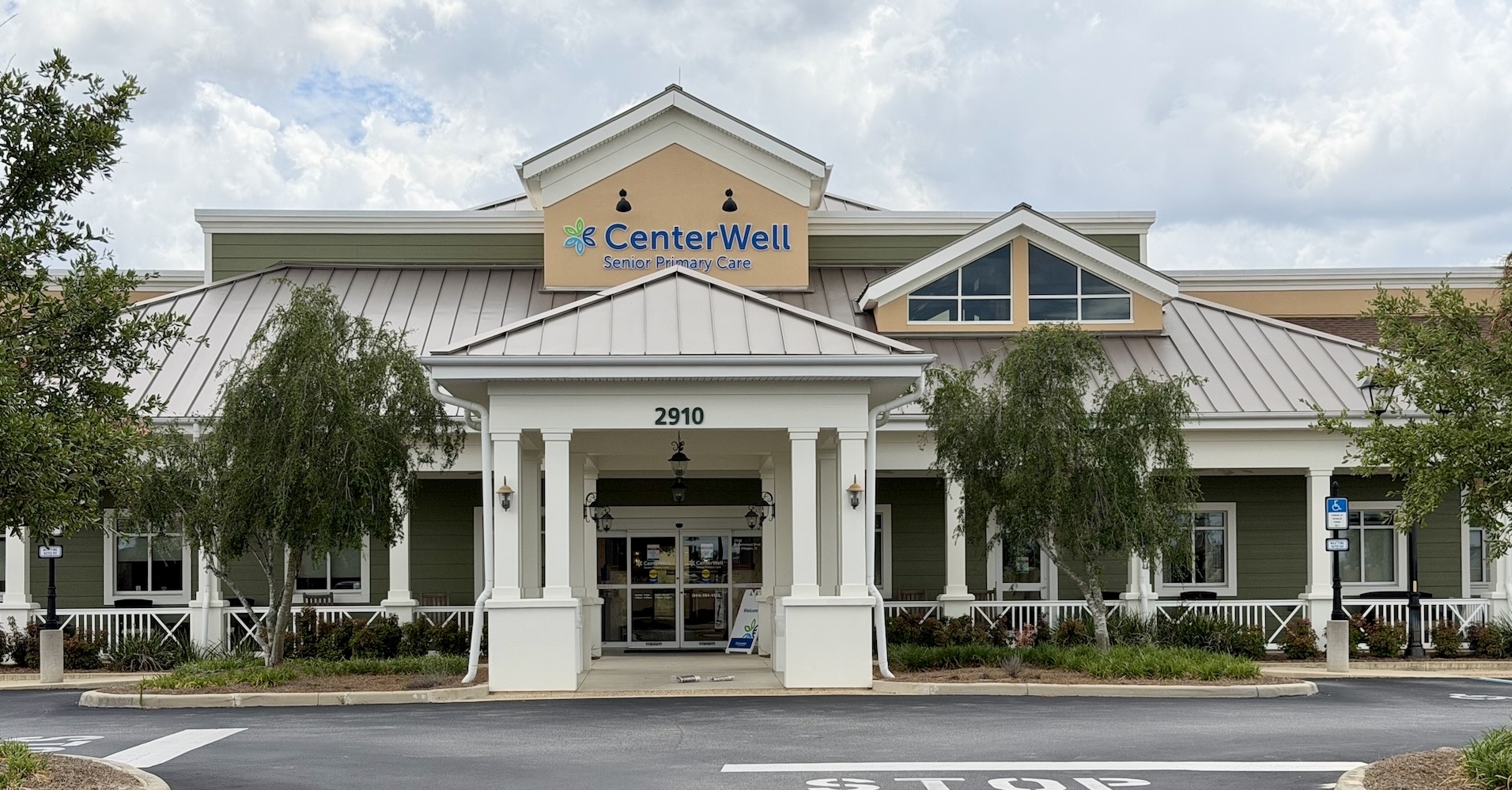
The Asset Sale and Continuation of TVHS’s Operations. As part of the bankruptcy proceedings, TVHS entered into an asset purchase agreement with CenterWell Senior Primary Care, a subsidiary of Humana. This agreement was a result of a “stalking horse” bid, meaning CenterWell made an initial bid for TVHS’s operations at $50 million and established the terms for a subsequent auction. The sale, however, faced objections from United Healthcare and Florida Blue, both of which claimed to be among the largest creditors due to their overpayments to TVHS:
United Healthcare was particularly critical, alleging that the bankruptcy plan was a way for TVHS to “hide insider dealings.” United Health claimed that $183 million had been improperly paid by TVHS to the Developer. United Healthcare argued this was a “suspicious” and “secretive” part of the sale.
Florida Blue also filed an objection, stating that it had been overbilled by TVHS by $25 million over a four-year period due to the false diagnostic coding.
.Whew! Risk to Local Healthcare Apparently Averted. Despite these objections and despite concerns raised by the US Department of Justice about language in the sale agreement that could prevent the government from pursuing civil or criminal liabilities, on September 9, 2025, the Bankruptcy judge approved CenterWell’s winning bid to acquire the assets of TVHS. The final price was $68 million. The court’s order allows CenterWell to acquire TVHS’s eight primary care centers and two specialty care centers. The sale was completed last November, and CenterWell has promised that patients will be able to keep their current providers and insurance plans. Thus, the first risk (risk to local healthcare) described above has apparently been averted.
Risk to Us as Federal Taxpayers. There still remains the second risk (i.e., the risk to us as federal taxpayers). While, as pointed out above, Medicare’s losses were originally estimated at or above $350 million, the amount owed the US government as a result of the Medicare overpayment to TVHS has now been set at $541.5 million. As indicated above, there are insufficient assets in the bankruptcy estate to come close to satisfying this amount. So, who eats the shortfall: the Developer, the insurance companies, us (the taxpayers) or a combination?
Under Bankruptcy Law, the debtor-in-possession can recoup (“claw back”) payments to insiders on several grounds, including voiding transfers that are deemed “preferential”, “fraudulent”, or excessive compensation. Therefore, there could be a basis for clawing back certain payments made to the Developer. Likewise, the US government may have a basis for collecting from the insurance companies and/or from the Developer outside of the bankruptcy proceedings. (Note the Office of Inspector General and Department of Justice negotiations referred to above). In fact, the Developer has offered up $80 million, under complicated terms and conditions.
What about criminal prosecution or the threat thereof as a means to recoup Medicare’s losses? As noted above, there are related negotiations underway, but their status is not publicly available. In any event, healthcare fraud has become a high-profit, low-risk scam, and even if a fraudster is convicted, he may well be pardoned or have his sentence commuted. During and after his first term, President Trump pardoned, or commuted the sentences of, a number of our nation’s biggest healthcare fraudsters. Click here for details. (Remember that the Developer is a major Republican donor.)
But not only is President Trump forgiving of healthcare fraud, so are we, the voters. We elected Rick Scott as our US Senator. We also elected Ralph Massullo as our State Senator. Click on their names for details. Thus, it doesn’t look like we can count on the government to recover Medicare’s TVHS losses from the Developer and/or from the insurance companies. It also doesn’t look like enraged voters will demand that the US government try to do so.
The Bottom Line. The good news is that, with the sale to CenterWell of TVHS’s operations, our local healthcare system has apparently dodged the bullet. The bad news is that it appears that we US taxpayers will eat a chunk of the $541.5 million owed to the US Government. While the size of that chunk is currently unknown, it should be ascertainable someday–when the bankruptcy proceedings and related negotiations come to a close. However, don’t count on reading about it in The Daily Sun.
Scott Fenstermaker is a resident of The Villages.
Related