
This story is part of Peak, The Athletic’s desk covering the mental side of sports. Sign up for Peak’s newsletter here.
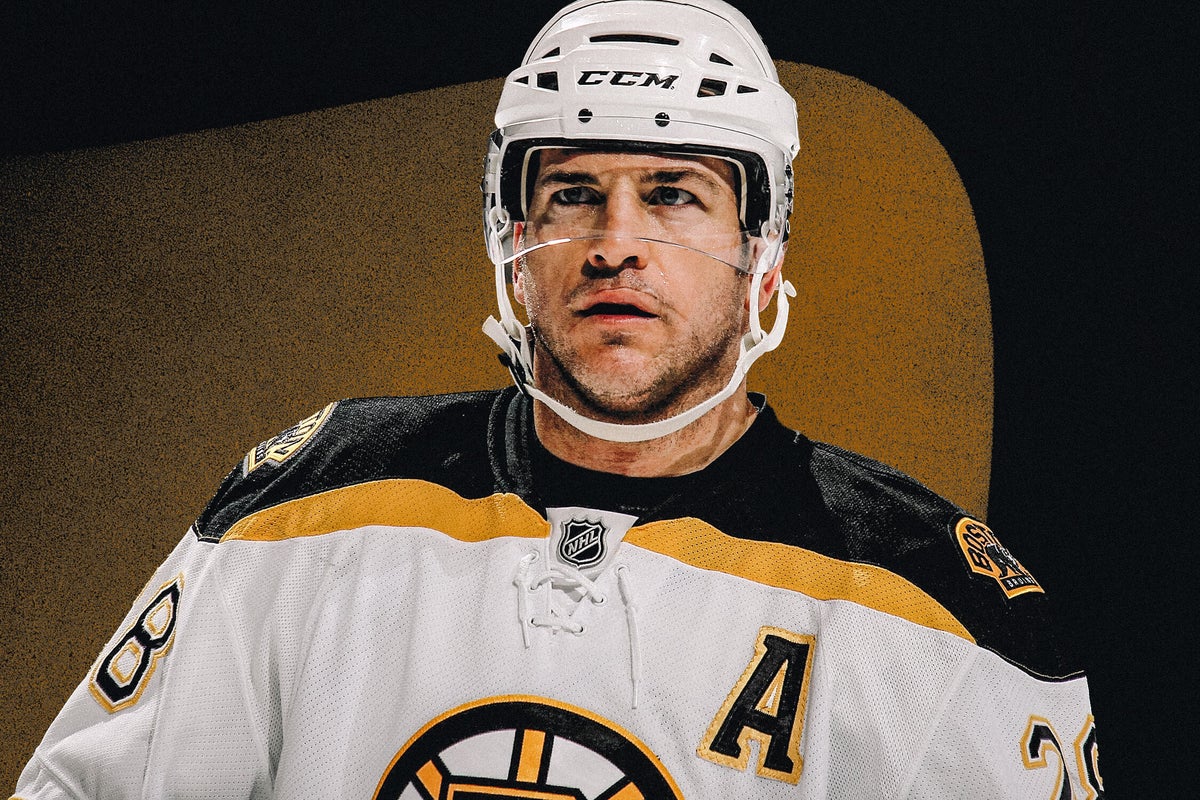
Mark Recchi played for seven teams in his 22-year NHL career. He was inducted into the Hockey Hall of Fame in 2017. These are the four best leaders he played with.
Bob “Badger Bob” Johnson, Pittsburgh Penguins coach
I only had him as my coach one year in 1990. He was very unique in how he approached leadership.
He was extremely positive. There was never anything negative. I met him and went through training camp, and it was just positive, positive, positive. Then we went through a bad stretch, and it was just positive, positive, positive.
You think: There is no way anybody can be this positive for this long.
But by the time January and February came around, I was like: This guy is still the same. He’s not changing. This is awesome.
He had a big impact on me. I learned that you can still lead, but you can find a way to spin it in a positive way. That was pretty neat for me.
We had some kind of party the night before, and we had a power-play practice the next day. He came into the steam room with us. We were all in there sweating out all of the beer. He hung out with us for 15 minutes and just talked to us in a great way. I don’t think many coaches will come into the steam room with you.
He could look at the stats and see if I had a good playoffs, but he challenged me in a way: “How have the playoffs been? Have you been good in the playoffs?” It was just a little bit of a challenge. I knew he was trying to push a button, and it was great.
We ended up winning the Stanley Cup that year.
Bryan Trottier, Pittsburgh Penguins forward
He joined the Penguins in 1990. I sat beside him and Joey Mullen, and they were both awesome. Trots just loved to communicate and talk.
He came from the New York Islanders, where he won four Stanley Cups. He was their top player for years, and then he came to Pittsburgh and was the third-line center. His leadership was incredible because he embraced that, grabbed it and realized it was a great opportunity. That was huge leadership for me.
He just came in and tried to help me; he was always trying to help me.
We would sit together in the dressing room, he and Mullen and I. They were veterans back then. Badger Bob would walk by and everyone would be going out to practice and I would always be thinking: I’m going to be late to practice!
But I was not going to leave, and Badger Bob and the coaches never said anything to me. They knew I was sitting and talking with him and learning.
He was very influential on me.
Patrice Bergeron, Boston Bruins forward
Patrice grew into an incredible leader, which was really fun to watch. You knew he had it in him, but he was a quiet guy who just did his thing.
He did everything right on the ice. He did everything right off the ice. But his voice needed to be heard.
We played on the same line for pretty much the whole time I was in Boston. It was January or February, and we had a really crappy period. We all knew it. I walked by him and just said: “It’s your time.” He kind of looked at me like “OK.”
Then he was unbelievable. He was amazing. He was confident enough that he knew he could do it. He grabbed that room, and it was unbelievable.
He found his voice.
It was so fun for me to watch him become the voice of the dressing room. He was the moral leader of that room.
He led by example for the most part, but he knew there were times when he needed to be heard, and he was great at it. His timing was always perfect. And he was really smart about when to do it. That’s a great example of leadership as well: knowing when to do it, because sometimes you can overdo it. He was always right on.
Zdeno Chara, Boston Bruins defenseman
He was always in the gym, ripping off 30 pull-ups and guys were going, “Holy.”
He had these long arms; I couldn’t even pull that off and I had short, little arms.
And then on the ice in practice every day, his leadership was incredible. Sometimes he’d just be like: “OK, we need to compete a little harder today.” He’d go out there and lead the competitiveness. He might whack a guy or he might get in the corner and get a little physical.
Nothing crazy, but it would get hard. Our practices were hard.
We knew that he was doing it for the right reasons. To me, that was great leadership on his part. He was able to just turn an OK practice into a competitive, hard, meaningful practice.
Our guys knew: Zdeno is telling us it’s not good enough, so it’s not good enough.
It was really fun to watch that. He just had that influence on our team.
— As told to Jayson Jenks