
Shannon Dawson has been on the road recruiting this spring, and at nearly every stop, Miami’s offensive coordinator/quarterbacks coach keeps getting the same question. And it’s not about the Hurricanes making the national championship game.
“The first thing that people in my job at other places say is, ‘Man, how do you get your f—in’ receivers to block like that?” Dawson said. “I’m like, it’s because he blocks his ass off.”
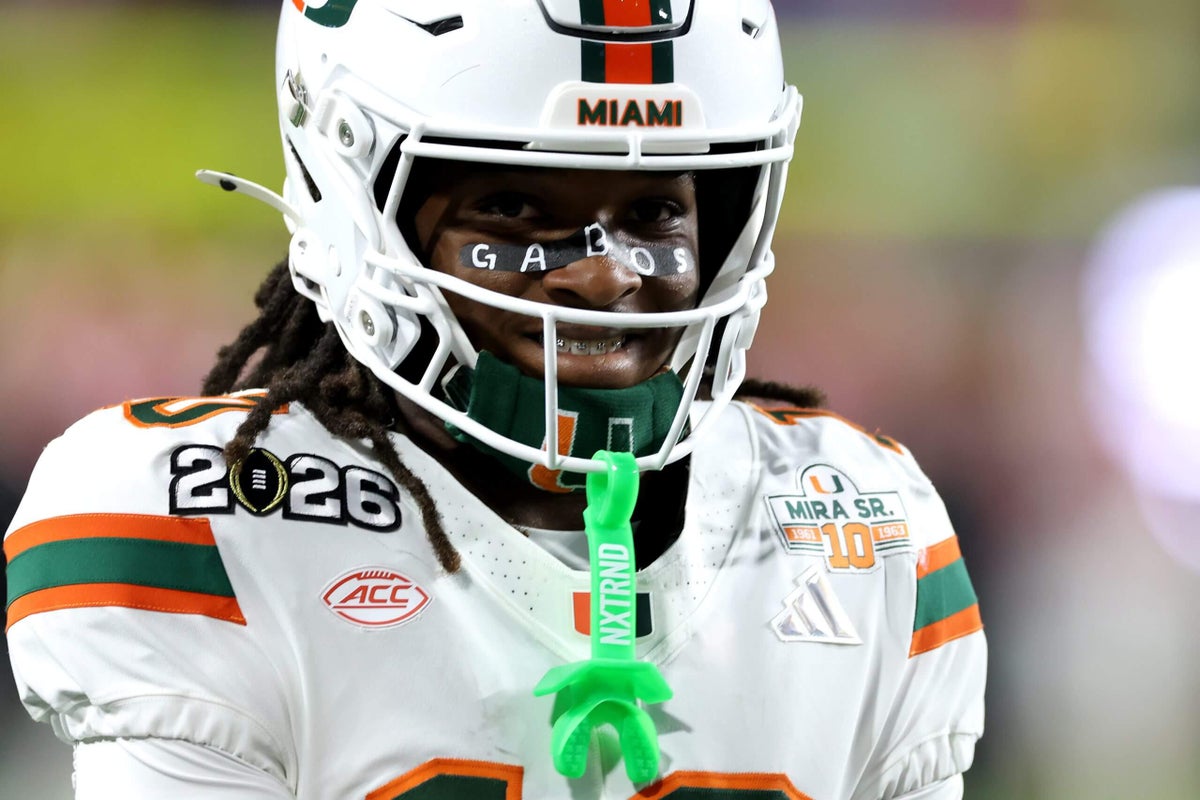
He is Malachi Toney, who was supposed to be a senior in high school in 2025 but graduated a year early and helped spark the Hurricanes’ run to the national title game. A local legend dating back to his days tearing up the ultra-competitive South Florida pee-wee ranks, Toney is now becoming a legend on the national stage.
“He sets the bar,” Dawson continues, “You’ve caught 109 balls for 1200 yards, you’d think OK, he’s gonna take a block off. He doesn’t take a block off. It’s hard to get a lot of (receivers) to block. They may block, but they’re looking behind them, afraid they’re gonna get rolled up on, or don’t want people hitting their legs. Mali blocks like a friggin’ tight end, from Day 1 with heavy hands.”
Toney is 5-11 and 192 pounds. Pound-for-pound, he might be the toughest player in college football.
“He is off the charts,” said Miami coach Mario Cristobal. “He’s like Spiderman.”
“To me, the size doesn’t matter, honestly,” Toney said. “It’s about the heart of the player, not the size of the player. If you’ve got heart, it doesn’t matter how small or big you are, as long as you go out there and produce.”
He arrives at the football facility by 5:30 a.m. He eats breakfast, then gets on the Jugs machine to catch 200 passes by 6 a.m. At 6:30, he’s stretching. At 6:50, he’s getting taped for practice, and by 7, he’s in receiver coach Kevin Beard’s office, writing down the day’s script. Beard’s office is just one of many stops Toney makes to check in with other coaches in the building, picking their brains on defensive back play, offensive line technique, and anything else he can learn.
“He’s always in here asking, ‘Hey Coach, why’d you do that? Coach, what’s the tip here?” defensive coordinator Corey Hetherman said. “We’re like, ‘We’re not gonna tell you that!’ He wants to know how we’re coaching these guys. He wants to know why we’re doing things and how we’re doing it.”
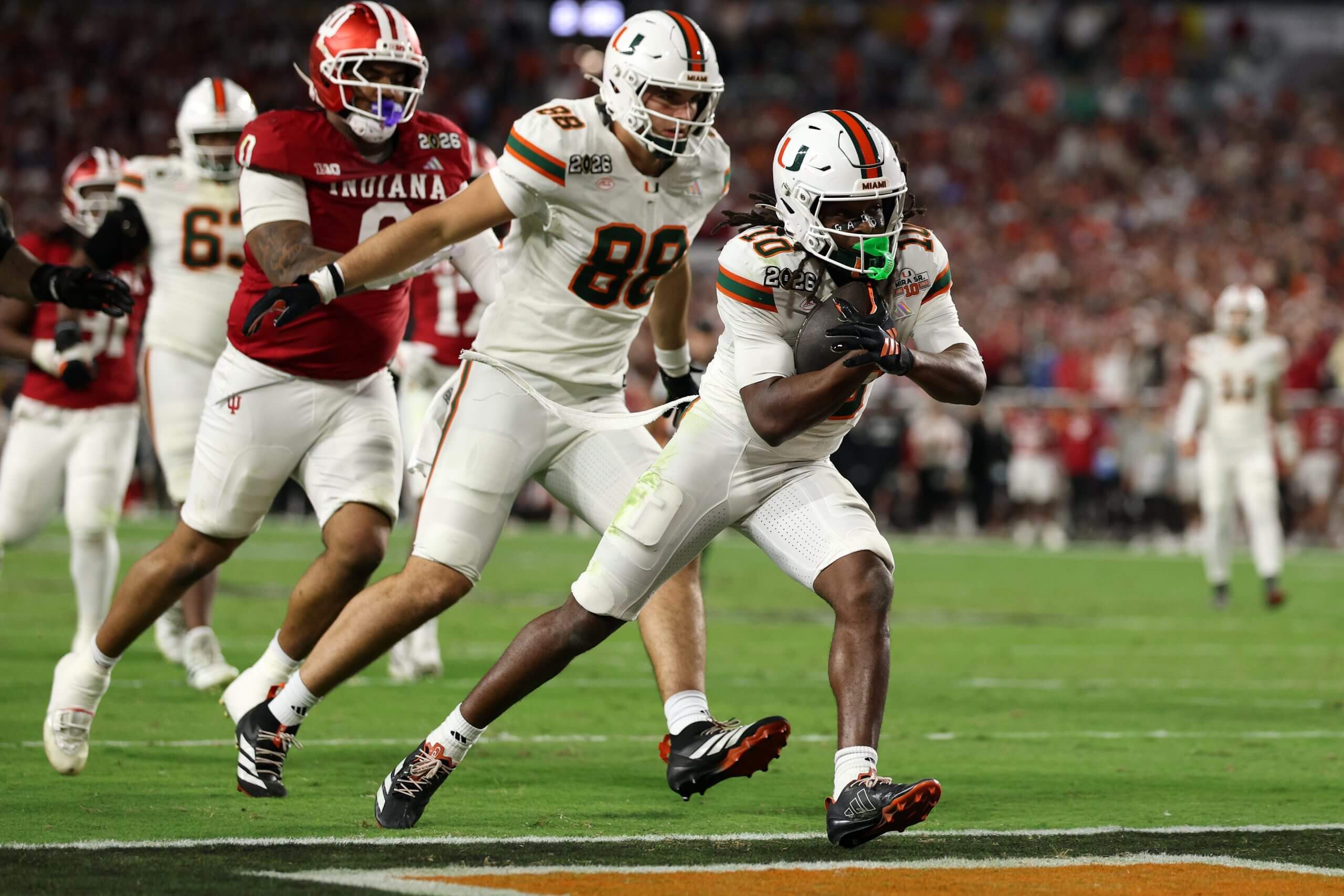
Malachi Toney stands at 5-11 but still blocks defenders at a high level. (Nathan Ray Seebeck / Imagn Images)
Even when he was a little kid, his mom, Toni Toney, said he’s always been an old soul who’s always been present.
“I’ve always told ’em, ‘You get what you want when you work hard for it,’” she said. “It doesn’t come easy. You just have to work for what you want.”
Of all the things that wow folks about Toney — his ferocious blocking, the acrobatic catches, his crafty route running, and his arm talent throwing passes — the most impressive thing is how dialed in he always is.
“There is never a time where he’s not on the top of his game in terms of his energy and focus,” Dawson said. “He never has an off day with attitude. Ever. And I think that is so important with a kid, especially skill guys. The steadier you can get, the better. I’ve coached some really talented guys, but their ups and downs were killing them. Mali could have a game where he caught one pass for five yards, but he blocked great, and we won; he’s as happy as if he caught 10 balls. You’d never be able to tell the difference. That’s rare.
“He should’ve still been in high school, so I didn’t want to overload him, but once I saw his capacity was so high, I realized you can’t overload him.”
Asked about her son’s uncanny focus and attention to detail, his mom mentioned Malachi’s artistic nature. What often makes a great artist is a keen eye for detail and nuance that others miss. “He could always draw very well,” she says. “He still does. He sketches anything that comes to his mind.”
Her son’s gifts, connecting his sketchbooks to his highlight reel, are probably no coincidence.
“That makes complete sense,” Dawson said when told about Toney’s artistic background.
Toney’s eye for detail parallels what it takes to be a good route-runner. A shoulder lean here, a quick head turn there, gives defenders false indicators to create separation. Those subtle details make a huge difference in both worlds.
Dawson has coached many dynamic receivers who have played in the NFL. Some struggled with their awareness and timing, often running their routes short, which frustrated Dawson.
“No matter how many times you tell ’em, they keep running it short. It’s because they get a hurry in their mind, ‘I gotta get open now!’” he said. “Mali has this innate ability, maybe it’s because he’s an artist and obsesses about those details that other receivers don’t obsess about. He views receiver play through the lens of a quarterback. He always has a good understanding of the timing.”
Toney says his best trait is his spatial awareness, which plays a big role in why he’s almost unguardable on his option routes. Of Toney’s Miami single-season record of 109 catches last season, Dawson estimates that about 30 or 40 came on option routes.
Leading up to Miami’s quarterfinal Playoff game against No. 2 Ohio State, Toney came into Dawson’s office to discuss an option route they’d talked about as Miami was finalizing the game plan. Toney had been told he could break inside only if the Buckeyes blitzed. If they didn’t (and they usually didn’t), a linebacker would be right inside him.
Dawson remembers Toney telling him, “Hey, I know I can’t break in if they don’t blitz, but that linebacker is tucked in, can I widen this guy and just kind of leak in and then Carson (Beck) can put it on me?”
Dawson thought about it for a bit, as Toney continued, “I’ll widen him, and it’ll create some space on the inside, but I won’t break in hard if he doesn’t blitz, but if he does, I will.”
That’s exactly how it played out in the game, as Toney got a completion on a play where the ball probably wouldn’t have come to him.
“Most kids probably wouldn’t bring that up to me,” Dawson said. “That’s the way his brain works. It’s always seeing leverage.”
Special players can reshape a playbook. Dawson remembers how former Texas Tech star Wes Welker’s fingerprints altered Mike Leach’s Air Raid offense.
“A simple 5-yard ‘stick’ route could look six different ways when Welker ran it, and it was all based on how the defense unfolded,” Dawson said. “Then, they started teaching stick routes, how he ran them after he left. Guys like him tend to create some rules that really don’t exist, that you go forward with. That’s not the way I teach the option route, but I probably will now because he’s right. You can create space.”
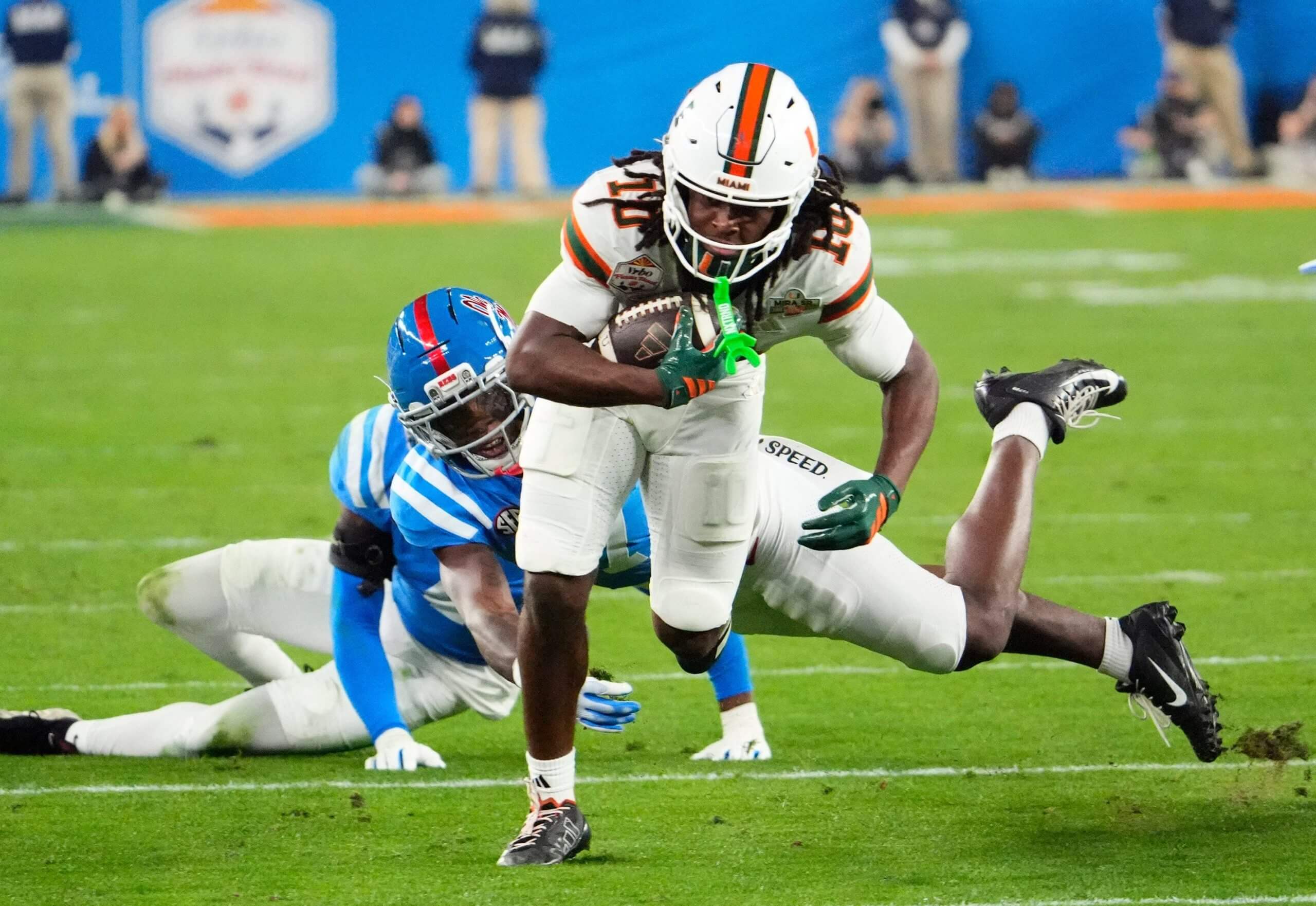
Malachi Toney thrived running option routes in Miami’s offense. (Rob Schumacher / USA Today Network via Imagn Images)
Despite playing in the country’s most talent-rich region and having a dominant high school career, leading American Heritage to the Florida state title in 2024, Toney was rated only a three-star prospect. None of the recruiting sites ranked him among the top 50 players in Florida or among the top 50 wideouts in the country.
Those recruiting rankings were gasoline to an already raging fire.
“It was my motivation,” he said. “Ain’t no way 100 people are better than me.”
He stopped caring about it after a while, he said, realizing they didn’t matter.
Toney’s high school coach Mike Smith, who has developed more than his share of five-star recruits, including Patrick Surtain, Sony Michel and Brian Burns, suspects Toney didn’t get his due from the ranking systems because they’re based heavily on measurables.
“He’s under 6-foot. They don’t have a (40-yard dash) time on him,” Smith said. “But I just know if you put the film on, he’s making plays. Acrobatic plays. I don’t know who comes up with all that stuff. I actually like it because it puts an even bigger chip on his shoulder.
“Look, I don’t know about the national rankings, but everybody down here knew. He is different. Keep putting that chip on his shoulder. He doesn’t forget being slighted. He’s got that Michael Jordan to him.”
Toney also wasn’t lacking hype. He earned the nickname “Baby Jesus” at age 8 after Toney, the smallest kid on the team, broke a long game-winning touchdown run to lead the Bunche Park Cowboys to a playoff win against the Miami Gardens Ravens.
“Bunche Park could never beat the Ravens,” said Marquaill Kennedy, the Cowboys’ coach. “They would always blow us out. It was 0-0. Malachi breaks this long run up the middle to put these people out of their misery. That was when Baby Jesus arrived.”
“Baby Jesus’” father, Antonio “Dayla” Brown, was a football legend in South Florida, too. Brown played receiver at West Virginia, spent two seasons in the NFL as a return man, and was best known for his blazing speed and for once beating Devin Hester, a Pro Football Hall of Famer and the NFL’s return touchdown record holder, in a race. “He’s one of the fastest people to ever come out of South Florida, like 4.2s all day long,” Smith said.
Toney carried himself like a grown-up, wise beyond his years, yet he was also the only kid any of the coaches had ever seen cry when he couldn’t practice because of the rain. He’d always wanted to be a wide receiver but played quarterback because the coaches said the team needed him there.
“You could tell he grew up with a lot of adults around him,” said Smith. “A lot of times, he’d be more mature than the adults in the room. He’s absolutely a different type of kid, man.”
Kennedy recruited his best friend, Craig Wilkins, a former Marshall wide receiver, to call plays and help Toney with coverages.
“He was like, you need to see this kid,” Wilkins said. “This kid is special. I watched him play in the Super Bowl. They lost, but he really stood out. He was like 10 steps ahead of everybody.”
Wilkins would work with Toney four times a week, giving him tips he picked up along the way. One piece of advice he gave was to understand how defensive backs worked. He told Toney to follow a DB trainer online so he would know exactly what to expect. “Once he sees something on the field, he’ll look at it, study it, analyze it, and he’ll get it,” Wilkins said, “and then keep doing it, till he masters it.”
When it came time to choose a high school, Toni did her homework to ensure she found the best program to help Malachi develop, both on the field and off. She met with the top private schools in the area: St. Thomas Aquinas, Chaminade-Madonna and American Heritage. Smith, who had been the strength coach at American Heritage, was promoted to head coach of the football program.
“Everyone was calling him Baby Jesus,” Smith said when Toney toured the school as an eighth grader. “I was like, ‘I ain’t calling a kid Baby Jesus.’”
Toney, of course, chose to play for Smith. In his first game, he had 100 yards receiving and a touchdown on the road against one of the top programs in Georgia. The following week, American Heritage was on ESPN. Toney scored another touchdown and was interviewed on the sidelines. Asked what he saw on the play, Toney said, “I seen that he ain’t as good as me, so I told my quarterback to check me to a fade.”
Shortly after the game, Texas A&M offered him a scholarship. By next week, he had six offers.
“He’s not intimidated by anything. He’s prepared himself for this moment,” Smith said. “That’s where he finds his confidence. I am not surprised by anything that he’s done. Even that one-handed catch that he made against Ole Miss in the Playoff that they called out of bounds. That’s a normal Tuesday here.”
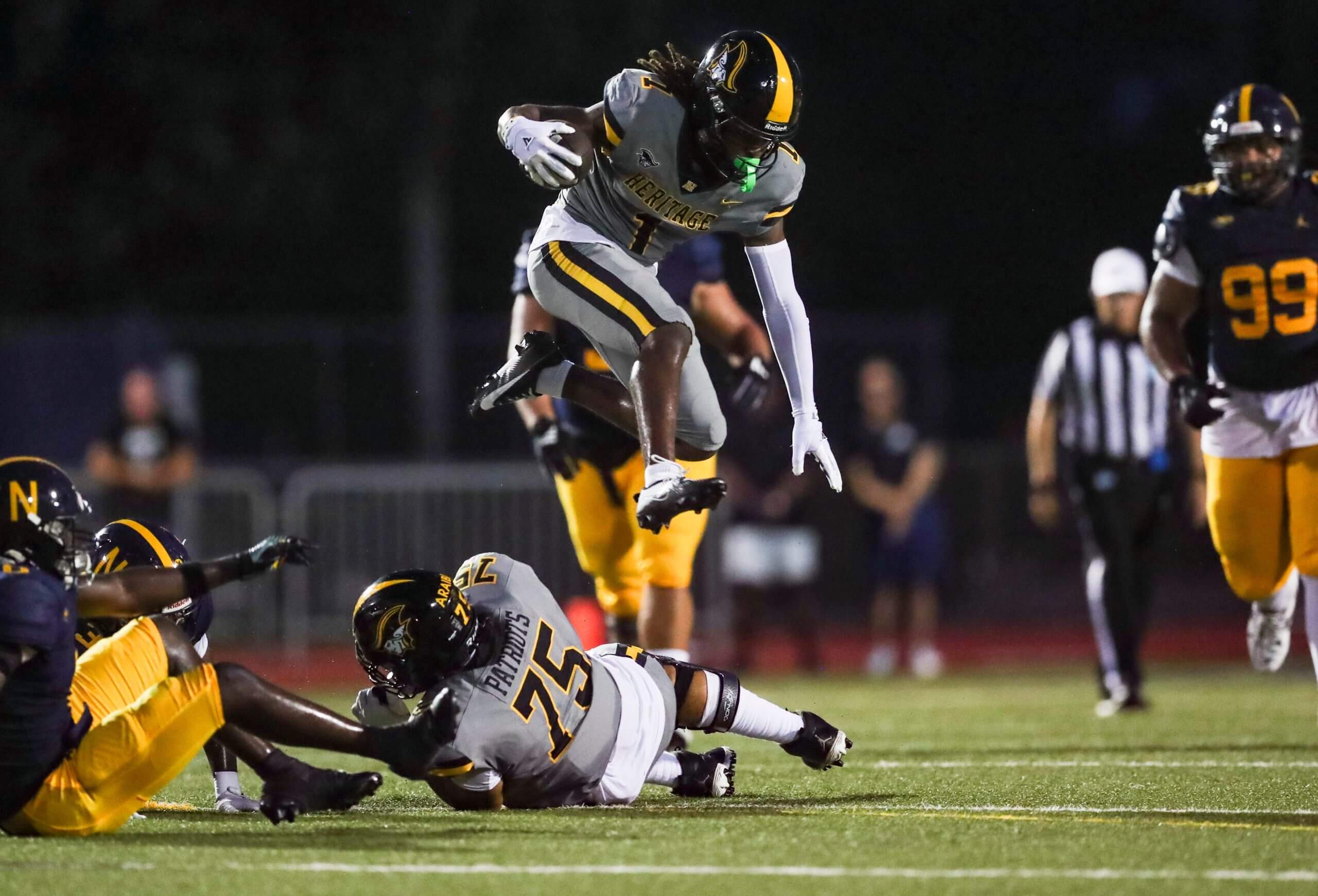
Toney led American Heritage to the state title game twice in his high school career. (Jonah Hinebaugh / USA Today Network)
At the end of his freshman year, Toney helped Heritage to the state title game against Miami Central, the No. 3 team in the nation. The Patriots rallied to cut a 31-10 deficit to 38-31 with the ball on the final drive.
Smith told his offensive coordinator to get his best two-point play ready because they were going for the win. They threw a bubble screen to Toney, who caught the ball and began to cut back, juking past a tackler who swatted at the ball as it was away from his body. On the 28-yard line, it popped out, and Central’s star D-lineman Rueben Bain Jr. recovered. Heritage lost. Toney was devastated, feeling he had cost his team the state title.
That moment turned Toney’s passion into an obsession. It’s why every day at lunch, in the broiling South Florida sun, Toney would have Smith get a shopping cart and load it with footballs. Smith would shoot 5-10 balls in a row to Toney, who would then throw them into the cart and push it back and forth until he caught his 200-plus balls — only there was a twist.
“He’d catch 28 balls down the middle, 28 on the left, 28 from the right,” Smith said with the 28 being the reminder of Toney’s fumbling at the 28 and the team coming up 28 yards short. “We’d go three rounds of that, repeat it three or four times. That became the number for him. It was his motivation.”
Now that number is 200, as in the number of balls he catches each morning from the Jugs machine he bought for himself a few months ago.
He only dropped one pass all of last year, he said — not just in games, but in practices as well. His lone drop occurred at a practice during Florida week in mid-September.
“I’d just come across the middle, it hit me in my chest, and I dropped it,” Toney said. “Some of the coaches screamed, ‘He’s human!’”
Miami came close to winning a national title in Toney’s debut season. Midway through the third quarter, the Hurricanes were down 10-7 and had the momentum. They forced a punt. Toney was back to receive inside the Miami 20. Mitch McCarthy boomed a high kick 55 yards, sending Toney backpedaling 15 yards near the right sidelines inside the Miami 5 to field the punt. The Hoosiers hemmed in the dangerous return man, and Toney was only able to get back to the 7-yard line.
What the TV cameras didn’t pick up was Miami speedster Bryce Fitzgerald, who runs a 10.5 100-meter dash, had drifted out to the far hashmarks, waiting for Toney to fire a cross-field pass that might’ve gone for a long touchdown. Only the McCarthy blast and the Hoosiers’ punt coverage squashed the throwback before it could happen. Miami had practiced it a ton. They’d seen how it would set up on film. They thought they had it. The only thing that could stop it was a great punt.“
While recording @BearBetsPod today our Miami expert @chrisfallica mentioned he believed the punt Toney fielded near the 5 yard line was a trick play that never materialized. Bear is correct. Look at this thing. Miami would have scored if the punt wasn’t so good. pic.twitter.com/N7yup1pcdr
— Geoff Schwartz (@geoffschwartz) January 20, 2026
“When he kicked it, I knew I wasn’t gonna be able to throw it,” Toney said. “It was so high in the sky. He didn’t out-kick his coverage. He gave them the time to get down there and recover.”
Three plays later, Miami faced a fourth-and-1 at its own 16. Indiana blocked the punt and scored. It was a 14-point swing. The Hoosiers regained the momentum and won 27-21.
Miami reaching the national title game was a major step for a program that had been in a 20-year slumber. Miami has three first-rounders to replace as well as a group of vocal leaders. Inside the program, though, there’s a feeling that this year’s team may be more talented than last year’s, but that doesn’t mean it’ll be better.
Toney, who is still only 18, knows he must help shoulder the leadership void in the receiver room with C.J. Daniels off to the Los Angeles Rams. “That’s a role I’ve gotta fill and be more of a vocal leader now,” he said. “I’ve got to take more of the freshmen under my wing, what C.J. did taking me under his wing.
“I gotta get better at everything. I can’t get complacent. Just because I did good at things last year, that doesn’t mean that I can relax or become lackadaisical.”
This offseason, Toney has changed his number from No. 10 to No. 1, as he’s become the face of the program and emblematic of its turnaround. Local kids flock to him, whether it’s at Miami’s practices or the youth football camps he hosts, like the one he held in May, where over 300 kids showed up, screaming his name.
“The best decision he made was going to Miami because he really is a hometown hero,” said Smith. “Those setbacks, like losing in the state game, they really fuel him. He texted me right after they lost the national championship game. He said, ‘Man, this is the same hurt like that state championship.’ I know as great as he was last year, you’re gonna see a different version of him this year. He always finds ways to reinvent himself. Everything is starting to slow down for him now. This will get real interesting and he’s gonna be really special.”