
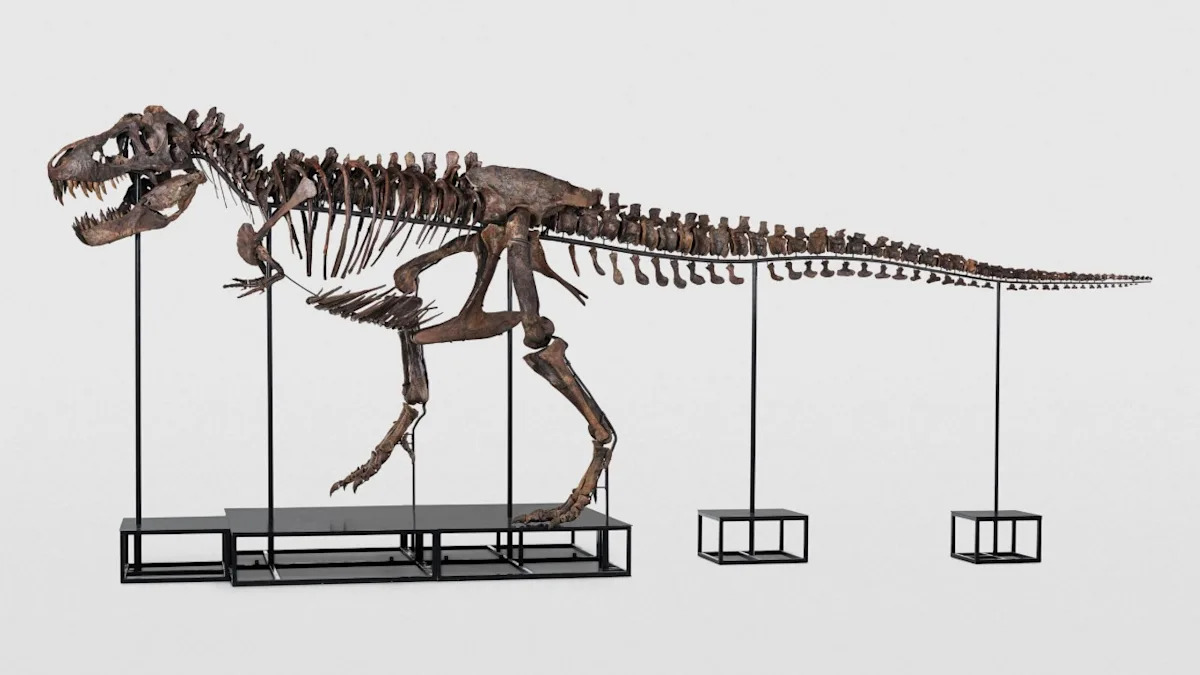
It’s a known fact that Tyrannosaurus rex dinosaurs have small arms — but why? Scientists now believe they have cracked the mystery.
According to a new research study published by The Royal Society on Wednesday, May 20, the T-Rex’s “reduced forelimbs evolved” at the same time as their skulls grew larger.
Scientists conducted research on 85 “non-avian theropod species” and found a correlation between the evolution of reduced forearms and high cranial robusticity in five carnivorous species.
“Results indicate that forelimb reduction is strongly correlated with cranial robusticity and gigantism,” the study, which was published May 20, explains. “Reduced/vestigial forelimbs evolved in at least five theropod lineages in concert with increased cranial robusticity and gigantism.”
Tyrannosaurids — along with abelisaurids and carcharodontosaurids— “show the greatest forelimb reduction relative to the skull.”
The results indicate that these species were forced to shift from “subduing prey” using their grasp, to relying on their “powerful bites and robust skulls.”
Among the studied species, the Tyrannosaurus rex had the largest head.
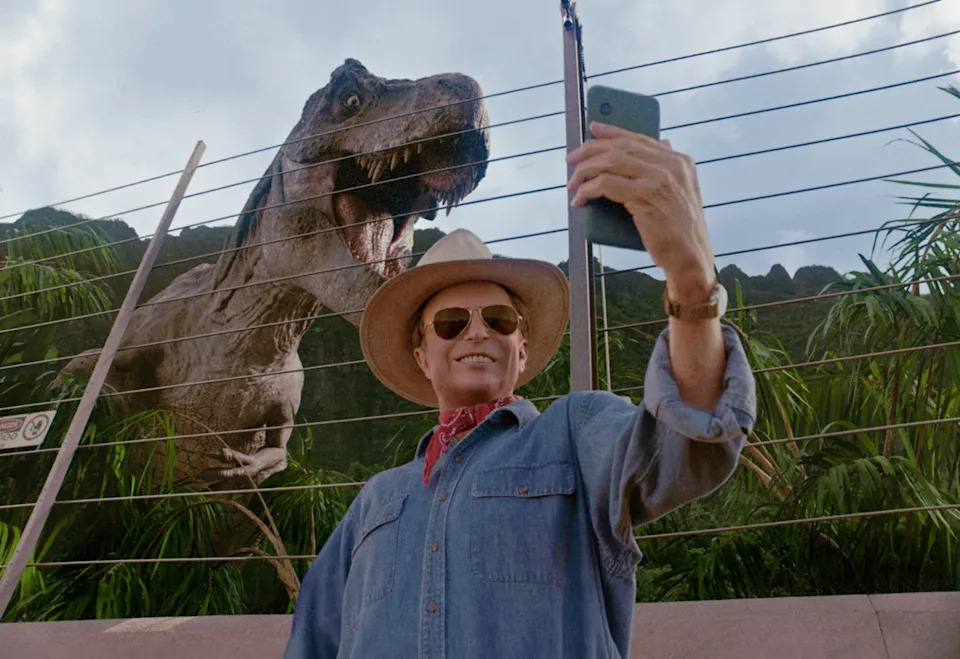
Courtesy of Xfinity/Mega
Lead author Charles Roger Scherer told CNN, “Everything was approached headfirst, so the head just became what came into contact with the prey. That was the easiest way to bring them down, as opposed to jumping around or fighting with claws.”
While the research likely discovered the cause of the short limbs, Scherer explained that the function of the arms remains unclear.
“They obviously served some kind of function, otherwise they wouldn’t have them,” he said. “Hopefully we can find that out with a bit more work.”
This story Why Do T-Rex Dinosaurs Have Mini Arms? Scientists May Have Discovered the Reason first appeared on Globe. Add Globe as a Preferred Source by clicking here.