
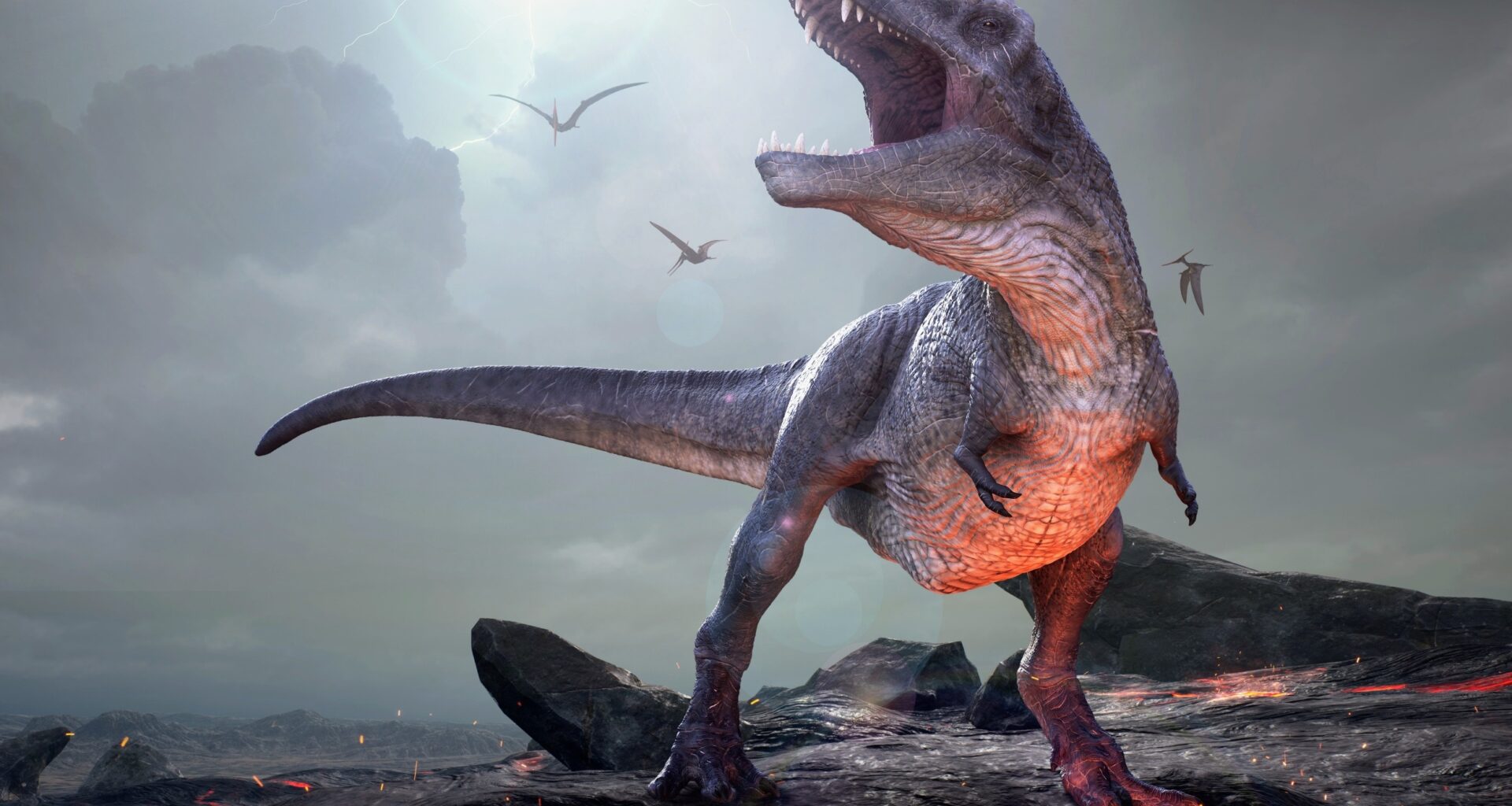
The dinosaur extinction story usually begins with a flash in the sky. A massive asteroid slams into Earth, dust clouds rise, temperatures drop and dinosaurs disappear.
But a new study from researchers at Johns Hopkins University shifts the focus away from giant creatures and falling rocks. Instead, it looks at microscopic fungal spores buried in ancient mud.

These tiny remains are helping scientists build a more detailed picture of what happened before and after the extinction event that ended the age of dinosaurs 66 million years ago.
The findings suggest the world may already have been in trouble long before the asteroid struck.
Fungal spores in ancient sediments
Scientists have debated one important question for decades. Was Earth healthy until the asteroid impact destroyed everything at once? Or were ecosystems already weakening before disaster arrived?
To answer that, researchers needed evidence that could react quickly to environmental changes and survive millions of years in the fossil record.
Fungi offered a strong clue. These organisms spread rapidly when large amounts of dead material appear in the environment.
Their spores also survive well in sediments for millions of years. That made them ideal witnesses to ancient ecological collapse.
Ancient rocks revealed decay
Rosanna Baker, an assistant scientist in Arturo Casadevall’s lab, examined rock samples collected from the Denver Basin in Colorado and sites in North Dakota.
Paleontologist Tyler Lyson from the Denver Museum of Nature and Science supplied the material.
Baker processed the rocks, separated fungal microfossils from plant material, and counted them layer by layer.
The researchers focused on the ratio between fungal remains and plant remains in each rock layer.
When fungal material suddenly became more common, it pointed to widespread death and decay in the surrounding ecosystem.
Fungi appeared before impact
Scientists expected to find one major fungal spike tied directly to the asteroid impact. Instead, the Colorado samples revealed three separate periods of fungal abundance.
The earliest fungal rise began around 30,000 years before the asteroid hit Earth and lasted for roughly 20,000 years.
That finding suggested environmental damage had already started long before the famous impact event.
Volcanoes changed climate
The timing matched a known cooling period linked to huge volcanic eruptions in what is now western India.
These eruptions formed the Deccan Traps, one of the largest volcanic regions on Earth. Massive amounts of lava, ash, and gases entered the atmosphere over long periods.
Scientists believe this volcanic activity altered global climate patterns and stressed ecosystems worldwide.
Fungi confirmed volcanic damage
The fungal evidence fits neatly into that picture.
“If you ask most people what killed the dinosaurs, they’ll say it was that asteroid, but our fungal microfossil-based results suggest that the world already had been undergoing a cataclysm when the asteroid struck,” Casadevall said.
Baker noted that there is other evidence from the fossil record that some species were dying off already at this time.
“It’s plausible that this volcanism in Asia was stressing ecosystems worldwide, essentially setting it up for the final blow when the asteroid struck,” said Baker.
Asteroid triggered global bloom
The second fungal surge appeared exactly at the asteroid impact boundary.
Researchers had noticed something similar before in New Zealand rock samples. The Colorado findings now show the same fungal bloom at the same moment in geological history on another continent.
That strengthens the argument that fungal explosions became a global response to the mass death caused by the asteroid impact.
Extinction recovery is not predictable
The final fungal increase appeared about 10,000 years after the asteroid collision during the early Paleocene period.
Unlike the earlier fungal events, this one has no clear explanation. Researchers found no evidence of another asteroid strike or major volcanic eruption linked to this period.
The mystery highlights an important point about mass extinctions. Recovery is rarely smooth or predictable.
Even after the worst destruction ends, ecosystems can remain unstable for thousands of years.
Fungi thrived after disasters
Casadevall describes this growing field of research as “disaster microbiology.”
“Fungi are life forms that often thrive on environmental calamities,” he says.
This pattern appears elsewhere in Earth’s history. The largest mass extinction ever recorded, the Permian extinction around 252 million years ago, also included evidence of major fungal blooms.
Warm blood helped mammals
The research may also support another long-standing idea proposed by Casadevall in 2005.
Mammals may have gained an advantage after the dinosaur extinction partly because of body temperature.
Mammals are warm blooded, while many fungi struggle to survive at higher temperatures.
In a world filled with decomposers and fungal growth, warm blooded animals may have faced fewer fungal infections than colder-bodied reptiles.
A different extinction story
The asteroid impact remains central to the extinction of dinosaurs. But the fungal spores buried in ancient mud reveal a more complicated story.
Earth may already have been under severe environmental stress before the asteroid arrived. Volcanoes had altered climate patterns. Ecosystems were weakening. Species were already disappearing.
Then the asteroid struck a planet that was already vulnerable.
The fungi simply responded the way fungi always do. They spread across dying landscapes and left behind microscopic spores that survived for millions of years.
The study is published in the journal Proceedings of the National Academy of Sciences.
—–
Like what you read? Subscribe to our newsletter for engaging articles, exclusive content, and the latest updates.
Check us out on EarthSnap, a free app brought to you by Eric Ralls and Earth.com.
—–