
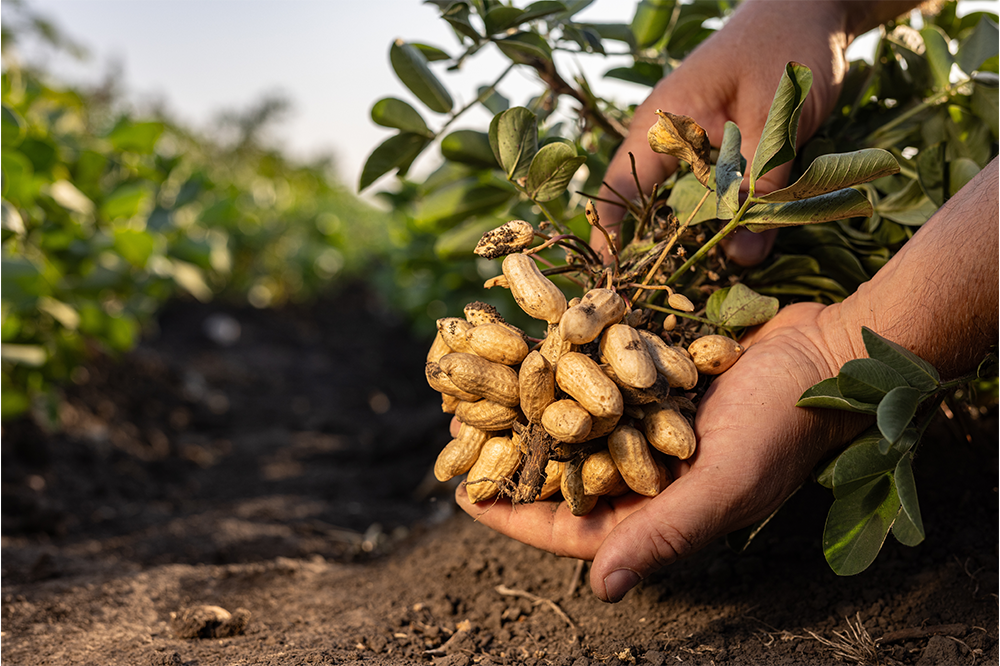
Up to 30% of peanuts never make it from pod to plate due to pests and diseases, according to Mars. And just 1 in 100 peanuts are good enough to become Peanut M&M’S, the company said.
The losses cost farmers “hundreds of millions of dollars” and “are jeopardising a key source of protein for millions of families worldwide”, the manufacturer of confectionery warned as it announced an additional $5m investment to help develop drought and diseases-resistant varieties of peanuts.
About three-quarters of peanut production occurs worldwide in arid and semi-arid regions, making drought an important concern in peanut production. Drought not only reduces yield but also degrades product quality.
In the US for example about two-thirds of peanuts are grown in non-irrigated lands, where drought accounts for an estimated $50m loss each year. Climate change exacerbates this situation by increasing erratic rainfall.
In the past decade Mars has ploughed $10m into research on the legume. “We know that the perfect peanut won’t be discovered by accident. It will take long-term investment, scientific ingenuity,” said Mars Snacking chief R&D, procurement and sustainability officer Amanda Davies.
The latest investment, over five years, will fund “advanced techniques” using genomic science to “grow hardier peanut varieties that can stand up to rising pressure from pests, disease, and unpredictable weather”.
In a recent paper on the topic published in Frontiers in Genetics, researchers noted: “The advent of precise genetic studies, artificial intelligence, high-throughput phenotyping, bioinformatics, and data science have significantly improved drought studies in peanuts.”