
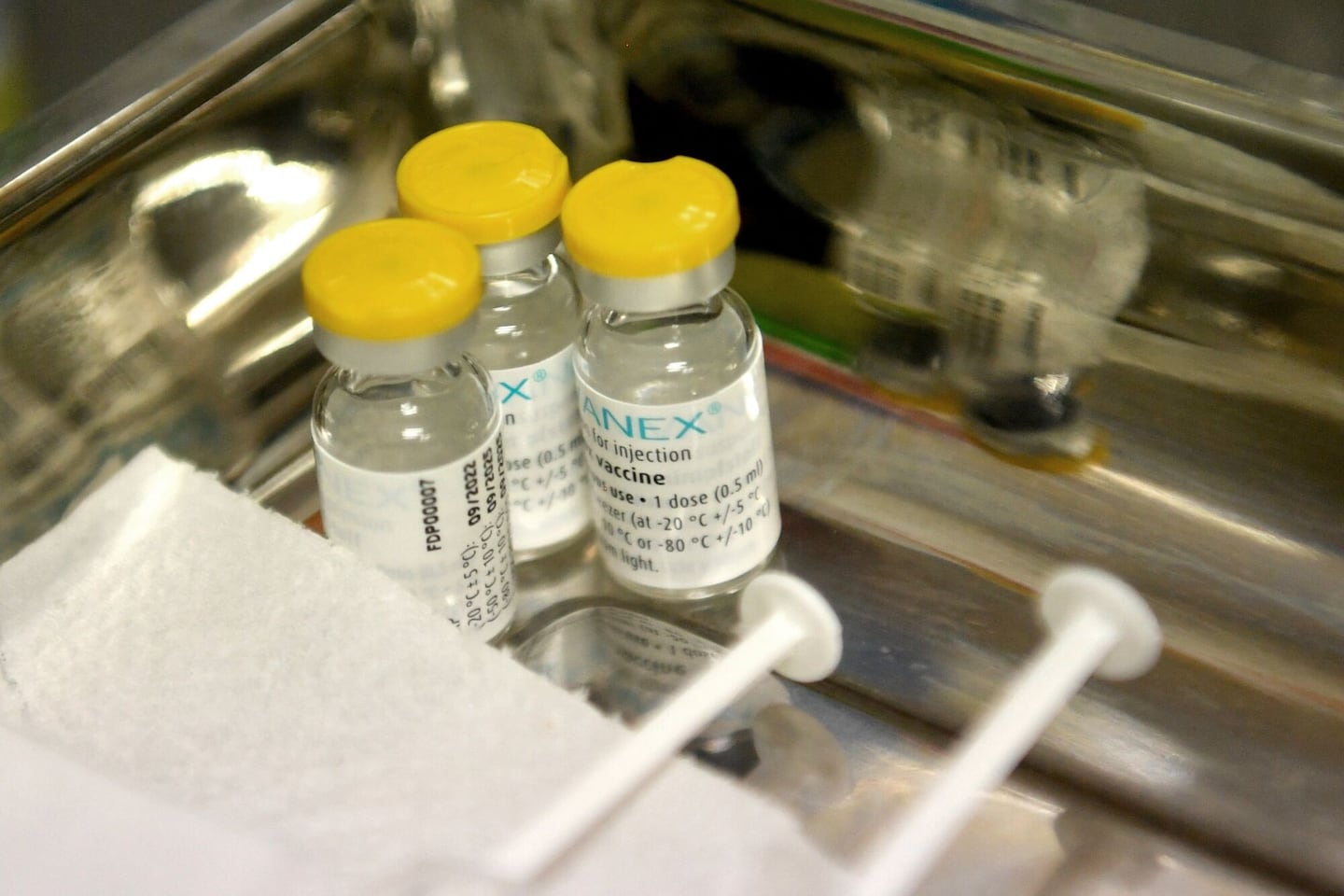
Boston and state health officials are monitoring an uptick in cases of the mpox virus and have launched new vaccination efforts to protect people at risk.
Mpox, formerly known as monkeypox, is an infectious disease that spreads through close, direct contact with an infected person’s bodily fluids. Symptoms include a painful, itchy rash that presents as pimples, blisters or scabs, fever, headache, and muscle aches.
Gay and bisexual men, especially those with multiple sexual partners, are at highest risk, officials said.
The Boston Public Health Commission said there is no widespread public health threat from mpox at this time.
Between August 1, 2025, and March 31, 2026, 77 mpox cases were reported in Massachusetts, up from 23 cases in the same time period a year ago but far lower than the more than 400 people sickened during a large international outbreak in 2022.
Only two cases were reported in the state between April 1 and May 28, according to a spokesperson for the Massachusetts Department of Public Health.
“The last eight months we’ve seen an increase, certainly not back to the level we were seeing in 2022, but an increase in cases from the very low baseline we were seeing in 2023 and 2024,” said Dr. Kathryn Himmelstein, medical director of the Boston Public Health Commission’s Infectious Disease Bureau.
Mpox spreads through intimate, sexual, or household contact or through direct contact with contaminated objects.
“Mpox does not spread through incidental contact like brushing up against someone on a crowded train car, or shopping in the same store,” the Boston Public Health Commission said in an advisory Thursday.
A recent study showed asymptomatic infections could be more widespread than previously thought.
In response to the increase in cases, Boston is launching a new vaccination effort. For the first time, the city will set up several mpox vaccination clinics over the summer months, offering people with and without insurance access to vaccines for low or no-cost. The first of these clinics will be set up at the city’s Pride flag raising June 1, the BPHC said in the press release.
The two-series vaccine is 80% effective in preventing illness and also lessens symptoms.
There are two clades of the virus: clade I, which is mostly found in Central Africa, and clade II, which is concentrated in West Africa. The cases in Boston are clade II, Himmelstein said, which is considered less severe than clade I.
The international outbreak of the clade II virus in 2022, which remains ongoing, marked the first time mpox spread widely outside of Africa. In the US, cases peaked in July and August 2022 and have remained at about 200 or fewer a month since 2024, according to the CDC. In Boston, cases peaked at 118 at the end of 2022, Himmelstein said.
Nationally, mpox cases rose in October and again in early 2026, and have decreased steadily since then, CDC data show.
Himmelstein said the local rise in cases could be attributed to the large share of unvaccinated people in the community. Some people who are now at risk could have been too young to get the vaccine when the virus was getting widespread attention in 2022.
“A lot of folks went out and got vaccinated in 2022,” she said. “Having a large population of unvaccinated people, including people who were too young to be vaccinated in 2022 and have now aged into adulthood and are more susceptible to mpox, could be part of why we’re seeing this.”
In addition to the city’s popup clinics, mpox vaccinations are currently available at Mass General Hospital, Boston Medical Center, and Fenway Health. Some pharmacies in the city have also begun administering the vaccine, BPHC said.
Emily Spatz can be reached at emily.spatz@globe.com. Follow her on X @emilymspatz.