
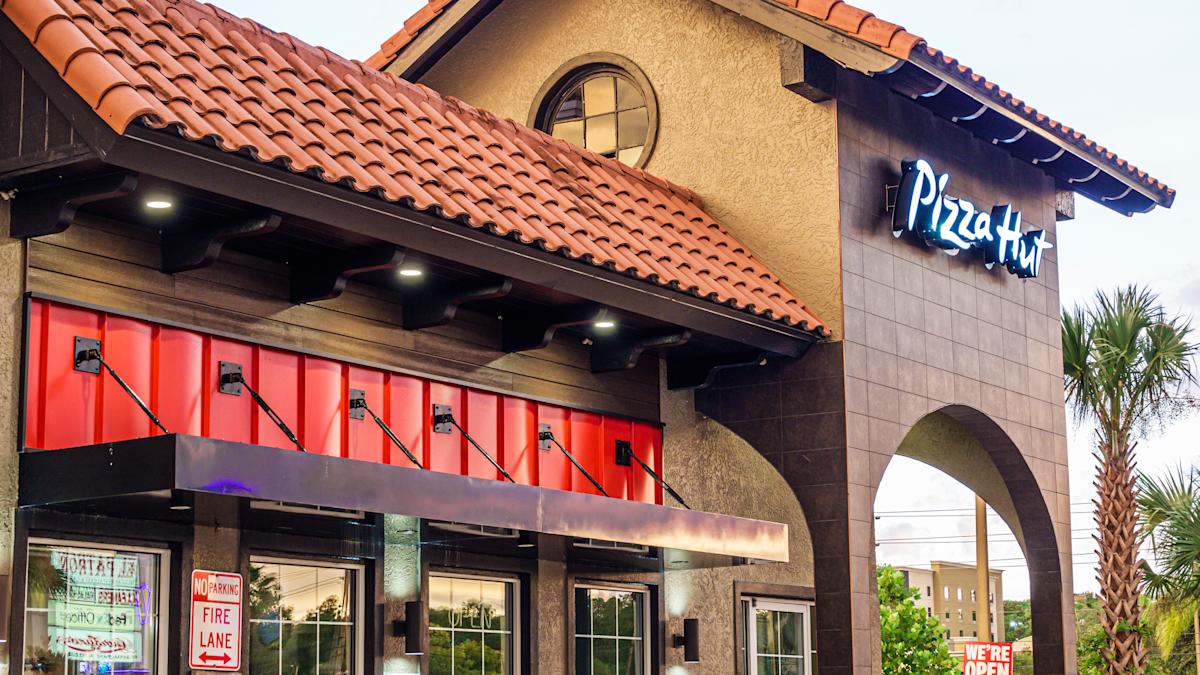
A Pizza Hut franchisee is accusing the restaurant giant’s AI technology of turning once high-performing stores into an operations nightmare and is now seeking $100 million in damages.
Chaac Pizza Northeast, which operates more than 110 Pizza Hut locations across New York, New Jersey, Maryland, Pennsylvania and Washington, D.C., alleges the chain’s Dragontail AI dispatch system caused widespread delivery delays that hurt sales, damaged customer satisfaction and caused chaos for restaurant operations, as reported by Fortune (1).
Must Read
“As this matter is pending litigation, we cannot comment in detail at this time,” a Pizza spokesperson told Moneywise. “We are in the process of reviewing the claim and will respond through the appropriate legal channels.”
It’s one of the latest warning signs for the fast-food industry as restaurant chains rush to embrace AI in hopes of cutting labor costs and speeding up service. But at what cost?
Fast-food chains are betting big on AI
Chaac Pizza Northeast filed a lawsuit claiming the AI technology gave DoorDash drivers unusual visibility into kitchen operations and order timing, allowing them to game the system by delaying pickups, batching deliveries together and cherry-picking higher-tip orders. The result, according to the complaint, was pizzas sitting out longer, slower deliveries and frustrated customers.
According to Business Insider, before the AI rollout, Chaac says more than 90% of its pizza deliveries reached customers within 30 minutes. The franchise also reported consistent double-digit sales growth, and guest satisfaction scores were above system averages (2). But once Pizza Hut rolled out Dragontail in 2024, the company said delivery performance went downhill.
“With the intention to improve efficiency and service to the customer, Dragontail did the exact opposite,” the lawsuit stated, alleging the system caused “significant delays and pummeled consumer satisfaction.”
The restaurant industry across the U.S. has increasingly turned to AI-powered ordering systems, kitchen management tools and delivery optimization software as operators look for ways to stay efficient in a competitive market.
Last year, Yum! Brands, the parent company for chains including Pizza Hut and Taco Bell, partnered with Nvidia to introduce AI-powered drive-thru and phone ordering systems at hundreds of restaurants nationwide.
Story Continues
It’s not the first complaint against technology, including AI, from a major chain. Others across the U.S. have already experienced some growing pains.
McDonald’s ended a two-year AI drive-thru partnership with IBM in 2024 after viral social media posts showed customers receiving incorrect orders, including hundreds of Chicken McNuggets and multiple unwanted beverages.
Wendy’s also faced backlash after announcing digital menu boards that sparked fears of surge pricing.
The Associated Press reported that Wendy’s Co. planned to launch digital menu boards at all U.S. company-run restaurants by the end of 2025, saying the menu boards “could allow us to change the menu offerings at different times of day and offer discounts and value offers to our customers more easily, particularly in the slower times of day.” (3) The company later clarified to AP that it would not raise prices during busy periods.
Techtarget, citing MIT, said there are lessons to be learned when implementing AI, many of them centered on everyday execution and day-to-day workflows, much like in the issue of the Pizza Hut lawsuit. (4)
Business owners beware: AI isn’t a ‘plug-and-play’ fix
Are you a business owner considering implementing AI?
The U.S. Chamber of Commerce has warned that companies using AI need strong oversight, employee training, transparency and internal safeguards to ensure the technology is used responsibly in real-world business operations. (5)
Similarly, the National Institute of Standards and Technology (NIST) has urged businesses deploying AI systems to review the risks, track performance over time and ensure humans remain involved in decision-making. (6)
For restaurant owners and other businesses that rely on gig-economy workers, one risk is failing to anticipate how workers might adapt their behavior around AI systems and incentives.
The Pizza Hut lawsuit illustrates that danger. Technology designed to speed up deliveries allegedly encouraged drivers to delay pickups and prioritize more profitable orders instead.
For some businesses, the path to profitability may involve revisiting the past. Pizza Hut’s growing “Pizza Hut Classic” initiative, a retro strategy that’s been spreading across the country, comes as the company struggles with declining sales, store closures and backlash over its AI rollout, according to Complex. (7)
More than 140 locations have converted back into throwback-style restaurants that recreate the dine-in experience many customers remember from before Pizza Hut modernized its operations, likely in hopes of tapping into nostalgia.
You May Also Like
Join 250,000+ readers and get Moneywise’s best stories and exclusive interviews first — clear insights curated and delivered weekly. Subscribe now.
Article Sources
We rely only on vetted sources and credible third-party reporting. For details, see our ethics and guidelines.
Fortune (1); Business Insider (2); AP News (3); TechTarget (4); U.S. Chamber of Commerce (5); National Institute of Standards and Technology (6); Complex (7)
This article originally appeared on Moneywise.com under the title: The owner of 110 Pizza Huts is suing the chain, claiming $100 million in losses from the botch adaption of an AI tool
This article provides information only and should not be construed as advice. It is provided without warranty of any kind.