
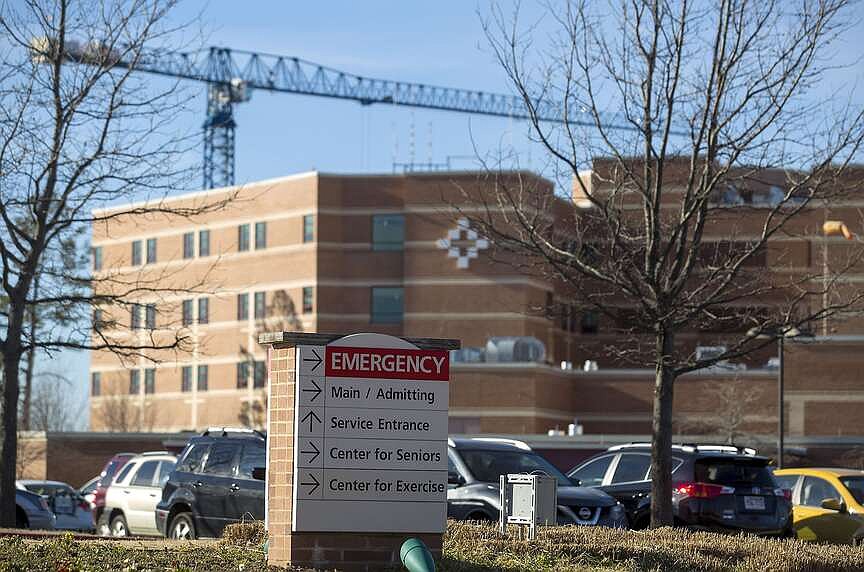
FAYETTEVILLE — Washington Regional Medical System on Thursday announced a “workforce reduction” expected to affect more than 80 staff members.
In a news release announcing what it called a “strategic organizational restructuring,” Washington Regional cited state and national trends showing hospitals and health systems are facing “mounting financial pressures driven by rising labor and supply costs, as well as continued reimbursement challenges.”
The changes will include consolidation of certain management and support functions, resulting in the elimination of positions, according to the release.
The workforce reduction will see 86 positions eliminated, impacting 86 employees, according to an email from Brooke Morgan, a Washington Regional spokesperson. The restructuring primarily impacts management and administrative support positions, she said.
“The focus of this restructuring is to streamline workflows, reduce redundancies and administrative burdens to better support our bedside and clinical teams, while also reducing expenses and improving efficiency,” Morgan said.
Neither the release nor Morgan’s emailed response to a reporter’s questions specifies if those 86 staff members will all be laid off or if some will be reassigned to other duties or unfilled positions within the health system.
Fayetteville Mayor Molly Rawn said Washington Regional is one of Fayetteville’s largest employers and one of the most important health care providers in the Northwest Arkansas region. Health care systems at every level are facing significant financial and operational pressures, Rawn said, adding that Thursday’s announcement reflects broader challenges happening throughout the health care industry.
“These conditions are not unique to our city or our region,” Rawn said. “We remain in close communication with the hospital and will continue supporting efforts that strengthen our local job market, access to quality health care, increased workforce development and the long-term economic stability in Fayetteville. We will continue working through our Healthcare Council and sector strategy efforts to ensure Fayetteville remains a place where health care institutions can grow, recruit talented professionals and deliver excellent care.”
The city’s hearts are with the employees and families impacted by the workforce reductions, Rawn said.
The workforce reduction is one of numerous operational changes the health system’s leadership is pursuing to improve Washington Regional’s financial performance, according to the release.
The release cites the Arkansas Hospital Association saying the cost of uncompensated care at Arkansas hospitals increased 14.9% during the 2025 fiscal year compared to the previous year. The association has also reported that, as of June 2025, approximately 40% of Arkansas hospitals were operating at a loss, the release states.
“The current health care environment continues down an increasingly difficult path. We are all evaluating our business and implementing significant operational changes,” Washington Regional President and CEO Dr. Lucas Campbell said. “By restructuring our management operations and consolidating roles, Washington Regional will reduce redundancies and optimize efficiency while still providing the high-quality care our community has come to expect.”
Washington Regional said patients will not experience a disruption in the care they receive as a result of the changes.
The challenges faced by the health system are not unique to Arkansas or Washington Regional, according to the release, which states hospitals and health systems nationwide are facing similar financial and operational pressures.
Hospital expenses increased 7.5% in 2025 — more than twice the rate of growth in hospital prices, according to reports on The American Hospital Association’s website. Regarding Medicaid and Medicare reimbursements, from 2022 to 2024, general inflation rose in the United States 14.1%, while net Medicare inpatient payment rates increased only 5.1%, the website states.
“We recognize and appreciate the vital care Washington Regional and its team provide Northwest Arkansas,” said Ashley Siwiec, spokesperson for the Mercy health system. “Unfortunately, health care systems are struggling across the country and bracing for the impact of the $1 trillion health care spending cut — also called H.R.1 or the ‘One Big Beautiful Bill.’ In these tough times, hospitals are seeing more uninsured patients, increasing uncompensated care costs and tough choices to survive. Mercy continues to find ways to meet these challenges, but we, too, know the difficult days ahead for all health care nationwide.”
She was referencing the budget reconciliation bill signed into law in July by President Donald Trump and which implemented many of his administration’s top legislative priorities.
The American Medical Association has decried the law, saying it “includes significant funding cuts and policy changes to Medicaid and the Health Insurance Marketplaces, Medicare physician payment and medical student loans, among other health care related items, all of which will worsen patient access to care.”
SIMILAR ISSUES IN RIVER VALLEY
The Washington Regional announcement comes less than two months after Baptist Health announced it would shutter several clinics and discontinue some in-patient services in Fort Smith. Services being discontinued include nephrology, pulmonary, oncology and infectious disease services.
Clinics being shut down include Baptist Health Cardiology, Baptist Health Pediatric, Baptist Health Neurology, Baptist Health Infectious Disease, Baptist Health Renal and Baptist Health Oncology, according to an April news release.
This transition was expected to result in a workforce reduction of about 150 employees, including 10 physicians, the release states.
“This restructuring allows the Fort Smith hospital to stop unsustainable losses and focus on high-quality delivery of these essential services,” Baptist Health President and CEO Troy Wells said at the time. “We are working closely with our affected employees to provide 60 day paid severance, career transition support, and opportunities for reassignment within the Baptist Health system.”
Since 2018, Baptist Health has sustained cumulative losses of $127 million through March 2026, the release states. That deficit is projected to grow this year, driven by a combination of declining hospital reimbursements and continued cost pressures across hospital operations.
Beyond the annual losses, Baptist Health also faces the critical need for extensive, multiyear facility improvements to ensure the physical plant remains viable for the long term.
“To ensure we remain a permanent part of the River Valley, we must become smaller and stronger, prioritizing the efficient use of our existing assets and resources rather than incurring significant new levels of debt,” Wells said.
A month before that announcement, Baptist Health reported it would be ending pregnancy and childbirth services at its Fort Smith hospital.
The decision was not made lightly, according to a statement from Baptist Health at the time. It followed a careful analysis of the program’s long-term operational sustainability amid significant and sustained challenges, including the rising costs of specialized care, Baptist Health reported.
Days before that news came to light, Wells said the Baptist Health Fort Smith campus would be seeing several changes in the following 12 to 18 months. Like Washington Regional, Wells cited rising costs, among other challenges.
“For the past several years, the health care environment across the country has changed dramatically. Hospitals everywhere are facing rising costs, workforce shortages, and shifts in how care is delivered,” Wells said at the time. “These challenges require health systems to continually evaluate how best to provide care in ways that are sustainable for the long term.”
Jada Robison can be reached by email at jrobison@nwaonline.com.