
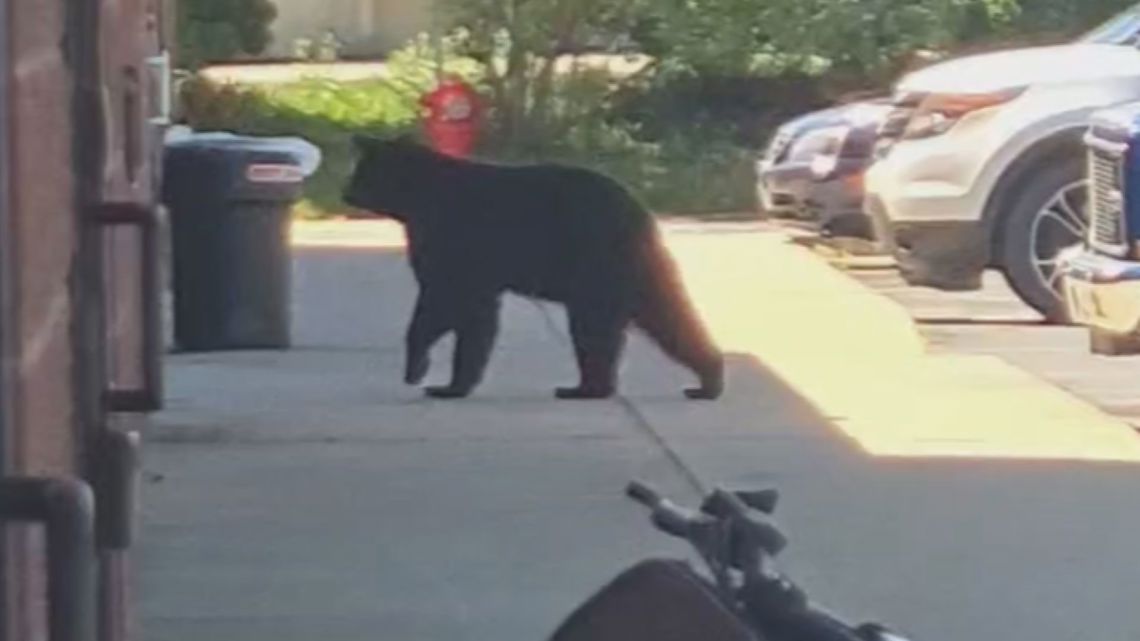
Recent bear sightings in Coopersville, Georgetown Township and Muskegon may feel unusual, but the DNR says there’s a reason behind them.
GRAND RAPIDS, Mich — A black bear cub running through parking lots in Coopersville this weekend surprised plenty of people in Ottawa County, but sightings like this are becoming increasingly normal across West Michigan according to the Michigan Department of Natural Resources (DNR).
The young bear was first spotted just before 3:00 p.m. Saturday afternoon near O’Malley Drive and 68th Avenue, weaving between businesses, climbing a tree and peeking into storefront windows before later being struck and killed while crossing I-96.

This story continues below.
“It looked like a big dog at first,” said Amber Wellman, who captured video of the cub near Social Nutrition in Coopersville. “Then I realized that it was a bear.”
The sighting came just weeks after another bear was reported in Georgetown Township and another climbed a tree near a manufacturing plant in Muskegon.
So why are black bears showing up farther south?
“We have seen an increase in the bear population over the last decade and a half,” explained Rachel Lincoln with the DNR.
According to Lincoln, West Michigan’s long stretches of connected forest and wildlife habitat along the Lake Michigan shoreline give bears a natural path south from northern Michigan populations.
“A lot of younger bears, especially young male bears, are looking for a new home range and a new mate,” Lincoln said. “So they start walking south and they’ll keep going until they hit a place where there’s too many people or too many buildings.”
The DNR says this time of year is especially common for wandering bears as younger males leave areas where older dominant bears already control territory. And while sightings may feel more frequent recently, officials say modern technology plays a role too.
“Everyone’s got a camera in their pocket,” Lincoln said. “Doorbell cameras are increasing, technology is increasing.”
A 2024 DNR survey estimated more than 2,000 black bears now live in Michigan’s Lower Peninsula, with populations gradually expanding farther south over time. Despite their size, the DNR says black bears are generally shy animals that avoid humans whenever possible.
“They tend to flee as quickly as possible,” Lincoln said. “They more so want those tasty morsels that have been left behind than they want anything to do with those of us in the area.”
Ottawa County deputies said the Coopersville cub did not approach people or act aggressively. Authorities believe it may have been searching for food at the nearby landfill.
The DNR encourages residents to remove bird feeders, avoid leaving pet food outside and secure trash if bears are reported nearby. Officials also caution people against trying to get too close to bears in the wild or in more urban settings.
“When a lot of people congregate around the bear, it can cause a lot of stress for that bear,” Lincoln said.