
It has been just over 72 hours since Arne Slot’s sacking by Liverpool, but it took barely a few minutes for a favourite to emerge in the race to replace him.
Andoni Iraola is the front-runner to become the club’s 23rd permanent manager/head coach, having left his post at Bournemouth at the end of the season, with talks between him and the club already under way.
Iraola would be a calculated gamble — at 43, he would not be the youngest Liverpool manager in the Premier League era (Brendan Rodgers was 39 when he was appointed in 2012) but he would be among the least experienced, certainly in terms of managing at the elite level.
So what would he bring to the role? Caoimhe O’Neill and Thom Harris, who both covered Bournemouth extensively during Iraola’s time in charge, analyse what Liverpool fans could expect if he was to get the job, while former Premier League referee Graham Scott reveals what he was like to officiate.
Tactics
Iraola’s stint at Bournemouth was transformational, helping to instil an aggressive, front-footed style of play that lifted the club to two record points tallies in the Premier League along the way. His ideas hinge on the out-of-possession, looking to disrupt the opposition build-up and relying on physicality and athleticism in midfield, where players are encouraged to take risks to steal the ball and back each other up in the press.
It took a while for Iraola’s ideas to sink in — Bournemouth were winless in the first nine games under the Spaniard — but pressing patterns soon became “second nature” and “natural” according to then striker Dominic Solanke, and results quickly began to improve.
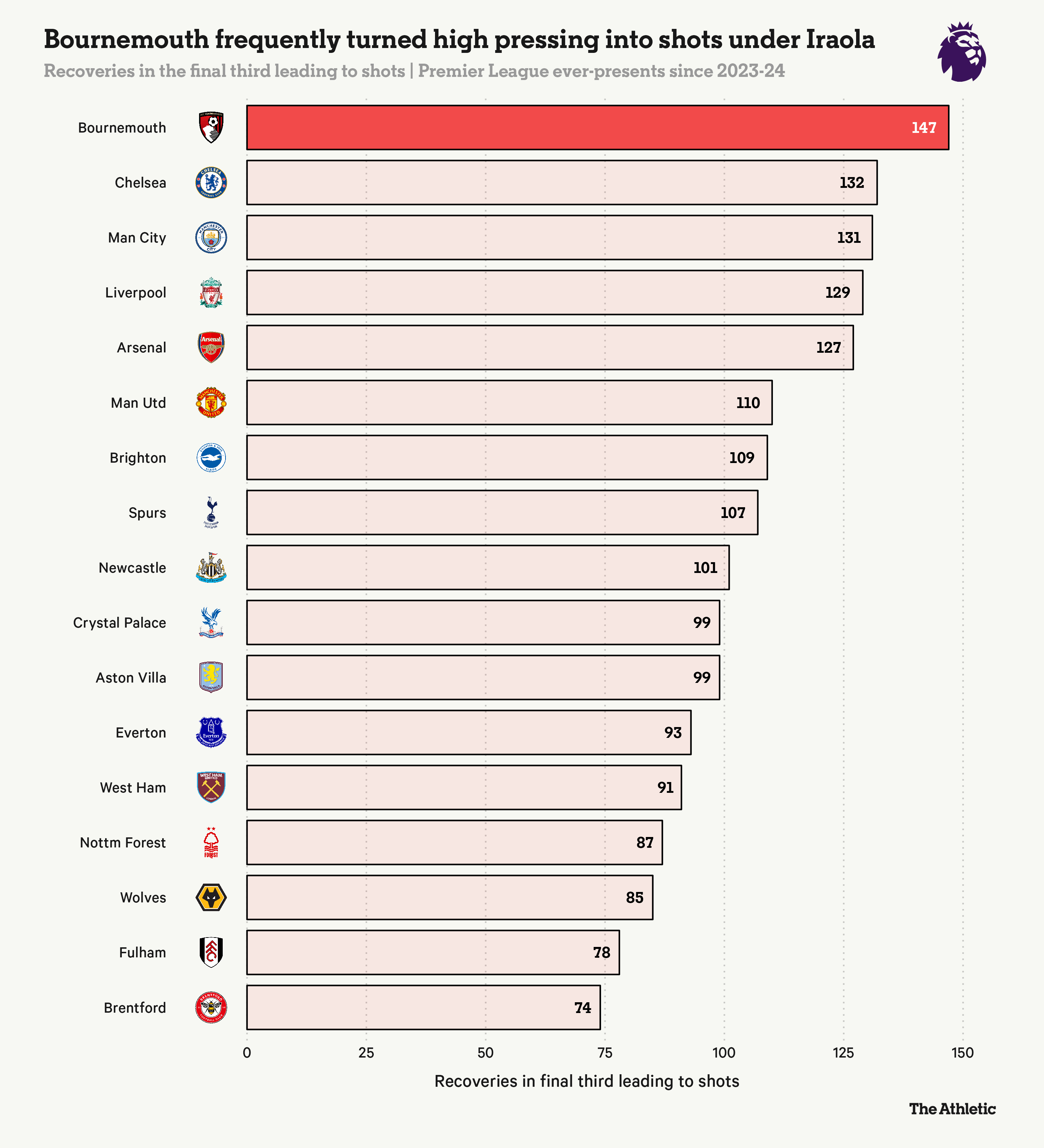
As we can see from the chart below, no team have taken more shots after turning over possession in the attacking third since his arrival, a sign of their adventure to chase the ball up the pitch and the speed with which they attack.
Part of the reason why Bournemouth originally struggled to get to grips with Iraola’s philosophy — and precisely why it is so effective — is that his high press does not just involve hard running and defensive tenacity.
The manager demands split-second decision-making from his players, switching from zonal to man-to-man marking systems when they sense an opportunity to close in. It relies on collective cohesion from back to front, and team-mates on high alert to jump forward in support once the first player commits to the press.
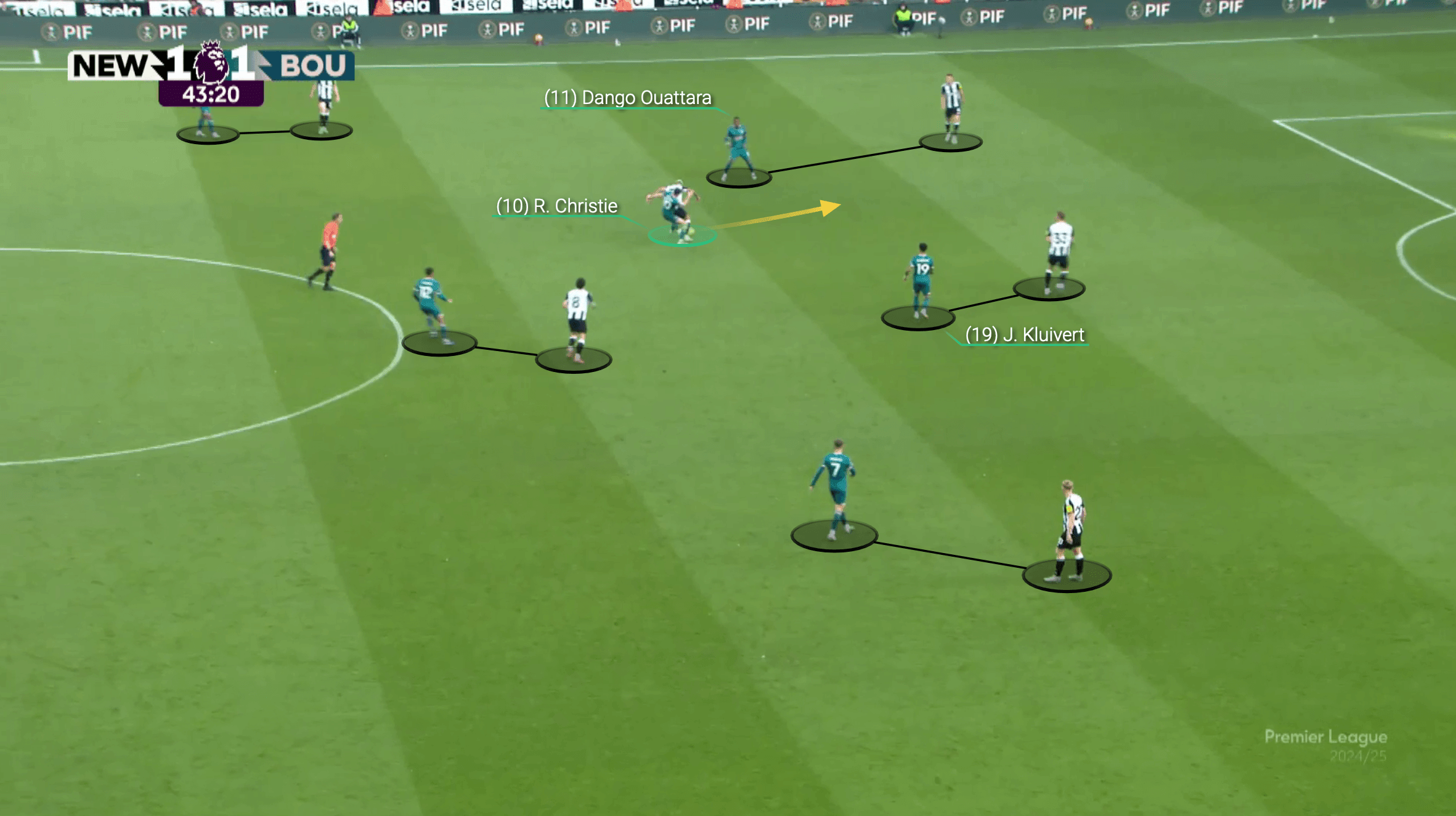
Here is an example from an impressive 4-1 win over Newcastle United. Bournemouth are pressing high with opposition centre-back Dan Burn in possession, but they leave midfielder Ryan Christie two-vs-one in the middle.
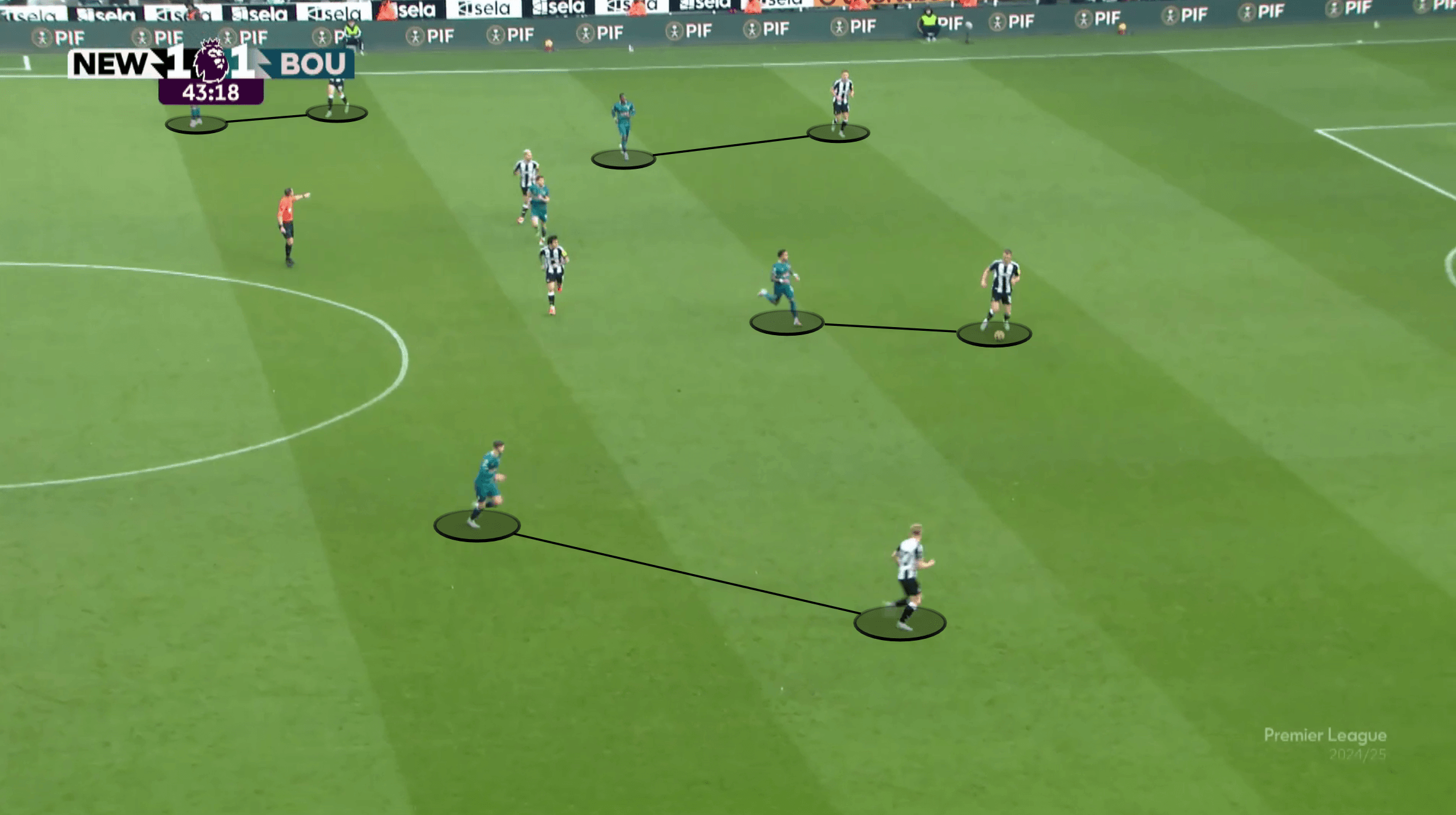
Burn turns quickly on the ball, and Bruno Guimaraes senses an opportunity to drop for the pass in frame two. It leaves Christie with a decision to make. He tracks the run, while Tyler Adams spots this from further back, and races up in support.
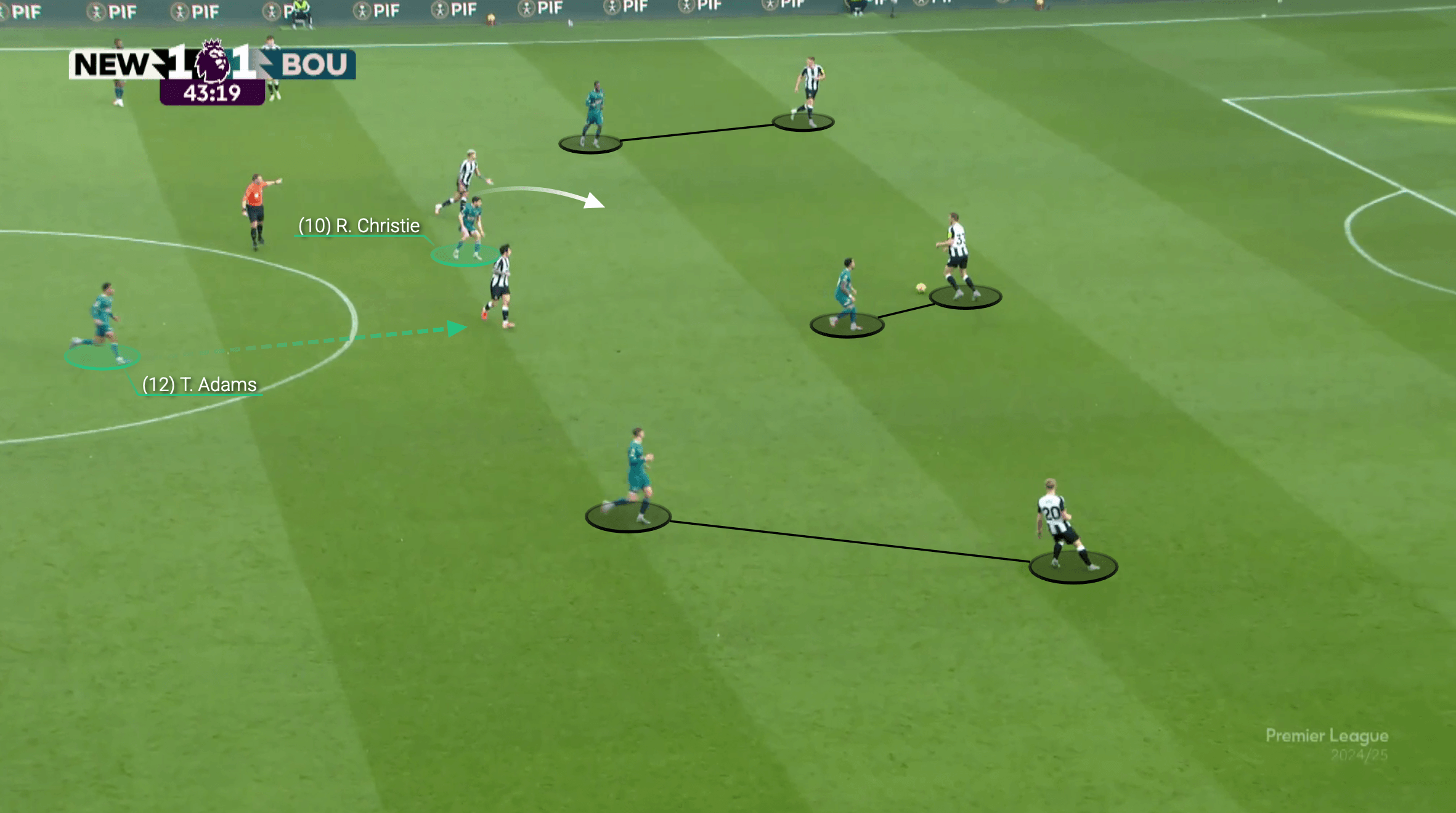
Suddenly, Bournemouth are locked on man-for-man, and they are able to nick the ball and race forward to score.
Though it involves risk — if Adams doesn’t take it upon himself to step up, they would be easily played through — the collective understanding and sense of anticipation drilled into Bournemouth’s players means that they can quickly snap into an aggressive press and catch opponents in their trap.
Iraola will attempt to coach similar patterns at Liverpool, but he may need to adapt to the demands and expectations of a historically bigger club. There will be more pressure on the manager to lead a side that can seize the initiative with the ball, rather than cede possession and look to snap at the opposition’s heels.
Though his Bournemouth side were uncompromisingly direct, there were a few signs last season that Iraola was looking to introduce more control to their possession play. They averaged nearly 11 sequences of 9+ passes per game — up from about 7.3 during his first season in charge — building their approach play around the likes of Alex Scott and Marcus Tavernier for their technical ability and composure on the ball.
It is that blend that Iraola will need to get right, but he is certainly capable of bringing back the intensity that Liverpool crave.
Thom Harris
Man management
Iraola might generally look calm and relaxed, but he demands a lot from his players every single day. His playing style is highly aggressive, physically taxing and means players have to be at the right level of physicality and tactical understanding. If they are not, they simply do not make the cut.
Yet there is no doubting the bond he generates with players who buy into his methods. Midfielder Alex Scott credits Iraola for what he was able to achieve last season as he missed just one league game for Bournemouth, was nominated for Premier League Young Player of the Season and earned a call-up to train with England’s World Cup squad.
Scott said he felt he was not initially at the level required to play in Iraola’s exciting yet relentless system, but the manager kept the faith and helped him get there.
Liverpool defender Milos Kerkez played a season under Iraola and famously celebrated getting an assist against Tottenham Hotspur by running over to his head coach, who had told Kerkez pre-match that Spurs’ high line and when they step up meant he should play his crosses in early.
“He is helping everyone to improve as a player and as a person. I’m really thankful he has trusted me,” Kerkez said at the time.
Scott described Iraola’s main strength as being someone who instils confidence in those around him.
“At times, I didn’t know when to go (and press), I was worried about what’s behind me and he gives you that confidence just to go flat out, and the defenders behind you will know to come as well,” Scott told The Athletic in April. “That’s probably his main strength as a coach. It’s a brilliant way of football.”
Around the training ground, Scott said Iraola is happy and relaxed, someone who has conversations with everyone on and off the training pitch and has helped cultivate a family feeling around the club.
He also improves players. Playing under Iraola helped Antoine Semenyo secure a move to Manchester City from Bournemouth in January, with the Spaniard working hard with him on his shooting and also understanding the moments when he should pass too.
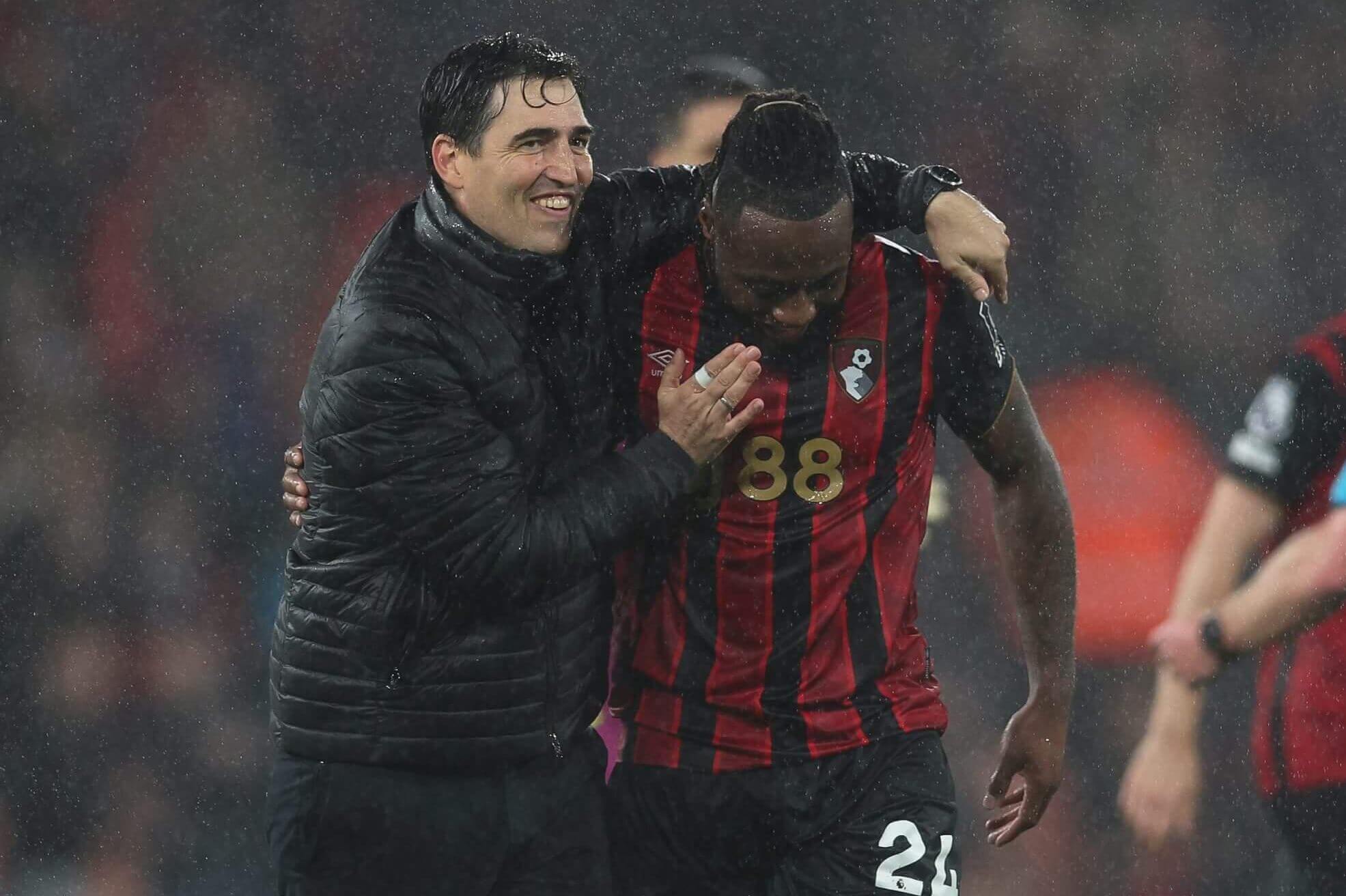
Antoine Semenyo loved working with Iraola at Bournemouth (Steve Bardens/Getty Images)
“Everyone’s embracing the philosophy,” Semenyo said in October 2024. “We love it, we know it’s hard. And it is hard — even on training days we find it tough. But we know we get success from it.”
You only have to look at the number of individual player success stories since Iraola joined Bournemouth in the summer of 2023 to know that, even if his football is physically demanding, once players buy in, good things tend to happen.
Caoimhe O’Neill
Managing upwards
Working at a club such as Bournemouth, with a young and talented team, Iraola has had to prove how adaptable to change he really is. In the past three seasons, he has had to stand by and watch some of his best players leave, often being handpicked away by Europe’s biggest teams.
Last summer, he watched three of his starting back line sign for Real Madrid (Dean Huijsen), Paris Saint-Germain (Illia Zabarnyi) and Liverpool (Kerkez). Starting goalkeeper Kepa Arrizabalaga’s loan deal was also up. Knowing Bournemouth’s business model, Iraola just got on with it.
Even seeing Semenyo, one of the best attackers in the Premier League, move to Manchester City mid-season was never going to be easy to deal with. But Iraola has consistently adapted to the decisions made in the boardroom by figures like chairman Bill Foley, president of football operations Tiago Pinto and technical director Simon Francis.
Iraola’s input was clearly important and respected at Bournemouth, but he was happy to take a hands-off approach when it came to the business of football — something that will surely appeal to Liverpool’s hierarchy, including sporting director Richard Hughes, who worked with Iraola during his first season on the south coast.
“When we sign players, I’m an assistant to them… I give my opinion, especially the kind of player we need and the demands that will be needed for that position, but I don’t control the market as well as they do,” Iraola told The Athletic last summer.
“You can watch a video, and you will watch a game from a player, but probably this is not solid enough to give a strong opinion.
“Sometimes, I watch a player and I don’t like what I see from the beginning — it may be in the way he moves or his reactions. I watch not only how a player is technically and physically. For example, one thing I look at is their reactions when the team scores a goal. I like it when players celebrate and they are very happy, even if they haven’t been involved in anything for the goal and they haven’t touched the ball.
“I try to somehow get to people who know that player or know things about their character, or about their personal life. But I am not a specialist in signing players. Ninety-five per cent of the job is done by people who, in this case, know more than me.”
Caoimhe O’Neill
Handling referees
Iraola is as intense as they come on a match day. Like his compatriot Mikel Arteta, he paces pitch-side incessantly, apparently possesses limitless reserves of physical and emotional energy and is always convinced that every decision against his team is preposterous.
No technical area is big enough to contain his enthusiasm, let alone the minimalist version at Bournemouth, which is the smallest in the Premier League. He’ll increase his step count still further at Anfield.
Ultimately, while he frequently overstepped the dashed line that was supposed to contain him, he rarely overstepped the mark in relation to his behaviour.
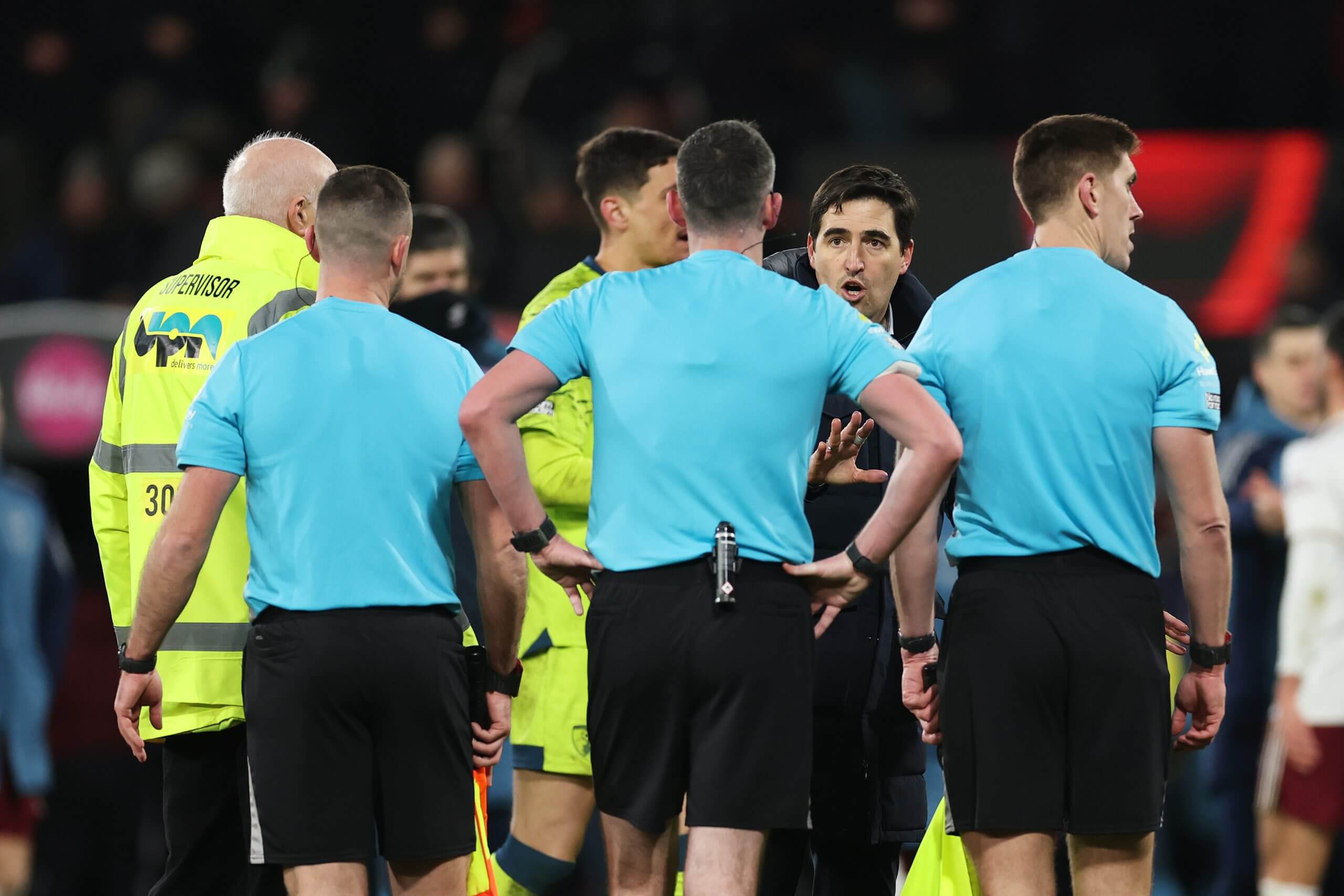
Andoni Iraola was a combative presence with referees at Bournemouth (Richard Heathcote/Getty Images)
Away from the field he cuts a calmer, more charming figure. For example, when we met once pre-season he presented as intelligent, measured and constructive.
We had a mature conversation about the challenge of applying the handball law, and the merits of defenders pinning their arms behind their backs when confronting opponents.
He listened politely to me pushing the party line that the practice was unnecessary, before suggesting that he still felt safer when his players adopted such a safety-first approach. I don’t blame him.
Next season I shall send a good luck message to the fourth official for the first Arsenal vs Liverpool. Whoever gets that gig is going to need it.
Graham Scott
Media and PR
Iraola is no stranger to dealing with the media, but the level of scrutiny he can expect at Anfield will eclipse anything he has experienced before. Given how many PR missteps Slot made towards the end of his Liverpool reign, Iraola will need to get it right if he does take the job.
At Bournemouth, Iraola always found positives to speak about after a game even in the most trying moments. He is not the kind of manager who will go on a rant that will make headline news, but he is also not afraid to give a long, passionate answer to a question or crack a little joke.
Iraola clearly loves working in football and if he has the chance to talk about it analytically, he will. He is realistic, too, and will accept when things didn’t go to plan: there is an acknowledgement that having his side play front-foot football brings risk.
On the touchline, Iraola is a mix of calm and occasional chaos. Most of the time, he is a patient orchestrator, watching them put his plan into motion. But when he wants his players to press, he lets them know by calling on them to “go”. And when one of his team wins the ball back high up the pitch, he will excitedly applaud them (a trait he shares with Jurgen Klopp).
He is not usually confrontational. At Bournemouth, his fitness coach, Pablo de la Torre, was the one who took on the role of clashing with opposition coaches.
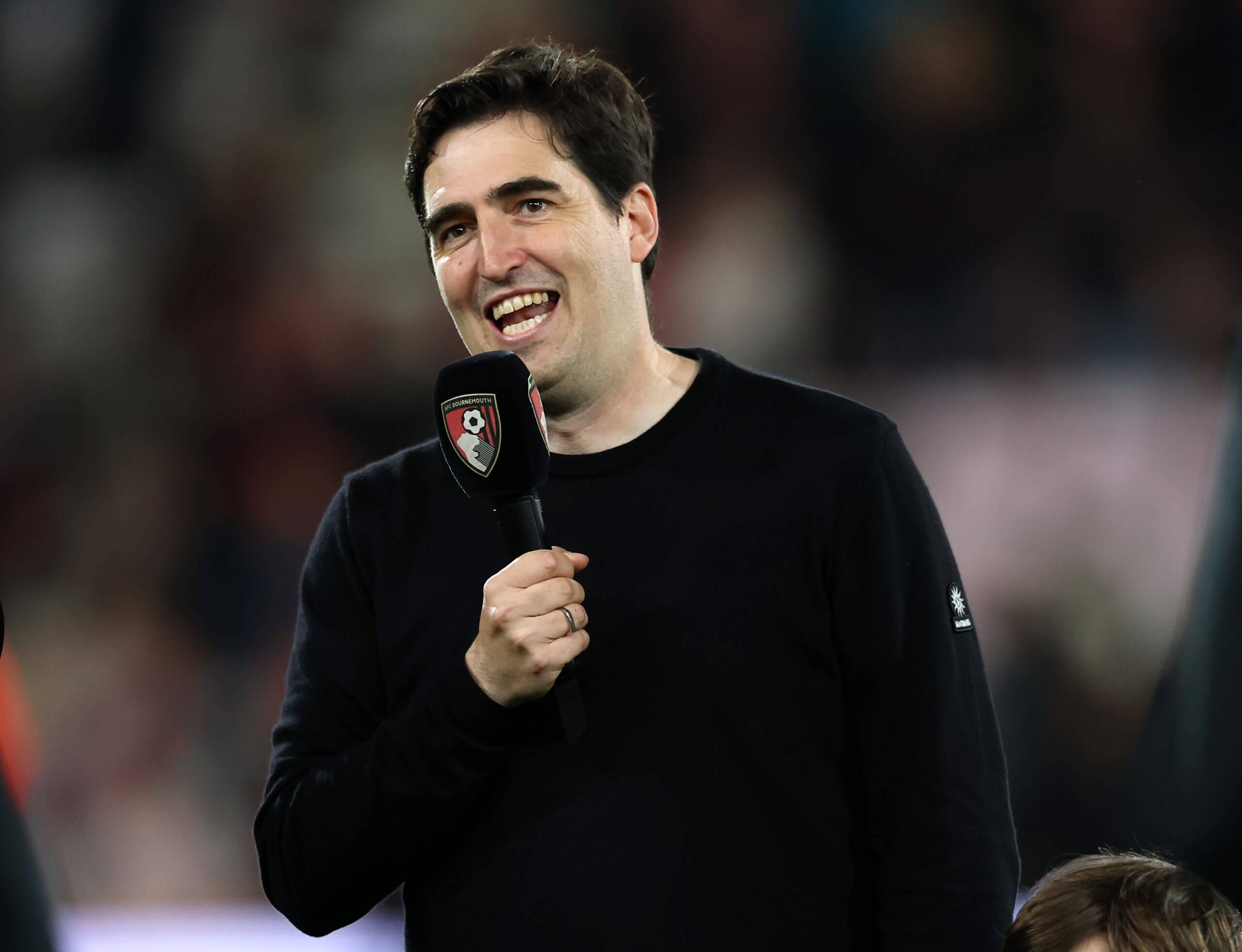
Can Iraola’s relaxed approach with the media work at Anfield? (Eddie Keogh/Getty Images)
But that is not to say he won’t be in the fourth official’s ear. He was shown 11 yellow cards at both Bournemouth and Rayo Vallecano for various sideline antics. And as a former player, he absolutely loves a goal celebration. He was often seen running, jumping and throwing his arms into the air when Bournemouth scored and enjoys those moments with the fans.
Just like when he was a player, Iraola has superstitions. He tapes his right index finger and left middle finger before games. He has described this as “stupidity” in the past, but it suggests a man who is ritualistic and driven by habits.
Caoimhe O’Neill