
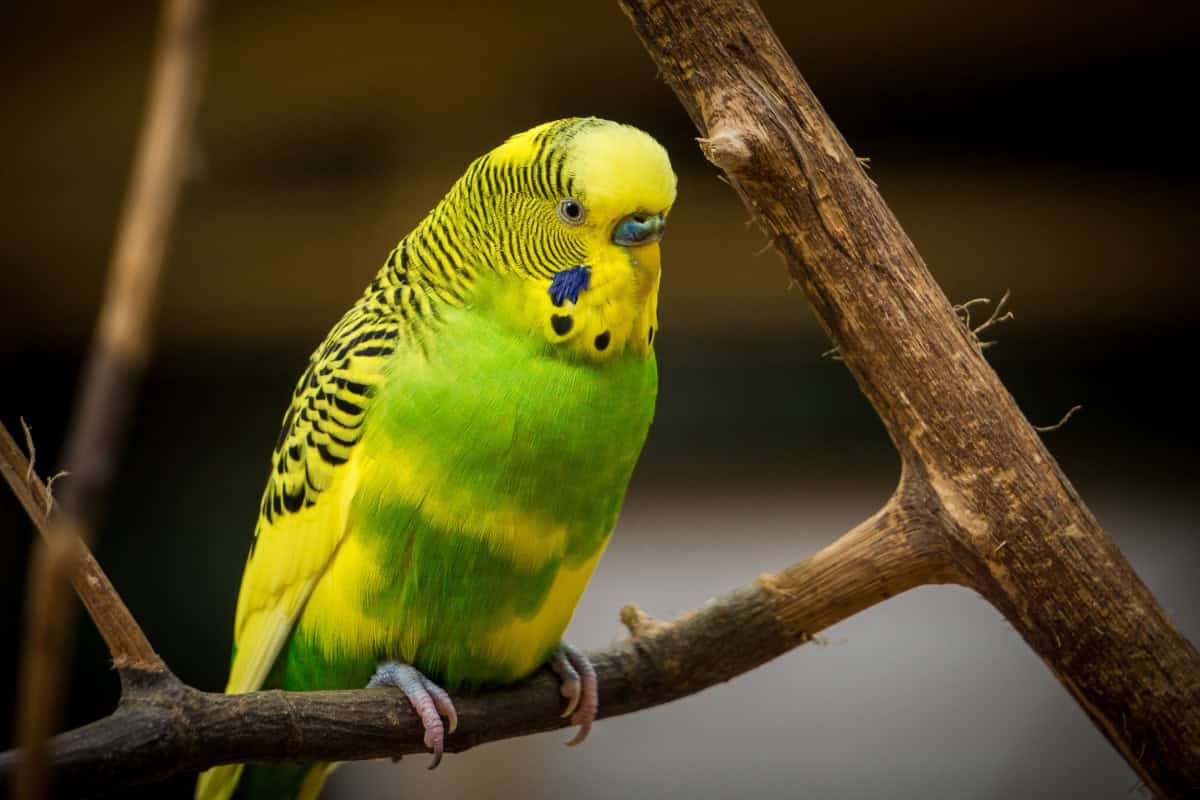
 Image in public domain.
Many bird owners have seen it and wondered whether something was wrong. A parrot rubs against a perch in a way that looks unmistakably sexual. Or maybe a wild bird uses a twig or branch in a way that just doesn’t seem normal.
Is it awkward? Sure. But is it abnormal? Not really, say scientists.
In the first broad evolutionary analysis of its kind, Chloe Heys and her colleagues found that masturbation appears across many bird groups. It occurs in both males and females, and, surprisingly, reports were more common in wild birds than in captive ones.
That matters particularly because bird masturbation is often treated as a cage-related problem. Owners may assume it means stress, boredom, frustration, or the absence of a mate. But the researchers argue that the behavior may be a natural part of bird biology.
A Behavior Hidden in Plain Sight
Animal masturbation has long sat in an awkward corner of science. Few researchers are eager to study it and it doesn’t exactly make for good dinner conversation. But the behavior is remarkably common.
It’s been reported in primates, dolphins, squirrels, horses, marine iguanas and penguins, and probably many other animals we haven’t seen yet. They do it as a sexual outlet, but it may also serve reproductive functions such as improving sperm quality, influencing mating readiness, or boosting fertilization odds.
Birds, however, have received far less attention. There have been scattered reports in parrots, penguins, and other species, but no broad evolutionary picture.
Part of the neglect may come from anatomy. Most birds don’t have external genitalia in the way mammals do. They mate through the cloaca, an opening used for reproduction, urination and defecation. In birds, masturbation usually involves rubbing the cloaca against an object such as a perch, twig or toy, often with wing movements or vocalizations.
×
Thank you! One more thing…
Please check your inbox and confirm your subscription.
Heys and colleagues set out to study this behavior. They defined masturbation as sexual stimulation of the genitals by self-manipulation, including the use of objects, but excluding ordinary cleaning, scratching or preening.
They then built what they describe as the largest dataset of bird masturbation to date.
The team combined three sources: peer-reviewed literature, surveys of avian experts and zookeepers, and reports from online bird-keeping communities, social media and videos. They recorded species, sex, age, wild or captive origin, mating system, rearing background and social environment.
From this dataset, the patterns started to emerge.
Not Random
The clearest result was that many bird species masturbate, and this behavior isn’t random.

The researchers say the behavior is phylogenetically conserved, meaning closely related bird species tended to resemble one another in whether masturbation was present or absent. It’s clustered by lineage.
The researchers estimated that the common ancestor of birds probably didn’t masturbate, but this behavior emerged and was lost several times across evolutionary time.
Males also seem to do it more than females. In reliable records, 55% of male records involved masturbation, compared with 36% of female records. This difference is significant, but it also suggests that the behavior can’t be explained as a male-practice only (for instance, for clearing out old sperm and replace it).
The researchers also found no significant difference between juveniles and adults, undercutting the idea that masturbation is mainly “practice” before maturity.
“Despite assumptions that masturbation among captive birds like parrots is a result of their often-solitary living, our study finds that it is natural, healthy, and widespread across diverse bird species, even in different environments,” says Chloe Heys, Senior Lecturer in the School of Pharmacy and Biomedical Sciences at the University of Lancashire.
So Why Do They Do It?
It’s hard to say precisely why such a behavior emerged. But researchers have a few ideas.
Birds are often socially monogamous, at least monogamous-ish. That is to say many form pairs, share nesting duties and raise chicks together. But avian sex lives can be far more complicated. Extra-pair mating is common in many species.
The new study found that socially monogamous species were less likely to masturbate, as were species with long-term pair bonds. Species with multiple or more indiscriminate mating patterns were more likely to masturbate.
That pattern supports two broad explanations.
One is the sexual outlet hypothesis. In species with more frequent mating opportunities or higher sexual arousal, masturbation may arise as an outlet for that arousal.
The other is the postcopulatory selection hypothesis. Basically, that means masturbation could influence reproductive success after mating has occurred or in preparation for a future mating. In males, it could improve sperm quality. In females, it could potentially affect arousal or reproductive tract conditions in ways that influence fertilization.
Both could be partially right, but there could be other aspects researchers haven’t figured out yet.
Important Takeaway For Pets
In the U.S., a 2025 report noted that 6 million households own birds. Around 22% of bird owners are Gen Z, which suggests that the practice may be on the rise. In the UK, 2.7% of households keep 1.4 million indoor pet birds plus 0.9 million domestic fowl and 500,000 pet pigeons.
Across Europe, the figures are even higher. Italy alone is estimated to have over 12.9 million birds, while Spain isn’t too far behind.
For bird owners, masturbation is often seen as a behavioral problem. It’s considered to be abnormal, a sign of frustration, boredom, or a lack of a mate. Owners are sometimes told to remove objects and try to change this behavior.
But the study actually reports that wild birds were more likely to be reported masturbating than captive birds. Plus, given the breadth of different reports, the behavior is most likely normal across several species.
“There has historically been a lack of research around masturbation in birds like parrots, despite how we’re frequently consulted on it as vets,” notes Ana Basto, Veterinary Lecturer in Exotic and Wildlife Medicine at the University of Lancashire, one of the study authors.
“This research is pivotal and will be a step towards achieving a more holistic understanding of why and how birds behave the way they do. I hope the findings therefore enable vets to give more accurate advice to protect birds’ welfare which remains our key priority across the industry.”
This study doesn’t say every case of masturbation in a pet bird is harmless. Excessive behavior, injury, cloacal irritation, feather damage, or distress still deserve veterinary attention. But it shows that while we may not like to talk about it, bird masturbation in general is pretty normal behavior.
Granted, the science here is still young. The dataset depends partly on reports from humans who notice and submit this behavior, and overall, there haven’t been that many studies on the topic. But even so, the pattern is clear enough to demand a rethink.
The study was published in Ecology and Evolution.