
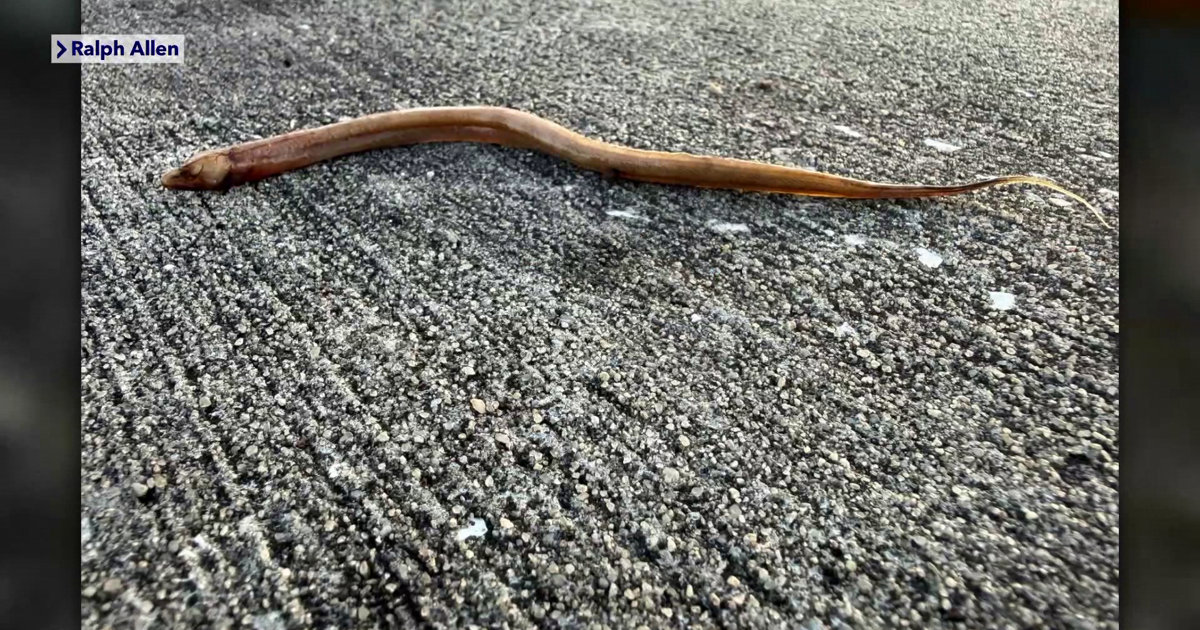
CHARLOTTE COUNTY, Fla. (WINK)—The invasive Asian swamp eel has been spotted several times in Southwest Florida.
Charlotte County neighbor Ralph Allen discovered one while clearing vegetation from his boat ramp about four or five years ago. He threw a grappling hook out and dragged up a bunch of vegetation.
“Something went sliding out of that, trying to get back down into the water,” Allen said. “I was able to pick it up, and it didn’t bite me. But it was very slimy and slippery and muscular and hard to hang on to.”
Allen first learned about Asian swamp eels when he had one in his hand. The elusive creatures are invasive and spreading fast across Florida.
“It’s one of the ones that they’re all worried about having an impact on our ecosystem, because they’re spreading very fast, and the big concern is they eat lots of little crustaceans and vertebrates and small fish and things, the very base of the food chain,” Allen said.
When Allen comes across an Asian swamp eel, he takes a photo and reports it every time. WINK News reporter Bridget Bruchalski learned how to report sightings in just a few minutes.
Allen starts by going to the Florida Fish and Wildlife Conservation Commission page on reporting sightings of non-native species. The page directs users to a third-party website called EDDMapS, or Early Detection and Distribution Mapping System.
First, type in the species. Allen only had to type “Asian SW” before Asian swamp eel popped up. Add the date and the type of sighting.

“See, they’re trying to make it as idiot-proof, to be blunt about, as possible,” Allen said.
Next, enter how you found it. Allen selected “captured” even though he grabbed the eel by hand. Drop a pin on the map, add a photo and hit submit.
“If I can make a five minute phone call or get on a computer for five minutes and log a sighting of something, and that adds one little teeny bit of data to somebody’s growing catalog, then you know, if that helps,” Allen said.
Experts say if you aren’t sure what you found, snap a photo and report it anyway. It could help scientists track Florida’s next invasive species.