

The Athletic has live coverage of the 2026 French Open men’s semifinals.
For the last eight months, The Athletic has been investigating the threat of fixing to the integrity of sport. In this sixth article in the series, we look at how tennis has become a sport vulnerable to exploitation by fixing gangs.
Also in this series:
The tennis star is still playing his shots — a backhand winner flashes down the line — but the match is ebbing away at a set and a break down. This is a prestigious tournament, dating back over 50 years. His tie is one of the day’s marquee match-ups.
He readjusts his hair. An ace, and with it, he takes his own service game. His opponent, however, ranked more than 50 places below him, still has the opportunity to serve for the match. The star has not come particularly close to securing a break.
Shortly after, with a meek return sent wide, their match is over. It is a surprise result, but not of the scale to send the press scrambling. The players shake hands at the net, organize their kit, and depart the court.
Later that day, according to sources familiar with the case, who, like others in this story, spoke on the condition of anonymity in order to speak candidly and protect relationships, a flag is raised in the system of the International Tennis Integrity Agency (ITIA), the sport’s anti-corruption organization. The match has been marked as suspicious — with betting patterns overwhelmingly and unusually backing a straight-sets win for the lower-ranked player.
A match-fixing alert in itself is not proof of wrongdoing, which is why The Athletic is not naming the player involved in the 2024 tie, but this match did spark further inquiry. It progressed to the ITIA’s internal betting analyst for review, who possesses the power to either drop the case, or escalate it into an official investigation.
Asked whether it could provide any details of the investigation into the match, the ITIA responded that it was unable to offer any comment on alerts that did not develop into a sanction.
This was a special case due to the ranking of the player involved, who remains one of the world’s best.
Matches like this are the tip of the iceberg. Tennis is highly vulnerable to match-fixing — “football is the most high-profile, but tennis is where it is most endemic,” one integrity expert told The Athletic — but cases generally involve lower-ranked players, who live a hand-to-mouth existence during their years on tour.
In December 2025 alone, French player Quentin Folliot was suspended for 20 years on fixing charges, while Chinese player Pang Renlong was barred for 12 years for separate offences. In March, two players and one official were all banned for breaching integrity guidelines. In May, six players and a coach were suspended for breaching anti-corruption rules. All were ranked outside the world’s top 400.
The Lewis Report, an independent study commissioned in 2018 by the sport’s stakeholders, stated the level of match-fixing was “very significant”, describing the basement of the professional game as a “fertile breeding ground for breaches of integrity”.
Over eight months of reporting, The Athletic has been told of secret meetings between players and fixers at the Gare du Nord, seen a major police operation launched, and tracked more than a million dollars of betting on a match involving a 14-year-old girl. Eight years on from the Lewis Report, tennis still faces its vulnerabilities.
Professor Richard McLaren, 80, led WADA’s investigation into Russian state-sponsored doping, having also worked on high-profile cases involving steroid use in the MLB and suspicious refereeing outcomes in Olympic boxing. Now, he sits as one of the ITIA’s four anti-corruption hearing officers. He has seen it all before.
“Don’t forget, when players fix with betting syndicates, they’re ultimately making promises to criminals,” he says early in our meeting, sitting in the lobby of a London hotel. “They’ve done some significant damage to players that didn’t fulfil their commitments, like kneecapping them, breaking their arms, threatening their families.
“I’ve been threatened several times personally. So have people that work for me. Those were just verbal, but physical attacks are not uncommon, particularly with some of the sophisticated betting syndicates based in Eastern Europe.”
McLaren has worked on so many of these cases because of tennis’ particular vulnerabilities. As one analyst had previously described it, unlike team sports, you only need to corrupt one player to guarantee a corrupt result. And unlike several other individual sports, each point is a new opportunity — offering potentially hundreds of betting opportunities each match.

Richard McLaren has warned of the threats of violence players face. (Stefan Wermuth / AFP via Getty Images)
“What typically happens is that a syndicate will have a couple of very skilled people who search the internet all the time,” he explains. “They then have their contact people who actually interact with the players. They then set what the rate’s going to be, which runs anywhere from $1,000 to $10,000. That’s the typical chain.”
Another weakness is the sport’s pay disparity. Though the sport’s top stars, the likes of Carlos Alcaraz, Jannik Sinner, and Aryna Sabalenka, might earn more than $20 million in prize money each season, with more on top from commercial deals, they are outliers in the extreme. The Lewis Report estimated that only the top 250 female players and top 350 male players earned enough to break even before paying coaching costs. At the same time, more than 15,000 players appear in professional tournaments. Vanishingly few earn income outside of their prize money. Fixers thrive on this inconsistency.
“These players are independent contractors, they’re not employees,” says McLaren. “They’re not paid much themselves, but they have to pay for everything. Coaches, travel, hotels. Winning is what supports them.”
Tennis’ scoring system means players can be convinced to corrupt matches whilst still winning them. For example, one technique is to request that a player loses part of a match — such as the opening set, or a particular service game — before returning to playing at their best.
“From their point of view, if they think they are going to lose a match nine times out of 10 while not really affecting the sport, it’s a good way of making some money,” McLaren adds.
As he describes it, a strange paradox emerges — the need to lose in order to stay on tour.
It means players are often rewarded by more than just money. McLaren has seen cases where players have been rewarded with first-class flights, had five-star hotel rooms booked on their behalf, or received treatment from physiotherapists who would ordinarily sit outside their budget.
“Now the syndicates have got that person hooked,” says McLaren. “They made a bad choice, and they don’t know how to get out of that choice. Don’t forget that lots of them are quite young, so they’re not very experienced at getting out of problems. Once you get on the treadmill, you’re like a gerbil trying to get off. It just keeps spinning faster and faster.”
The numbers bear this out. Back in 2018, the Lewis Report surveyed more than 3,200 professional players as part of their investigation. Some 464 reported first-hand knowledge of match-fixing — around 15 percent of the respondents.
Novak Djokovic, the most decorated male player of all time, had shared his own experience two years earlier, stating that he had been offered $200,000 to throw a first-round match in St Petersburg in 2006. Djokovic did not play the tournament.
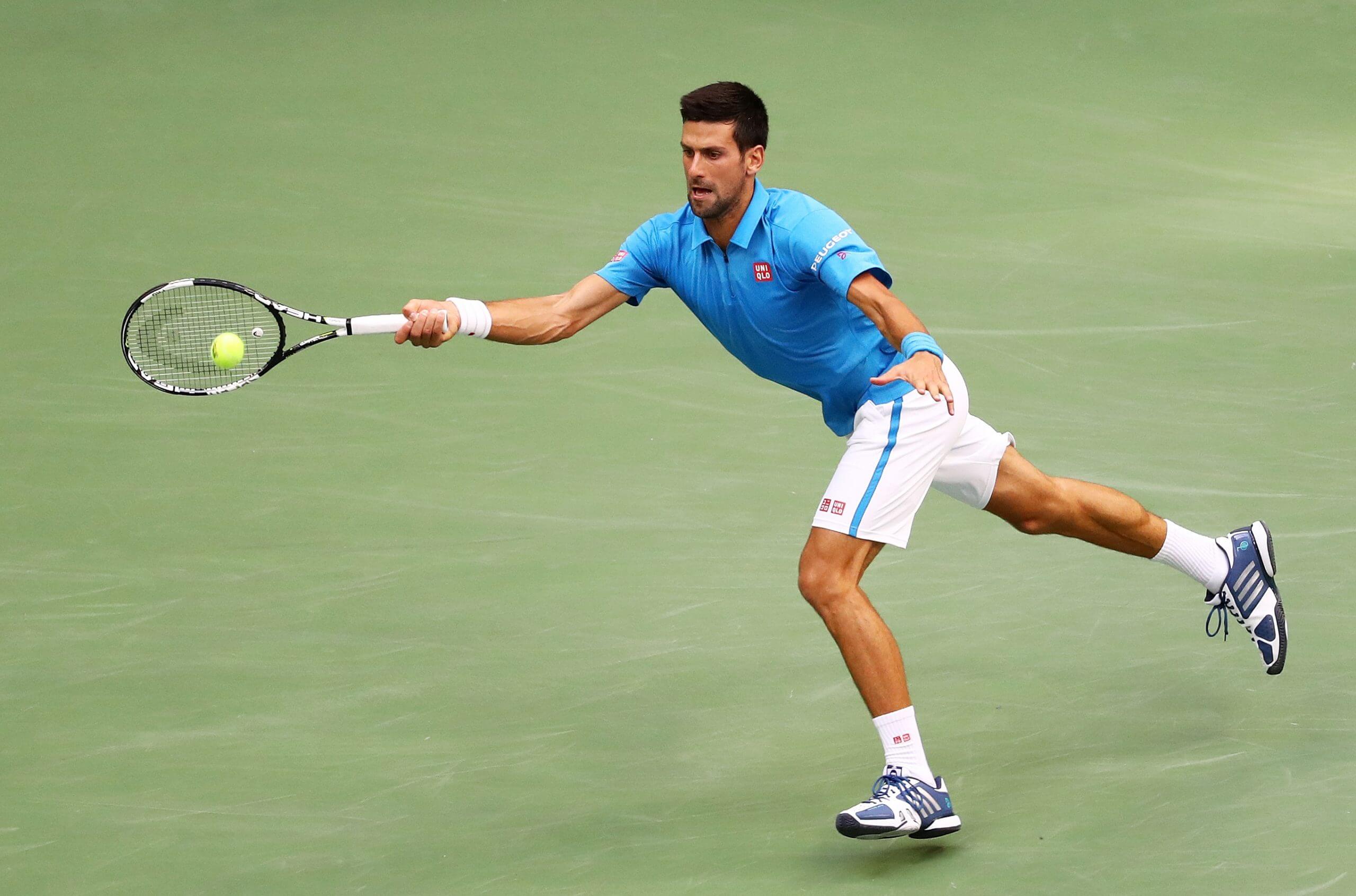
Back in 2016, Novak Djokovic told how he had been indirectly approached by fixers. (Al Bello / Getty Images)
“I was not approached directly,” he said in a post-match press conference at the 2016 Australian Open. “Well… I was approached through people that were working with me at that time, that were with my team. Of course, we threw it away right away. It didn’t even get to me, the guy that was trying to talk to me, he didn’t even get to me directly. There was nothing out of it.”
The ITIA was founded in 2021 on the back of the Lewis Report’s recommendations, which itself emerged from a joint BBC-Buzzfeed investigation in 2016, in which reporters alleged significant corruption within the world’s top 50 over the previous decade. It replaced Tennis’ Anti-Corruption Protocol, which dated back to 2008.
An independent body representing seven stakeholders — the ATP, WTA, ITF, and the four Grand Slams — the ITIA’s CEO is Karen Moorhouse, who joined in 2023 after 14 years in a senior role at the Rugby Football League. Last year, it registered 68 suspicious match alerts across its competitions, down from 95 the year before.
“l think every sport has a vulnerability to corruption,” she explains over a video call during January’s Australian Open. “Tennis has really gone out of its way to recognize where our abilities are in response, both in setting up the ITIA and making sure that we’re well resourced in terms of our specific vulnerabilities.
“A particular challenge around corruption is that, by definition, it is something that happens in secret. It’s not something that you can go out and easily measure. So I’m really proud of the number of cases we have, because it demonstrates that we’re tackling that underbelly. We’re sending a clear message that it’s unacceptable.”
Its remit is preventative as well as investigative. A major part of the body’s work involves working with young players. Moorhouse mentions several courses that were running at the Australian Open as she spoke. Another development seeks to make the reporting process easier for players.
“We launched a programme last year called The Line,” she says. “It’s a WhatsApp channel which players can use either with their real names or anonymously, and they can ask us anything they want. If they’re a bit nervous about something, they can come to us for guidance and advice. Players felt they had more boundaries over email — this has helped us.”
Another of the body’s successes has seen corrupt umpires targeted, particularly in tournaments across the Caribbean and South America.
Broadly, the scheme would work through the umpire’s touchpad, which each uses to input the score. If the umpire knew that the syndicate was after a particular result in a specific point or game, they had the ability to input the incorrect score, triggering a payout, before correcting their ‘error’ later on.
“We’ve seen a marked decrease in this area over the last three or four years,” says Moorhouse. “But it’s something we can’t become complacent about.”
In 2023, tennis’ biggest fixing scandal finally concluded with the imprisonment of Grigor Sargsyan, a man who, according to ITIA documents seen by The Athletic, had more than 180 players in his network spread over at least 30 countries.
Investigators linked a minimum of 375 corrupted matches with the Armenian fixer, and identified a network of 1,671 mules (individuals hired to place bets), front men (middle men between criminal organizers and players), and accounts through which bets were placed. There were even matches where, without knowing of the other, both players were on his books.
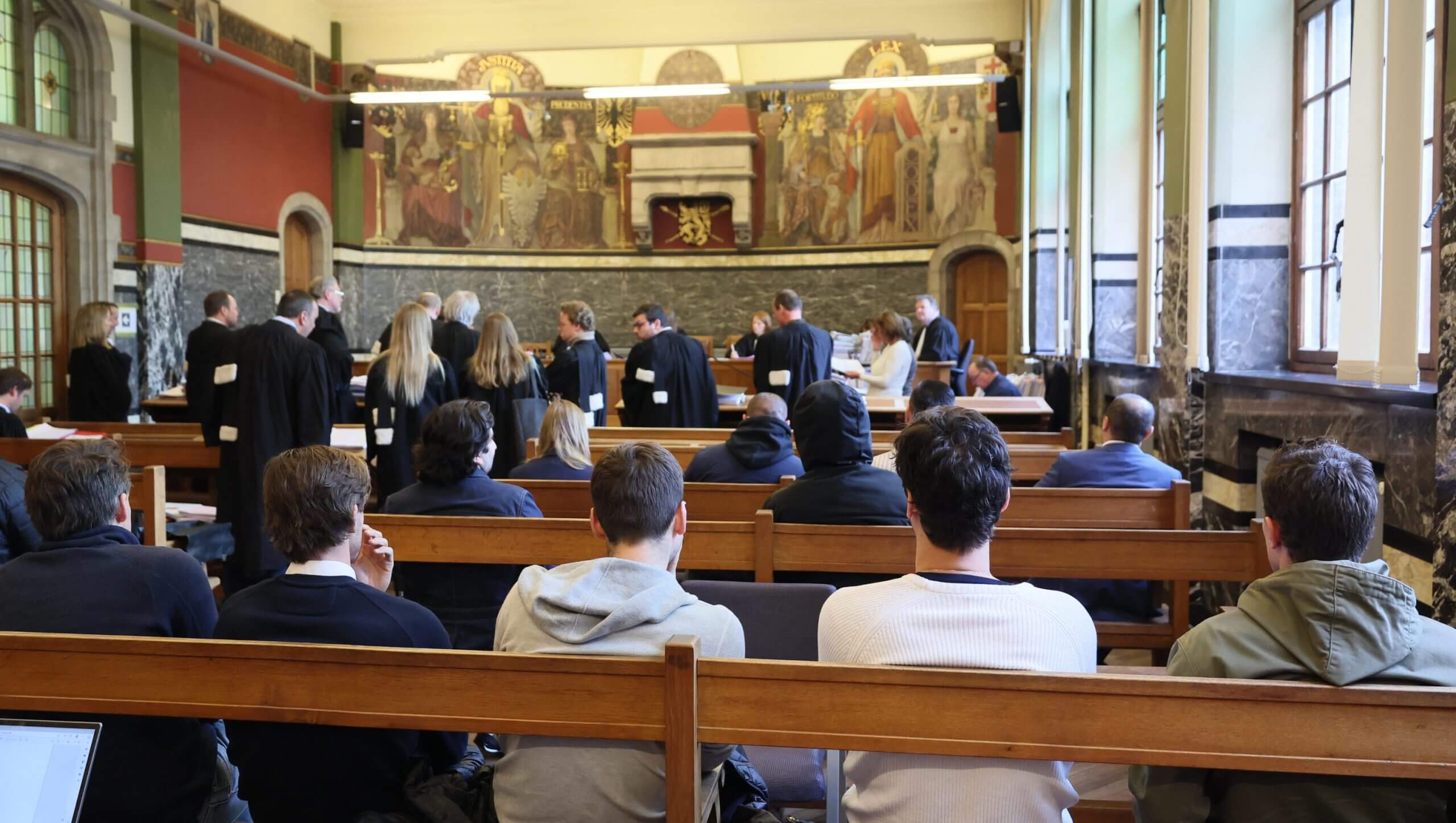
The trial of Grigor Sargsyan and his fixing network in Oudenaarde, Belgium in March 2023. (Benoit Doppagne / BELGA MAG / AFP via Getty Images)
Detained by Belgian police in June 2018, and his electronic devices seized, the ripples of his arrest carried through tennis — providing the most in-depth picture yet of how fixing works in the modern game.
Sargsyan never placed the bets himself. Instead, via Telegram or WhatsApp, he would work alongside what law enforcement described as “an extensive criminal network,” paying most of the winnings into the account of another Armenian, Andranik Martirosyan, named by the ITIA and Belgian Police in several related cases. At its peak, police said, Sargsyan’s network was capable of generating $406,000 each day.
After each fix was decided, players were paid through sites such as MoneyGram, Western Union, and Skrill, but several favoured in-person cash meetings. Sargsyan was a regular passenger on the train between Brussels and Paris — frequently meeting players at the Gare du Nord, envelopes stuffed with cash carried in his inside pockets.
But Sargsyan’s main skill was in recruitment. He would frequently attend far-flung tournaments in person, popping up on a different continent by the round. One player who was later found guilty of fixing, Frenchman Thomas Setodji, described how they met in his witness statement.
“Sargsyan approached (Setodji) and was asked to sit down by him while eating following a match,” the ITIA’s report said. “(Setodji) testified that Sargsyan said he was a tennis fan, liked the way the player had played, and ‘would like to be a sponsor for me. So we exchanged numbers and that is it’.”
Sargsyan also used the sport’s small world to spread his network. He recruited a coach, Sebastian Rivera, who had a direct line to vulnerable younger players, many of whom he convinced to fix. Rivera would later be banned from tennis for life.
However, sometimes it took more than money to motivate players. One player, Yannick Thivant, had originally agreed to a fix before changing his mind and playing his best. Sargsyan was not informed. Later, he messaged Thivant in a fury.
“Do not tell me — do not oblige me to tell you how it is happening,” he texted. “So, you have to pay me back this money over the next matches, otherwise do not let me show you how it ends.”
Thivant began to fix matches, initially unpaid. He was later given a lifetime ban by the ITIA.
“It’s important to remember that often there will be an organised network behind this, but the player may not know that,” Moorhouse said. “So they may well just think this is something small, one person, but they’re not privy to the full picture.”
Sargsyan was given five years in prison. He was the only non-playing individual within the syndicate who faced sanctions. Outside court, he was stopped by a Washington Post reporter.
“If the prosecutor knew what I know, there would be many more people on trial,” he told them.
Some players caught in fixing schemes can rationally claim entrapment. Others appear far more aware of what they are doing — and why.
Quentin Folliot reached a career-high of world No. 488, a ranking that increased by more than 200 places whilst working with fixers. His motivations were laid bare by a Snapchat recorded in October 2022, later uncovered by investigators.
The photo showed him at a party with a large wedge of cash, one day after messages recorded him agreeing to fix a match. The caption?
“Ca met un peu de beurre dans les epinards.” Translation: “It puts a little butter in the spinach.”
Folliot’s texts are another window into how fixes have operated. Released in ITIA sanction filings, one exchange showed him being offered a deal — to lose a game for $870 (€750), or to lose the match for $2,900 (€2,500). He chose the latter. Later, he asked his handler to send some of the payment in advance “to pay (for) my flight ticket. Two days later, he requested the remainder — “I’m in (a) party. I need to pay.”
Another time, a doubles partner, Lucas Bouquet, told Folliot he was not going to play his best in the pair’s upcoming match, prioritizing a singles match in a different tournament the next morning. Folliot reported this information back to the fixers.
“Frankly, if Folliot isn’t caught one day, I don’t understand it,” another professional texted Bouquet.
“Well, he’s a suspect but his (fixing) contact has an undercover agent who closes the files,” Bouquet replied.
But Folliot, unawares, was in fact being tracked by investigators. He received a 20-year ban from tennis last December.
The live stream shows two players, one of whom is about to serve. They are playing in what looks like little more than a municipal gymnasium, with no crowd in sight. The first sign that something is amiss happens when a torch flickers through a semi-ajar door.
Armed police burst in, ordering the players to the side of the court as part of a Belarusian investigation into suspected manipulation. Over the previous months, numerous players at this event, the Daily Premier Tour, had been observed showing a lack of interest in points, competing at a near amateur level.
The feed from the betting website, carrying footage of the match across the globe, rolls on.
Маски-шоу в прямом эфире: в Беларуси силовики накрыли любительский турнир по теннису.
Зрители, смотревшие матчи на сайтах нелегальных букмекеров, внезапно увидели, как правоохранители ставят к стене судей и теннисисток. На следующий день линия на игры этого турнира пропала. pic.twitter.com/ILLUREUL2G
— LiveResult.Ru (@LiveResultRu) October 29, 2025
The site in question is 1xBet, one of the world’s most popular betting sites — holding sponsorship agreements with high-profile football clubs such as Barcelona and Paris Saint-Germain.
Founded in Russia, the company is not allowed to operate in the United States, United Kingdom, and much of the European Union — having earned a reputation for the number of markets it offers. The Daily Premier Tour matches in Belarus were carried on the site.
The proliferation of websites like it, and the availability of point-by-point data for matches up and all the way down the tennis ladder, has led to sums being placed on matches that far outweigh the prize money that the competitors might ever hope to win.
Logging onto the site one Tuesday in early February, two days after Carlos Alcaraz wins the Australian Open, a wealth of matches are visible across virtually every level. At the bottom end are qualifiers for an ITF tournament in Monastir, Tunisia. Several matches involve players aged under 18.
In one extreme example, The Athletic learned of one 14-year-old player competing in an ITF event. Through a quirk of scheduling, her match was one of the few listed matches taking place in the world that afternoon. Betting experts have told The Athletic that the match attracted more than a million euros in wagers — all surrounding a player still four years away from being able to bet herself.
“There was nothing suspicious about the match itself in terms of corruption, but the circumstances of the match were shocking,” says Francesco Baranca, an independent integrity expert. “This is betting on the result of a 14-year-old girl. There has to be a serious inquiry into how it is possible to bet such crazy amounts of money on youth matches. People are making money from this. It’s terrible for the game.”
The Athletic has also been told of dozens of matches that have triggered alerts on the personal systems of independent experts. Over the past year, these include high-profile tournaments, such as a Davis Cup tie, right down to obscure competitions taking place in locations such as Pakistan, Chile, and Egypt.
According to the ITIA, around 115,000 matches are listed on betting websites each year. For the vast majority, it is possible to bet on every point, in every game, of every set. Advertisements for online gambling platforms can be seen at almost every sporting event, and most broadcasters and media outlets, including The Athletic, take betting sponsorship.
How are bookmakers able to offer odds on so many markets? There are only two ways that the data can be gathered by bookmakers — through illegal ‘courtsiders’ at the matches, tracking every point, or through the sale of official data by the governing bodies. Many of these matches are not filmed — with this data, aside from the memories of the players’ themselves, the only evidence they ever existed.
The ATP, WTA, and ITF, for example, have each signed a deal with Sportradar, a Swiss-based company which also works with the NBA, NHL, MLB, and UEFA. Sportradar then makes its money by selling this data to bookmakers, as well as carrying out its own analysis on the numbers. The company offers an integrity service as part of the contract, flagging suspicious matches to the ITIA.
Many argue this model adds to the sport’s vulnerability — without the point-by-point information from low-level matches, bookmakers would not be able to offer odds on matches which are highly susceptible to corruption. Governing bodies, in turn, respond that these deals bring in revenue which can then be reinvested in the sport — benefitting players by creating more prize money for them. They also say that stopping these deals would not prevent these matches being offered on the legal market.
Either way — from amateur matches in Belarus to some of tennis’ flagship events — the concerns remain.
“Should we really be able to place bets on the world’s No. 500 against the No. 700?” asks integrity expert Chris Kronow Rasmussen. “There is literally nobody there except the players and the umpire. The tournament winner sometimes only receives $10,000 — but there’s millions of pounds of bets.”